


One person died after a small plane crashed into the ocean off Bristol on Thursday afternoon.
The Lincoln County Sheriff’s Office responded to calls for a small plane crash near Fort William Henry in Bristol around 1 p.m. Thursday, it said in a news release.
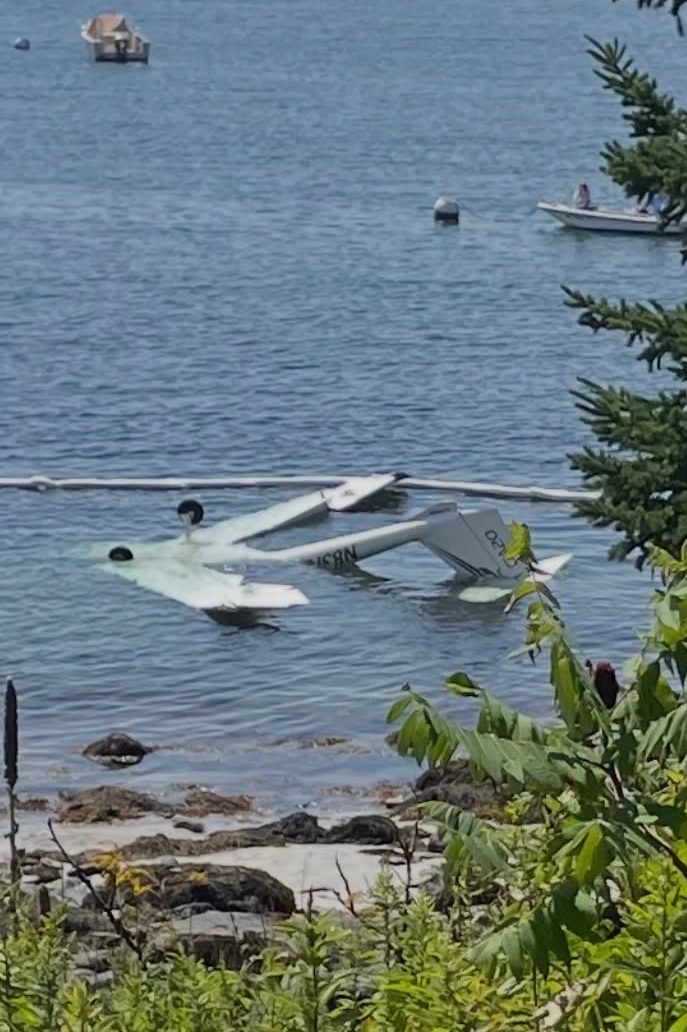
A small single-engine plane was found lying upside-down in the harbor in roughly 4 feet of water, the sheriff’s office said, and nearby residents and a building crew “rushed into the water to help” after witnessing the crash.
The male pilot was pulled from the plane but died at the scene, the sheriff’s office said, while a male passenger was able to escape. He was transported to a hospital in Damariscotta with non-life-threatening injuries.
“Initial information indicated the aircraft had left Brunswick Airport with a destination of the Knox County Airport and possibly experienced some type of mechanical failure,” the sheriff’s office said, noting an official cause will be determined by federal agencies.
A spokesperson for the Federal Aviation Administration confirmed that a Diamond DA20 — a two-seat aircraft — crashed with two people on board.
The FAA spokesperson said the crash occurred around 1:40 p.m., but the time given by the sheriff’s office lines up with multiple flight tracking websites, which show a DA20 rapidly losing altitude near Bristol around 1 p.m.
A photo shared with the Portland Press Herald showed the plane upside-down in the water near the shore.
The plane was removed from the water by a marine barge, the sheriff’s office said.
The FAA, as well as the National Transportation Safety Board, will investigate the cause of the crash, FAA public affairs specialist Rick Breitenfeldt said in a statement Thursday.
The Bristol Fire and Rescue Department, Central Lincoln County Ambulance, and Maine Marine Patrol also responded to the crash.


Comments are not available on this story. Read more about why we allow commenting on some stories and not on others.
We believe it's important to offer commenting on certain stories as a benefit to our readers. At its best, our comments sections can be a productive platform for readers to engage with our journalism, offer thoughts on coverage and issues, and drive conversation in a respectful, solutions-based way. It's a form of open discourse that can be useful to our community, public officials, journalists and others.
We do not enable comments on everything — exceptions include most crime stories, and coverage involving personal tragedy or sensitive issues that invite personal attacks instead of thoughtful discussion.
You can read more here about our commenting policy and terms of use. More information is also found on our FAQs.
Show less