


Sheila Richardson has been hanging wallpaper since her youngest was in seventh grade. She learned the skill from her grandmother and her father, then grew it into a successful business with a broad customer base near her home in Turner — all by word of mouth.

“I take pride in my work,” she said. “I don’t have to advertise.”
Now 78 and a great-grandmother, she’s still working 35 years later, despite some health issues that cropped up last year.
“I’m up and down the ladder a hundred times a day,” she said. “I’m a doer. I don’t depend on anybody else.”
Richardson’s tenacity is serving her well these days, as rising costs for materials and fuel, and a shifting economic landscape make it more challenging to work or do business in Maine.
She is one of 824 Mainers who responded to a survey conducted in July by the Siena Research Institute for the Maine Trust for Local News. It found that the job market is daunting for many across the state — 51% of respondents rated their ability to get suitable employment as “only fair” or “poor,” while 41% rated their ability to make a living wage as “not very likely” or “not at all likely.”
Asked whether they could get a job with opportunities for advancement, 32% said it was “almost certain” or “very likely,” but 27% said it was “not very likely” or “not at all likely” and 39% said it was a toss-up.
The Portland Press Herald/Maine Sunday Telegram interviewed a variety of people across the state who participated in the 62-question survey. While they see some bright spots, Richardson and others say workers and businesses face increasing economic headwinds.
Richardson has been working all her life, really, running a household with four kids, helping her husband with his excavation, wood harvesting and auto repair businesses, scrimping and saving to make ends meet when times got hard.
Social Security has eased her need to work, she said, but her healthcare savings are dwindling despite Medicare. She and her husband own the ranch-style home they built themselves, but it needs a new roof, and that’s going to be costly.
She sees others struggling, too, including her son, who has his own construction and excavation business, she said. Record-high diesel prices are eating up narrow profit margins.
“It’s terribly tough right now,” Richardson said. “The price of everything has gone up and you have to charge customers what it costs. You really have to pinch pennies when you don’t have money coming in.”
SHADOW OF UNCERTAINTY
In reviewing the survey results, Maine State Economist Amanda Rector said she was surprised that only 32% of respondents were positive about the potential for job advancement, especially since Maine has a worker shortage and its rapidly aging population is expected to increase retirements.

“Responses may have been overshadowed by near-term uncertainties,” Rector said, including rising costs that have led some businesses to throttle hiring and consider downsizing if artificial intelligence is used in the workplace.
She also noted significant regional differences in views of the job market — 51% of Southern/Coastal respondents (Cumberland and York counties) said they could get suitable employment, and 38% saw potential for workplace advancement. Responses in other regions were even lower.
Rector said that’s not surprising. “That’s where a lot of economic activity is in the state,” she said.
Respondents showed similar regional trends when asked whether Maine is a place where businesses can succeed — 46% rated the business climate positively, while 52% said it’s only “fair” or “poor.” Looking at that question regionally, 57% of Southern/Coastal participants had a positive response, with significantly lower rates in other areas where business owners say they’re facing tough economic conditions.
Rector also pointed out that the survey shows strong recognition — 75% statewide — of Maine’s access to affordable adult education and job training. Both have been bolstered in recent years by the state’s community colleges, building contractors, defense contractors and the U.S. Small Business Administration.
“It’s good to see that has such a strong positive response,” she said.
LACK OF RELIABLE WORKERS
Workforce training is helping Alex Thibodeau meet some of the challenges facing Maine’s manufacturing sector, including rising costs and logistical drawbacks of being at the end of the line geographically.
Thibodeau is director of operations at Kenway Composites, an Augusta company with 50 employees that makes fiber-reinforced plastic storage tanks and other equipment for heavy industry, public infrastructure and military uses.
In recent years, Thibodeau has hired seven students from the composites manufacturing program at the Foster Career and Technical Education Center in Farmington that serves several area high schools.
“They are some of our best employees,” said Thibodeau, 59. “Technical training is one of the only salvations for manufacturers who need workers. (The training programs) are so underrated and deserve more funding going forward.”

Still, a lack of reliable workers has forced Thibodeau to turn away about $2 million in contracts in recent years, he said. His hiring expectations are pretty basic — show up every day, be willing to learn and do quality work — but he’s often disappointed, despite offering benefits, bonuses and pay ranging from $23 to $35 an hour depending on the job, he said.
Recent tariffs, inflation, higher interest rates and rising fuel prices have increased the cost of procuring materials, having them delivered to Maine and transporting goods to customers, he said. Truck deliveries now come with fuel surcharges. Tariffs on one part needed for a government contract increased the price from $80,000 to $130,000.
“We as taxpayers end up paying for that,” Thibodeau said. “One of Maine’s greatest struggles is our location. Most of the truck traffic is outbound, so you have to pay for the trip in. We are disadvantaged in a lot of ways already. We don’t need additional costs.”
STARK DIFFERENCES STATEWIDE
Thibodeau’s experience and the survey’s findings align with aspects of a Maine State Chamber of Commerce goals report released this year in advance of the 2026 gubernatorial election, said Patrick Woodcock, chamber CEO.

Economic headwinds that have pummeled Maine for years have been exacerbated by recent federal policies that have increased costs and threaten to worsen the workforce shortage, he said, including immigration enforcement activities.
In reviewing the survey results, Woodcock noted that while 57% of respondents in the Southern/Coastal region said Maine is a place where businesses can be successful, 58%-60% of respondents in the rest of the state said the exact opposite.
“I found that gap to be pretty stark,” he said. “Some pessimism has taken root. There are distinct challenges between the regions, and we have to recognize and respect those differences.”
Woodcock also noted that 85% of respondents across the state said the lack of affordable housing is a problem.
“Housing has overwhelmed a lot of Maine families,” he said. “Our members have identified affordable housing as a workforce issue. We cannot attract workers, foster economic growth and have a robust business climate without addressing affordable housing.”
On the upside, Woodcock said, Maine businesses are resilient, with an uptick in recent retail sales corroborating anecdotal feedback that this summer was a fairly strong tourism season. He noted that lodging receipts increased 12.8% in July compared to 2025, and restaurants experienced 6.8% growth, according to the latest state sales tax reports.
THE GOOD AND NOT SO GOOD
Nathan Gurtman agrees — it was a successful summer for many businesses in Maine’s hospitality industry. A chef at the York Harbor Inn, he has worked in area kitchens for 30 years.
“It was a good season,” said Gurtman, 50. “We were booked up with plenty of events and functions and our daily business was good.”
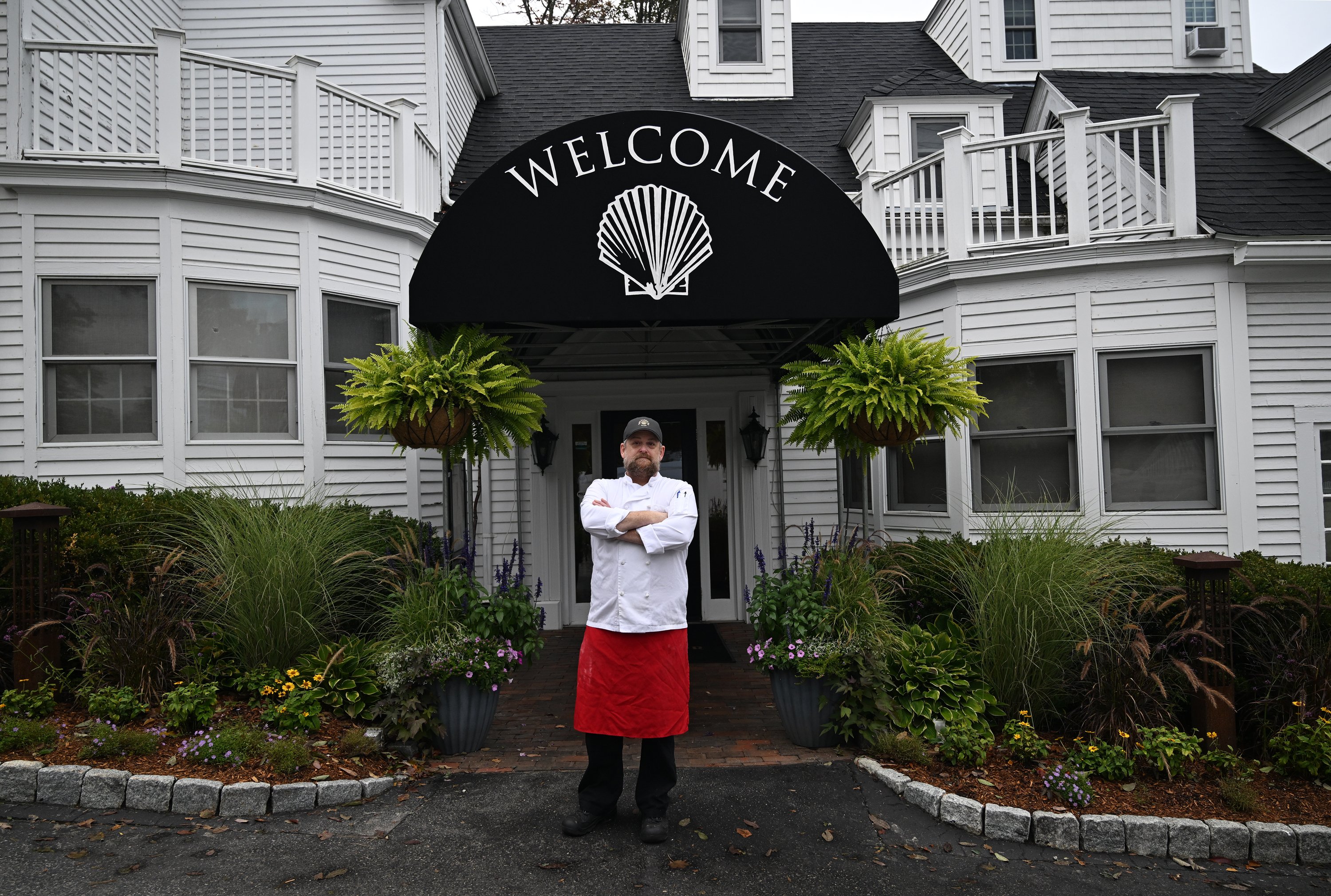
But the inn has been affected by rising costs like every other business, he said. Whether ordering special ingredients from outside Maine or fresh produce from nearby farms, food prices and delivery fees are going up.
“We make everything from scratch,” Gurtman said. “We’ve definitely seen price fluctuations due to what’s going on because fuel is more expensive, insurance is more expensive, everything related to doing business is more expensive. At the same time, we’re trying to keep our quality up and our prices reasonable.”
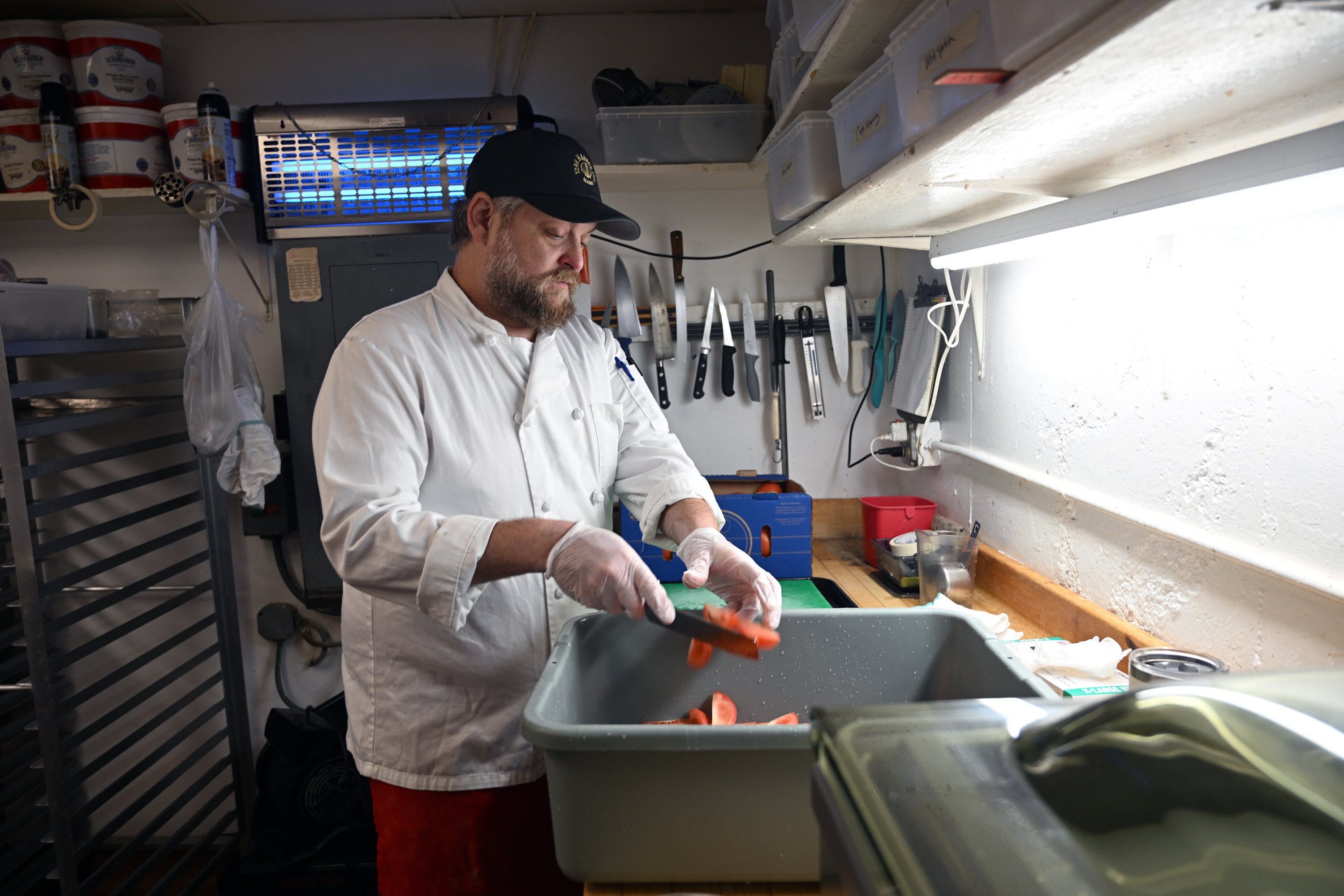
Despite the challenges, Gurtman said he wouldn’t want to live anywhere else. A native Mainer, he has vacationed in western Maine all his life, visits Acadia National Park at least twice a year, and swims several times a week at beaches near his home in York.
He doesn’t mind the tourist traffic that takes over Memorial Day through Labor Day because it pays the bills — for him, the town and the state.
“I understand why people come here,” he said. “I live it. I don’t take it for granted.”
Zack Gauley, 28, is on the flip side of that experience. A California native, he lives in Rumford, in western Maine, with his girlfriend, who has a job in manufacturing. He has worked seasonal jobs in the skiing and commercial fishing industries for the last five years, he said.
This year, however, his $15.10-an-hour minimum wage job making snow and running chairlifts at Black Mountain Ski Resort kept him working into spring, then he was let go, he said. At that point, the fishing boats he had worked on in the past were all crewed up.
A high school graduate, Gauley has applied for jobs at local gas stations, grocery stores and fast-food restaurants without luck, he said. He plans to expand his search to manufacturing jobs that might pay more and include job training.
“I’m dismayed with a lot of things, but I just have to apply myself a little more,” he said. “I just hope I can get a job as soon as possible, and then I can get a better job and build a life for me and my girlfriend.”

We invite you to add your comments. We encourage a thoughtful exchange of ideas and information on this website. By joining the conversation, you are agreeing to our commenting policy and terms of use. More information is found on our FAQs. You can update your screen name on the member's center.
Comments are managed by our staff during regular business hours Monday through Friday as well as limited hours on Saturday and Sunday. Comments held for moderation outside of those hours may take longer to approve.
Join the Conversation
Please sign into your Sun Journal account to participate in conversations below. If you do not have an account, you can subscribe here. Questions? Please see our FAQs.