
Laid off. Downsized. Gone out of business. No matter what the reason, people are re-entering the job market — many without much notice — only to find that it’s nothing like they remembered. Gone are the days of walking into a business, filling out an application, interviewing, and securing a job. Today’s job market is a far more competitive and less personal animal than even a few years ago.
That’s what Mike Castaneda, Sue Beaule, Roger Hamann and others found when they lost their jobs. No easy return to the workplace. No quick rehires.
But what they did find was a host of resources to help them get back to work. There was the Maine Department of Labor’s Career Center, the Chamber of Commerce, the group Women, Work, and Community, and the Maine Small Business Development Center, all ready and waiting to assist them into a new career. What they offered was everything from skill building to big-time networking, resume writing to informational workshops. And they found that getting a new career didn’t have to be a go-it-alone venture.
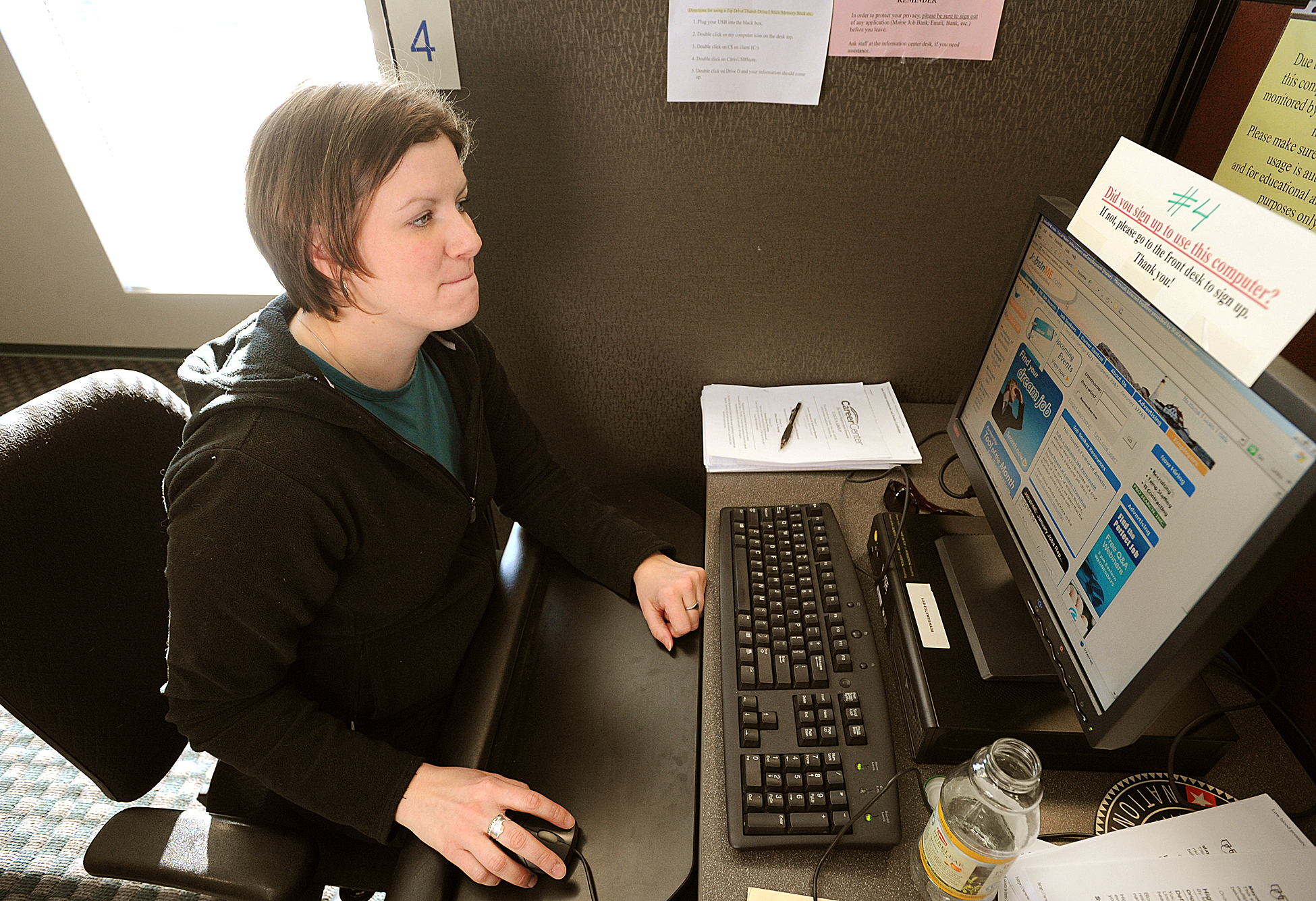
For many people looking for employment, the first stop is the Career Center in Lewiston. Mary LaFontaine leads the center, which offers everything from help filing for unemployment insurance to starting another career. The center has job-search tools, lots of workshops every month and information on how to network. It offers help writing resumes, networking, interviewing and obtaining new jobs skills.
There are two tracks at the Career Center that most people fit into, said LaFontaine: job counseling and vocational training.
“If they are in the job search track, we would encourage them to participate in a couple of specific workshops,” she said. “If they come in having worked x-amount of years in a shoe factory, or something like that, and want to consider training for a new skill, they would be put on the training track.”
The most important factor to successfully changing careers is knowing what skills and interests you have and how best to sell them to potential employers. Don’t, said LaFontaine, pigeonhole yourself by talking solely about your job position.
“That’s a really hard thing for people to do, because we always think about ourselves as our job title,” said LaFontaine. “We don’t talk about the skills we have.”
With 30,000 people across the state exhausting their unemployment benefits by June this year, identifying those skills and making the most of the many available resources in the community is imperative to getting back to work, LaFontaine said.
Upward and onward; the positive path
Finding herself unemployed for the first time, Sue Beaule of Lewiston knew exactly where to go to begin her job search. As a social worker with the Maine Department of Health and Human Services, she had regularly referred clients to the Career Center and was well aware of all the programs and resources they offer. When she found herself faced with the elimination of her position, there was no question where she would go as she sought a new job.
She said remaining positive is the
most important thing when facing job loss. “I’m convinced that if you don’t keep your level of confidence up, you’re not going to be competitive,” said Beaule. “You have to leave
your comfort zone.”
Getting up each day as if you’re going to work and maintaining a busy schedule is directly related to the positive attitude needed to be competitive in the job market. Beaule said she learned at one of the center’s workshops that the best way to look at being unemployed is as an opportunity to reinvent yourself. She said that having a husband who is employed and having children who are older certainly made a difference, but that thinking positive and doing proactive things is what helped her with networking.
“You’re wearing how you feel. It’s all over you. It’s in your eyes, how you smile, in your handshake,” said Beaule. “I think that it’s critical to keep your self-esteem up, so that you are in the ‘I can’ mode.”
She said keeping structure and having a daily plan were critical in moving forward for her. Another secret, Beaule said, is remembering that when you talk to anyone — at the grocery store, the bank, wherever — you are networking. Until you secure a job, you are in what Beaule calls “employabiltiy mode.” What you say, the way you speak, everything you do should reflect a person that people will want to hire.
“It’s a full-time job,” said Beaule.
A supportive role
After serving his time in the U.S. Marines, Mike Castaneda spent years working in the mill industry. He experienced his share of company layoffs and mill closings before finding himself unemployed in 2008. His work experience as a laborer was typical of anyone who has worked in a mill or factory setting, he says. Though he wasn’t completely surprised by the layoff, like most people, he had hoped for more time. Castaneda says he is thankful he had the forethought to begin arranging his financial matters, as it made a difference during the time he was unemployed.
During the later years of his career, he became involved in and served as an officer for the labor union, which prepared him — unknowingly — for his current career as a Rapid Response representative at the Career Center. When the Legislature heard testimony on a bill important to the union, Castaneda was there to support the bill; he left with contacts that later led to a position at the Wilton Career Center. That, in turn, led to his current job in Lewiston. Castaneda reaches out to soon-to-be displaced workers with information on what the Career Center can offer, and has organized various career resource fairs.
This first contact can immediately take away the uncertainty and isolation that comes with losing a job, he said. Castaneda stressed the importance of being informed: Knowing what steps to take to file for unemployment, what health insurance alternatives are available and getting your finances in the best possible order can make all the difference in a person’s unemployment experience.
“What are you going to do; where do you go,” said Castaneda. “It’s good that I can share my experience with people to let them see that there is life after losing you job.”
Castaneda’s advice to job seekers: Never burn bridges — the people you have worked with can be valuable networking resources down the road; have an updated resume; keep a portfolio of your work and volunteer history; know how to conduct yourself in an interview; know how to network; and know how to interact with people in a variety of settings.
“Finding work is work today,” said Castaneda.
Seek and you will find
Layoffs were a periodic occurrence during the 30 years that Roger Hamann, a journeyman cabinetmaker, worked for Modern Woodcrafts in Lewiston. As the economy worsened more recently, the layoffs were more frequent, and Hamann says he knew the last layoff might be the end. Still, at 59, he hoped the business would hang on for few more years, so he didn’t immediately seek other employment last summer. Then he got the official word that the Lewiston plant would be closing its doors for good this past October.
“I had already envisioned my retirement. I was going to retire at 62,” said Hamann. “And then, all of the sudden, it was like whoa, wait a minute.”
Shortly before being notified that the layoff was permanent, Hamann, at the urging of his former manager, decided to check into the Career Center. He considered jobs similar to what he had been doing, and even thought briefly about woodworking from home, but the stress level and lack of tools convinced him it was time to look into something else.
“Just being here (Career Center) encouraged me and gave me uplifting support,” said Hamann. “To see I wasn’t the only one.”
Woodworking was a trade that Hamann pursued after he served his time in the U.S. Air Force, so he wasn’t entirely sure what else he could or would want to do. He felt fortunate to have worked so long doing something he really enjoyed.
A Vietnam veteran, he knew he was interested in working with other veterans, but says he wasn’t sure in what manner. As a personal interest, he had dabbled in locating people, predominantly veterans, through online research, and found he really enjoyed it. After hearing a woman speak about her experiences during a workshop, Hamann says he was inspired to really look into starting his own online business finding family and old friends, doing adoptee searches and reuniting veterans.
“I left the seminar that day, went home to my wife and said I think that’s what I’m going to pursue,” said Hamann. “Rather than finding a job that suited me, I decided to pursue my dream job.”
Going on your own
For some, the search for another job leads to starting their own business. Michelle Tribou, owner of Heidi’s Brooklyn Deli in Auburn, spoke to a group at the Lewiston Career Center recently about her experience. Faced with being laid off from the bakery she had been working at, she wasn’t entirely certain what she wanted in her next job. Tribou soon decided to leave her comfort zone and began researching owning her own business.
“I’m grateful to the person who told me four-and-a-half years ago to come to the Career Center,” said Tribou.
The Career Center offered resources and classes, but Tribou said she also found the people — the staff and the other unemployed individuals there — had sensitivity and sympathy for one another. That’s important, she said, because being unemployed means that often people need to be adaptive and exercise forward thinking, which are difficult tasks if the outside influences aren’t positive ones.
In addition to the center’s resources, Tribou spent a good deal of time at the SCORE office, where she made lasting contacts that have helped her start and maintain her business along the way. SCORE offices are located throughout Maine, including Lewiston-Auburn, and offer free advice to new and aspiring business owners from retired business owners and executives.
“Be patient,” advised Tribou, when it comes to starting your own business. “Don’t lose sight, and the research process shouldn’t be rushed.”
Taking the time to look at how opportunities might affect you is wise. If you’re thinking about starting your own business, be realistic about the demands on your time and the level of commitment needed. You need to be adaptive and forward thinking, as well as be aware of outside influences, Tribou said.
Some initial steps to finding a job:
- Assess your likes and dislikes — that’s important when you consider that a career will last for years. Don’t underestimate the value of research, networking and the job market in your area.
- Planning is essential, especially when it comes to your financial situation. Having a firm grip on how much money you will have coming in as well as what your expenses are is vital to a successful start.
- Not a decision to be made lightly, an honest and thorough self-assessment is really the best way to make the most of a career change (or any life-altering change of direction for that matter).
- You wouldn’t become a teacher with little to no education, so you need to look at your skills and knowledge of a career before diving in. If extra education or training is in order, it’s better to know that beforehand.
- Are you seeking a career with little responsibility or more responsibility? Are you prepared to work longer hours or in varying conditions? Know what you’re willing to do.
- Find out and keep in mind what employers are looking for in the positions they are hiring for in this new field.
Web sites worth a visit:
- http://www.mainecareercenter.com/careercenters/lewiston.shtml (the Career Center in Lewiston)
- http://www.mainecareercenter.com/ (Maine Career Center: search for a location nearest you)
- http://www.taonline.com/ticpages/ticintrview.asp (Interview tactics and techniques)
- http://www.scoremaine.org/ (SCORE)





Comments are no longer available on this story