
AUBURN — Whether you knew her 10 minutes or 20 years, something special drew people to
.
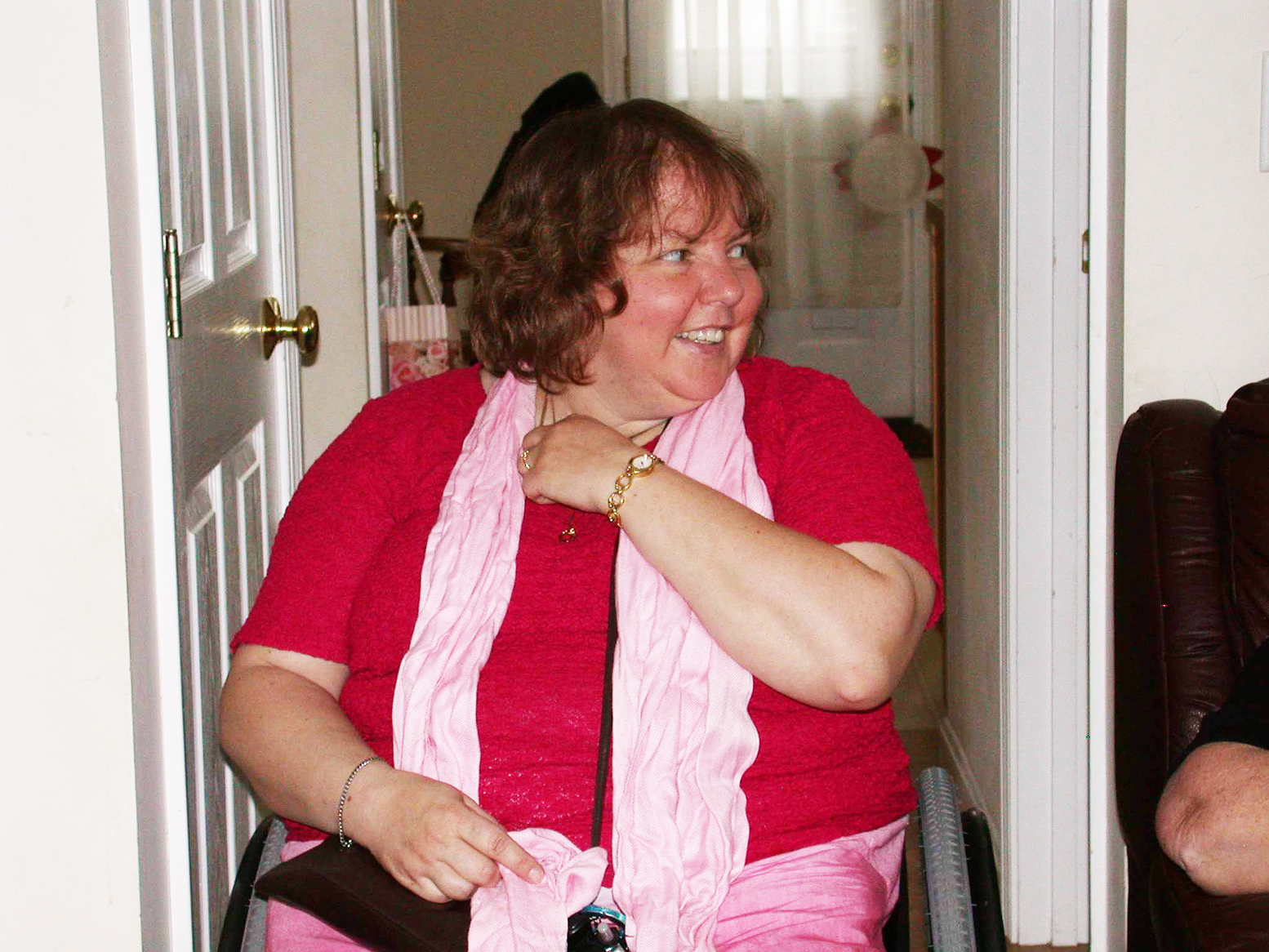
The longtime, well-loved advocate for the disabled died Saturday following her lifelong battle with spina bifida. Family, friends and fellow activists and advocates across the state shared memories as the shock of losing a woman who defied all odds settled over them.
“She didn’t feel limited. That’s just the kind of person Alice was,” said her life partner, Dean Conway. “She was just a good, wholesome person — a kind soul who just wanted to take care of other people.”
Those who knew the Auburn woman best described her as more than a lifelong advocate for people with special needs or a disabled rights activist. The 51-year-old woman’s larger-than-life personality, generous nature and persistent pursuit of justice led the charge on countless issues over the years in local city council chambers, statehouse hearings and federal courtrooms.
She sued United Airlines in 1996 after an incident on a Portland-bound plane from Mexico when she was denied access to her wheelchair and a bathroom. Her case helped lead to changes in the Air Carrier Access Act.
She did all this and more after doctors told her parents back in 1960 that she’d be lucky to live past the age of 13.
“Alice was an extraordinary person,” said Elaine Makas, a social and behavioral sciences professor at the University of Southern Maine’s Lewiston-Auburn College and a longtime friend of Conway. “Every time someone told Alice she couldn’t do something, she went ahead and did it.”
Makas laughed at her memory of how doctors told Conway she should never attempt to have children because she might not survive the pregnancy, which is something of a long shot for people born with spina bifida. Not only did Conway surprise her doctors by getting pregnant, she proved the medical world wrong by carrying her son, Richard, to full term and being around to raise and nurture him into the man he is today.
“It makes you wonder how some of us who don’t have disabilities can make excuses, while somebody like Alice, who had so many challenges, could accomplish so much without making excuses,” Makas said.
She said she would best remember Conway for her involvement in the Corey Brown debate back in 1993 and 1994. The pair fought the 12-year-old girl’s mother, doctor and Lewiston public schools after the district agreed to uphold a “Do Not Resuscitate” order placed in the disabled Farwell Elementary School student’s file.
Makas said Conway was a well-respected member of the Androscoggin Head Start board of directors. She served alongside Makas for several years, and even served as president.
“She was a very unique person with all she had to live with,” said Estelle Rubinstein, longtime director of Androscoggin Head Start who retired at the end of 2011. “She was very upbeat with all she had to endure. She was the most courageous person I’ve ever met in that she didn’t let her disabilities get in the way of her belief system.”
Serving on the board for Head Start was a natural fit for Conway, given her determination for full access to full lives for anyone with a disability, Rubinstein said. This conviction held especially true when it came to children. She said Conway was a strong advocate for mainstreaming for special needs and disabled children and played a pivotal role in leading the way for local Head Start programs.
In fact, Conway’s own life as a child mirrored much of her adult work as a trail blazer. Her parents, Fred and Marlene Dyer, fought for their daughter to be included as much as possible. As a 4-year-old, Conway attended the federally funded pilot program in Lewiston that eventually evolved into Head Start.
“Alice was in a class among the pioneers in the disability field,” friend Mike Reynolds wrote in an email. “Quite simply, Alice would never have thought of herself as an icon or leader. But she, just by her accomplishments, truly deserves to be considered one.”
Comments are no longer available on this story