
Negotiations continue regarding the Trans-Pacific Partnership, a free trade agreement that currently includes Australia, Brunei, Chile, Malaysia, New Zealand, Peru, Singapore, Vietnam and the United States.
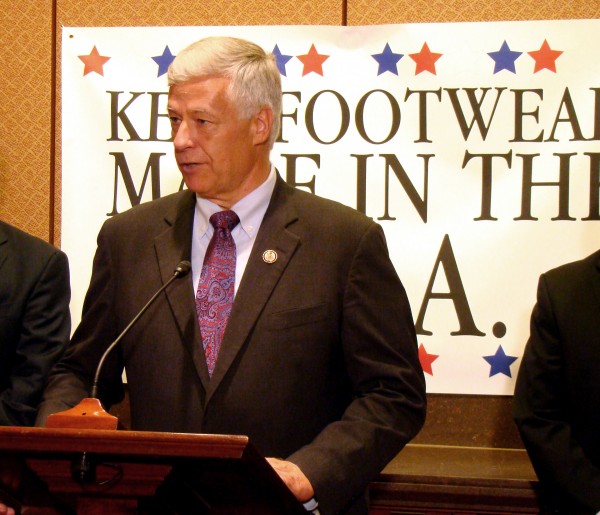
Workers from Boston-based New Balance’s plant in Norridgewock, Maine, joined with Republican Sen. Susan Collins, Democratic U.S. Rep. Michael Michaud and others to argue against dropping tariffs. According to the company, New Balance is the only athletic shoe firm that makes footwear in the United States. It has five factories in New England, including two in Maine in Norridgewock and Skowhegan, where they employ roughly 700 people.
According to a release from Michaud’s office, through free trade agreements, tariffs normally are phased out. If that happens, the release asserted, “Vietnam’s currency manipulation, state-owned enterprises, and low labor and environmental standards will give its footwear factories a significant and unfair advantage over American producers like New Balance.”
Michaud said Wednesday that even with tariffs in place, Vietnam’s footwear sector has managed to grow to the second largest exporter of shoes to the U.S., second behind only China, according to a transcript of his remarks.
“These tariffs not only level the playing field, but they keep the doors to New Balance’s factories open. They make it possible for all 4,000 American workers in the U.S. footwear sector to keep their jobs,” he said. “In addition, and a point not to be overlooked during the conversations about reducing the deficit, these tariffs raised $19 billion in revenues over 10 years.
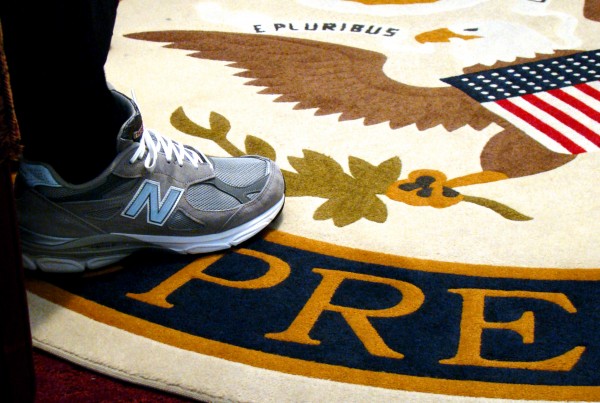
“I delivered this message directly to the President when I handed him a pair of personalized, hand-crafted New Balances made at their Norridgewock facility.”
Collins noted that Maine has a long shoemaking history, once one of the largest industries in Maine with more than 30,000 workers. Today, she said, there’s about 900 total shoemaking jobs in Maine.
“Domestic rubber footwear manufacturers depend on the long-standing duties that are levied on certain imported footwear products to continue to manufacture and produce high-quality, American made footwear,” Collins said, according to a transcript of her remarks. “I am extremely concerned that a Trans-Pacific free trade agreement that does not recognize the importance of these duties to the domestic industry could put U.S. manufacturers at an overwhelming disadvantage compared to their competitors who have opted not to manufacture in the U.S., and as a result, could force the remaining domestic production overseas.”
Collins noted the recent controversy surrounding the sourcing of the U.S. Olympic uniforms, which were made in China.
“To all those people who care about the ‘Made in the U.S.A.’ label, I would say this is your opportunity to support American workers and ensure the survival of a domestic footwear manufacturing industry,” she said.
According to a recent release from the Office of the U.S. Trade Representative, the Obama administration views the TPP as a way “to support jobs for American workers by boosting American exports to the dynamic Asia-Pacific region, promote manufacturing, innovation, and entrepreneurship, and at the same time, reflect in the agreement important values on key issues such as worker rights and the environment.”
Comments are no longer available on this story