




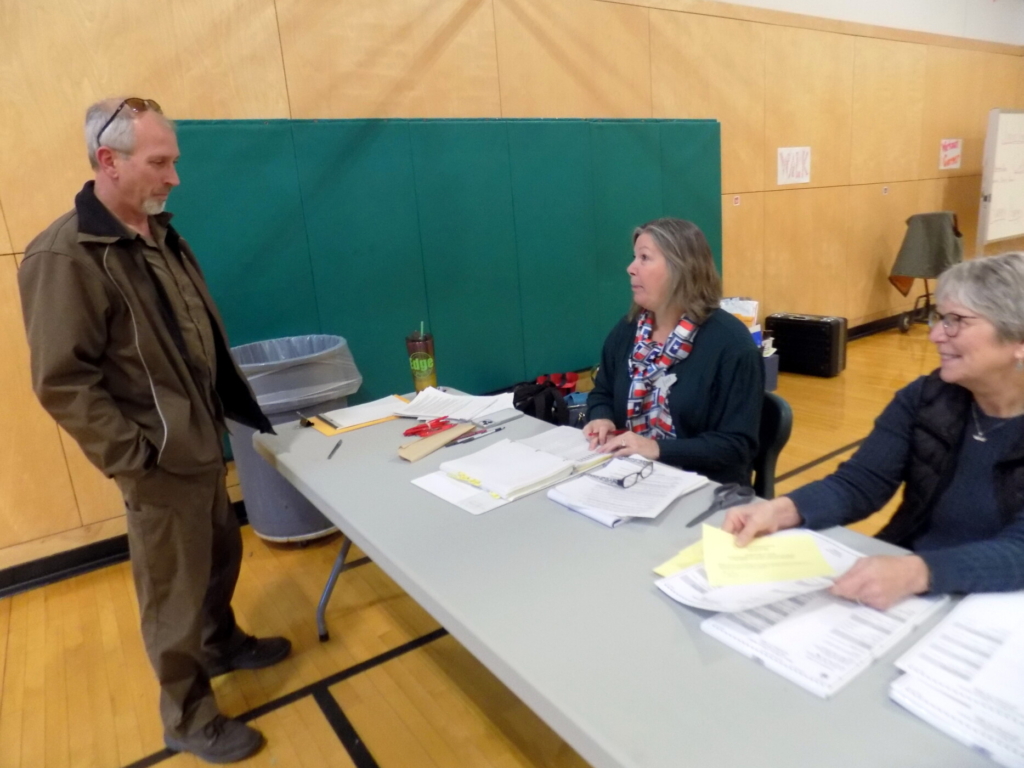
Michael Pelletier checks in with Town Clerk Renda Guild and Ballot Clerk Pam Manter at right midday Tuesday, Nov. 8, at Spruce Mountain Primary School in Livermore. More than 375 voters had been to the polls that morning while 356 cast absentee ballots. Pam Harnden/Livermore Falls Advertiser
LIVERMORE — Voters on Tuesday, Nov. 8, narrowly approved amendments to the Shoreland Zoning Ordinance during a special Town Meeting referendum vote, Administrative Assistant Aaron Miller wrote in an email Wednesday.
“It has been crazy,” Town Clerk Renda Guild said around noon Tuesday. At that time 375 people had voted, she said. “A lot of the 356 absentee ballots received are not processed yet,” she added.
Due to a technical glitch, results the Town of Livermore sent to the Livermore Falls Advertiser Tuesday night were not received. Results posted on the town’s Facebook page did not provide information about the amendment vote.
“The Shoreland Zone vote passed by a narrow margin, but I don’t have my notes with me at the moment,” Miller wrote in an email Wednesday.
The Livermore Town Office is closed Wednesdays. Guild confirmed the article did pass later Wednesday but she did not have the numbers either. On Thursday, she said Miller had not left them for her and he was not working. The office was closed Friday for Veterans Day.
“The Shoreland Zone initiative narrowly passed, 533 yes to 518 no,” Miller wrote in an email Monday morning.
The amendments allow more oversight for the Planning Board, Administrative Assistant Aaron Miller said at the Oct. 25 selectpersons meeting. “It allows more sets of eyes on any proposals in the Shoreland Zoning district and it also brings us up to date,” he noted. “My understanding is the existing ordinance needed to be updated.”
The town’s ordinance follows state guidelines, Selectperson Scott Richmond said at the meeting.
Comments are not available on this story.
Send questions/comments to the editors.
