

A recent spike in water usage has Bethel Water District officials searching for answers — and likely, a leak.
At a Sept. 16 trustees meeting, engineer Ricky Pershken, who has consulted for the town for about 20 years, flagged the issue that trustees had guessed at already.
Bethel typically pumps 150,000 gallons of water a day to 750 customers. But on some recent days, the monitoring software has tracked as many as 350,000 gallons.
Trustees Reggie Brown and Randy Autrey confirmed the numbers.
“We’ve got days right now that go over 350,000 (gallons),” Brown said.
“In the last fifteen days of the report … 340,000; 243,276; 259,210; 276,000 … It’s way higher,” Autrey added.
“You’ve got a leak somewhere,” Pershken said flatly.
District Superintendent Lucien Roberge said he believes the leak is somewhere in West Bethel.
“They can’t be using 50 gallons a minute every minute of the day,” Roberge said. “When everyone’s in bed, it’s 50 gallons a minute.”
“You’ve got a leak over there, no doubt about it,” Pershken added, urging quick action before winter sets in.
Roberge said this week that they are scheduled for a service visit from an engineer with Maine Rural Water, who would work to identify the location of the West Bethel leak. The engineer will use an ultrasensitive microphone to listen for leaks through the ground. The inspection will likely take place early in the morning, when minimal traffic reduces sound interference.
Roberge noted that because the main hadn’t burst and West Bethel residents hadn’t lost water service, the situation didn’t qualify as an emergency. A slow leak and low pressure, he said, do not constitute an emergency.
In the meantime, he increased the water pressure to West Bethel. Once the leak is fixed and the system returns to normal, Roberge jokingly predicted some residents will be upset because they have reported having “the best showers of their life.”
On the docket for the trustees’ next meeting is consideration of a new software monitoring service, ALFX Network Leak Detection, that detects leaks in the field at several locations.
“That way when you go digging, it is more on target and less expensive than exploratory digging,” said Roberge, who added that less pumping equates to lower costs.

SYSTEM UPGRADES
The water district has been working on a 20-year sustainable plan, Pershken said, looking for long-term solutions to existing challenges and reviewing critical infrastructure.
The district is using an upgraded SCADA system, which allows Roberge and Assistant Superintendent Eric Belcher to monitor operations using their cellphones. Both are trained, certified operators who alternate weekends.
The plant is designed to pump 300 gallons per minute, but Pershken said he wants to see that boosted.
“At 350 gallons a minute, you can feed the town and fill that tank back up in a day,” he said.
Financially, however, Pershken expressed concern.
“The town is $885,000 in debt with $100,000 in annual debt payments,” he said. “The system is only making about $480,000 in revenue. That amount may have increased, but (nevertheless) you couldn’t put anything away in depreciation.”
He added, “I look at a lot of small water districts. I see the same thing over and over and over. I try not to let it get depressing.”
Drilling a new well is next on the list, and it would be Bethel’s sixth. With the system nearing maximum capacity, a new source is critical to ensure future stability.
“Somewhat hard to pick places to drill here in Bethel,” Pershken said. “You’ve got a lot of sand and gravel. Same reason we’ve got the leaks (in West Bethel).”
Pershken said there are several past test sites but none of them materialized.
“This was Glacier Lake Bethel at one time, after the ice melted. Lot of sand and silt,” he said. “Nice waterway in Newry, but so far to go. Around the airport — too thin. Decent one out here, but because of the horses and the stored manure — unfit to even smell.”
His ideal site?
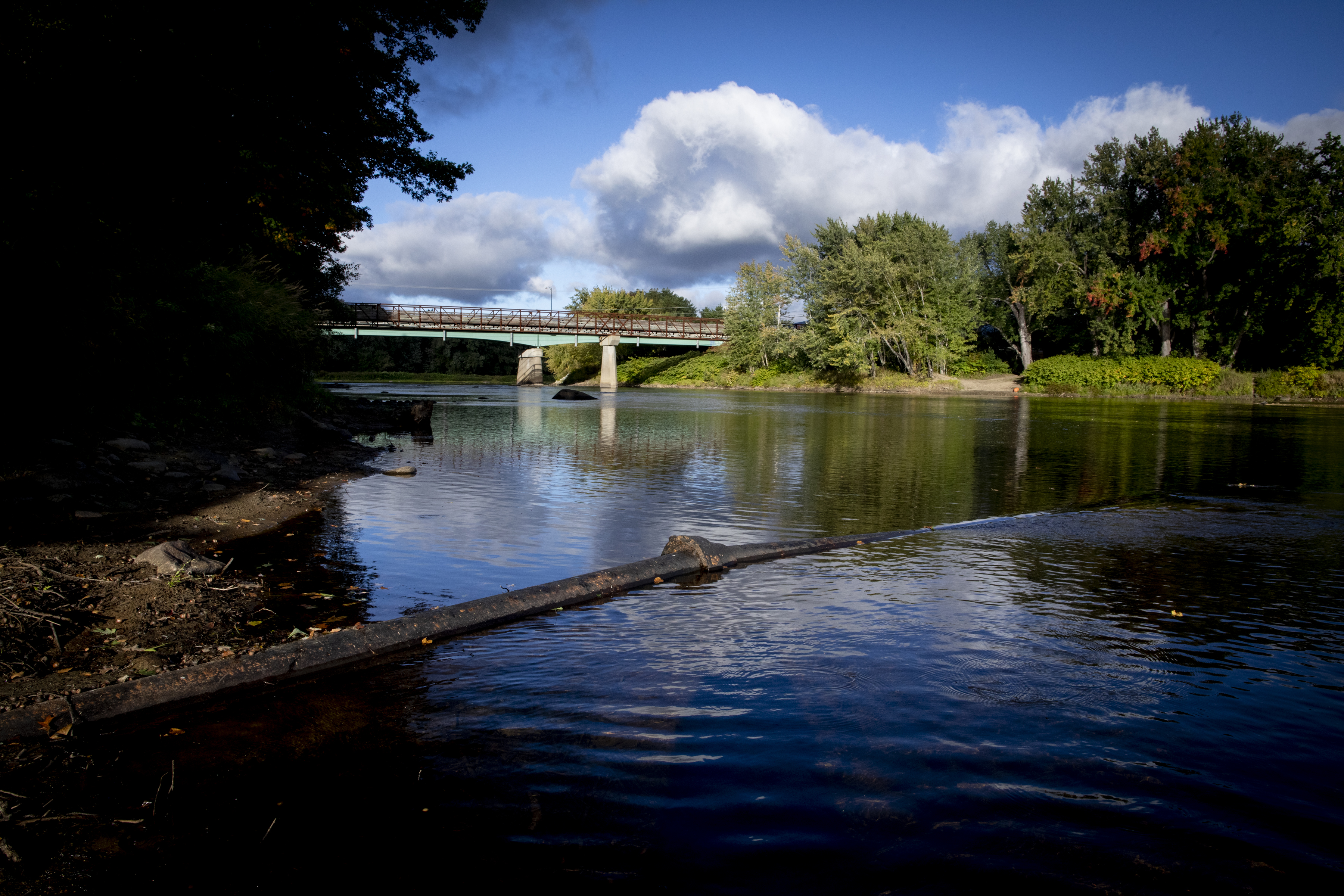
“Across the Androscoggin, not in the floodplain, just above it,” Pershken said. The options will have to be narrowed based on landowner cooperation and geological suitability.
The water district’s wells are already near maximum output, and the 500,000-gallon semi-buried Paradise Road reservoir, built in 1920, is being continuously monitored for any potential leaks.
A GPS mapping system created recently by a college student — who logged every catch basin, manhole, shut-off, sewer hole and fire hydrant in town — will aid the search for more water.
The Bethel Water District board of trustees meets at 800 North Road on the third Thursday of each month at 7 p.m. In December, Chair Scott Fraser will step down, creating a vacancy.
Note: This is the second in a series of stories looking at Bethel’s water and wastewater systems.

We invite you to add your comments. We encourage a thoughtful exchange of ideas and information on this website. By joining the conversation, you are agreeing to our commenting policy and terms of use. More information is found on our FAQs. You can modify your screen name here.
Comments are managed by our staff during regular business hours Monday through Friday as well as limited hours on Saturday and Sunday. Comments held for moderation outside of those hours may take longer to approve.
Join the Conversation
Please sign into your Sun Journal account to participate in conversations below. If you do not have an account, you can register or subscribe. Questions? Please see our FAQs.