

Nonpartisan budget forecasters are predicting $250 million more in state revenue than originally expected, laying the foundation for another budget battle when lawmakers return to the State House in January.
The Mills administration said in a news release Monday afternoon that the additional revenue stems from higher estimates for sales and income taxes, as well as increases in capital gains based on the stock market’s performance.
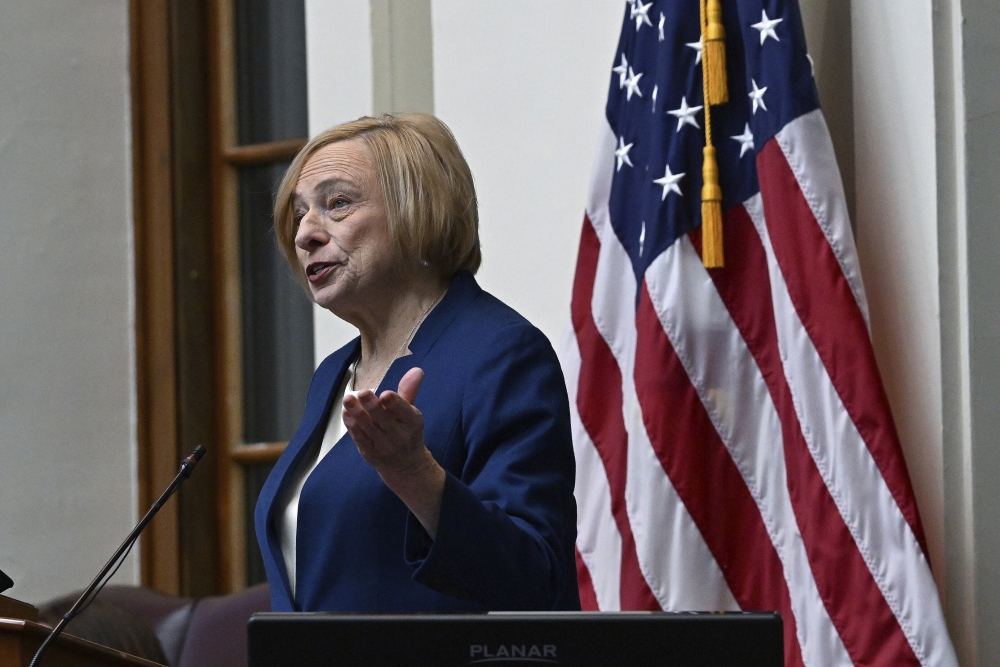
“With these projected revenues, the state of Maine continues to remain on solid fiscal footing,” Gov. Janet Mills said in a written statement. “In January, my administration will work with the Legislature to continue to budget prudently, focusing on the health, safety, welfare and education of Maine people.”
The Revenue Forecasting Committee, which met earlier on Monday, increased revenue projections by $165 million this fiscal year and $83.3 million for the next, totaling $248 million.
The positive revenue forecast comes after bleak budget warnings last year prompted Democrats to enact a series of tax increases to plug a projected $118 million hole in the state’s Medicaid program, known as MaineCare.
Democrats, who control both chambers and the Blaine House, approved tax and fee increases on cigarettes, cannabis and internet streaming revenue, which was originally projected to generate an additional $177 million over the course of the two-year budget.
Even as the administration predicted flattening revenues, the state ended the previous fiscal year with a $152 million surplus that was directed to certain accounts as required by state law since it occurred at the close of the previous two-year budget.
One of those accounts was the state’s budget stabilization, or rainy day fund, which now sits at a maximum of about $1.03 billion.
Revenue forecasts have been conservative under Mills, routinely prompting upward revisions and surpluses. Those cautious estimates occurred both during and after the pandemic, when infusions of federal funding propped up state spending. And Trump’s second-term agenda, including tariffs and his verbal dispute with Canada, have fueled fears of inflation and an economic slowdown, especially in tourism.
State officials did not respond to questions Tuesday about the status of the MaineCare budget.
House Minority Leader Billy Bob Faulkingham, R-Winter Harbor, criticized the administration for describing the additional revenue as “modest,” saying instead that it’s the result of “higher taxes and bloated government.”
“This ‘modest boost’ isn’t a windfall for state government, it’s just more burden on the backs of hard-working Mainers,” Faulkingham said. “We need leaders in state government whose first instinct is to let people keep the money they earn. Higher taxes and bloated government has been a disaster for Maine’s working people.”
Since Monday’s projected revenue increase is happening in the middle of a fiscal year, lawmakers will have to decide how to use it, since the Maine Constitution requires a balanced budget.
Republicans, who are in the minority in both chambers, have long called for tax cuts, while Democrats have routinely passed bills calling for additional spending, only to have them linger — and in many cases die — for a lack of funding on the appropriations table.
Nearly 300 bills that would require more than $2.5 billion in spending over the next two years were still awaiting funding when the session ended in June. A large part of that cost was tied to a $1.6 billion bill that would increase cost-of-living adjustments for state employee pensions. The legislation is unlikely to secure final passage.
Also on Monday, the largest state employee union filed a labor complaint against the Mills administration, alleging bad-faith negotiation over its latest contract. The union is seeking more competitive wages, among other things. The Mills administration says it has increased wages across state government by 24% since she took office, but the union contends that state workers still face a 14% pay gap.
The economic committee is scheduled to meet again in January, which could lead to further revisions, and complicate the budget discussion even more.
The state’s biennial budget has grown from about $7.2 billion when Mills took office in 2019 to $11.6 billion in the current biennium. Her budgets have fully funded revenue-sharing with municipalities and provided 55% of public education funding to local districts. Funding has also gone toward free school meals, investments in affordable housing and free community college, which is funded for one additional high school class.

We invite you to add your comments. We encourage a thoughtful exchange of ideas and information on this website. By joining the conversation, you are agreeing to our commenting policy and terms of use. More information is found on our FAQs. You can modify your screen name here.
Comments are managed by our staff during regular business hours Monday through Friday as well as limited hours on Saturday and Sunday. Comments held for moderation outside of those hours may take longer to approve.
Join the Conversation
Please sign into your Sun Journal account to participate in conversations below. If you do not have an account, you can register or subscribe. Questions? Please see our FAQs.