
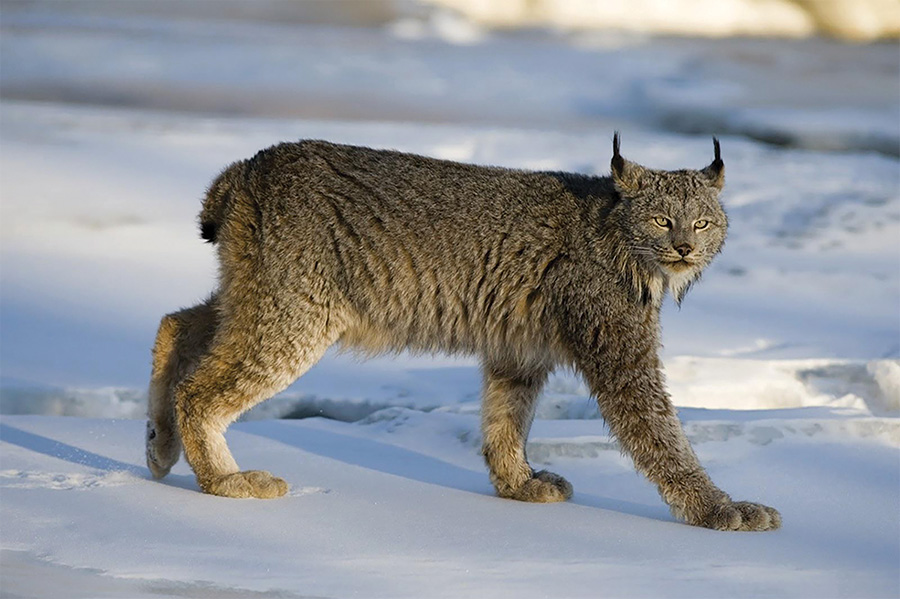
Tracking wildlife in winter is like reading a compelling new novel. As animals travel across blank pages of fresh white snow, their tracks become words, authoring new chapters every day in the memoir of their elusive lives.
Their story will appear to be written in an unfamiliar language at first, but as you become fluent in wildlife signs, you’ll unlock many secrets of the natural world and never want to put the book down.
This winter, we encourage you to get out in the snow to make some tracks of your own, practice reading wildlife signs and relish the story of Maine’s winter wildlife. We hope these tips will help you get started.
1. Set yourself up for success
Wait for good conditions
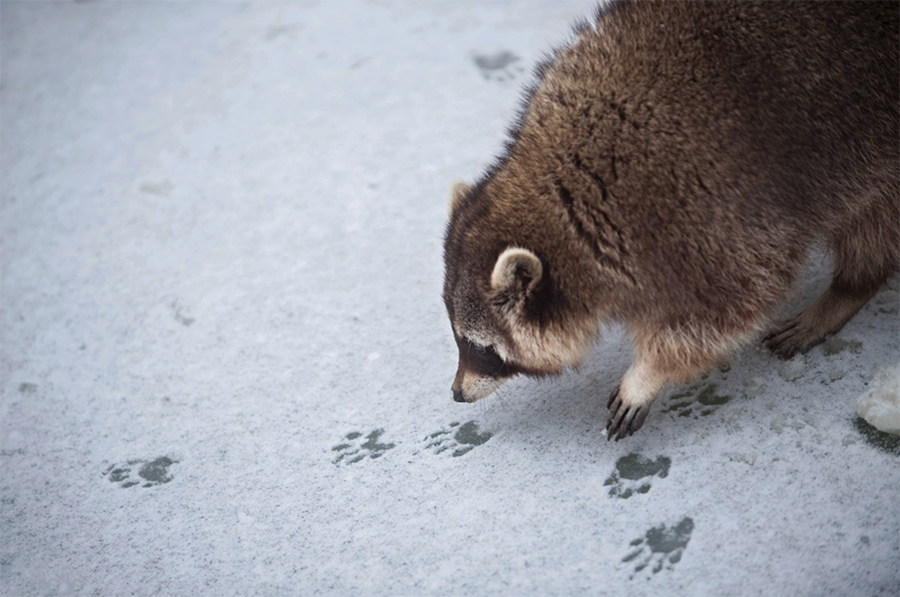
When you are new to tracking, set yourself up for success by visiting places where there are likely to be a lot of tracks during suitable snow conditions. A relatively thin fresh layer of wet snow is perfect for tracking. If it’s too deep and/or dry and fluffy, tracks will easily become obstructed or unclear. Wildlife Management Areas are great places to try out your tracking skills, but if conditions are right, you could even get started in your own backyard.
Find a mentor
Historically, tracking skills were critical for hunting and survival, and passed down from generation to generation. Today, tracking is used for hunting, trapping, biological research and as a recreational hobby. While we encourage sharing your sightings, be aware that a flurry of misidentifications often comes with posting track photos on social media. Working with an experienced mentor is still one of the best ways to become a proficient naturalist.
Bring helpful tools

A pocket track guide, measuring tape, tracking stick, binoculars and camera or smart phone are all helpful tools to have with you in the field as you learn. You could even set up a trail camera to help confirm identifications. Download a complete pocket guide at mefishwildlife.com/tracks.
Be patient and keep practicing
We are lucky to have amazing wildlife diversity in Maine, but that means a lot of tracks to learn! Don’t expect to be able to identify every single one. Avoid being overwhelmed by starting with the basics. Learn to distinguish groups of animals like canines, felines, weasels and rodents before trying to identify individual species.
2. Narrow down your options.
Location, location, location
Wildlife signs exist because an animal has interacted with their environment in some way. A track should be viewed not as an isolated clue, but a clue within the context of the area it was found. Knowing what your realistic (no, not including Bigfoot) options are for the location and time of year will narrow down your list before even looking at characteristics of a track.
Get to know Maine wildlife
Familiarize yourself with species that call your area of the state home. What types of habitat they utilize and what resources they need. Do they live there year-round? Are they active in the winter months? Take a look around. What types of cover and food are available? Are you near water? Are you in a rural or urban area?
For example, if you are tracking in York County, you can eliminate lynx and marten because their ranges do not extend that far South. If you are not near water, it’s probably safe to discount mink, otter, muskrat and beaver. And in winter, you can safely take woodchuck off your list of probable species because they are true hibernators. Fox and domestic dog tracks are more likely in an urban environment than coyote tracks. You’re already one step closer to a correct identification before even finding a track.
3. Start with the bigger picture
Pattern before print
A common mistake is to jump to conclusions by starting with the details. First, take a step back and look at how the animal is moving across the landscape. Their gait is reflected in the track pattern and can tell you what group of animals the tracks belong to. Canines, felines and hooved animals tend to walk or trot; members of the weasel family are bounders: rabbits, hares and rodents hop or gallop; and others like beaver, porcupine and skunk have more of a waddle.
Stride and straddle

Deeper tracks are made by heavier animals, but track depth can vary greatly depending on the substrate. Two helpful measurements for estimating the size of the animal are the stride and straddle. Stride is the length between steps and straddle is the width of the track pattern.
Size and shape
Now that you have considered context, gait, stride and straddle, it’s finally time to look at the size, shape and other characteristics of individual prints to settle on an identification.
Most track cards and field guides will provide an average length and/or width of prints made by front feet and hind feet. Sizes will vary to some degree based on sex and age of the animal. More importantly, size and shape can appear wildly different in different substrates. Keep in mind that tracks will appear larger than the true size in certain conditions like melting snow, and don’t be fooled by overlapping tracks.
Details
Most conditions will only allow you to determine, pattern, stride, straddle and general shape and size. In excellent conditions, there are several other characteristics to take note of:
How many toes are on the front and back feet?
Can you see imprints from the nails?
Can you see imprints from fur or webbing?
What is the shape of the negative space between pads?
Did the tail leave any marks?
4. Get the whole story
Wildlife tracks can tell you a lot more than just who was there. They can also answer questions about when and why an animal was present. How long ago were they there? Was there more than one? Were they foraging? Just passing through? Escaping a predator? The behavior of an animal can change how a track appears. For example, an animal’s speed can change the gait and stride. This may make a track more difficult to identify at first, but once you recognize what causes variation, you will ultimately gain a better understanding of how that animal was interacting with their environment.

A simple starting point is learning to determine the direction the animal was moving. To the right are the tracks of a snowshoe hare. We can tell that the hare who made this track was moving away from us for two reasons. The first is that the print is wider at the toes than the heel. The second is that when hares hop, their larger back feet land in front of their smaller front feet. In the resting position, they’ll leave a track with the back feet behind the front feet.
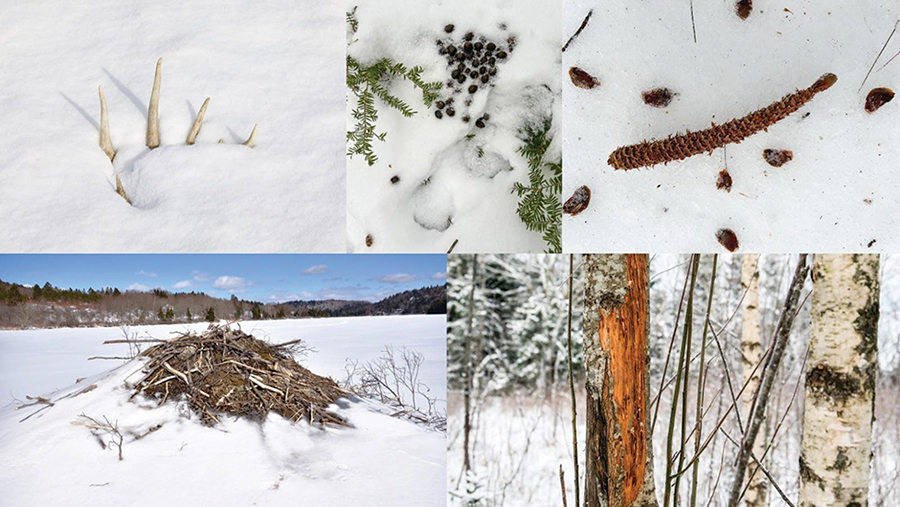
As you follow tracks, keep your eye out for other types of signs that can tell you more of the story. Scat, urine, pellets, beds, dens, tunnels, rubs, shed antlers, bones, fur, feathers, and evidence of foraging are all great clues.
Maine Department of Inland Fisheries and Wildlife (MDIFW) preserves, protects and enhances the inland fisheries and wildlife resources of the state. Established in 1880 to protect big game populations, MDIFW has since evolved in scope to include protection and management of fish, non-game wildlife and habitats, as well as restoration of endangered species like the bald eagle.
In addition to its conservation duties, MDIFW is also responsible for enabling and promoting the safe enjoyment of Maine’s outdoors — from whitewater rafting to boating, snowmobiling, hunting, fishing and wildlife observation.