


BRUNSWICK — During a brisk November recess, four giggling fourth graders sat atop a slide embedded in a shrub-covered hillside. They inched down as one, arms and legs intertwined, to elude monsters lurking among the nearby boulders.
“There’s the monster!” said Monroe Forgues, pointing at a stand of tall native grasses. The girls shrieked. “Oh no! I’m slipping,” line leader Abrielle Mackenzie-Hinkley said. “Stick together,” Royalty Steed urged her friends. “It can’t get us if we stick together!”
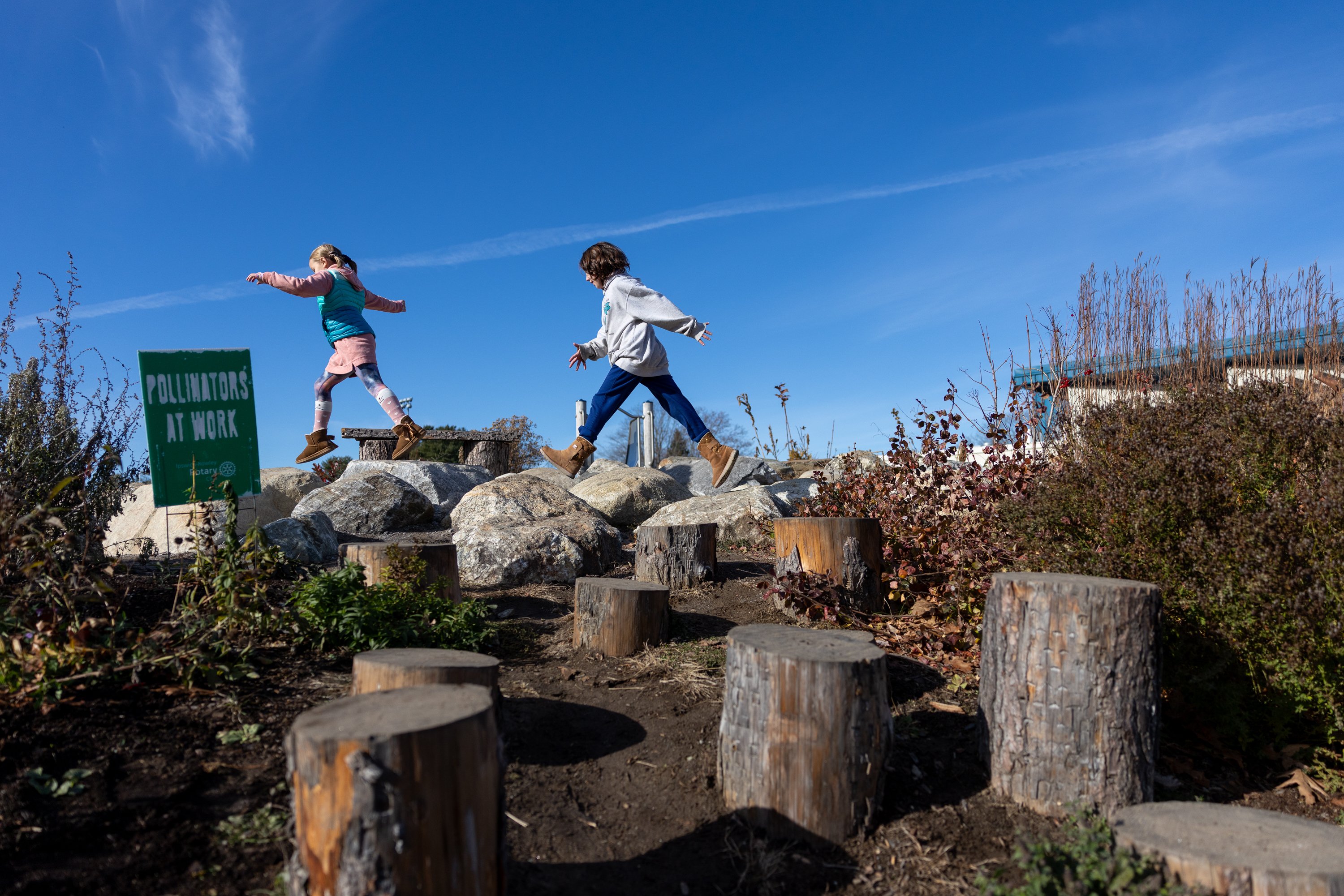
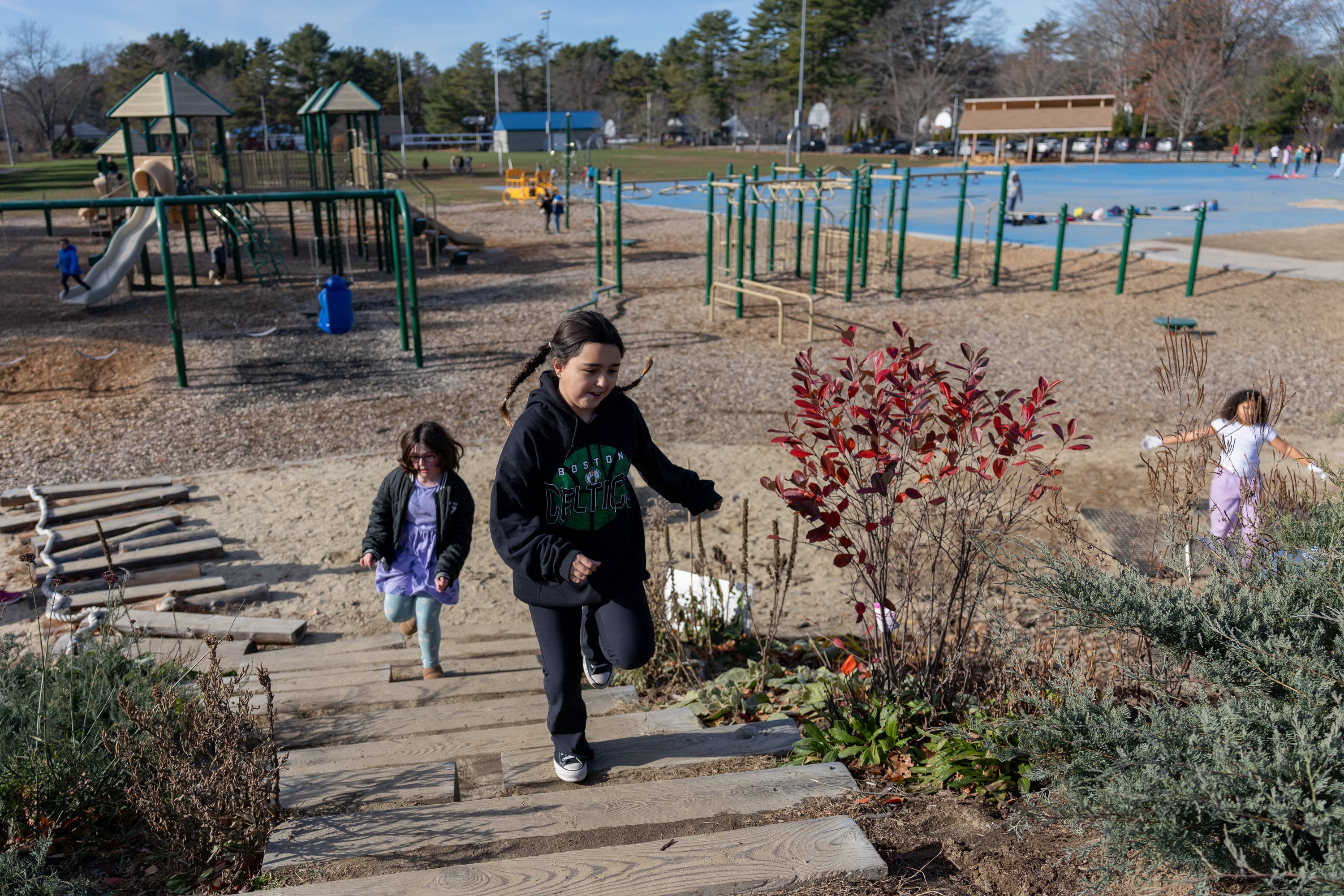
The foursome bested their imaginary foe, repeatedly, racing each other up and down the hillside at the center of Harriet Beecher Stowe Elementary School’s new nature-based playground. Built in 2024, the yard features native plants, rock and stump-lined paths and a nearby tunnel. Next to it is a greenhouse and garden.
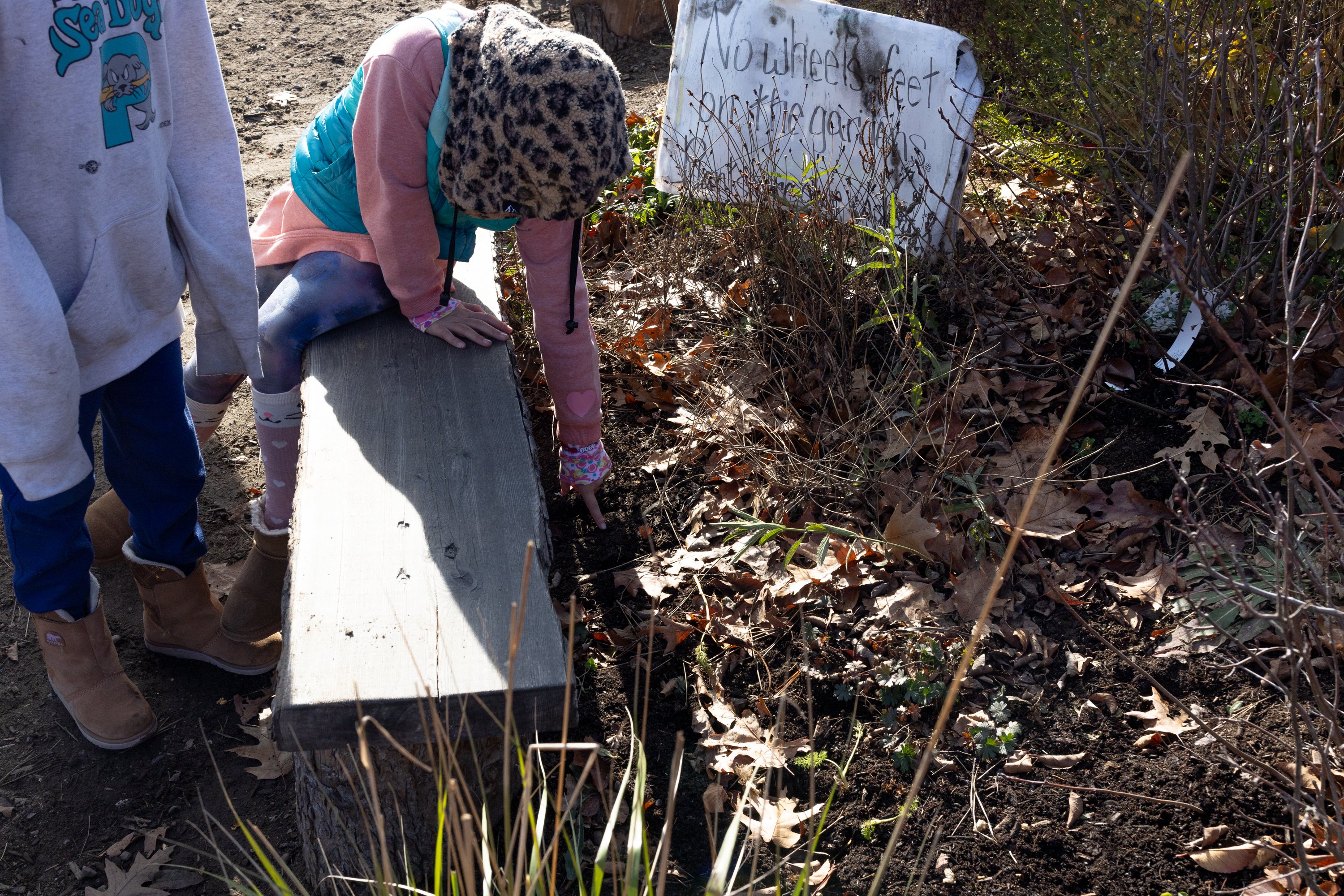
“The kids just love it, especially the open-ended nature of it,” Principal Heather Blanchard said. “Do we have more skinned knees? Give out more Band-Aids? Probably. But it’s also the perfect low-stakes setting for our students to get dirty, take chances and test their limits.”
The school is one of at least three dozen in Maine, from South Portland to Skowhegan, that have embraced outdoor play and learning areas that use natural elements like boulders, logs, plants and water to encourage exploration, problem solving and an affinity for the environment.
In these spaces, students study bees in the pollinator gardens. They hop from stump to stump, compost cafeteria food, build forts, splash in drainage ditches and streams, burrow in tunnels, and grow beans, tomatoes and flowers.
Advocates like former Freeport middle school teacher Laura Newman claim green schoolyards have educational and environmental benefits that traditional playgrounds, which are dominated by athletic fields and prefabricated equipment, do not have. But not all districts are on board, with some questioning the costs and relative safety.
Sashie Misner, the landscape architect behind many of Maine’s nature-based school spaces, said it’s important for Maine children to know how to navigate physical challenges because they live in a state known for its dense forests and rocky beaches. Better they learn their limits in the schoolyard before tackling the Precipice Trail.
‘THE LAST THING WE THINK ABOUT’
The nature-based play movement gained momentum in the wake of COVID-19 when schools scrambled to take learning outdoors. Some made use of nearby trails. Others planned field trips. Some, like the elementary school in Brunswick, began hunting for grants to bring nature to them.
“Most students will tell you that recess is the best part of their school day,” Newman said. “Yet the spaces we give them to play are often the last thing we think about when building a school and the first thing we cut when we run out of money.”
Maine doesn’t have an official outdoor education policy. Daily physical activity and at least two periods of unstructured recess are required for all elementary school students, but not outdoor playgrounds, according to Chloe Teboe, a Maine Department of Education spokeswoman.
A local school district that wants an outdoor playground can fund it themselves using local tax dollars or they can include it in its application for a state school building grant. But such grants are hard to get: Maine only funds a handful every five years.
The Governor’s Commission on School Construction is considering standards for the outdoor environment surrounding a school — including play spaces — but these have not yet been voted on, Teboe said. The commission has yet to release the proposed standards to the public.
The commission’s 21-page interim report released in April mentioned the outdoors three times, calling it a key area to be considered in the overhaul of Maine’s school construction system but offering no details.
Harriet Beecher Stowe School used $350,000 in education innovation grants to bankroll the initiative, including staff training. In its grant application, school leaders said they hoped the project would increase student test scores and attendance and lower behavioral infractions.
A NEW LOOK AT NATURE-BASED PLAY
The state education department is taking a new look at nature-based play and learning after state lawmakers voted last June to create a green school network to build capacity for outdoor education, sustainable infrastructure and environmental education in Maine public schools.
Last month, the department held Maine’s first-ever Green Schools Symposium. More than 400 policymakers, educators and students turned out to learn how to cut their cafeteria food waste, achieve energy efficiencies and invite nature into the schoolyard.
Newman was joined by Anne Adams from Maine Early Childhood Outdoors and Misner, the landscape architect, to talk about the variations, benefits and political, legal and financial realities of local nature-based playgrounds.
Some Maine schools, like Portland’s East End Community School, have built sizable green spaces to complement traditional playgrounds. Others have introduced nature-based elements. Some, like Harriet Beecher Stowe School, use them for science or art classes and daily recess, while others, like Camden-Rockport’s pre-K, conduct the bulk of every school day there.
Many of the 40 people at the panel loved the idea of swapping out blacktop and cookie-cutter play systems for mud kitchens, wood forts and nature walks. “It’s the way play should be,” one teacher said. “It’s what my own kids like to do,” an educational technician said.
RISKY PLAY?
But there was pushback, too. Budget directors worried about the annual cost of planting and tending a garden. Teachers worried about keeping track of kids exploring a pond while others roamed the woods. Phrases like “risky play” elicited groans from several administrators.
“We’ve been sued just from kids falling from perfectly safe play structures onto perfectly safe surfaces,” one skeptical facilities director said. “I can’t imagine the amount of litigation if kids start falling out of trees.”
The panel leaders had heard all these concerns before. The consultants claim Maine’s green schoolyards usually cost less to install than traditional playgrounds, help schools recruit new teachers and have not caused a spike in playground-related lawsuits.
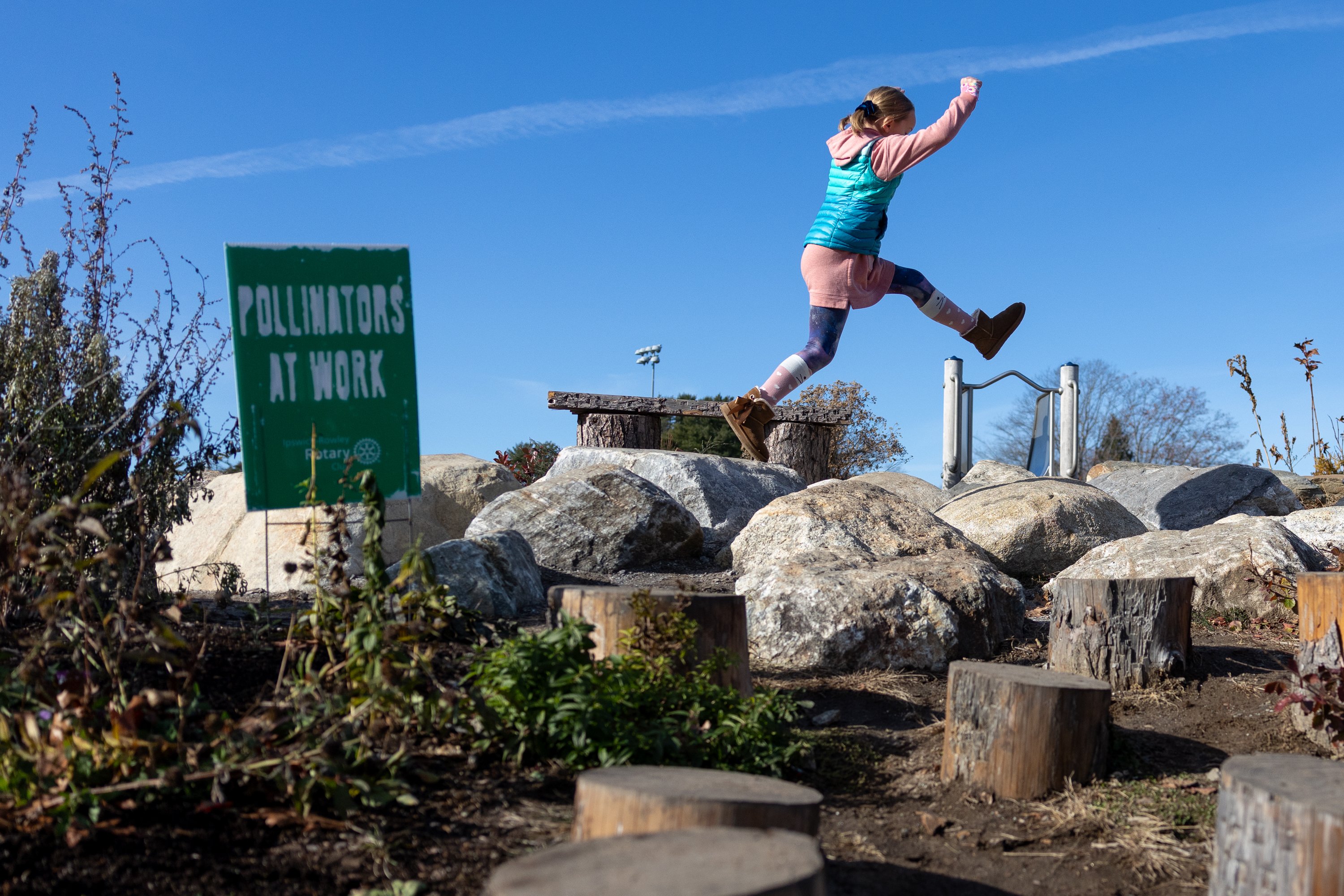
“When we say we encourage risky play, what we really mean is we are offering a safe place to learn how to face challenges, take risks and assess the consequences,” said Misner, the landscape architect. “When they’re deciding if it’s safe to jump off the boulder, they’re learning to solve problems.”
Green schoolyards can also help a school district meet its sustainability goals, said Newman, the Freeport teacher.
Logs, boulders and native plants don’t have the deep carbon footprint of a typical playground. Extracting and processing the virgin materials used to make an industrial playscape’s plastic, steel and aluminum parts produce a lot of heat-trapping greenhouse gas emissions.
Unlike a traditional schoolyard, a nature-based one doesn’t absorb, retain or reflect much heat, which can prevent a school from turning into a heat island — an area significantly warmer than surrounding areas due to human development — and keep school energy costs down.
Disposal can be a problem as a playscape approaches the end of its 15-year life span, Misner said. Landfills don’t like them because they take up so much space, and the harmful chemicals used to make the plastic, steel and aluminum parts can leach into the groundwater.
Manufacturers often encourage owners to donate the equipment to needy institutions, like a church or a community center, or sell it to a scrap buyer who can recycle at least some of the metal components and possibly some of the plastic.
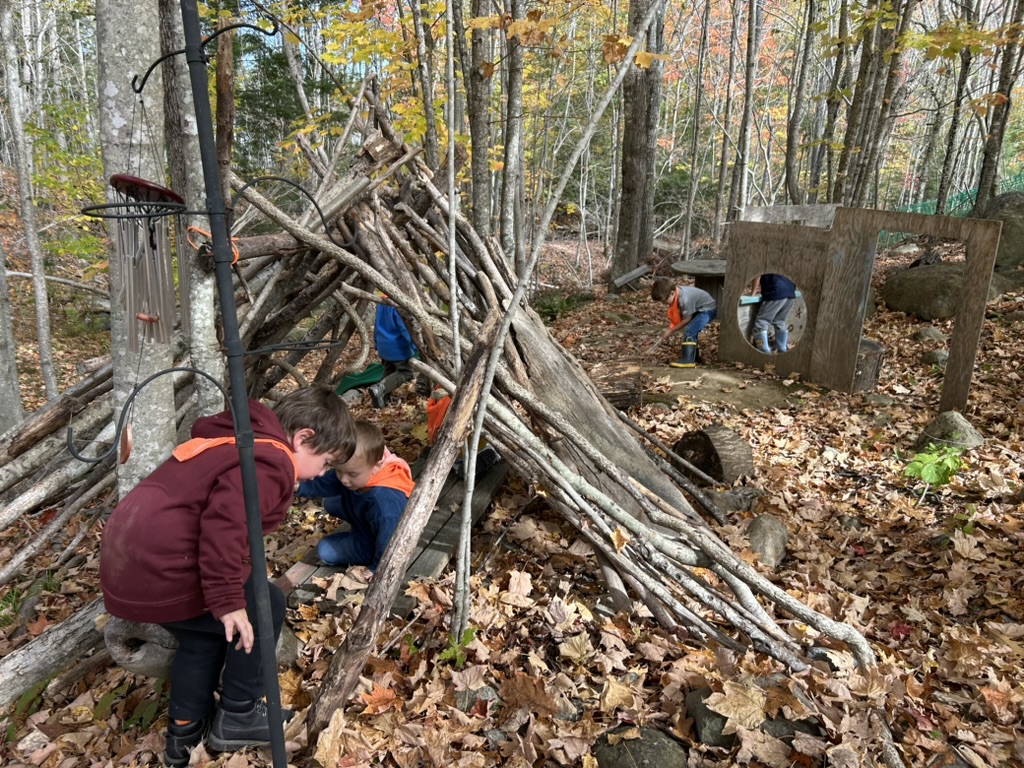
INTO THE WOODS, DOWN BY THE RIVER
Preschoolers Aislinn L’Italien and Emerson Kennedy spent a half hour in the mud kitchen in the woods near Camden-Rockport Elementary School one November morning turning dead leaves, water and discarded pumpkin guts into sumptuous seasonal delights.
“The pumpkin tea needs more water,” Aislinn said. Emerson marched to the stream at the edge of the outdoor classroom and filled his mixing bowl. After he added it to a pot, Aislinn stirred it and offered Emerson an imaginary sip.
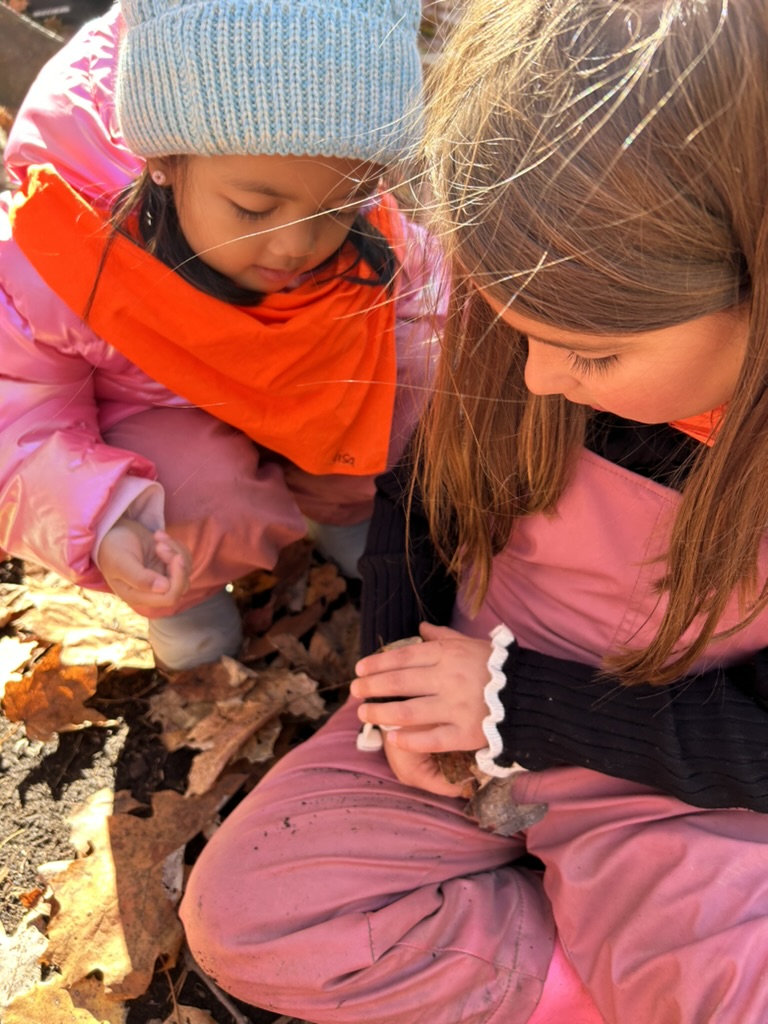
“Perfect!” he said. Then he pointed at a skillet. “The pumpkin waffles look dry.” Aislinn nodded. Emerson spun around and headed back to the stream bank, hopping from one leaf-covered rock to the next. Aislinn called out: “Bring some mud, too!”
On the way, Emerson passed Nisa Jinmanasook, a pint-sized robot monster mom going to work while her robot monster sons, classmates Sully Curtis and Joseph Guaman, protected their robot monster house from hordes of evil preschool invaders.
“Hi Nisa!” Emerson said. “I’m a robot monster!” Nisa roared back. “That’s cool!” Emerson said.
Sully and Joseph ran to protect their mother, but declared a truce when Aislinn offered a waffle.
Minidramas like these played out repeatedly over the next three hours of this program, the first nature-based, outdoor pre-kindergarten in a Maine public school. These 4- and 5-year-olds strap on protective clothing and go outside everyday, rain or shine.
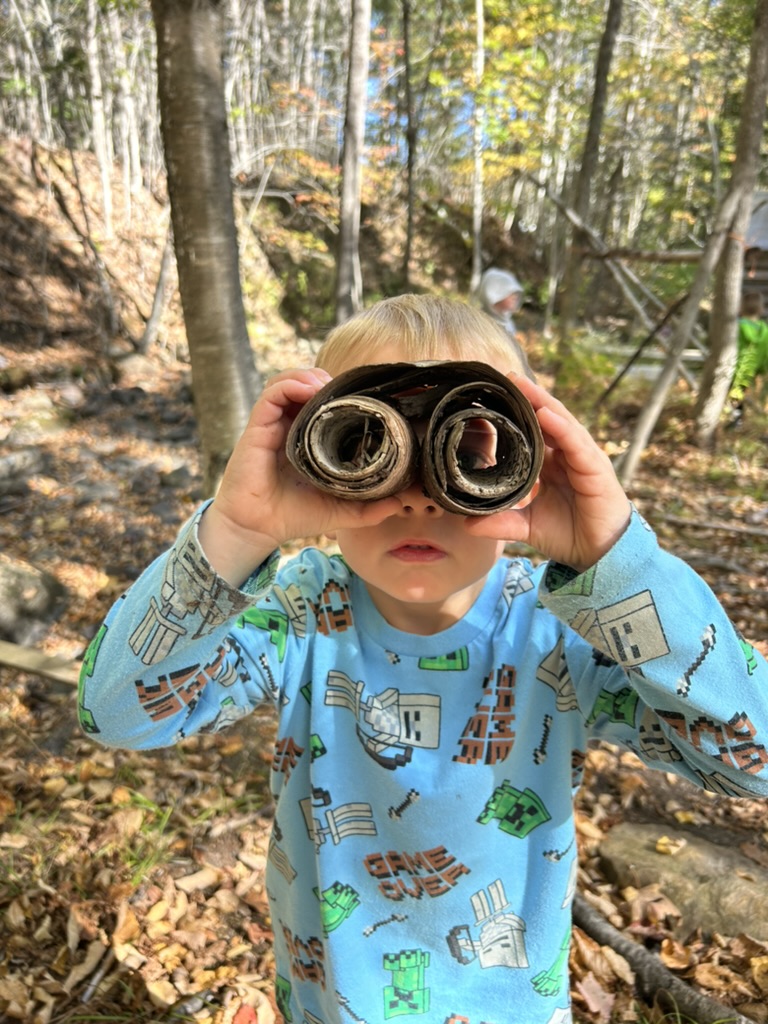
The children sing as they leave the school. “I’m wondering if you’ll come wandering with me, through the wilderness and woods where the wind is blowing free,” they call out as they walk down the hill and sit on a circle of stumps before an outdoor chalkboard.
They begin their outdoor time singing a daily wake-up-the-woods song, “Good morning, dear Earth!” They remind themselves of their outdoor rules: take care of themselves, take care with each other and take care of the earth. “Alright, let’s go check out the woods!”
Like Aislinn and Emerson, head teacher Heather Bowen often finds herself throwing out her recipe and making the most of what the woods and water behind the school offers them each day: a decomposing pumpkin, a found garter snake or a new bird song.
While the children are learning early math and science and honing motor skills, they are also learning how to face challenges, express themselves and build relationships, Bowen said.
“They grow into next-level problem solvers,” Bowen said. “Isn’t that what we want for our kids?”

We invite you to add your comments. We encourage a thoughtful exchange of ideas and information on this website. By joining the conversation, you are agreeing to our commenting policy and terms of use. More information is found on our FAQs. You can update your screen name on the member's center.
Comments are managed by our staff during regular business hours Monday through Friday as well as limited hours on Saturday and Sunday. Comments held for moderation outside of those hours may take longer to approve.
Join the Conversation
Please sign into your Sun Journal account to participate in conversations below. If you do not have an account, you can register or subscribe. Questions? Please see our FAQs.