

PHIPPSBURG — After powerful storms flattened Popham Beach State Park’s coastline in the winter of 2024 , a pilot project used 450 discarded Christmas trees to capture wind-blown sand and restore about 100 feet of dunes.
The project prevented the situation in a region already prone to “dynamic” erosion from getting significantly worse, said Peter Slovinsky, a marine geologist for the Maine Geological Survey. But now, despite those efforts, the state park beach is the narrowest he has ever seen.
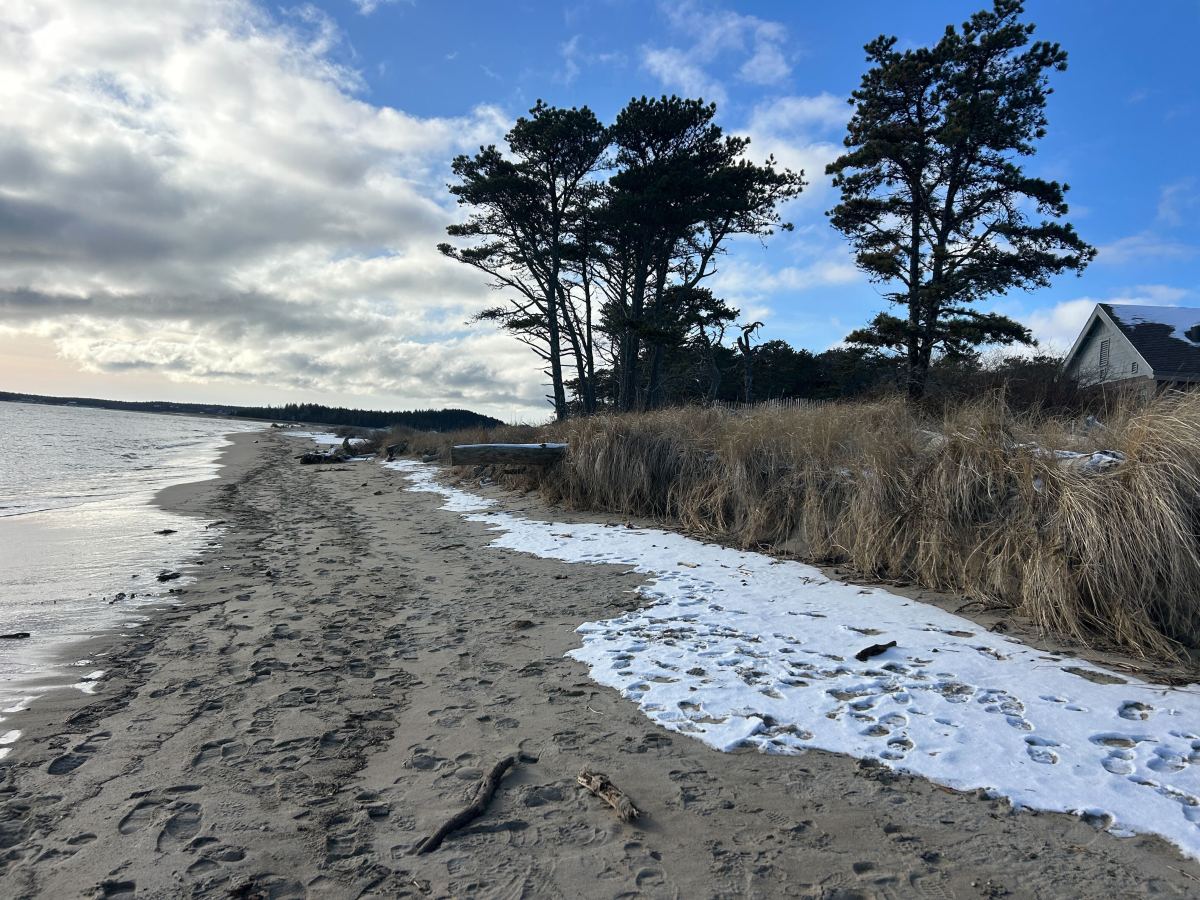
The latest challenge to dune restoration at Popham is a northeastern shift of the Morse River, first noticed around August. Normally, the river lets out to the west of Popham Beach closest to Small Point, allowing sand to build up, but every 10–15 years, it swings over, eating away at the dunes that have grown over time.
“It’s the worst I’ve seen it in my 25 years,” Slovinsky said.
Locations at Popham Beach are eroding faster than other Maine beaches, according to data released by the Maine Geological Survey in October. While Maine’s beaches have been eroding at about 1 foot per year on average, Popham Beach between the West and Center access paths has eroded an average of about 92 feet per year since 2017, the highest rate in the state.
The last time a shift of this magnitude occurred was in 2010, when erosion caused waves to nearly reach the bathhouse on the west side of the park.
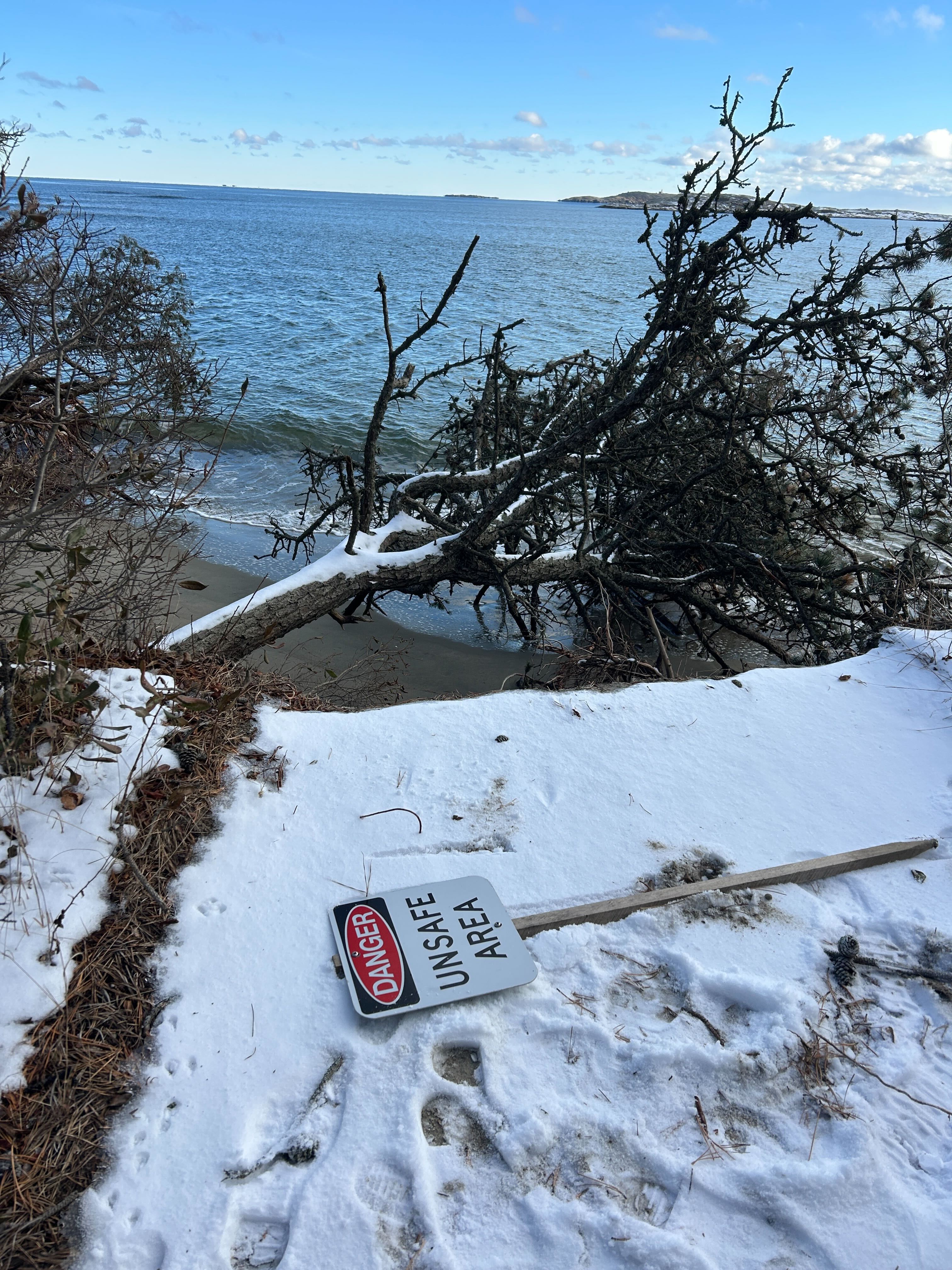
The East and Center paths to the beach have been severely damaged by recent erosion and are currently closed to visitors.
“We’ve lost signage that I don’t believe has ever been moved or repositioned since the ’60s, when the park was created,” said Park Manager Sean Vaillancourt.
To demonstrate the fluctuating nature of erosion at the state park, as recently as 2019, the beach extended roughly 1,000 feet, allowing people to walk out to nearby Fox Island at low tide, Slovinsky said.
The 2024 Christmas tree project was built on a similar trial at South Portland’s Willard Beach in 2023. Reid State Park followed Popham’s example in 2025 when volunteers collected hundreds of recycled trees.
The process mimics the natural creation of sand dunes, which serve as barriers against storm surges and crucial ecological habitats.
“What it does is it naturally creates these mounds, like the dune would do in nature anyway, and in doing so, it helps capture more sand,” Slovinsky said. “And then waves will sometimes wash in and the sand will get deposited, and then the grass will start growing, [which] traps the sand, too.”
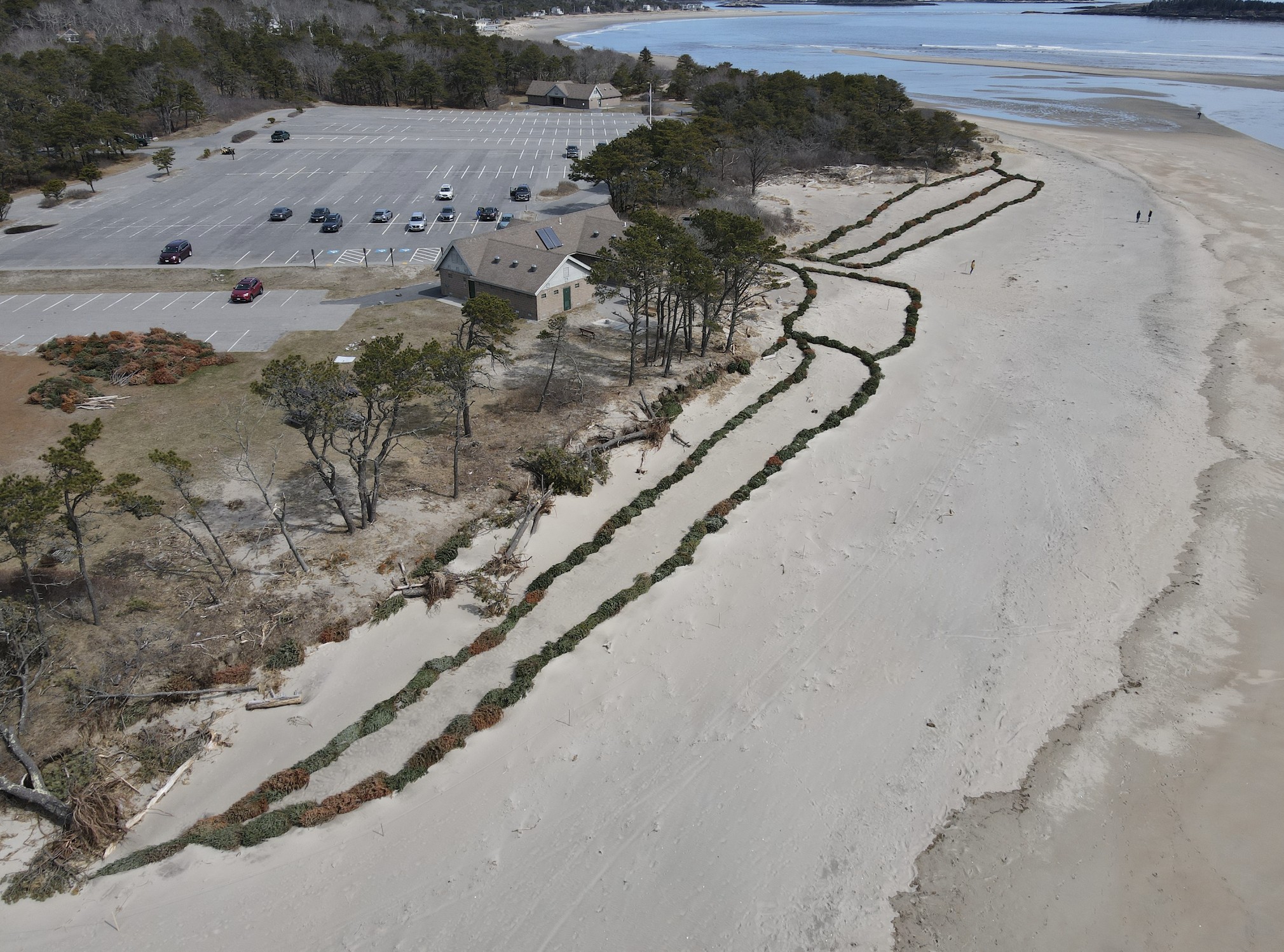
The trees likely helped prevent the recent erosion event from destroying even more dunes. About 30–40 feet of dune remained on the West Beach in early December, with many pine trees still buried deep under sand, snow and vegetation. The rest of the trees have probably floated away, Vaillancourt and Slovinsky said.
However, a similar project won’t be possible this holiday season. While the winter 2024 storms left behind a long, flat beach, the beach in its current state is too short to fit enough Christmas trees to make a difference.
It’s hard to predict when the Morse River will reposition itself and allow the beach to build back up, Vaillancourt and Slovinsky said, but the hope is that Mother Nature will step in before tourist season.
In the long term, they’re weighing a number of possible strategies, including manually diverting the Morse River and relocating or rebuilding the bathhouse that sits just above the dunes. Visitors can stay tuned to the Maine Department of Agriculture, Conservation and Forestry’s text message and email alert system for closures and other information, Vaillancourt said.

We invite you to add your comments. We encourage a thoughtful exchange of ideas and information on this website. By joining the conversation, you are agreeing to our commenting policy and terms of use. More information is found on our FAQs. You can modify your screen name here.
Comments are managed by our staff during regular business hours Monday through Friday as well as limited hours on Saturday and Sunday. Comments held for moderation outside of those hours may take longer to approve.
Join the Conversation
Please sign into your Sun Journal account to participate in conversations below. If you do not have an account, you can register or subscribe. Questions? Please see our FAQs.