

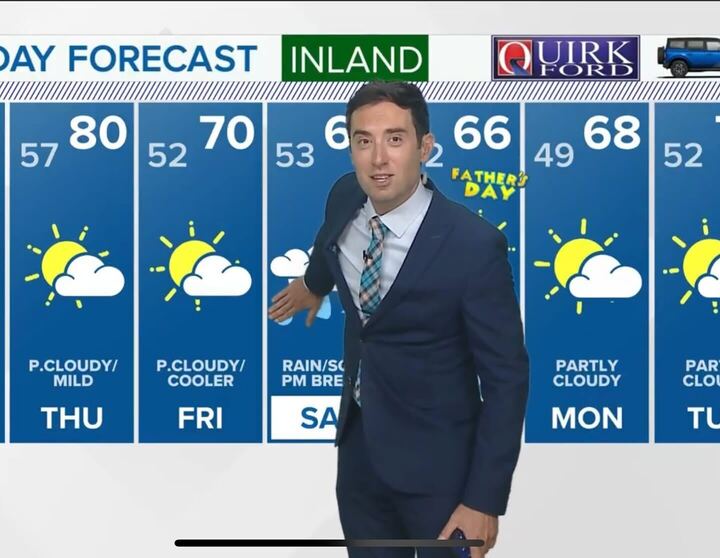
Most people who quit their job to take another one aren’t likely to get more than a handshake on their last day. Maybe a sheet cake. When meteorologist Keith Carson left News Center Maine to go work for Maine Conservation Voters last month, however, he was given the sort of sendoff typically reserved for retirements and memorials.
There were on-air tributes from world-famous weatherman Al Roker and Channel 6 legend Joe Cupo. Colleagues posted photo montages on Facebook with heartfelt messages about what Carson meant to them. News stories about his departure were laden with comments from viewers lamenting their loss.
Yes, Carson set himself apart with his unabashed stance on climate change, self-professed nerdy fascination with the weather and quirky sense of humor (best demonstrated in his response to viewer accusations that his “smedium” suits were too tight and his new hairdo looked like a toupée). But all that only added to his likeability.
For longtime TV meteorologists in Maine, being beloved is the baseline. Mainers get attached to the forecasters on their screens.
“Our weather is pretty wild. So, I think that’s part of it,” Carson said. And because of the abundance of outdoor enthusiasts like hikers and skiers, he added, it’s a major factor in people’s plans. (No one, though, pays more attention to snow forecasts than teachers, he said.)
Carson and others in broadcasting offered several theories about what contributes to the outsize popularity of meteorologists in Maine, where debates about who’s the best play out in Facebook comments and Reddit threads. Here in the oldest state, more people watch the TV news than elsewhere, they said, and among broadcasters, weather people can let their personalities shine, walking around and ad-libbing more than the anchors reading serious news stories from teleprompters. That leads to a level of familiarity even more poignant in places with smaller populations, where you have a better chance of running into your local newscasters around town.
Tim Moore, president and CEO of the Maine Association of Broadcasters, said that can be a “double-edged sword.”
No one’s going to walk up to an anchor and tell them their news report was wrong, Moore said. “But somebody will approach a meteorologist at the grocery store and say, ‘Hey, you said it wasn’t going to rain on Saturday, and I had a family reunion.'”
CONNECTING WITH VIEWERS
When Tom Salter, of Topsham, met his favorite meteorologist, it wasn’t exactly a chance encounter. He heard Carson was going to be at a coat drive at his local Reny’s last year and made plans to go.
Salter watches the weather reports on all three of southern Maine’s TV newscasts at different times: News Center Maine while he’s eating lunch, WGME in the evenings and WMTW when he wakes up early, especially on the weekends. He often records others.
“I think all the networks have good people,” he said, naming News Center’s Todd Gutner, WGME’s Charlie Lopresti and WMTW’s Victoria Wisniewski among them.
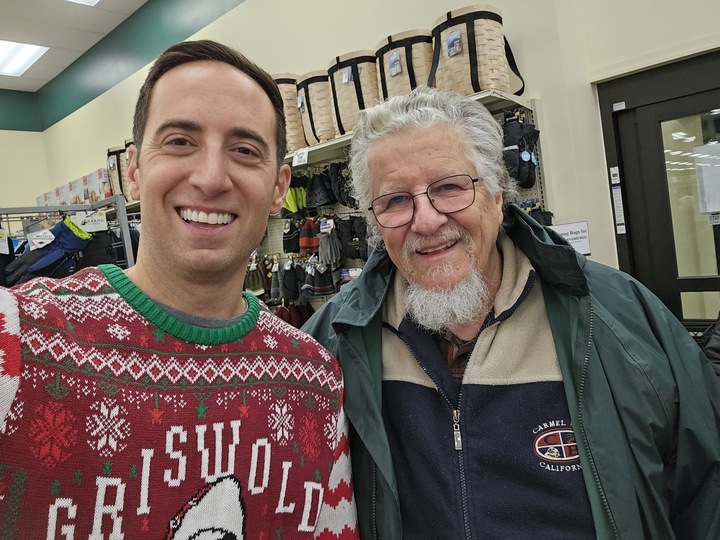
But none have spoken to him quite like Carson did. Salter said he learned a lot about the weather from him. He also liked the stories he told about his family and the fact that he found something to laugh about in every newscast.
“Sometimes you just feel kind of connected with somebody, and I felt that with Keith Carson more than with anybody else,” he said.
Carson said every forecaster brings different strengths that will appeal to different viewers. While Gutner is friendly and fun, he said, Lopresti has a knack for statistics.
“I think there’s a lot of great meteorologists in this market,” he said.
Toni Ramundo of Benton, a daily News Center Maine viewer, liked Carson for his personality and intelligence, she said. She was sad to see him go, but not quite as sad as when meteorologist Aaron Myler left the station in the fall.
“He’s just so comfortable in his own skin and willing to do crazy things,” she said, referencing Myler’s attempts at skiing and cooking as part of the series “Myler Makes It.”
She’s seen enough change in the 20 years she’s watched Channel 6, though, that she knows eventually she’ll get used to it.
“You grieve them for a little bit and then you move on,” Ramundo said.
Some viewers, however, don’t let go completely. Social media pages allow fans to stay connected to their favorite TV news personalities even after they leave the market. Few know that better than Jason Nappi.
Nappi, a former News Center Maine meteorologist, wears his heart on his Facebook page. In his two years in the job, he amassed an online following that supported him through his mother’s cancer battle, thumbs-upped pictures of pizza and ice cream he ate around Maine, and encouraged him when he parted ways with the station under ambiguous terms last year.
Since leaving News Center, Nappi has seen his number of followers continue to grow, now clocking in at about 50,000 on Facebook. Even though he has moved to Oklahoma, 95% of them are still in Maine, he said.
In the past year, Nappi has come and gone from a station in Tulsa and, last month, was interviewing for new jobs in and out of TV. All the while, he’s continued to post forecasts for his Maine fans, and they’ve kept supporting him in return.
“I thought people were going to start unfollowing me, but none of that happened,” he said. “They wanted to be part of the journey of my next adventure.”
A LASTING LEGACY
It’s no coincidence that so many of Maine’s favorite meteorologists come from the same station.
Carson acknowledged the advantage he and Gutner had, walking into their second stints at News Center Maine about 10 years ago, right around the time popular longtime weather forecasters Joe Cupo and Kevin Mannix retired.
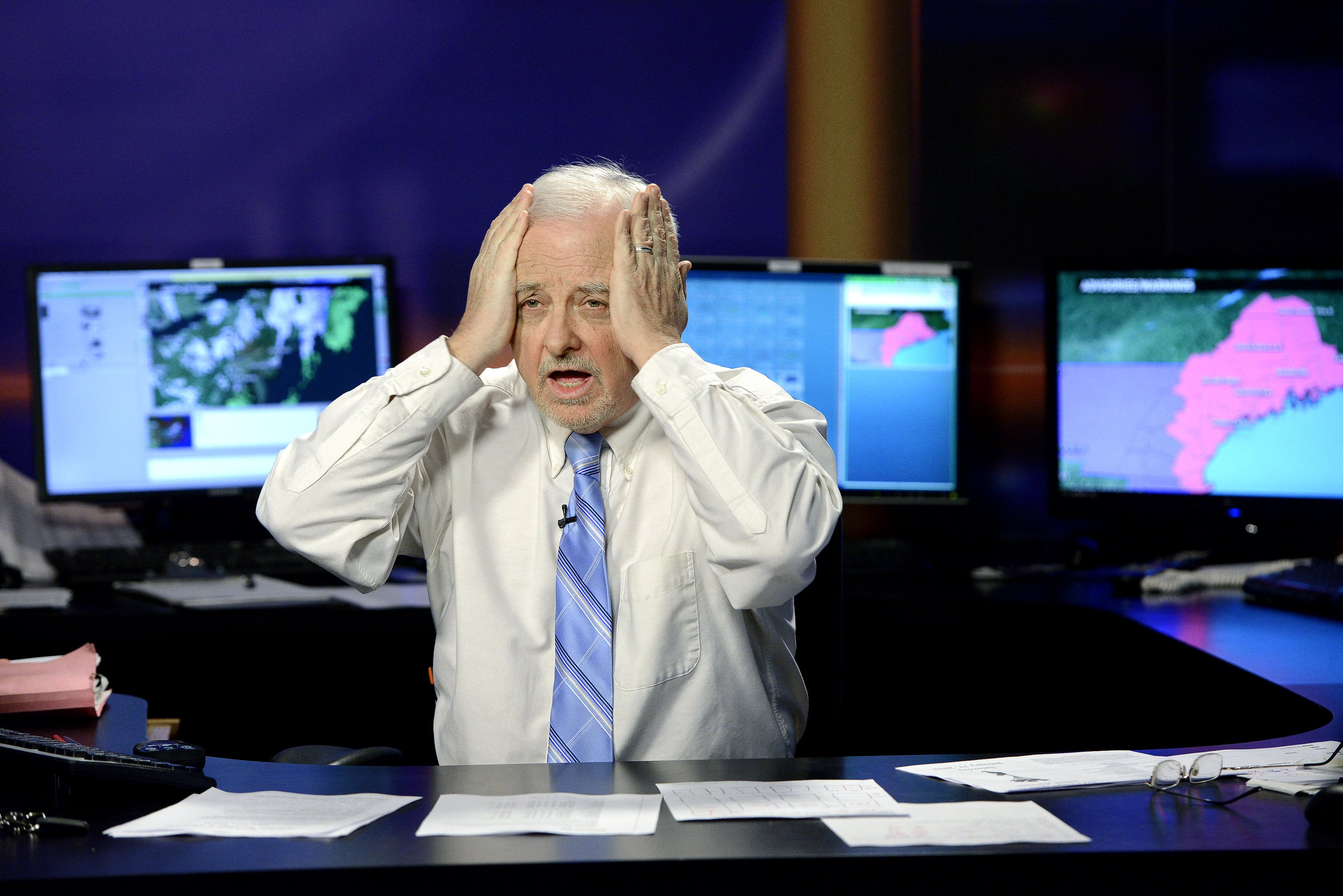
“Just being the next version of it,” he said, “I don’t know that we would have to even be very good.”
“Altitude Lou” McNally, who got his start on Channel 13 in the ’70s and now forecasts the weather for Maine Public, believes the tradition of Maine news stations and their viewers taking weather forecasting seriously started with Boston’s Don Kent. Known as the “Dean of New England Weathermen,” he set the expectation of having a professional meteorologist on staff, starting in the ’50s, rather than weather people without degrees.
“That took off in New England a lot faster than in the rest of the country,” McNally said. “We’ve kind of been leading the pack in that.”
Moore, of the Maine Association of Broadcasters, noted that meteorologists tend to stay with the same station longer than people in other roles, “in part because it takes them time to really know an area, a region, from a weather standpoint.”
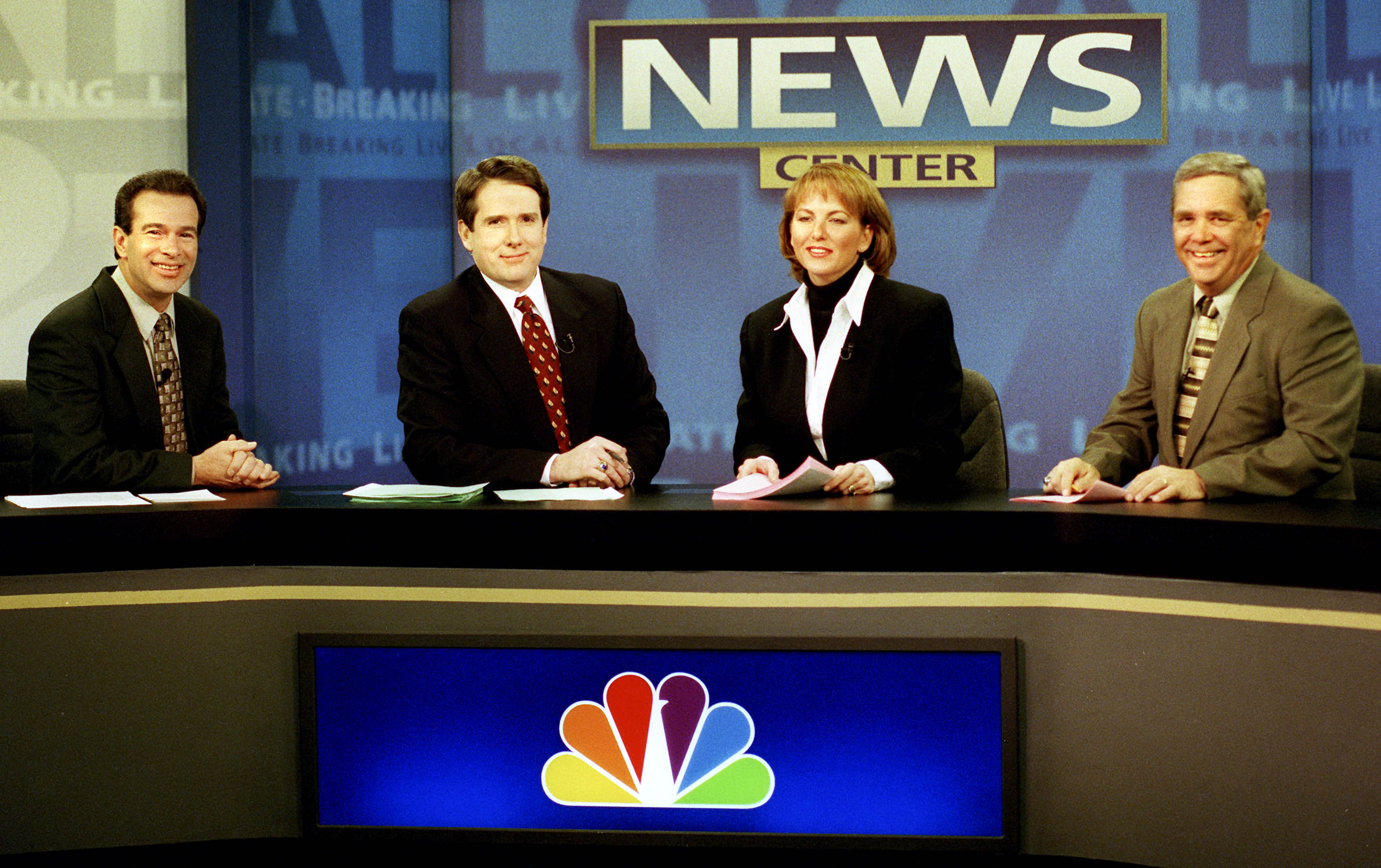
Anchors stay longer, too, he said, but it’s the weather reports, promoted as different or more accurate than other stations, that are often responsible for attracting new viewers.
“There’s a little bit of animosity there, too, I think,” McNally added, ” … that more people tune in for the weather than for the news.”
Forecasting the weather from schools around the state on Tuesday and Wednesday mornings is one way WMTW has drawn new viewers. Meteorologist Ted McInerney, who has run the “Weather At Your School” program for the past 10 years, said people tune in to see kids they know on screen or hear the silly things any of them might say.
Legacy stations like News Center Maine tend to have more older viewers who are in the habit of watching the 6 p.m. news, he said. Younger viewers, who might prefer to watch popular TV shows in the evenings, are more likely to listen to a weather forecast while they’re getting themselves or their kids ready for the day, he added.
“In the mornings, I think people just have it on for comfort,” McInerney said.
GENDER GAP
What you might have noticed about all the longtime Maine weather forecasters mentioned is that none of them are women (though some requests for interviews sent to current and former female Maine meteorologists were not returned or declined).
Even as now-retired female anchors Kim Block of WGME and Cindy Williams of News Center Maine were becoming established personalities, meteorology roles remained dominated by men.
“Women are underrepresented in all STEM fields,” said Anthony Adornato, chair of the department of broadcast and digital journalism at Syracuse University’s Newhouse School of Public Communications. Which also means there have been few role models for women interested in broadcast meteorology, he said, though ABC News Chief Meteorologist Ginger Zee, who joined the station in 2011, has helped change that.
Now, however, some young women see closing the gender gap as a reason to enter the field, Adornato said. And they’ve had more job opportunities in recent years, as news stations look to tighten their belts by hiring broadcasters with less experience.
“I don’t think it’s a novelty anymore,” he said about female meteorologists on TV, “but there’s still definitely an imbalance.”
Dana Osgood, who joined News Center Maine in 2023 right after graduating from college, said she didn’t realize how few women were in the field until she got to Penn State and saw the gender makeup of her classes.
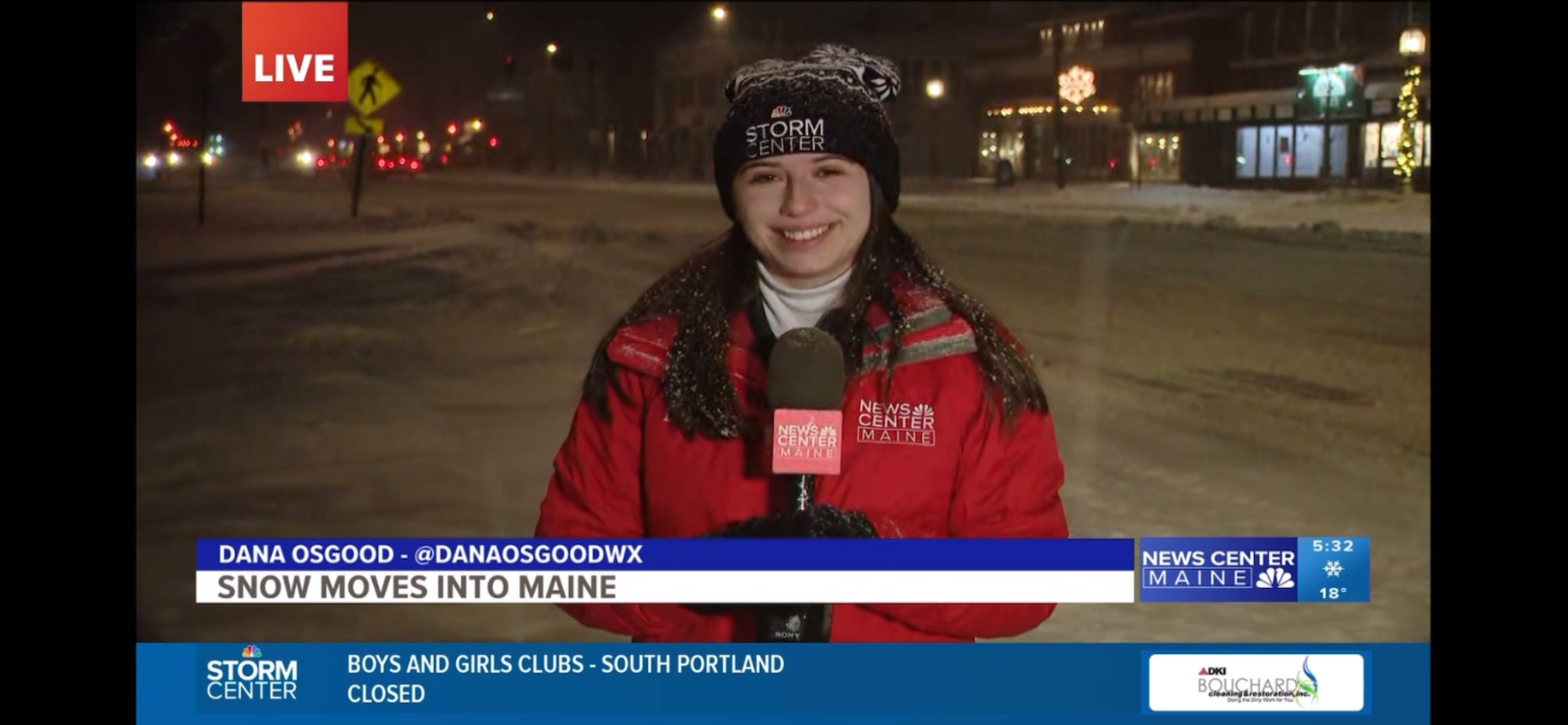
“It definitely made me feel motivated to prove myself,” said Osgood, who was better at English than math in high school. Her interest in meteorology stemmed from weather events she experienced as a kid growing up outside of New York City, namely Hurricane Irene in 2011 followed soon after by a Halloween nor’easter dubbed “Snowtober.”
In her short time here, Osgood’s name has already started popping up in online conversations about Mainers’ favorite meteorologists, which she said “feels really good.”
Could this be the start of a long career in Maine and the making of a future legend?
“I think that’s a question I’ll have to answer down the line,” she said.
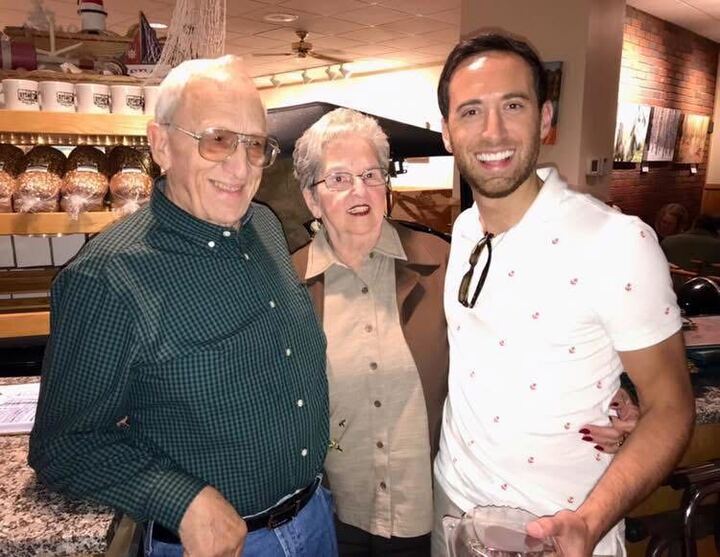
Carson, though, is already there. Even by 2019, on a trip to Dysart’s, that had become clear.
Carson had spotted the couple who went viral for the outtakes from a commercial they filmed for the Hermon truck stop, repeatedly flubbing the line “buttery, flaky crust.” He wanted to get a picture with them. Before he had the chance to go over and ask, they came up to him looking for the same thing.

We invite you to add your comments. We encourage a thoughtful exchange of ideas and information on this website. By joining the conversation, you are agreeing to our commenting policy and terms of use. More information is found on our FAQs. You can modify your screen name here.
Comments are managed by our staff during regular business hours Monday through Friday as well as limited hours on Saturday and Sunday. Comments held for moderation outside of those hours may take longer to approve.
Join the Conversation
Please sign into your Sun Journal account to participate in conversations below. If you do not have an account, you can register or subscribe. Questions? Please see our FAQs.