


On any given day, H.E. Callahan Construction Co. in Auburn has a couple of openings for skilled carpenters, laborers, foremen or supervisors.
Filling those positions is tough in an industry that consistently has 200,000 to 300,000 openings nationwide. It’s a critical concern for owner Christine Kendall when she bids on projects for Callahan Construction, a commercial contractor with 34 employees and $18 million in annual sales.
“Every bid is factored down to the man-hour,” Kendall said. “I need to know I’ll have the people to do the job.”
To help fill those jobs, the Maine Community College System and Associated General Contractors of Maine are establishing a pre-apprenticeship program in 2026 to prepare adult Mainers for in-demand building trades.
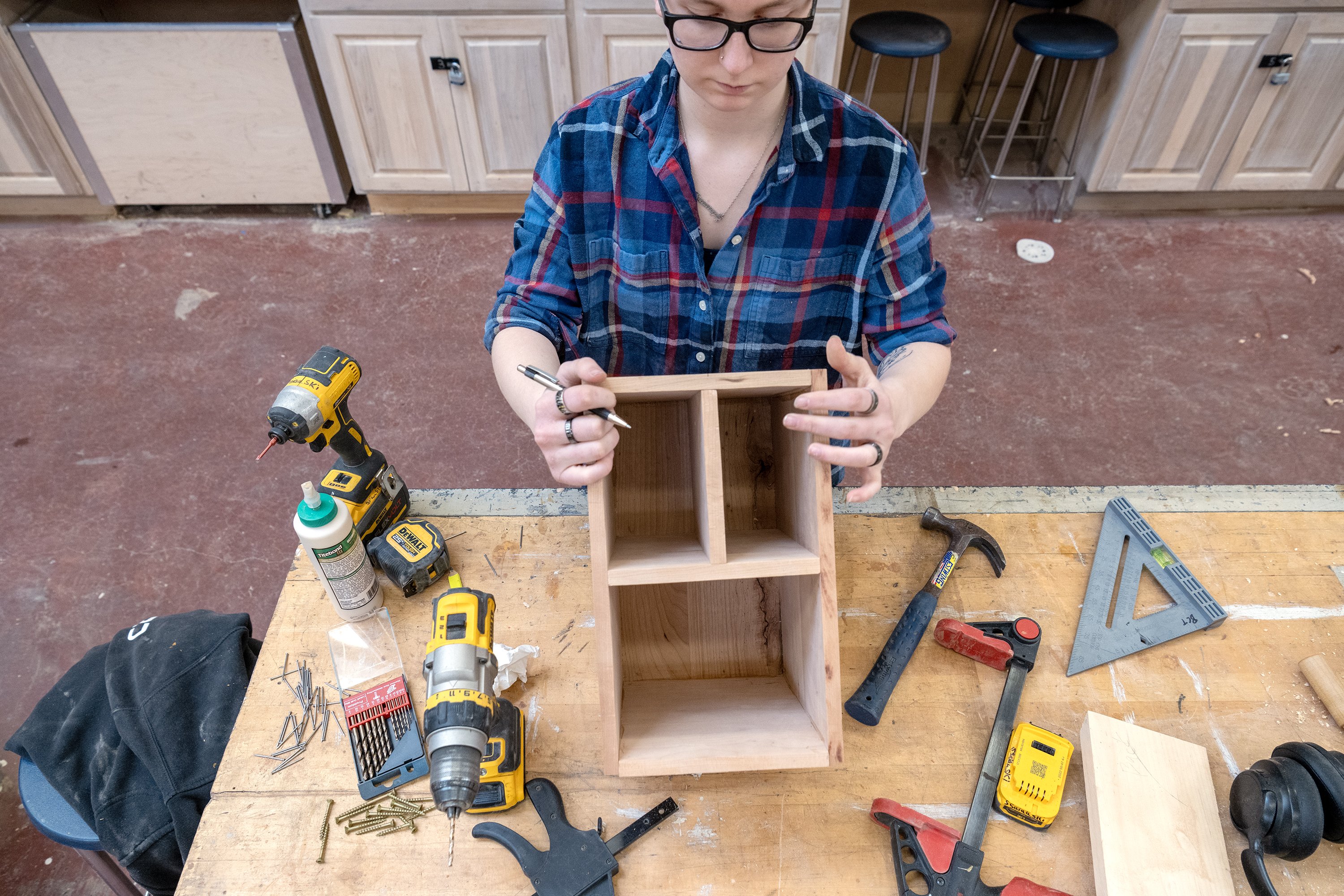
While construction job openings aren’t tracked at the state level, many contractors lament the challenges of hiring and retaining experienced workers despite offering annual salaries of $45,000 to $75,000, depending on skill level, according to the contractors’ association.
The pre-apprenticeship program is an expansion of the Maine Construction Academy Immersion Program launched by the association in 2023 for students ages 16-20 at several high schools and technical centers across the state.
The four-week summer program gives students basic construction site experience, as well as training and national certification in worker safety, first aid, hand and power tools, construction drawings, communication skills and material handling.
The free course also prepares them for state-registered apprenticeships or certificate and degree programs offered through the community colleges. And it connects them with employers like Kendall who are willing to hire students who complete the training.
The program is being expanded to people over age 20 because it has proven popular and successful for both students and employers. Student applications increased from 104 the first year to 436 this year, while students selected to participate grew from 50 to 233. The number of employers in the program increased from 12 to 33.
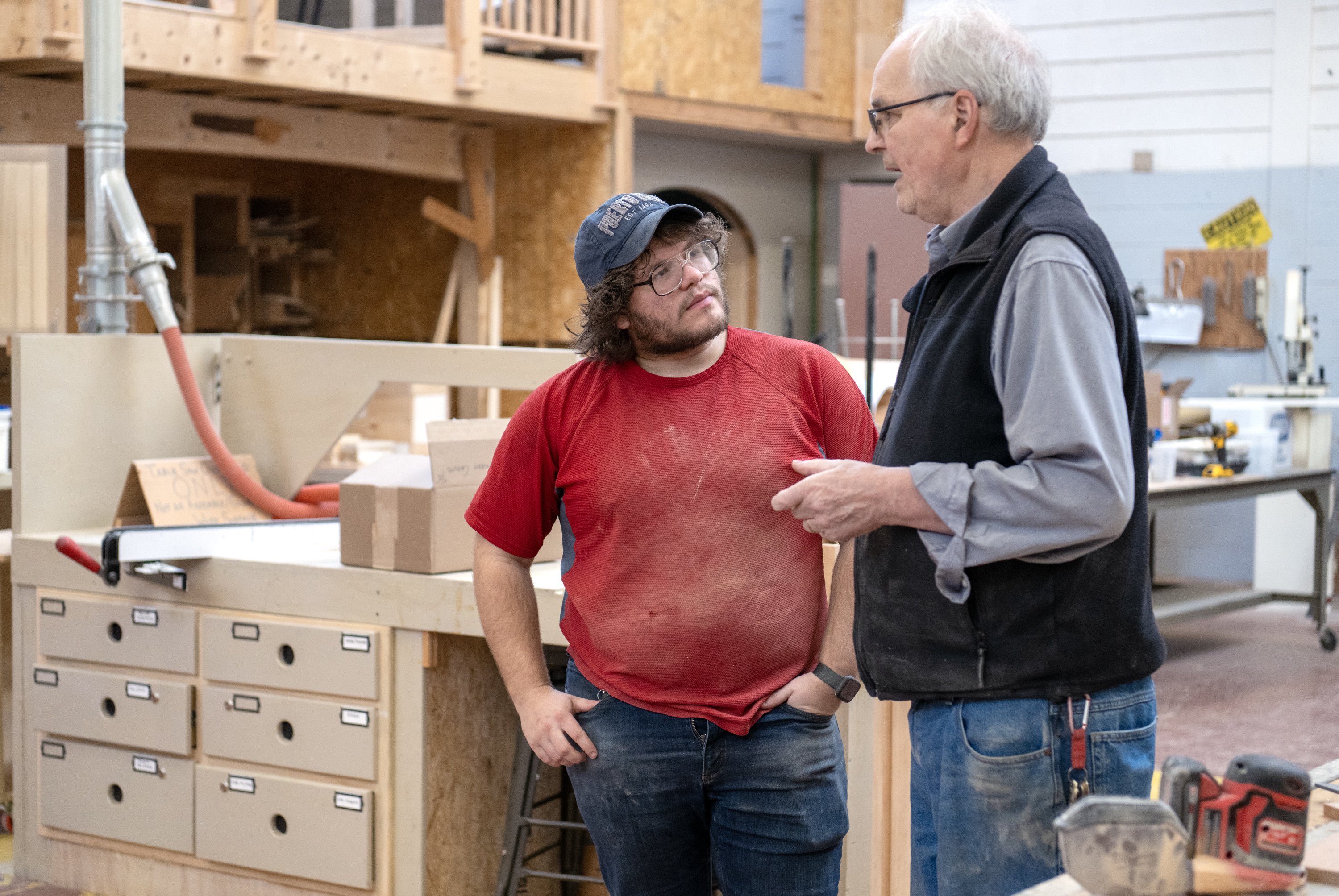
Half of the students in the 2023 program and 38% in the 2024 program are now in construction-related jobs, including some who have yet to graduate from high school, said Kelly Flagg, executive director of the contractors’ association.
It’s one of several strategies to address workforce shortages in Maine’s construction industry, Flagg said. Other programs under development include new short-term training programs in carpentry, heavy equipment operation and HVAC skills.
VETTING POTENTIAL EMPLOYEES
Kendall, who is president of the contractors’ association, has experienced the benefits of the high school-level immersion program firsthand.
She hired Caleb Parker, 19, as an apprentice at Callahan Construction in September, after he completed the immersion program offered at Oxford Hills Comprehensive High School in South Paris last summer.

“He was so well-spoken, he always had a smile on his face and he wanted to work,” Kendall said of Parker. “He wanted to better himself and build a career in construction. He was flagged as a person with potential.”
Kendall said the immersion program is not only an “on-ramp” for people who have an interest or some basic experience in construction jobs, but also a vetting process for companies seeking employees.
“If you’ve been through the academy, I know you’ve been exposed to what’s expected on a job site,” she said. “We work in such a highly serious industry in terms of skills and safety. You can’t just walk onto a job site without some basic training.”
Parker is currently working at a site in Rome, near Waterville, where Callahan Construction is building an addition at the Travis Mills Foundation’s headquarters. Last week he was on a crew installing foundation forms and preparing to pour concrete.
“I had a lot of experience in residential construction, working with family and friends, but I lacked commercial experience and the certifications I needed to work on job sites,” Parker said. “Now, I have nationally recognized certifications and I’m learning so much on the job. I’m grateful for the opportunity and I’m most definitely going to stick with it.”
FUNDED BY ALFOND CENTER
The expanded immersion program will be managed by the contractors’ association and funded by the Harold Alfond Center for the Advancement of Maine’s Workforce, which is part of the community college system.
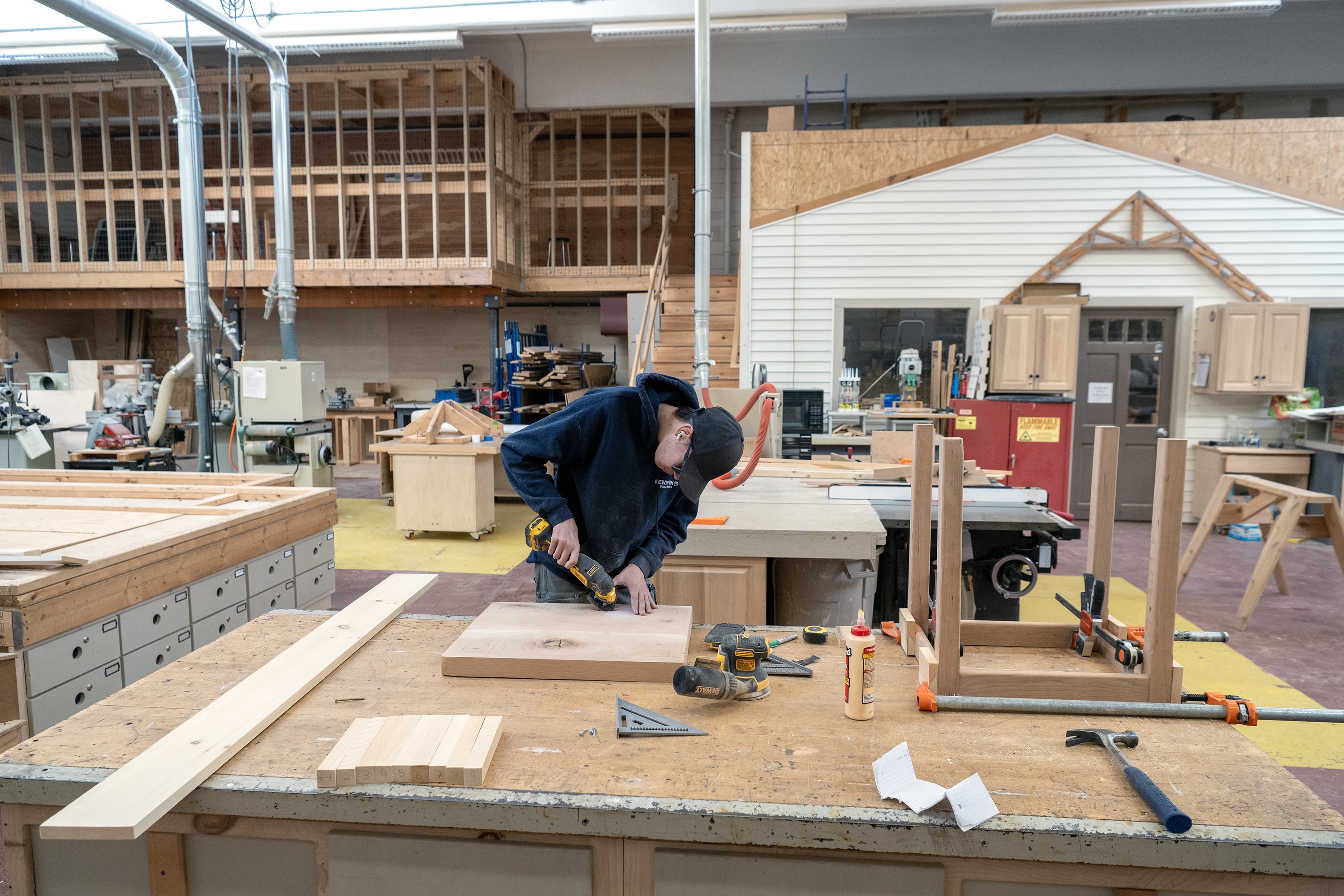
It’s one of 220 free, short-term workforce training programs that the center has funded with $8.3 million to serve 6,700 Mainers in the 2025-26 academic year, said Dan Belyea, the system’s chief workforce development officer. It’s also part of an overall plan to provide low- or no-cost training to nearly 100,000 people by 2030 in a state with about 700,000 workers.
Funding from the Alfond Center comes from private philanthropic support and the Maine Jobs & Recovery Plan, which invested nearly $1 billion from the federal American Rescue Plan.
The program for students ages 16-20 will be offered next summer at these high schools and technical centers: Oxford Hills, Sacopee Valley, Lewiston, Gorham, Brewer, Houlton, Bonny Eagle, Bangor, Bath, South Portland, Caribou, Cony, Sanford and Dover-Foxcroft.
The expanded program for adults will be offered starting in March with slots for up to 20 people at each of five community colleges: Central Maine in Auburn, Northern Maine in Presque Isle, Kennebec Valley in Fairfield, Eastern Maine in Bangor, and Washington County in Calais.
Whether the expanded program will be offered again in the future depends on how many people enroll in the initial sessions, Flagg said. The association is taking applications now at buildingmaine.com for both the high school-level and expanded program in 2026.
CONSTRUCTION WORKERS RETIRING
Maine has about 6,500 construction-related companies that employ nearly 35,000 workers and contribute $4 billion, or 3.7%, of the state’s $101 billion GDP, according to the contractors’ association.
The dearth of skilled carpenters, plumbers, electricians and other tradespeople in Maine is apparent whenever property owners or managers try to hire one. Another factor driving demand is the housing crisis, as well as the state’s effort to encourage construction of 84,000 new homes between 2024 and 2030.
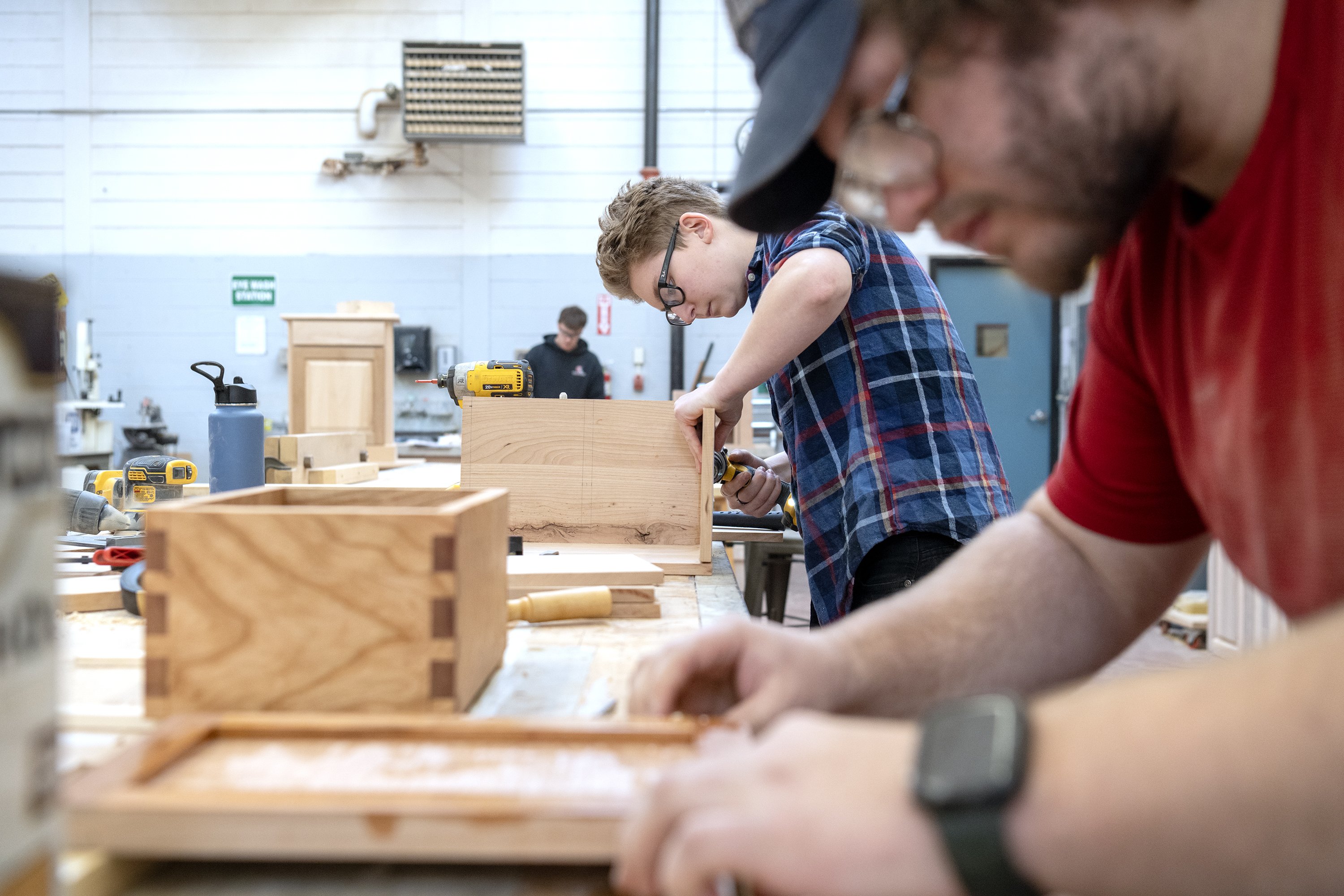
Contractors also see their workers are aging, and they view the immersion program as a way to entice younger generations into the field.
“The average age of a construction worker in Maine is about 48. Obviously that’s not sustainable,” said Kyle O’Connell, director of business development, health and safety at N.S. Giles, a concrete contractor in Bangor.
N.S. Giles has hired 13 graduates of the immersion program for students ages 16-20 — and 11 still work for the company, O’Connell said.
“We take them on full time,” he said. “Because of the program, they’re already a foot ahead of other people coming through the door. It’s still a lot of responsibility and risk on our part because they’re young, but we’re investing in them. Hopefully we’ll have reliable, productive employees for the next 20 years.”
Sam Saiauski, 19, knows she’s filling a need that’s growing. A second-year student at Central Maine Community College, she’s working on an associate degree in building construction technology.
“There’s a really big need with so many people retiring,” she said, “and you can make a lot of money.”
Saiauski fell in love with construction when she studied building trades at Sanford Regional Technical Center during her junior and senior years at Kittery High School. She sees a real benefit to the pre-apprenticeship program for people of all ages.
“For people who don’t have access to a vocational program, the four-week immersion would be really helpful if they want to learn what it’s all about,” she said.
For contactors, the expanded immersion program also is an opportunity to promote construction as a preferred career, said Kendall of Callahan Construction.
“We’re elevating the field so it’s people’s first choice, not their last choice,” she said. “We provide a good wage and good benefits in a profession. You can be as successful as you want to be here.”

We invite you to add your comments. We encourage a thoughtful exchange of ideas and information on this website. By joining the conversation, you are agreeing to our commenting policy and terms of use. More information is found on our FAQs. You can modify your screen name here.
Comments are managed by our staff during regular business hours Monday through Friday as well as limited hours on Saturday and Sunday. Comments held for moderation outside of those hours may take longer to approve.
Join the Conversation
Please sign into your Sun Journal account to participate in conversations below. If you do not have an account, you can register or subscribe. Questions? Please see our FAQs.