

In 1961, Otto Wallingford opened Lost Valley Ski Area in Auburn. He epitomized Yankee ingenuity, and is heralded as the pioneer of snowmaking and grooming in the Maine ski industry. In the 1970s, Lost Valley was the first in the state to introduce manmade snow, and one season when there was no natural snow, it was the only reliable place to ski in the region. Most other mountains quickly followed suit by employing snow-making equipment.
Current owner Scott Shanaman has followed in Otto’s footsteps with revolutionizing other aspects of the industry. Earlier this month, Staff Photographer Russ Dillingham spent the afternoon with Shanaman’s son, Mason Shanaman, and his longtime friend, Ethan Levesque, as they worked alongside family and other snowmakers during a 12-hour day on the trails making snow during ideal snowmaking weather before the start of winter. It led to Lost Valley having its earliest opening in over three decades.
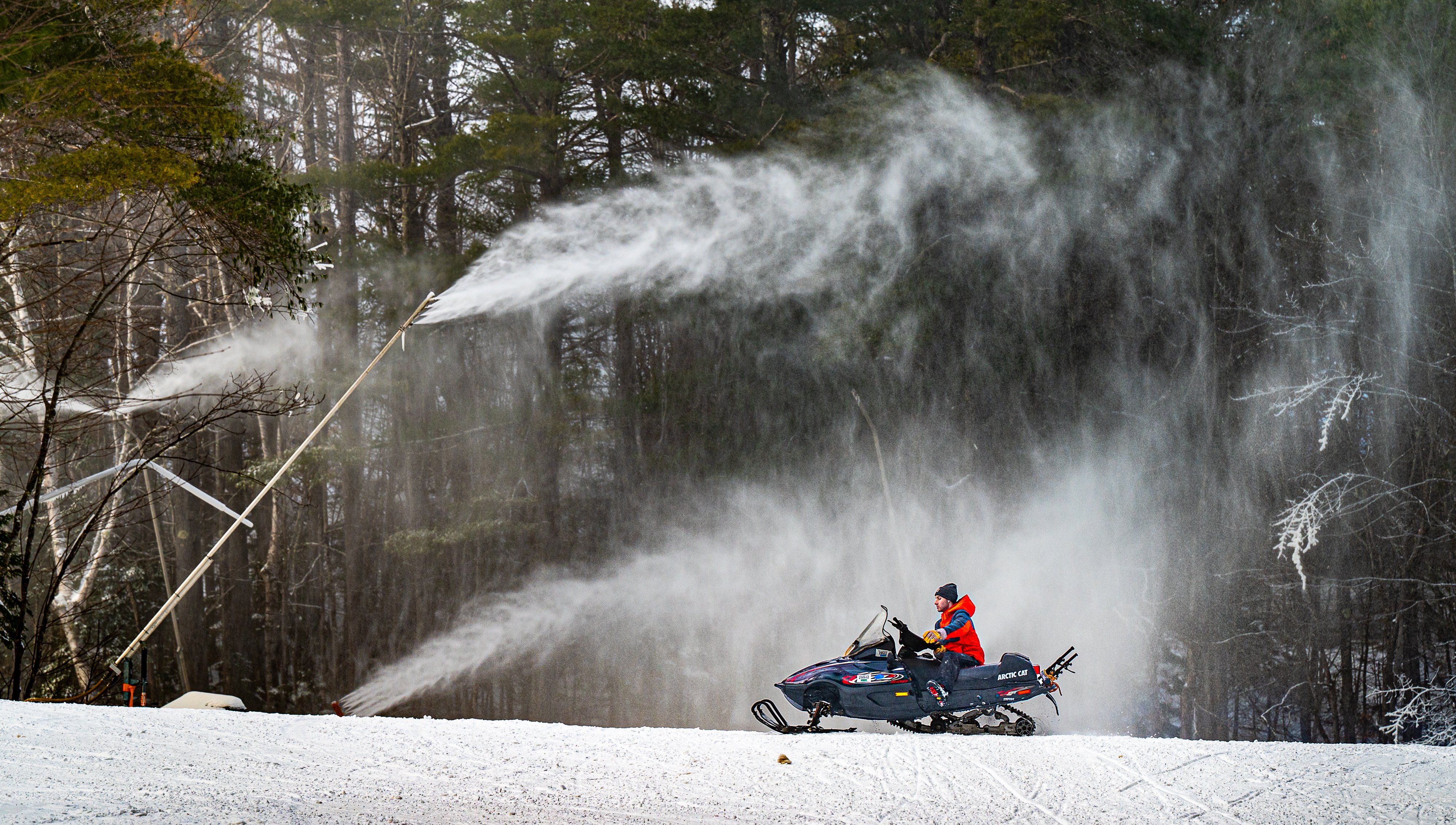
Ethan Levesque uses a snowmobile to move from one snow gun to another Dec. 15 in a constant battle with the wind and ice buildup in order to create ideal snowmaking conditions at Lost Valley Ski Area in Auburn. “It’s kinda full circle for me now as I’ve been skiing here since I was a kid. It’s like Christmas morning when we light up the first gun of the season. “I love everything about this job, except waking up in the morning and having to put on wet boots that have not dried from the previous 12-hour workday,” he said. Levesque, a student at Maine Maritime Academy, was on holiday break.
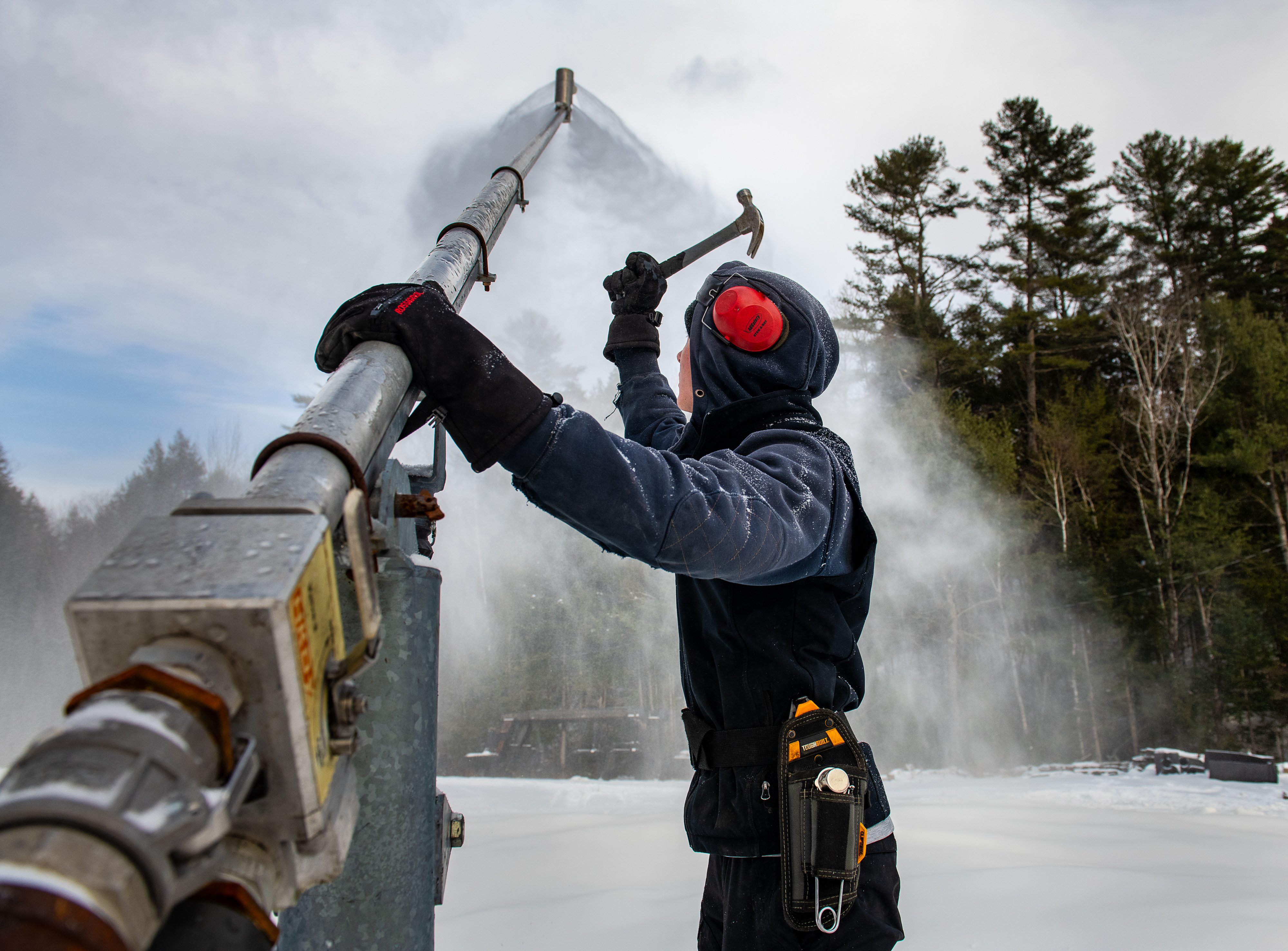
Mason Shanaman uses a hammer to knock ice buildup from a snow gun to keep the snow flowing.
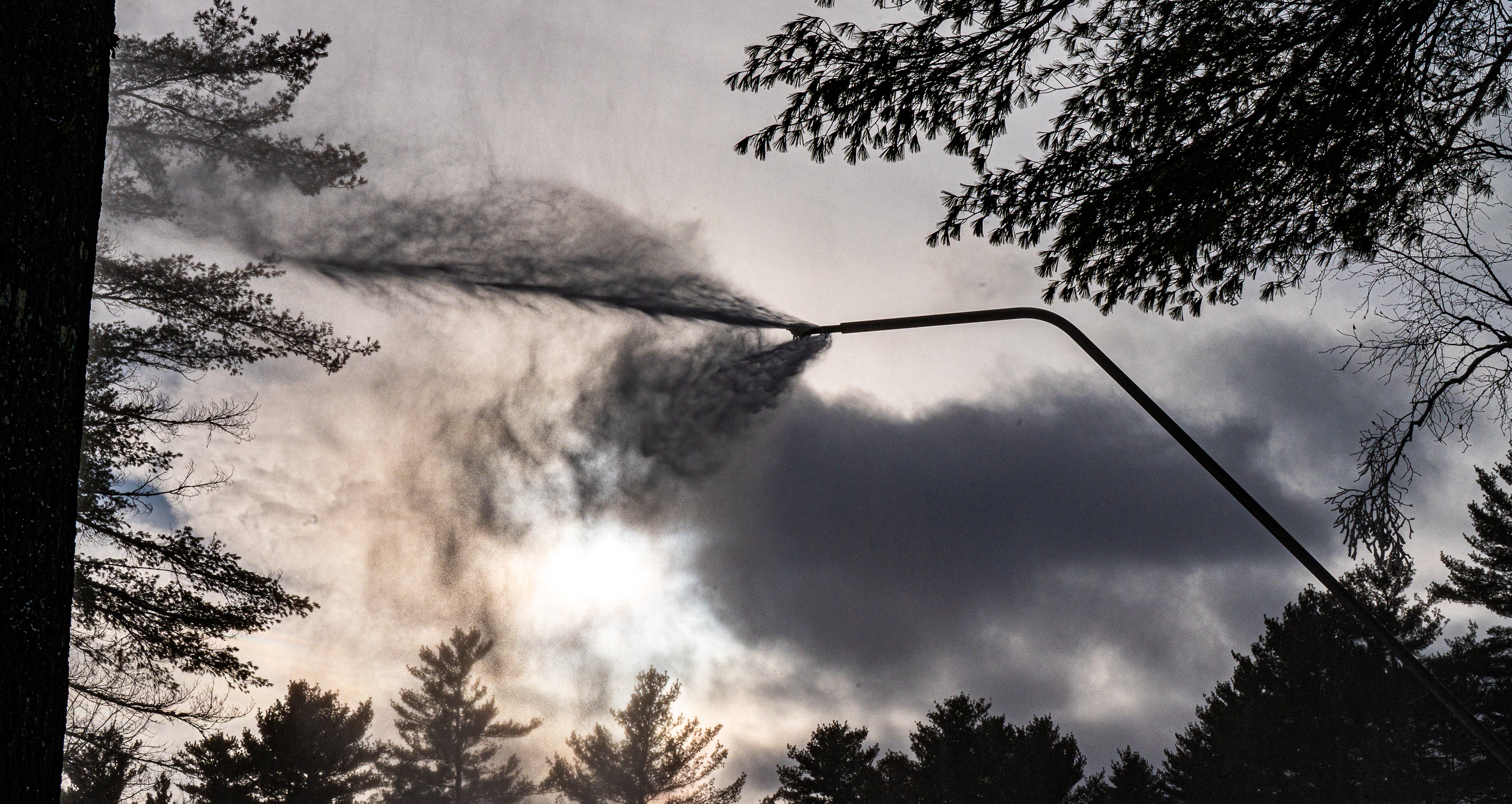
A snow lance, or tower gun, makes snow at Lost Valley Ski Area in Auburn. This particular piece of equipment is a permanent fixture, although the angle and direction can be changed depending on the wind direction and where more snow is needed.
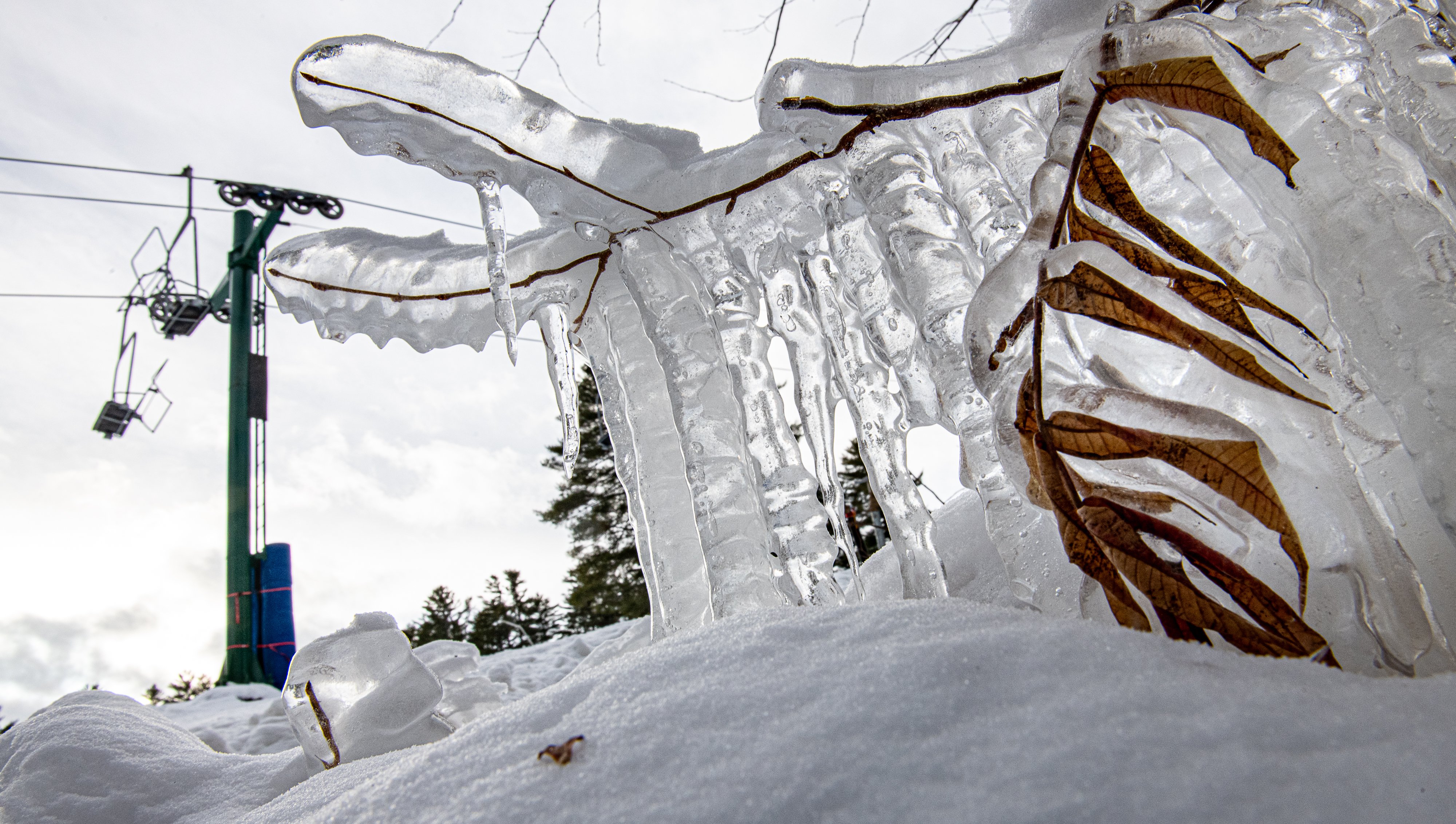
Ice forms on a tree branch and red sumac leaves after a hydrant supplying water to a snow gun was bled once snowmaking was finished for the day.
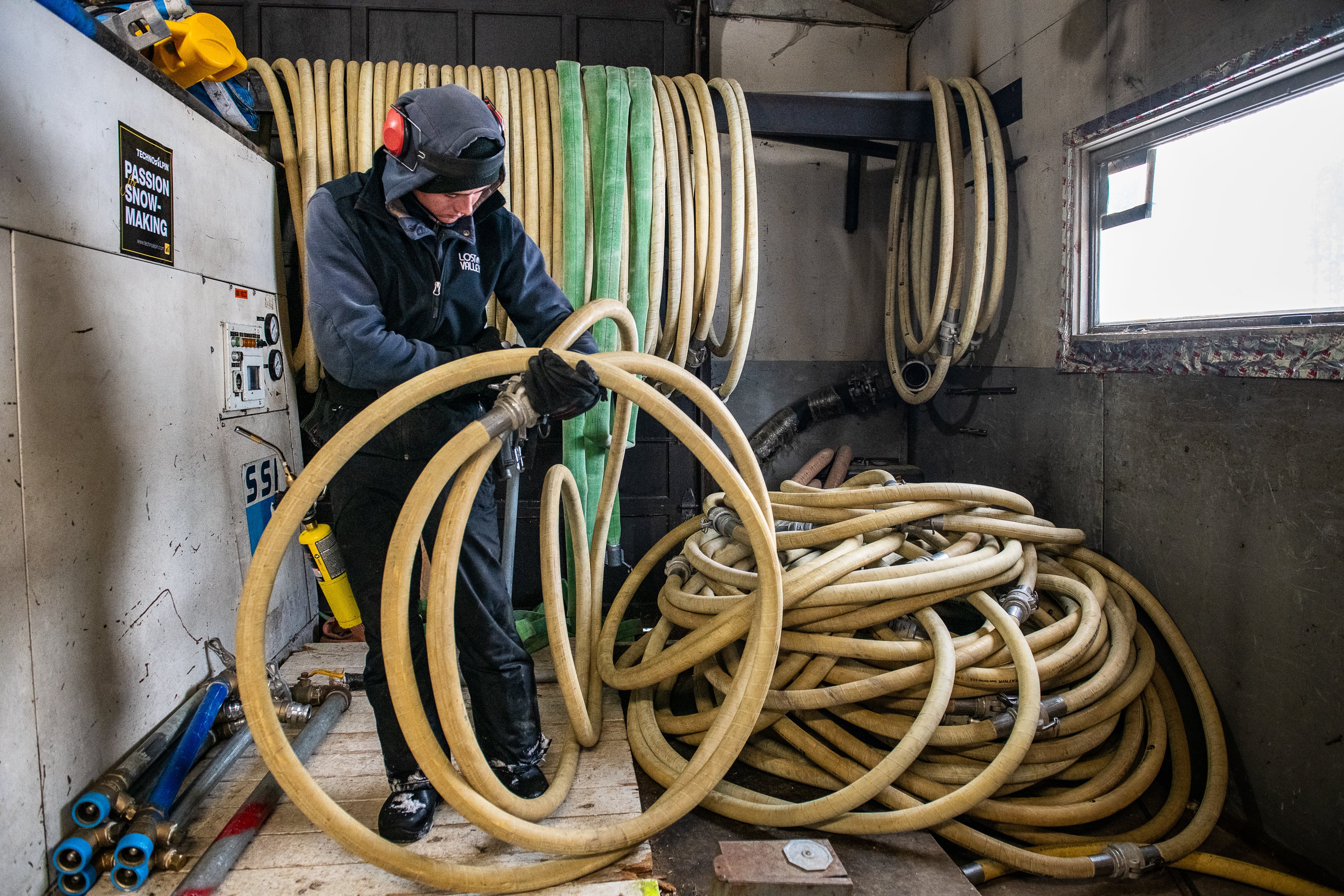
Mason Shanaman gathers lengths of hose in the pump house to feed snow guns.
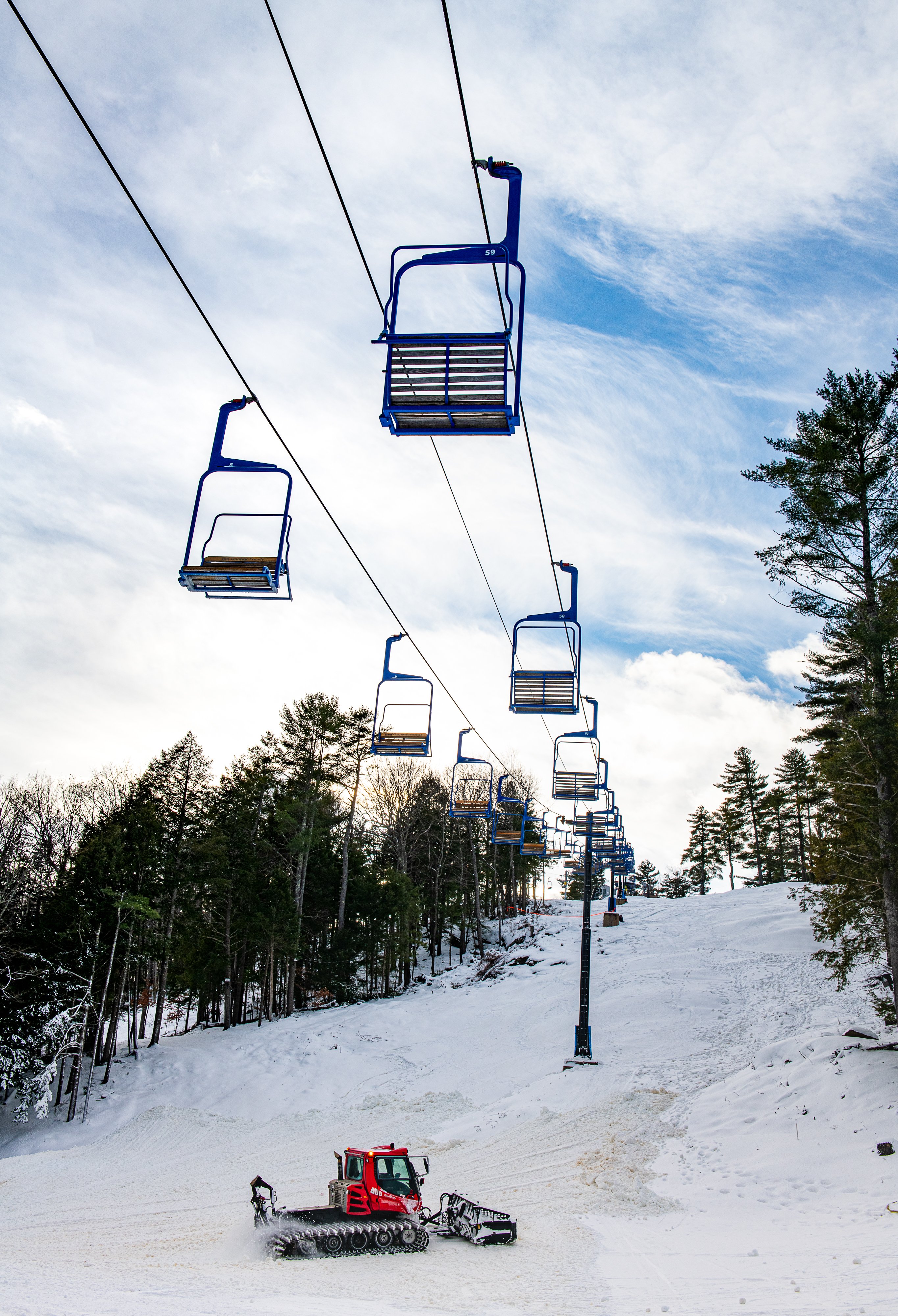
Nate Swenson pushes piles of manmade snow around at the bottom of the Bull Moose trail.
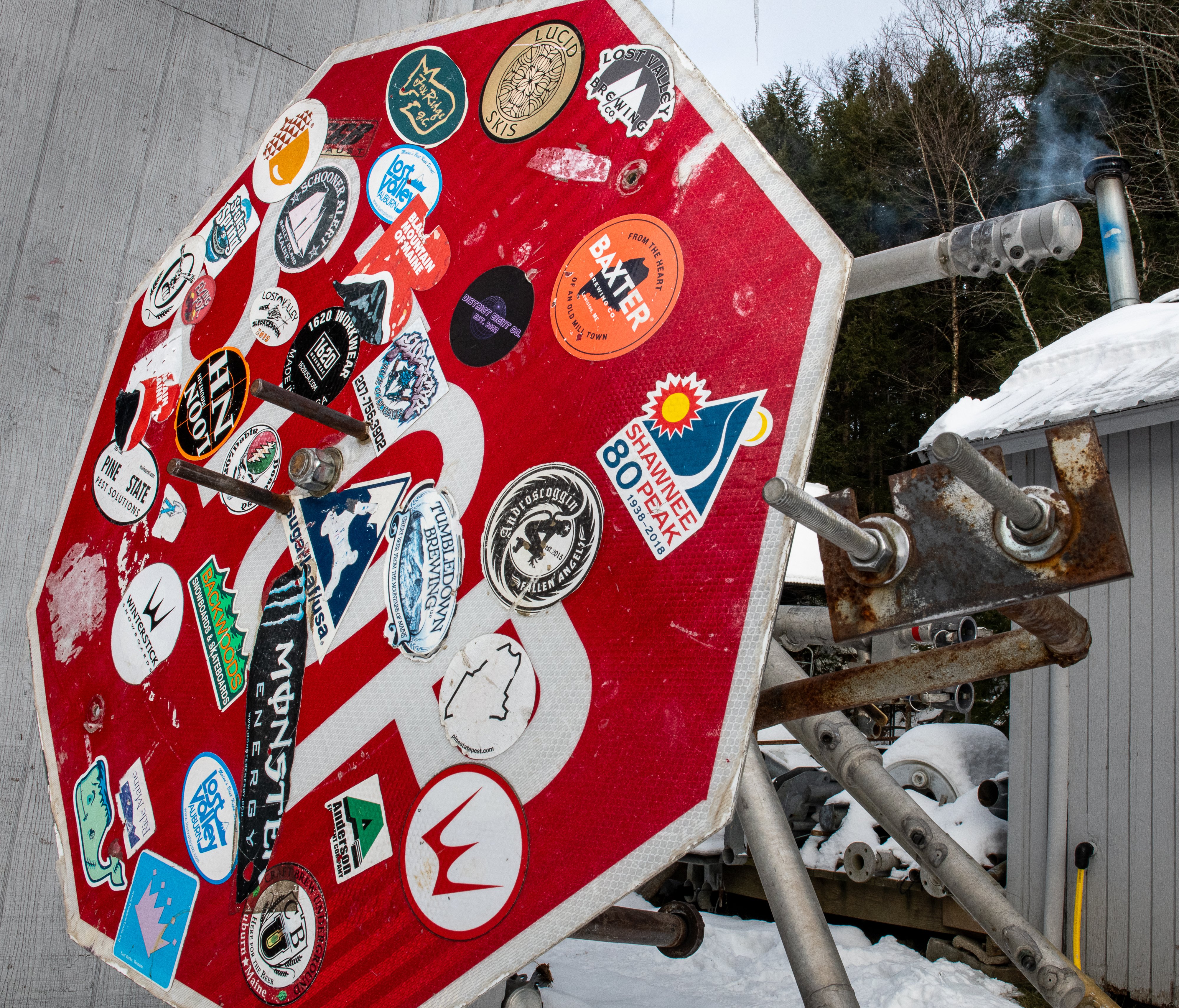
In the spirit of Auburn’s Otto Wallingford, who pioneered snowmaking and grooming in the 1900s using Yankee ingenuity, a stop sign that once stood at the end of Lost Valley’s access road has been transformed into a hose reel outside the spider barn.
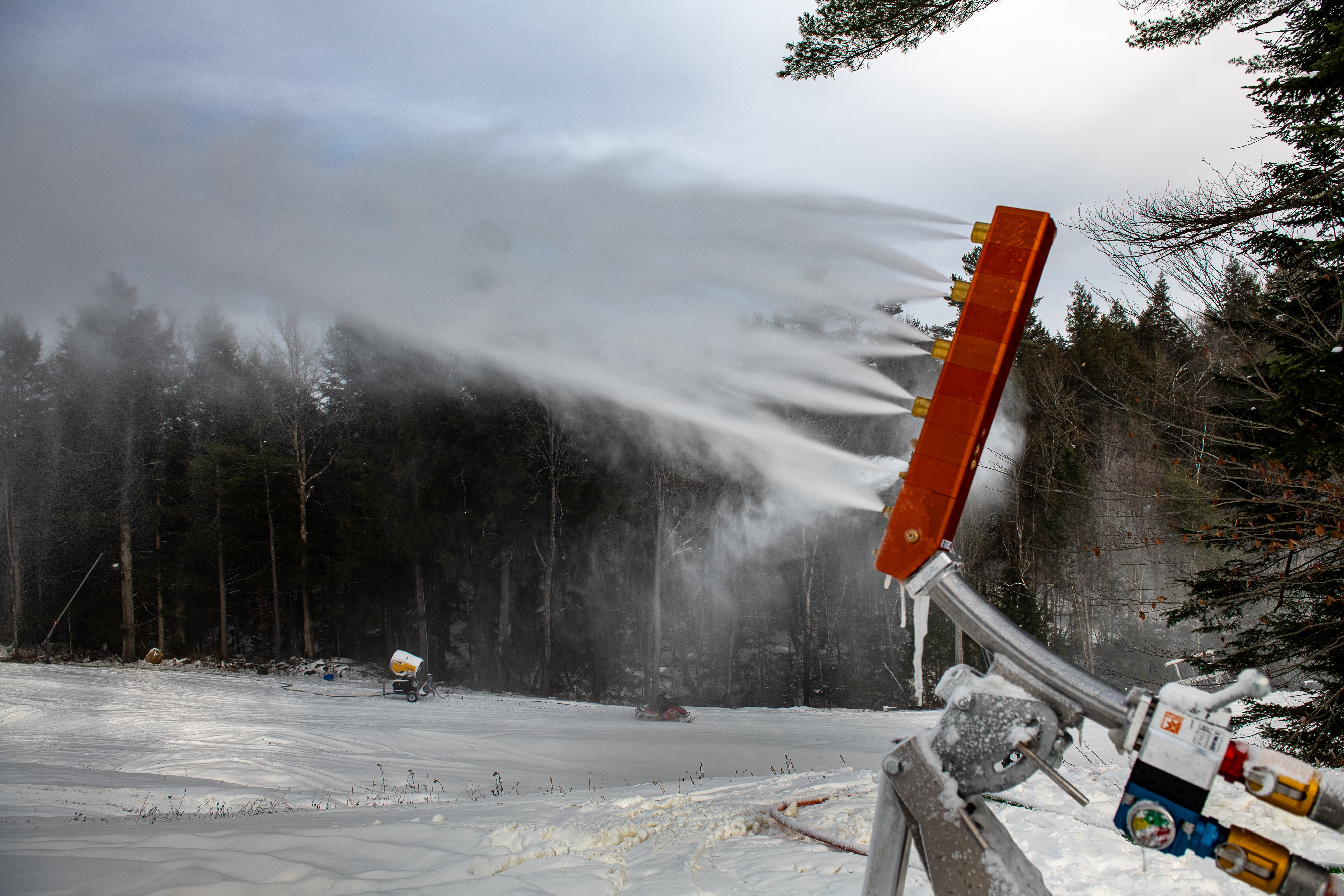
One of a number of snowmaking heads used at Lost Valley.
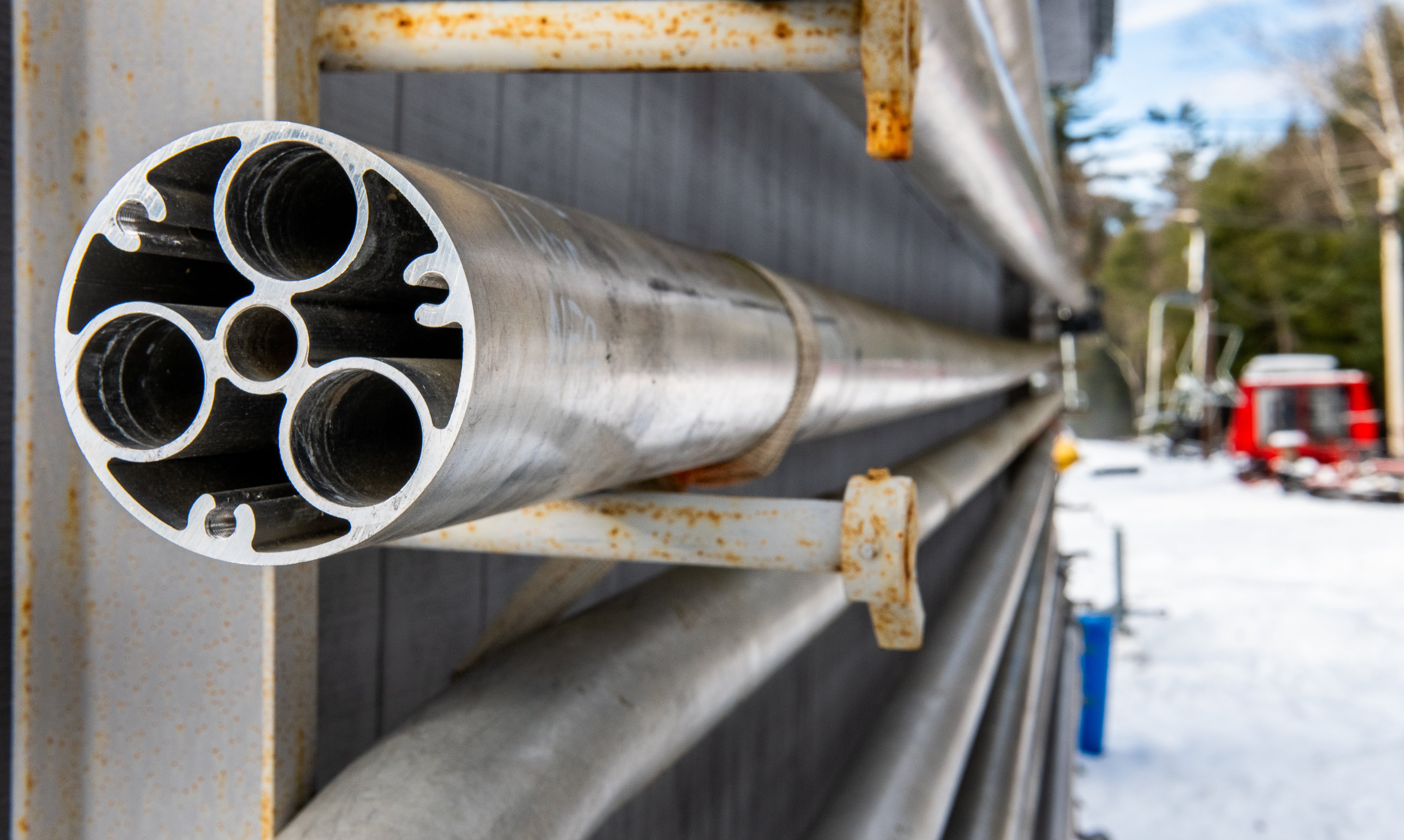
Air and water tubes can be seen inside a spare tower gun hanging on the side of the spider barn at Lost Valley Ski Area in Auburn.
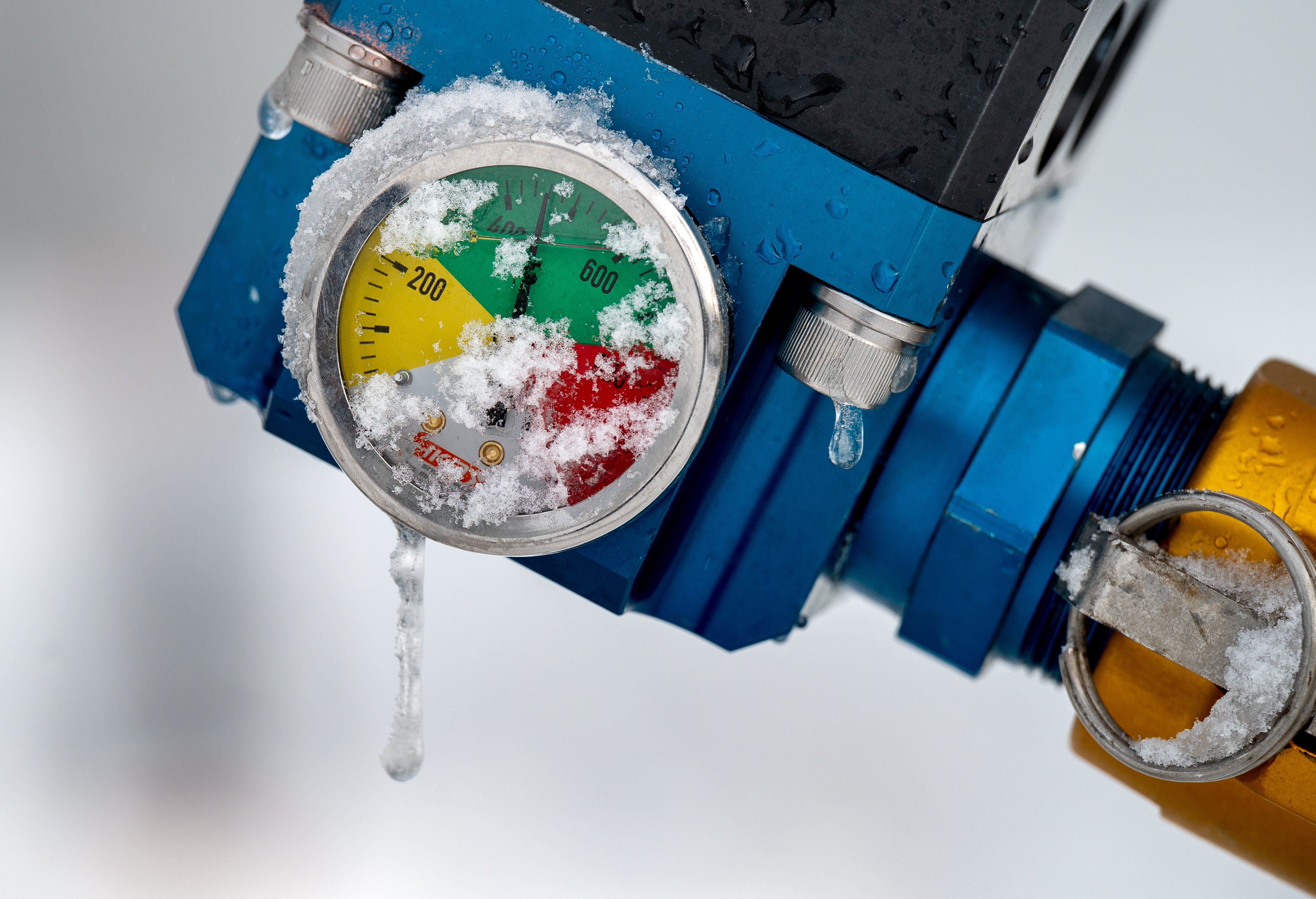
A water pressure gauge on a snowmaking gun. Setting the correct mixture of air and water depends on temperature and humidity. Lower humidity allows for more and fluffier snow.
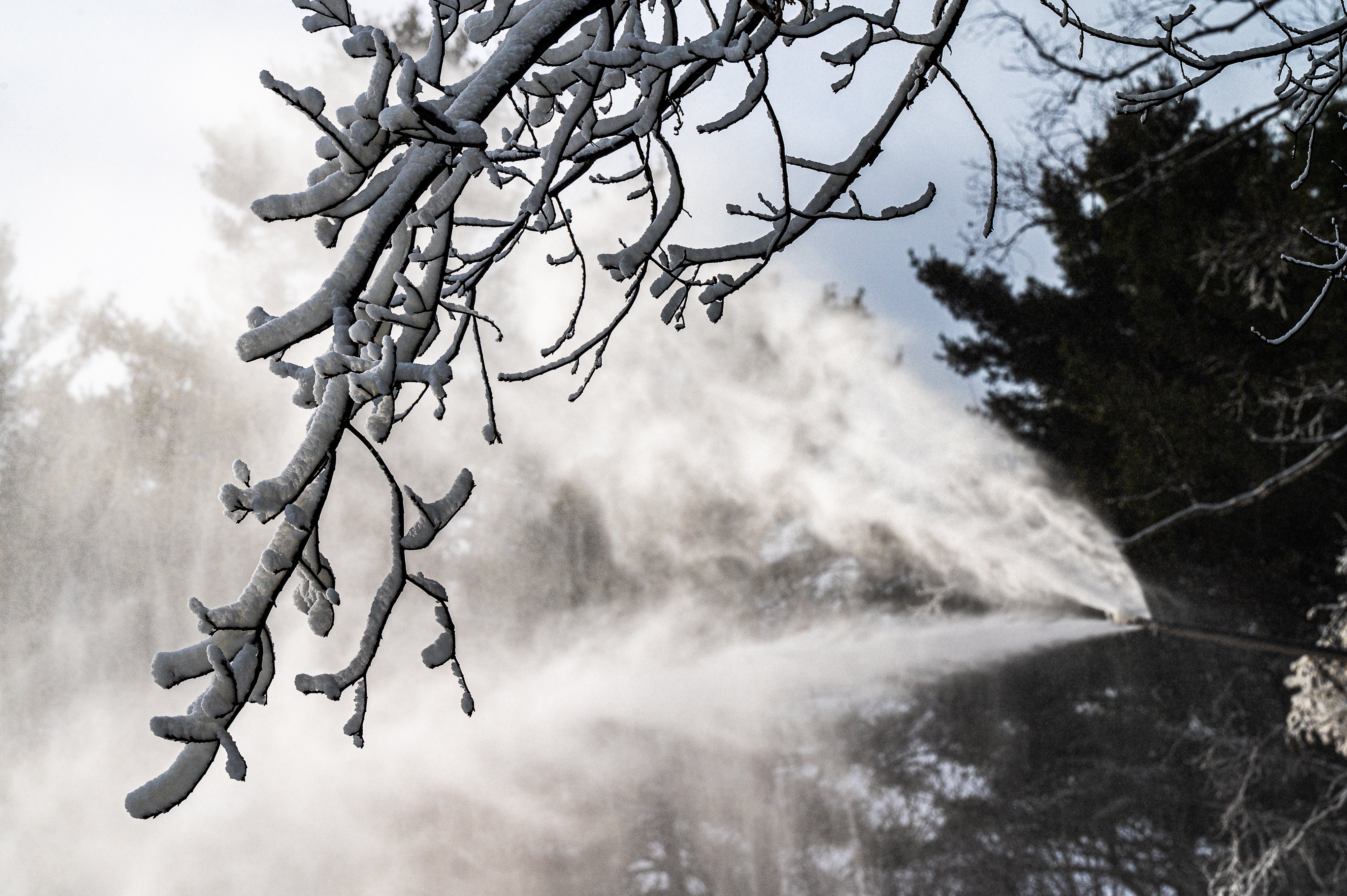
A tree is covered in manmade snow as a gun churns out more. With the wind constantly shifting, it’s a battle for the snowmakers to keep changing the angles and direction of the guns so the snow falls on the trail and not in the woods.
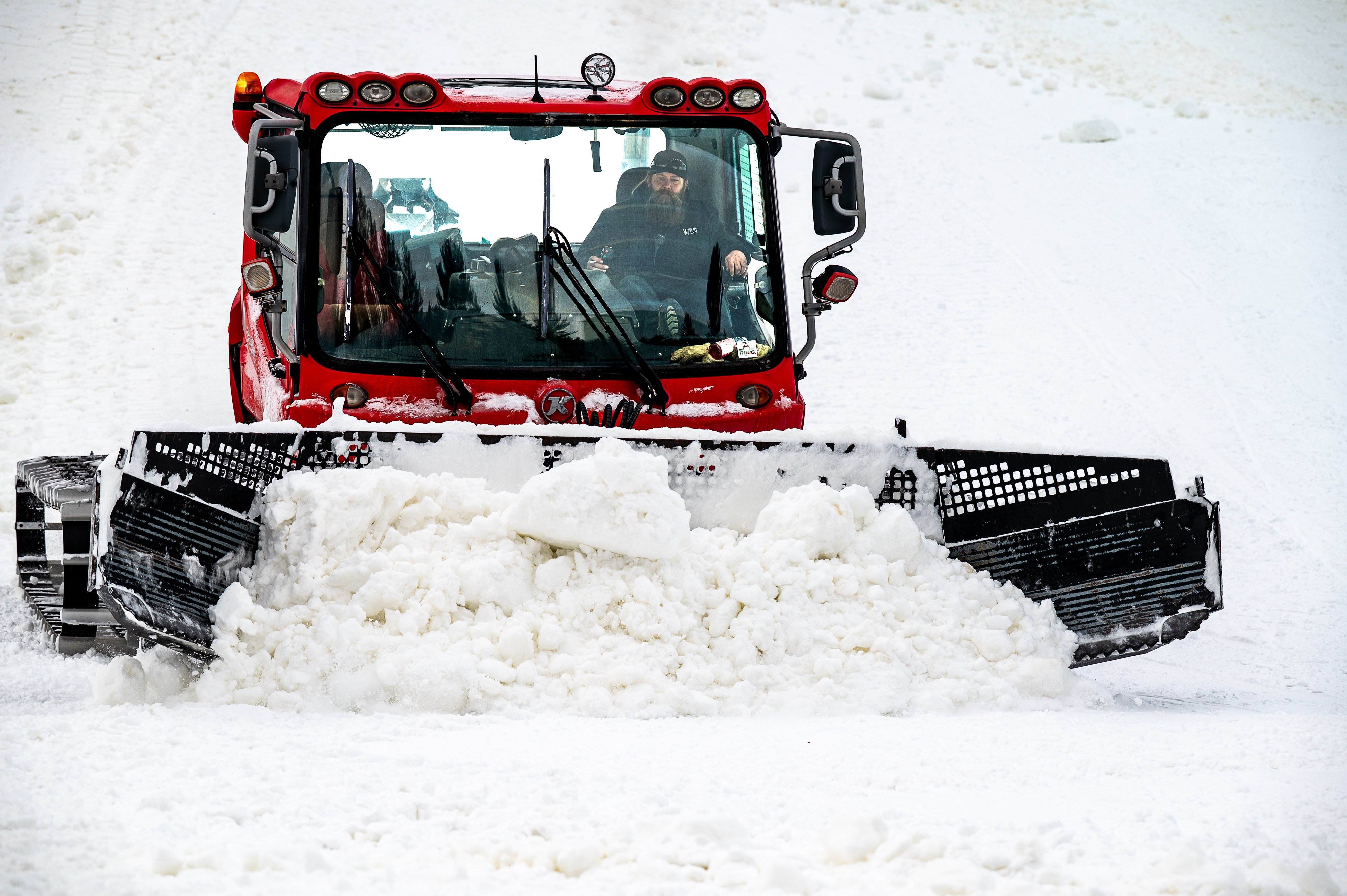
Nate Swenson pushes a pile of manmade snow on Big Buck, driving a Piston Bully groomer, or snow cat, made locally in Auburn.

We invite you to add your comments. We encourage a thoughtful exchange of ideas and information on this website. By joining the conversation, you are agreeing to our commenting policy and terms of use. More information is found on our FAQs. You can modify your screen name here.
Comments are managed by our staff during regular business hours Monday through Friday as well as limited hours on Saturday and Sunday. Comments held for moderation outside of those hours may take longer to approve.
Join the Conversation
Please sign into your Sun Journal account to participate in conversations below. If you do not have an account, you can register or subscribe. Questions? Please see our FAQs.