

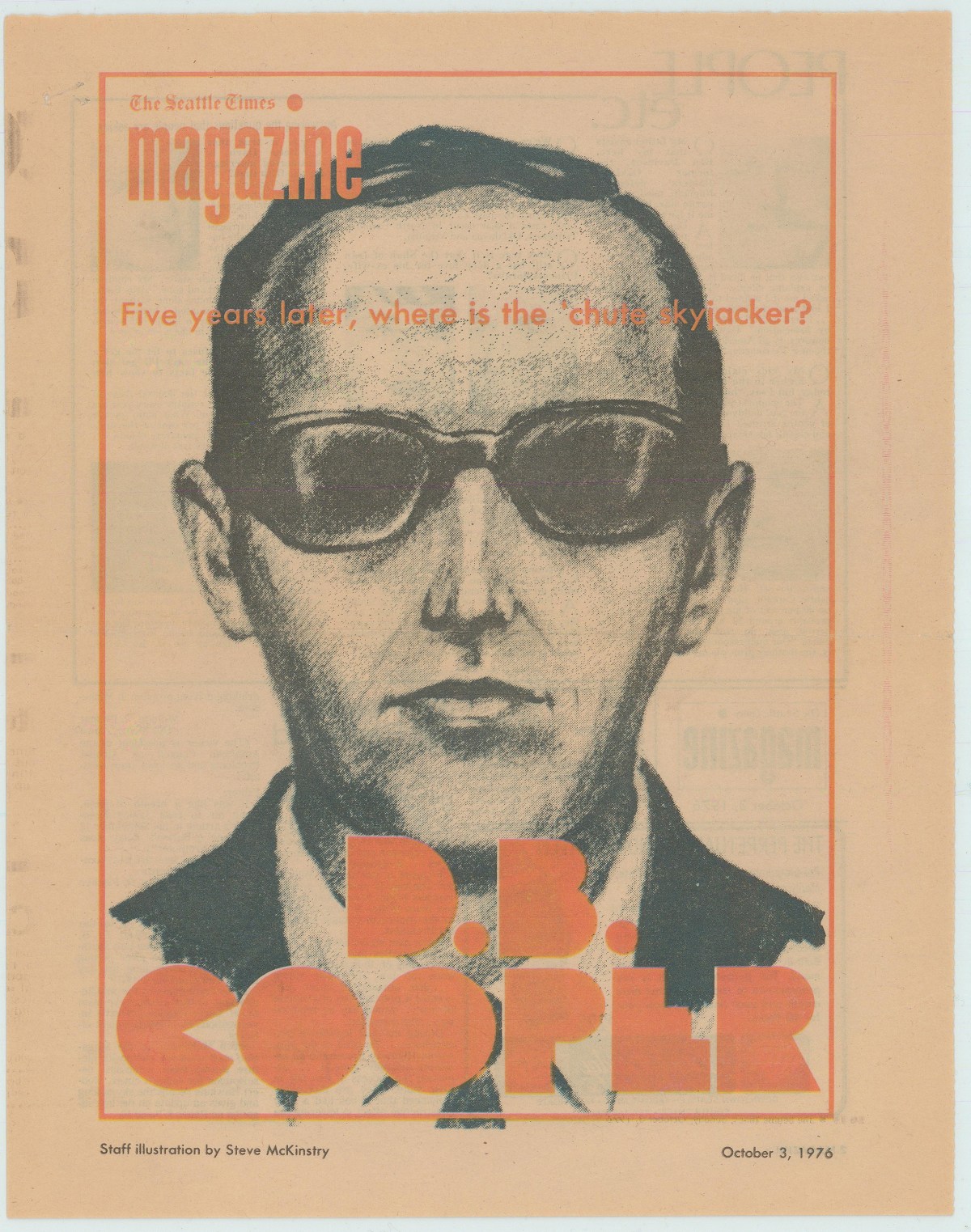
A mystery man boarded a plane in Portland, Oregon, in November 1971, and later parachuted out of it with ransom money equivalent to $1.6 million today. He was never found. The FBI calls it one of the agency’s “great unsolved mysteries,” and it has spent decades trying to figure out the hijacker’s true identity.
A newly released batch of investigative files shows that one of the hundreds of people they considered over the years is a former pilot from Norway, Maine, who died in 1989.
The story of the hijacking, which has come to be known as the D.B. Cooper case based on the name the man gave at the Oregon airport, has inspired movies, books, podcasts, and countless amateur investigators. Ryan Burns attends the “CooperCon” in Washington every year and runs a YouTube page with 6,620 subscribers called D.B. Cooper Sleuth. By day, he’s a criminal attorney in Mississippi.
“It’s kind of the coolest crime ever. This guy is wearing sunglasses, smoking cigarettes, drinking bourbon in the back of a plane,” Burns said. “And he got away with it.”
No one died in the hijacking, and Burns, who plans to release his own book on the Cooper case, said he has interviewed several of the plane’s passengers and they didn’t know the plane had been threatened until they landed safely on the ground.
The pilots and flight attendants knew, though, and after he retired one of the pilots told the Associated Press that the crime had “caused a great number of people a great deal of grief.”
The FBI’s quest to figure out the identity of the hijacker brought them to many places, including central Maine in 1972, where they interviewed a man named Raymond Sidney Russell, who also went by R. Sid Russell and Sid Russell.
The FBI files do not make clear how Russell originally drew their attention, but the files show the agency investigated his background and spoke with several people who knew him, some of whom told the bureau they thought he could’ve committed the crime and others who didn’t think he was capable of it. The section on Russell takes up 30 pages of the tens of thousands released so far by the bureau.
He is by no means the most talked-about subject in the FBI’s files, and there are about two dozen other people the agency seems to have taken as seriously as they took Russell, according to Burns, who said he has reviewed all of the released files.
“I don’t think anybody in the world wants it solved more than I do, given all the effort I put into it,” Burns said.
After looking at all of those documents, Burns has serious doubts that Russell and Cooper could have been the same person.
HIGH SCHOOL ATHLETE, PILOT, INVENTOR
According to public documents and newspaper records that match the identifying information of the man interviewed by the FBI, Russell was born in 1923, was a standout on the high school ski team in Norway and served in the military. He then spent part of his career with the Flying Tigers and other freight airlines, and he lived on the West Coast before returning to Norway once he retired.
People who knew Russell in the early ’70s described him to the FBI as a witty man and casual dresser who enjoyed the outdoors. One said Russell had parachute training. He was the same age as the man known as D.B. Cooper and some of his physical characteristics matched Cooper’s, according to the FBI, though not the most distinguishing ones like Cooper’s height or the shape of his nose. Those differences alone makes Burns, for one, believe it is unlikely they were the same person.
In Russell’s interview with the FBI at his summer residence on Whitney Pond in Oxford, he denied involvement in the hijacking and provided an alibi, saying he had returned to Maine from the West Coast to be with his mother in summer 1971 — months before the crime occurred.
The interview notes are incomplete in the newly released files, and a search of the tens of thousands of other pages the bureau has released did not reveal Russell’s name anywhere else.
But on one document from November 1972, months after the FBI interviewed him, a handwritten note at the bottom says “ELIMINATE RUSSELL,” which Burns takes to mean they did not consider him to be a suspect worth pursuing.
The Norway that Russell returned to in 1971 was “bustling,” according to Sue Denison, curator of the Norway Museum & Historical Society.
“The economy was good and everybody had work,” including at shoe and wood factories, she said.
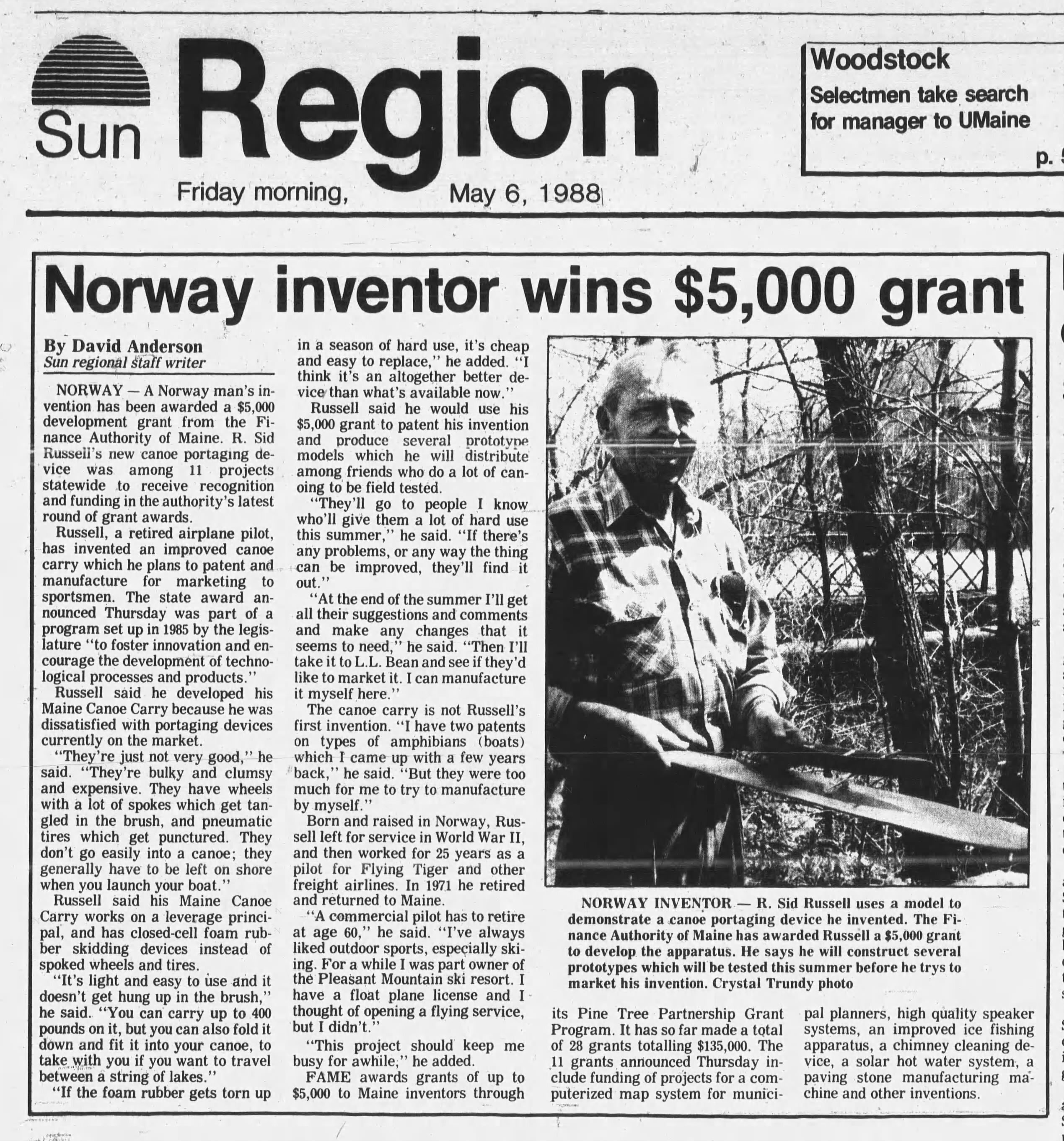
While Cooper made off with $200,000 in $20 bills, the equivalent of more than $1.6 million today, Russell does not appear to have had that kind of wealth. He put several ads in the newspaper looking to buy things, such as a small trailer, or sell things, like foam rubber. He also put in an ad looking for an investor for his prospecting endeavors.
A year before his death in 1989, the Lewiston Daily Sun wrote that Russell received a $5,000 grant from the state for an invention — a canoe portaging device that Russell hoped L.L.Bean would take an interest in.
Russell is buried in Paris, Maine, and does not have many close relatives. One reached by the Press Herald did not comment for this story. Attempts to locate people in Norway who knew him were unsuccessful. The names of witnesses and acquaintances the FBI talked to are redacted in the files the agency released.
Several other names have been examined extensively online. The Wikipedia page for Cooper, for example, lists 15 suspects — none of whom are Russell.
The Mainer’s new appearance in the files drew some interest in Cooper forums this month. But Burns doesn’t think any of the people being publicly discussed are the real hijacker. In fact, he doesn’t believe it’ll ever be solved, in part because any DNA evidence in the case appears to have been destroyed.

We invite you to add your comments. We encourage a thoughtful exchange of ideas and information on this website. By joining the conversation, you are agreeing to our commenting policy and terms of use. More information is found on our FAQs. You can modify your screen name here.
Comments are managed by our staff during regular business hours Monday through Friday as well as limited hours on Saturday and Sunday. Comments held for moderation outside of those hours may take longer to approve.
Join the Conversation
Please sign into your Sun Journal account to participate in conversations below. If you do not have an account, you can register or subscribe. Questions? Please see our FAQs.