


READFIELD — Making maple syrup from the sap that annually flows from Maine’s maple trees, veteran sugarers say, is at its core a very simple process but mistakes can happen.
That seems appropriate considering Maine Maple Sunday, what is now one of the biggest days of the year for maple syrup lovers and producers and inspired other agricultural product-themed days across the country, grew out of a mistake.
Alan Greene is the president of the Maine Maple Producer’s Association. His family has tapped trees at Greene Maple Farm in Sebago for eight generations. Four decades ago, a reporter misquoted his father, Ted, in a news story as saying the Greene farm would serve pancakes the following Sunday. People showed up at the farm for the “event” that Sunday, looking to have pancakes and maple syrup.
That gave Greene’s father an idea.
Greene spoke with Arnold Luce, another maple sugarer in Anson, who had expressed frustration at not knowing when people might come to his farm to buy maple syrup, so he didn’t know when to get the place ready.
So they decided, through the maple producers association, to designate a day in 1983 as Maine Maple Sunday when they would open their sugarhouses to the public and share their process and sweet products.
Since then, the annual event has taken off, drawing thousands of visitors to maple operations across Maine. It has grown to become Maine Maple Sunday Weekend, which this year is March 21-22.
Not all syrup-related mistakes end up being so sweet, especially for the growing number of first-time tree-tappers, who are taking up the hobby. Since the COVID-19 pandemic, Greene said, tapping a few backyard trees to make syrup has become an increasingly popular family activity.
Greene welcomes newcomers to maple sugaring, but he recommends they partner up with a veteran producer as sort of a job shadow to see how it’s done firsthand to avoid potential pratfalls.
“I see a lot of people online, on Facebook, asking questions that shouldn’t be asked,” Greene said. “Like, ‘Can I use old kitty litter buckets for sap?'”
Mistakes can result in syrup that is off-flavor or burned pans or a killed a tree.
“There are a lot of tricks to the trade, little things you pick up just talking to other producers,” Greene said. “It can save a lot of trouble. You don’t want to do all this work, boil all this sap, and then lose it. If it tastes bad, people may not want to try it again. The last thing we want is bad syrup out there.”
Readfield nativeDavid Harriman, co-owner of Dead Stream Alpaca and Maple Farm with his wife, Karen, runs an 1,800-tap maple operation, with 800 taps on 56 acres of his own land off Winthrop Road, and the rest on three parcels of land he leases from others.
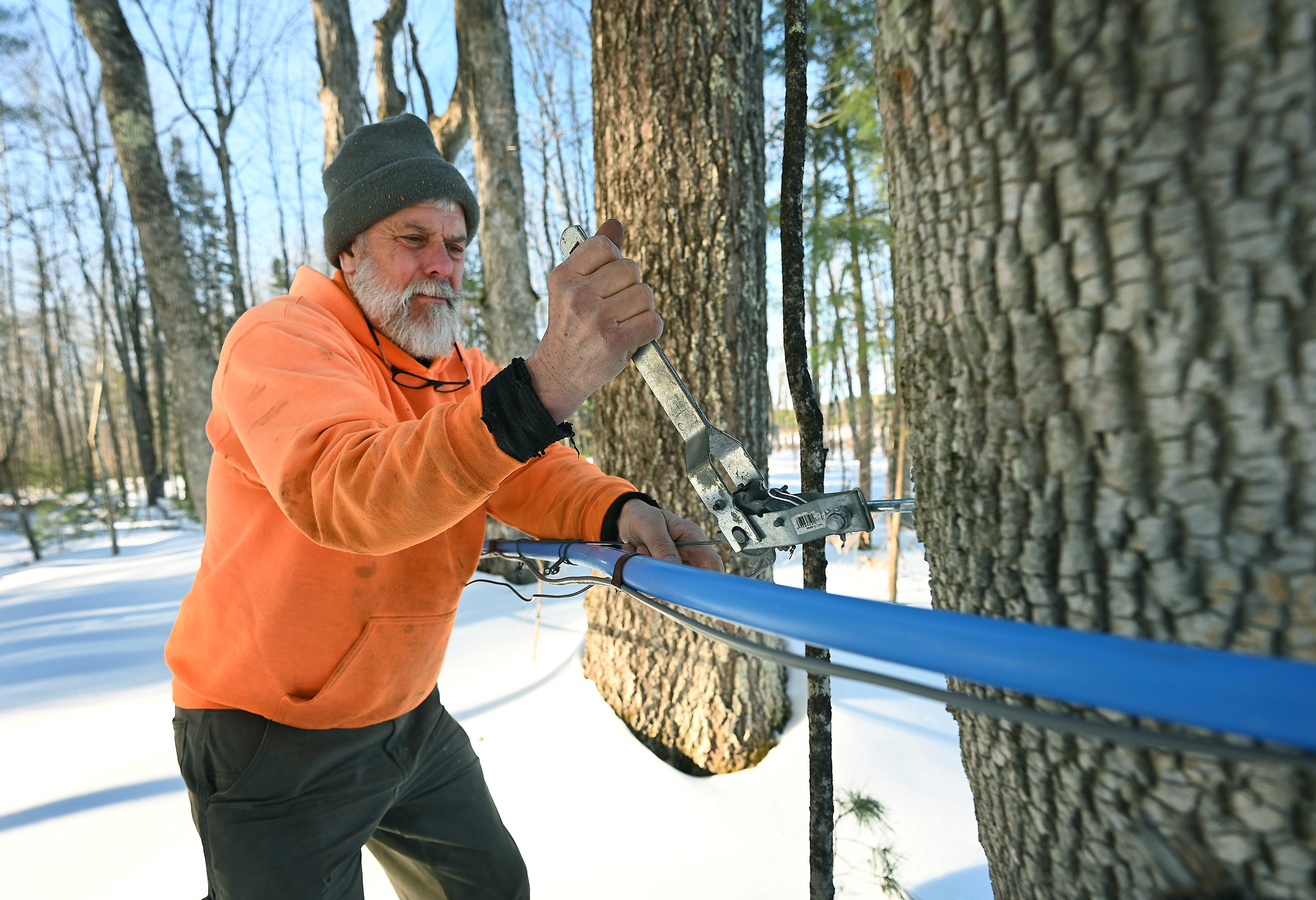
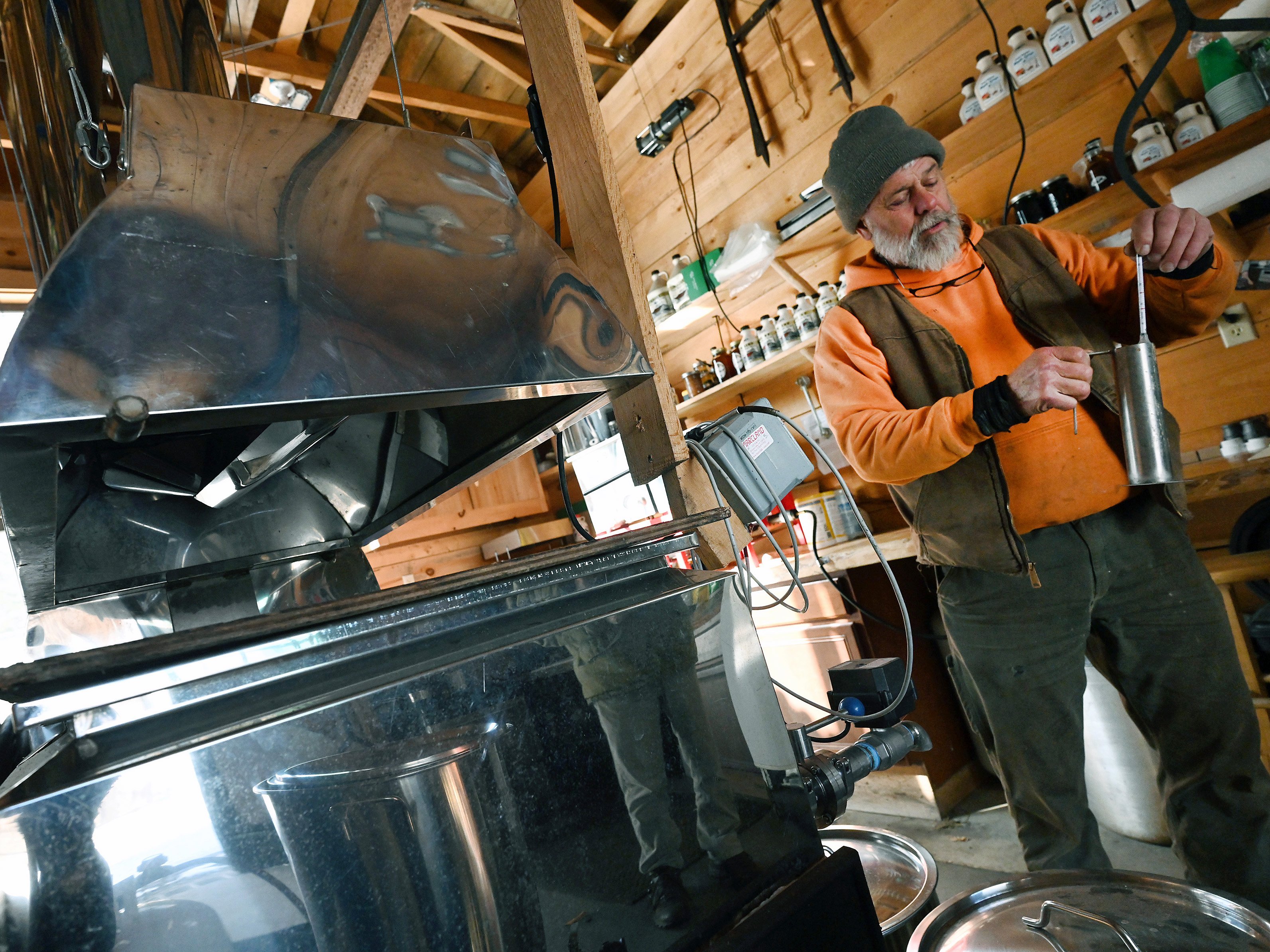
It’s a relatively big operation, with a large, gleaming stainless steel evaporator in a dedicated sugarhouse, surrounded by woods where the maple trees are connected by webs of blue tubing and trails that Harrison travels on an all-terrain vehicle. That network of tubes carrysap from the trees to one of three 250-gallon collection tanks spread through the woods.

His family’s first effort at sugaring was considerably simpler, and it ended with a mistake.
When Harriman was 10 or 12 years old, he tapped a few of the family’s maple trees, boiling the sap off on a woodstove in the family kitchen.
That production ended when the boiling process steamed most the wallpaper off the kitchen walls. Harriman, who works as a contractor, didn’t make syrup again until he was an adult, and started in 2008 what grew into his current operation on land previously owned by his 87-year-old father, Dan.
“It’s just a hobby gone out of control,” Harriman said. “I never planned to get to this level.”
Harriman does most of the work, but has two or three friends who help out. And on Maine Maple Sunday, they’ll have 15 to 18 family members and friends helping with festivities at their sugarhouse. Last year, they hosted around 500 people.
Recently Harriman, 64, has been working in the woods, clearing dead trees and making sure the countless feet of tubing threading through the woods are elevated and ready to work once the sap starts flowing. He said working in the woods is where he wants to be, in relative solitude in a beautiful location away from life’s stresses.
While he mostly uses tubing to collect sap, he keeps one bucket on a test tree near his sugarhouse, which he checks to see when sap is flowing. He said the tubing is a much faster way of collecting sap. He misses using buckets, because checking them for sap made him feel like a kid on Christmas.
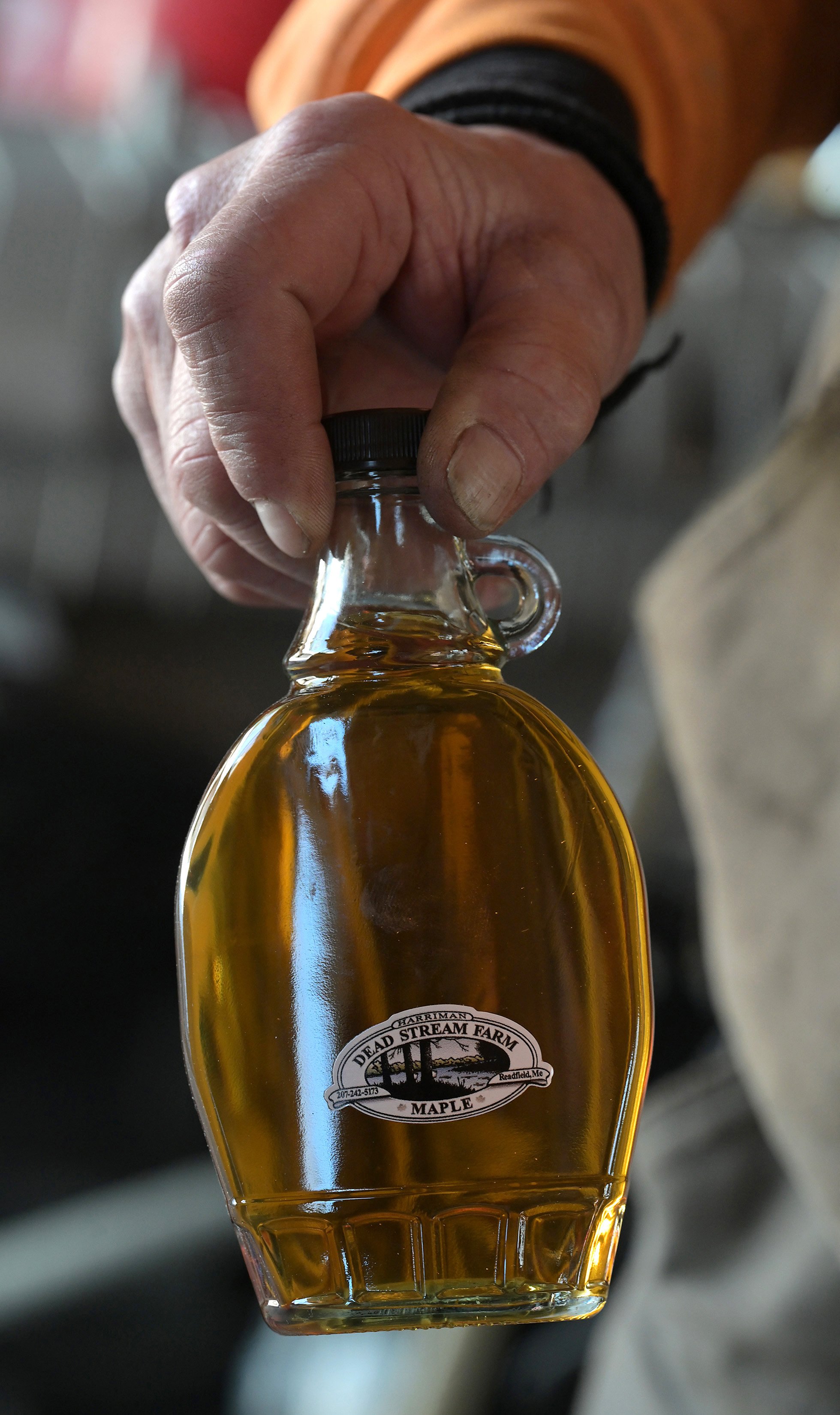
On Thursday Bob Peterson, 86, who leases his nearby land to Harriman to collect sap from, stopped by “to collect my pay,” a hefty bottle of maple syrup and a dozen eggs from Harriman’s chickens.
“It’s the best. My wife and I have it everyday, we love it,” Peterson said.
Mainers makes more than 575,000 gallons of syrup annually during a normal season, generating more than $55.6 million for the Maine economy and supporting more than 833 full-time and part-time jobs that generate more than $26.9 million in wages, according to the The Maine Maple Producer’s Association. The association represents more than 250 of the 450 producers licensed to sell maple products in Maine, with a mission of promoting the maple industry.
The complexity of operations can grow exponenially, as operations go from individual backyard taps and buckets and boiling sap on a woodstove to 1,000-plus tap systems with vacuum-fed tubes to collect and move the sap, high-technology evaporators, reverse osmosis devices that separate sugar and water to speed production, and canning operations.
Greene said making syrup boils down to “an incredibly simple process that you can make as complicated as you want.”
And that can still be done fairly cheaply with a few taps, buckets, a heat source and container for boiling, some maple trees, time, and effort.
Green encourages newcomers with some maple trees in their backyard to give it a try, noting they can keep it simple and relatively cheap at least initially.
But maybe spring for a food-grade bucket for collecting sap and use that old kitty litter bucket for storing things you don’t plan to eat.

We invite you to add your comments. We encourage a thoughtful exchange of ideas and information on this website. By joining the conversation, you are agreeing to our commenting policy and terms of use. More information is found on our FAQs. You can modify your screen name here.
Comments are managed by our staff during regular business hours Monday through Friday as well as limited hours on Saturday and Sunday. Comments held for moderation outside of those hours may take longer to approve.
Join the Conversation
Please sign into your Sun Journal account to participate in conversations below. If you do not have an account, you can register or subscribe. Questions? Please see our FAQs.