
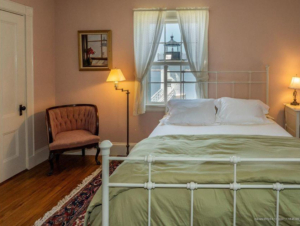
99 LIGHTHOUSE RD., ISLE AU HAUT — $1.695 million
4 beds, 2 baths, 2,500 SF
Built in 1907 by the Army Corps of Engineers, the Isle Au Haut Light Station at Robinson Point is a public-private property. The town owns and operates the lighthouse while the four-bedroom keeper’s house and two-bedroom cottage have operated as an off-the-grid inn or rental. However, it’s perfectly sized for single-household occupancy. The property is solar powered with drinking water drawn from Penobscot Bay via reverse osmosis. Fixtures, furnishings, and equipment like a generator, boathouse, and deepwater dock included. Listed by Jamie O’Keefe, LandVest, Inc. See the full listing.
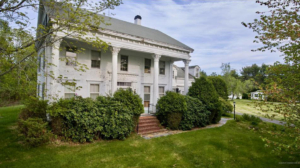
218 AND 220 BRISTOL RD., DAMARISCOTTA — $2.7 million
35 beds, 29 baths, 15,000 SF
In long time operation as The Down Easter Inn, the Greek Revival main home on this nearly 40-acre property was completed in 1850 as a private home for the son of Robert Huston, the first Justice of the Peace of Lincoln County. There are nine bedrooms, five bathrooms and seven fireplaces in the main house. 22 attached, motel rooms were added in the 80s and the full bed/bath count includes a two-bedroom owner’s cottage. Right of way access to the river across the street. Listed by Kellie Peters, Reilly Real Estate. See the full listing.
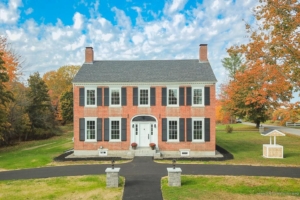
186 MAIN ST., UNITY — $949,000
3 beds, 2 baths, 2,829 SF
Prefer a property only for personal use? Built in 1826, this Federal style home on 2.23 acres is where the second president of Bates College, George Chase, grew up. It looks “move in ready,” very recently renovated with high end tiles, refinished floors, new interior and exterior lighting, new patio, and a new, two-level barn in the back. Unity is about 45 minutes’ drive from Bangor and 30 minutes from Belfast. Listed by Stephanie Cross, Better Homes and Gardens Real Estate, The Masiello Group. See the full listing.
Comments are not available on this story. Read more about why we allow commenting on some stories and not on others.
We believe it's important to offer commenting on certain stories as a benefit to our readers. At its best, our comments sections can be a productive platform for readers to engage with our journalism, offer thoughts on coverage and issues, and drive conversation in a respectful, solutions-based way. It's a form of open discourse that can be useful to our community, public officials, journalists and others.
We do not enable comments on everything — exceptions include most crime stories, and coverage involving personal tragedy or sensitive issues that invite personal attacks instead of thoughtful discussion.
You can read more here about our commenting policy and terms of use. More information is also found on our FAQs.
Show less