


When Joshua Viertel stumbled upon a news story about illegal elver fishing in Maine nearly a decade ago, he got hooked.
He said he couldn’t stop reading about the issue, in part because he felt connected to it. The eel Viertel ate in sushi rolls in New York City, he realized, could have started as babies, or elvers, in Maine — one of just two states where they are commercially harvested. And their journey to his plate was a battlefield.
In the mid-2010s, the elver fishery became one of Maine’s most profitable. But legally catching the young eels, also called glass eels, meant following government regulations to prevent overfishing, including a limit on how many could be captured.
Under those restrictions, a high-stakes black market for elvers soared — until a federal sting started taking it down.
“The Maine coast on its own is so extraordinary … But then there is this little fishery that is made-for-TV drama already in real life. And all of these characters are real people,” said Viertel, a food and farming activist based in New York. “There’s so much in there that’s rich and begs to be written about.”
He looped in his father, Jack — a retired Broadway producer living in Deer Isle — and they began cowriting under the pseudonym J.J. Viertel.
Their debut novel,“The Glass Eel,” arrived on shelves on Sept. 9.
It’s one of several recent books and TV shows that have taken up fishing-related crimes, and elver trafficking specifically. (“The Glass Eel” would “make a helluva film, too,” actor Emma Thompson wrote in an email to the elder Viertel that was later added to the back cover.)
Local booksellers and writers say the trend reflects shifting interests from readers.
“More popular books are examining Maine in a way that’s really thoughtful,” said Josh Christie, owner of Print: A Bookstore in Portland, “as opposed to the Hallmark movie version of a lobsterman being like a fireman – a hunky and gruff character that people pine after that ends up with the female lead at the end of the book.”
‘THE ELVER WARS’
A pound of elvers can earn a licensed fishermen $2,000 in Maine. The eels hatch in the Sargasso Sea — a swath of water in the Atlantic Ocean east of the Bahamas with lots of floating seaweed — and drift from there to North America while they grow from larvae to elvers, with the transparent look that inspired the term “glass eels.” When they are caught in Maine, they are sold to dealers and most often shipped to east Asia, where they are raised to maturity, then used as food in meals like sushi.
In the last decade, authorities uncovered a ring of at least 21 people accused of illegally trafficking over $5.25 million worth of elvers, including many in Maine. To protect their kingdoms, legal and illegal elver fishermen began bringing guns and armed guards down to the river while they harvested their catch.
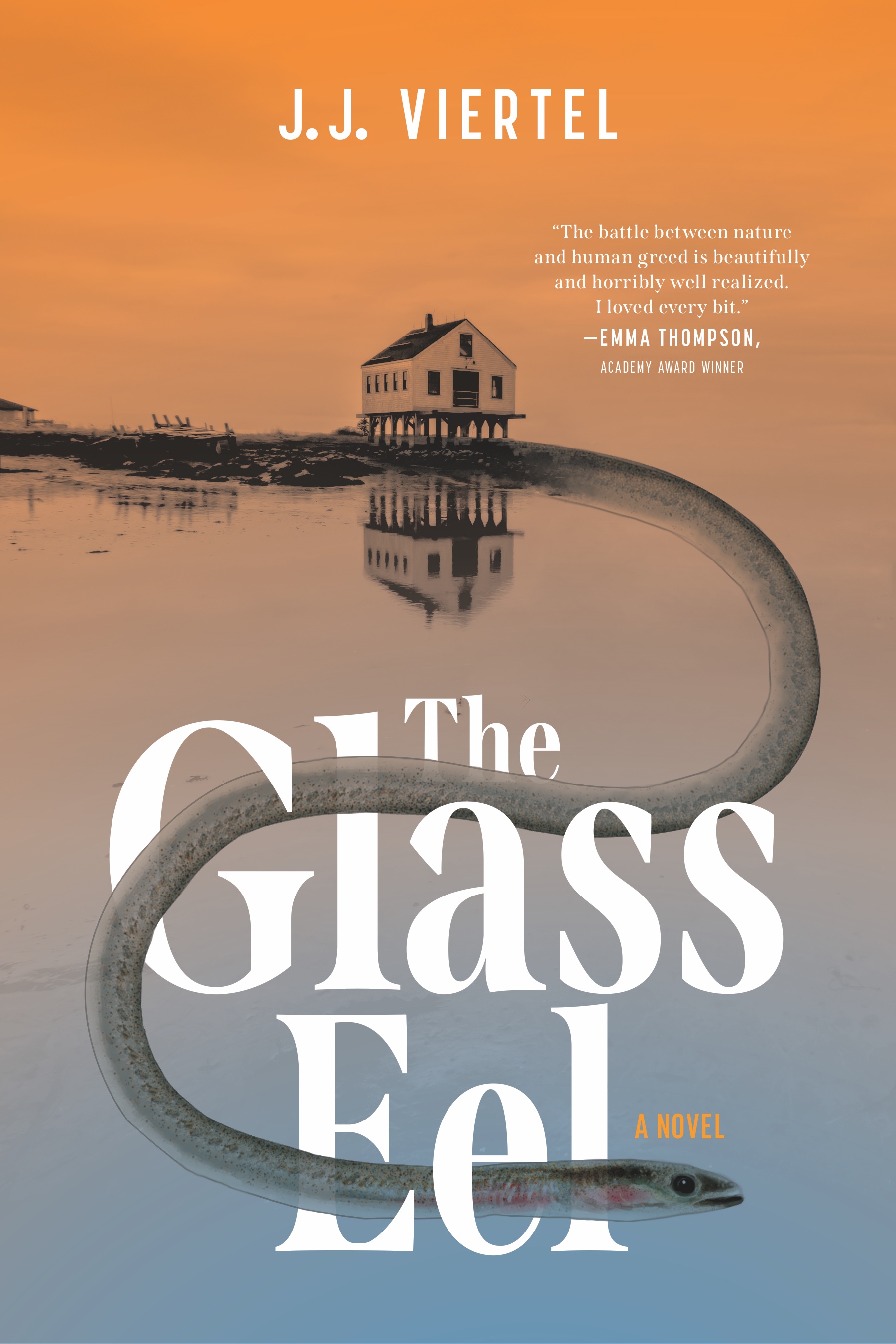
The Viertels’ book follows Jeannette King, the owner of a crab shack in a small, fictional Downeast town. She is dragged into the muck of a criminal ring after finding her lobsterman ex-husband’s illegal bucket of glass eels.
There is a shady former governor recovering from his lost election to a female Democrat; Passamaquoddy Tribe members grappling with the misuse of a sacred species; young people struggling with money and substance use in coastal Maine’s limited job market; and ringleaders who infiltrate small communities looking for people to do their bidding.
“Elvers, as small and seemingly insignificant as they are, opened up a boundless world that we could explore in as many ways as we wanted to,” Jack Viertel said.
The pair traded drafts back and forth, between Maine and New York. Jack would write a chapter, then Joshua would add, edit and flesh it out.
WHY NOW?
Journalist Ellen Ruppel Shell, who published “Slippery Beast: A True Crime Natural History, with Eels” last year, was similarly fascinated with the subject. A former house painter sat down at her table for a break and mentioned the drama in passing.
“It was just an irresistible story,” she said. “ I don’t think I’ve ever had so much interest in a proposal (from book publishers).”
The Netflix show “Bodkin,” which came out in May 2024 also explores elver-related crime, but in a fictional Irish community.
Gibson Fay-LeBlanc, executive director of the Maine Writers & Publishers Alliance, believes that the casual reader is looking for more nuance and reflection in an entertaining, non-academic read.
And in the age of the internet, it’s harder to navigate a highly saturated market. There is no shortage of books about Maine’s lobstering world, whether it be about the “romance” and “idealism” or the grit and challenges.
“We have a century of writing about Maine where the coast tends to dominate — lighthouses and lobstermen.” he said. “Those things will (continue) to be written about. But I think people are also more interested in the less usual Maine stories.”
Ruppel Shell calls it a “growing hunger for hidden-in-plain-sight books.”

We invite you to add your comments. We encourage a thoughtful exchange of ideas and information on this website. By joining the conversation, you are agreeing to our commenting policy and terms of use. More information is found on our FAQs. You can update your screen name on the member's center.
Comments are managed by our staff during regular business hours Monday through Friday as well as limited hours on Saturday and Sunday. Comments held for moderation outside of those hours may take longer to approve.
Join the Conversation
Please sign into your Sun Journal account to participate in conversations below. If you do not have an account, you can register or subscribe. Questions? Please see our FAQs.