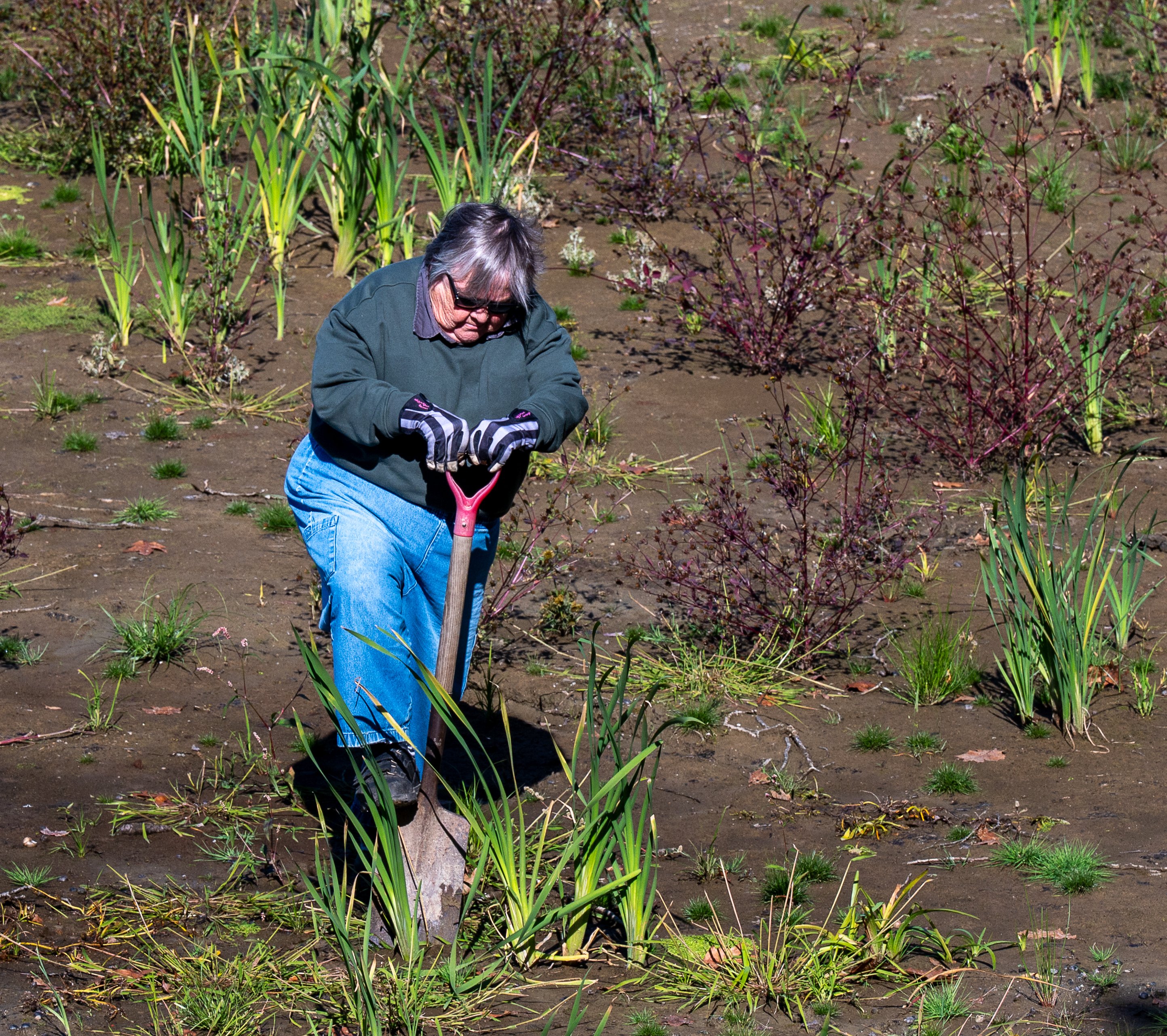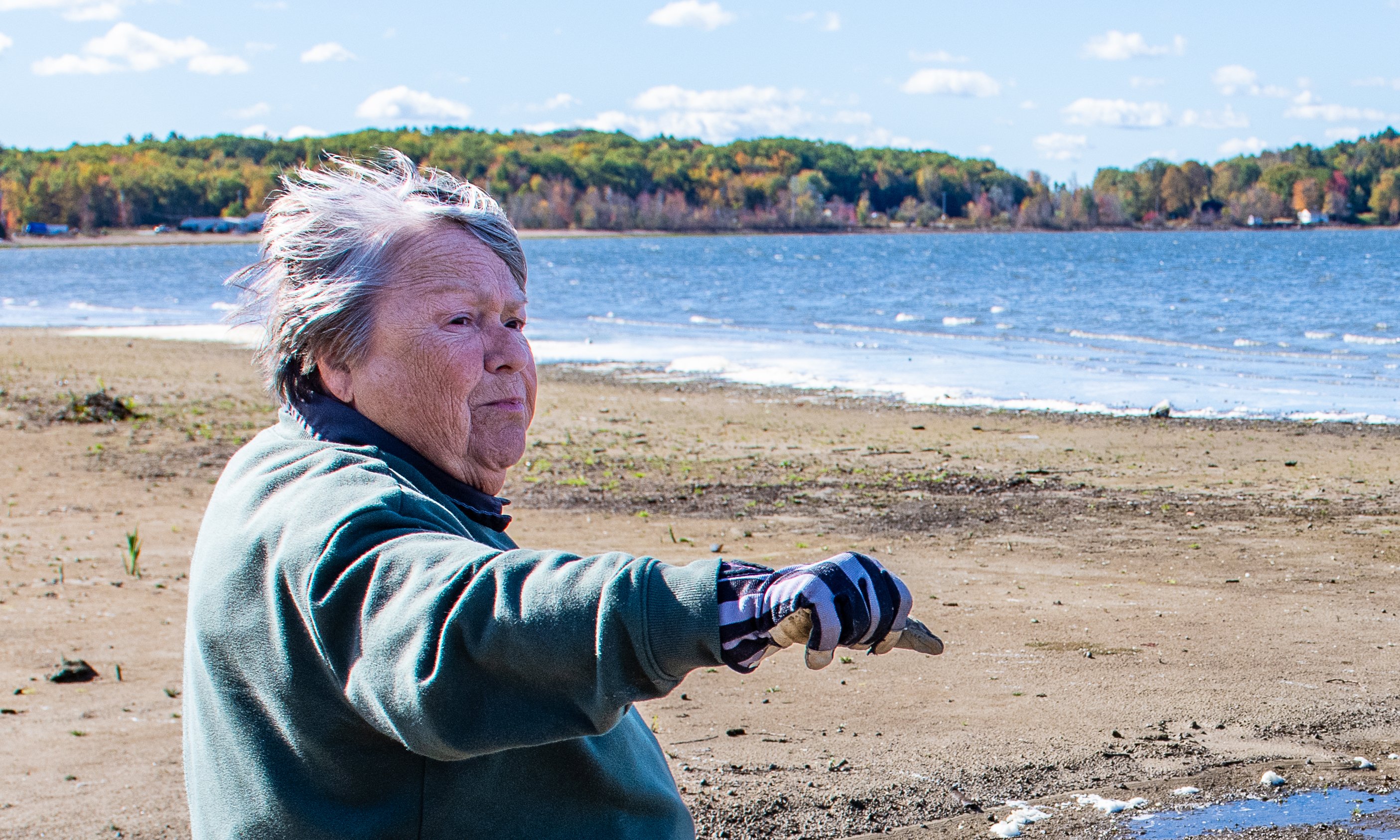
SABATTUS — Surrounded by a sea of “weeds,” Lucille Laliberte has spent the summer slowly and methodically picking away at the exposed bed on the east shore of Sabattus Pond.
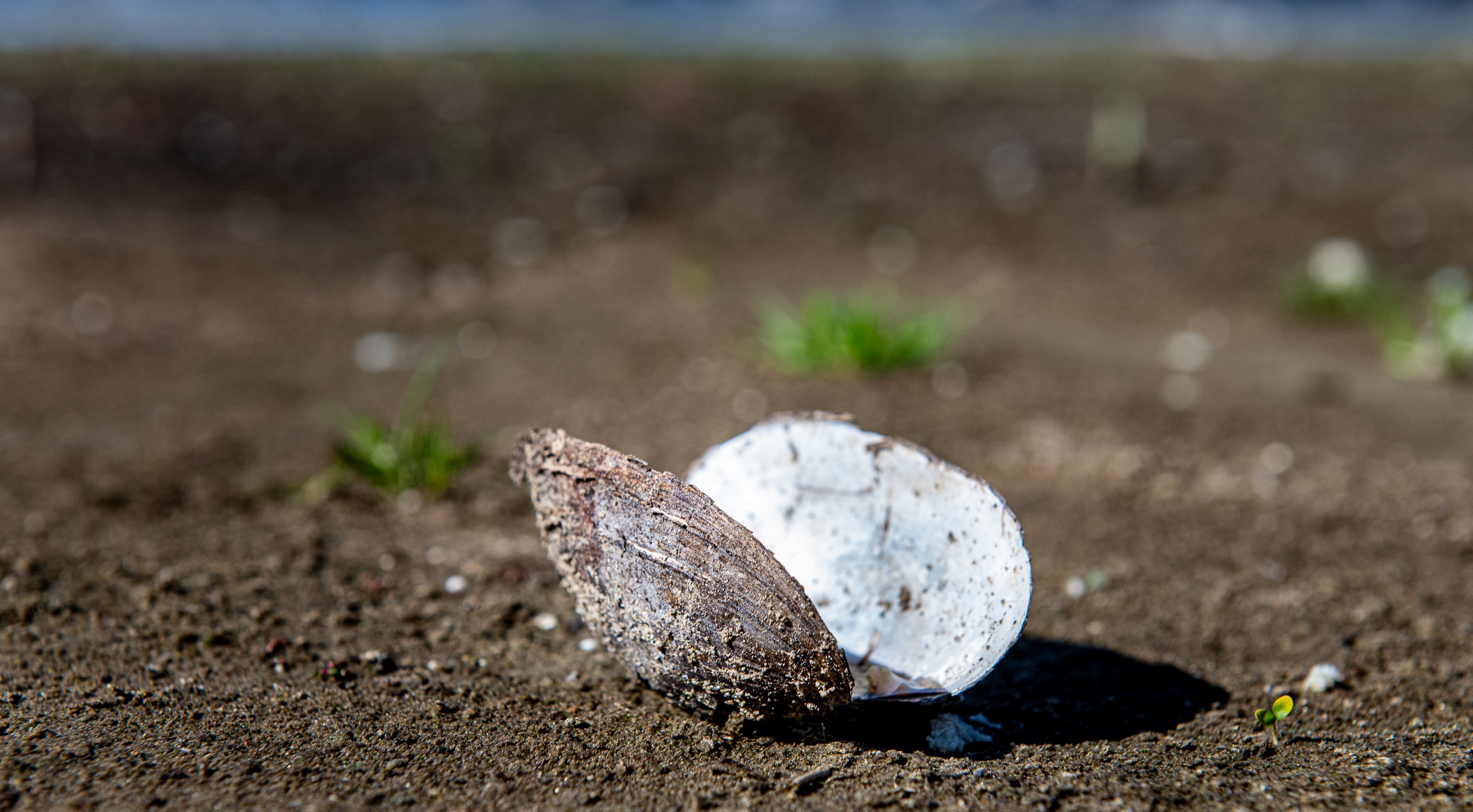
Beer and soda cans and bottles, tires, logs, fishing gear and parts of a fiberglass boat that had sunk littered the pond she frequented nearly her entire life.
And “invasive” plants, she says, which weren’t nearly as thick and unsightly when she lived on the pond.
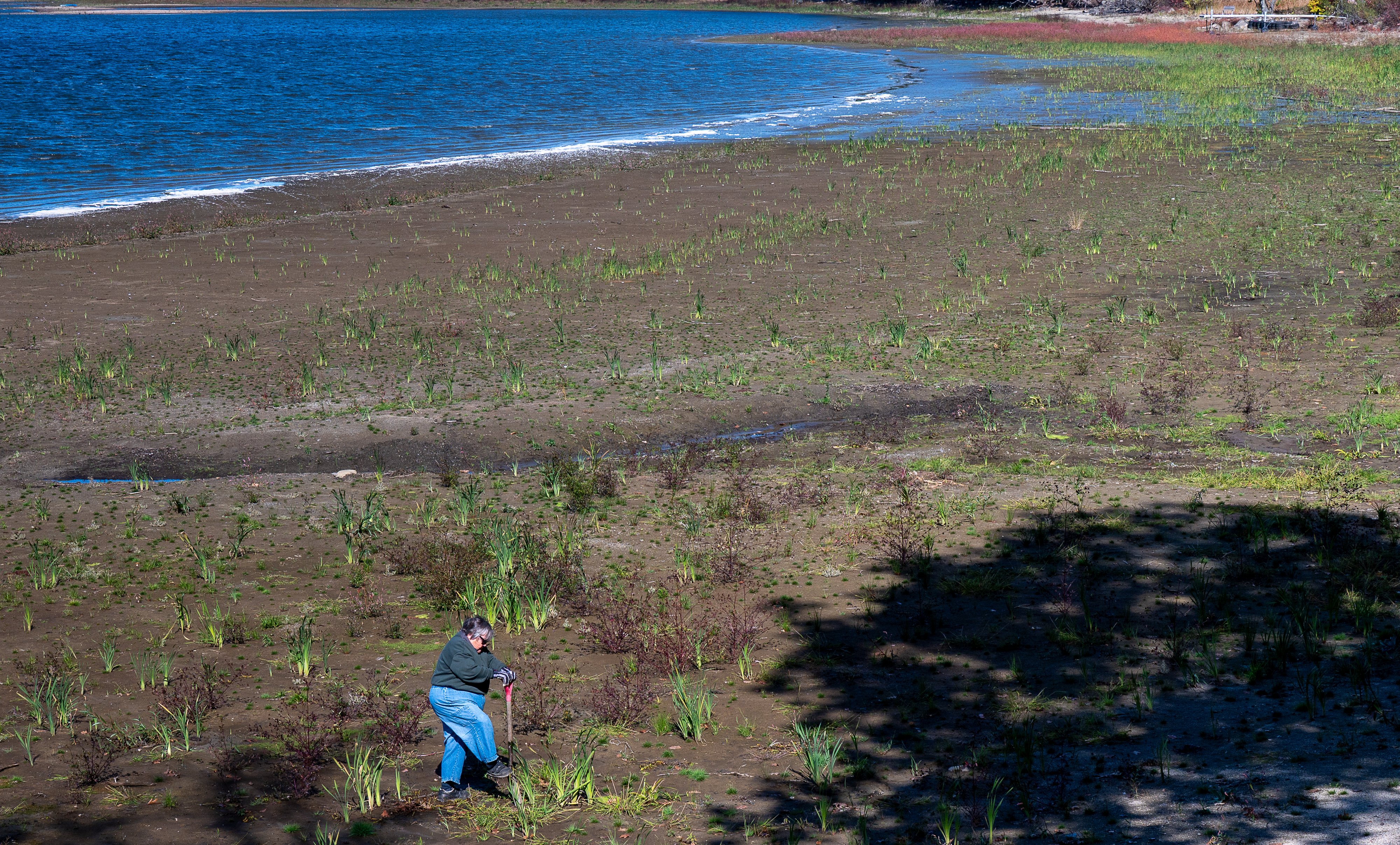
The 77-year-old’s cleanup efforts began in earnest in spring after an 8-foot drawdown of the pond exposed several hundred feet of sand, debris and vegetation. The lowering was done to allow for the reconstruction of two remaining dams along the river that are fed from the shallow pond, which is only 19 feet at its deepest.
The opportunity to access and remove the debris and plants presented itself and Laliberte got to work.
It wasn’t until months later that the Sabattus Pond lake association and state regulators did the same — to stop her.
‘I love that lake, I grew up here’
Until about 20 years ago, Laliberte lived on the pond on the eastern shore, playing in and around it as a girl. After she moved into an independent living facility in Lewiston, her cousin, who still lives there, allowed her access to her “quarter mile of tranquility.”
Except that tranquil personal sanctuary is, in Laliberte’s eyes, a sea of weeds and trash.
“I love that lake, I grew up here. My father grew up across the lake and spent his summers here. There’s such a thing as taking care of things that you love and enjoy,” said Laliberte, a U.S. Coast Guard veteran.
So far, Laliberte estimates she has dug up, plucked and carried off a half-ton of debris.
“The transfer station has been great about letting me, and anyone, dump the debris off for free,” she said last week while stepping onto a shovel to dig one of thousands of stalks that surrounded her as she stood about 160 feet from shore.
“Even the wet weed residue that can be lifted in sheets should go, along with the dried algae (and) weeds that look like tree bark, as it will fertilize weed growth when the water returns. Others, like the deep-rooted cattail green shoots need to be dug up,” she said.
Try as she might, Laliberte found the work was proving too much to handle for one septuagenarian and two helpers. So, she submitted an inquiry to the Sun Journal’s Sun Spots column in early October, asking local residents to help remove more of the pesky plants and restore the eastern shore to its former glory.

Days later, however, members of the Sabattus Pond Watershed Project reached out to the Sun Journal, perturbed by what they read.
“Our organization was contacted by the Department of Environmental Protection regarding this article because of what (Lucille) wrote,” Justin Bragdon, secretary and treasurer of the Project, said in an email.
The Project, a nonprofit group dedicated to preserving and improving the quality of life around and on the pond, asked for a full retraction of the inquiry and for a mention that the group is not affiliated with the query or Laliberte’s efforts.
Bragdon said in a follow-up call that his talk with DEP revealed that Laliberte was likely violating state ordinances without approval for her activity on the pond. Bragdon said he made sure to distance the Project from the request in the newspaper column, which was signed only with Laliberte’s first name, going so far as to peek through some 617 Facebook group members to see. “No Lucille,” Bragdon said.
Despite her best intentions to restore the area near her cousin’s property to the memories of her time on the pond, DEP confirmed she was indeed violating the Natural Resources Protection Act.
DEP spokesman David Madore said Sabattus Pond is a protected natural resource under Maine’s Natural Resources Protection Act and any alterations “in, on, over or adjacent to” the pond requires departmental review and licensing. Alterations include, among many activities, the removal, by hand or machine, of any vegetation, invasive or otherwise.
And not that it matters under Maine law, but according to Madore, the vegetation Laliberte has been removing isn’t invasive. It’s native to the pond.
“Native aquatic plant life creates important fisheries habitat, enhances water quality through nutrient absorption, and is an important indicator for assessing a natural resource’s overall health,” Madore said. “The removal of aquatic plants in Sabattus Pond would result in increased turbidity and diminish overall lake health.”
AI and online lake advice
Laliberte said she learned on Google and AI to determine whether the vegetation should be removed. For example, the cattails need to go, she said, because they can damage boat propellers. The sheets of algae needed to go because its pulls oxygen out of the water that pond life such as alewives — which will be restocked after dam work is finished, she said — rely on to live.
“If I needed to get a permit ahead of time, mea culpa, I didn’t do that,” Laliberte said, adding that she acted out of a sense of responsibility. “Maybe it’ll be OK, or maybe they’ll fine me. But it’s a labor of love.”

The only problem with Sabattus Pond that the DEP has on file is elevated phosphorus levels, Madore said. Ironically, the cattails Laliberte was removing from the pond, in fact, help filter phosphorus, which feeds bacteria that create toxins harmful to human health.
When informed that she may need a permit for the removal of plant life, Laliberte said she wasn’t aware she was breaking any laws or rules. She was frustrated.
“I’ve been cleaning up trash and other debris on the lake bed since 1998. I was a homeowner on Sabattus lake, right there on the lakeshore,” she said, adding that she didn’t introduce anything new to the pond or disrupt the shoreline. “There comes a point where (some) people … really don’t have any skin in the game.”
From Bragdon’s perspective, he and his group are following the science and doing the right things for the pond, which include some of the efforts Laliberte has been undertaking.
“We actually organized a cleanup at the end of September with local towns to remove tires, plastic, old docks and other debris, but leaving the aquatic plants alone,” he said. “It’s all about evidence-based practices and protecting the lake for future generations.”
He noted that the pond’s sometimes high levels of phosphorus are of immense concern to the group.
The Project welcomes anyone who cares about Sabattus Pond, whether they live on the pond or just enjoy visiting, Bragdon said, adding that Sabattus Pond Watershed Project wants to educate as well as work with partners at the DEP, Lake Stewards of Maine, Bates College and other organizations.
“We want to reach as many people as we can to care about the pond,” Bragdon said. The Project’s Facebook page and YouTube channel have updates and all meeting recordings, which include experts speaking about the pond’s health. “It’s a way for people to learn, participate, and help ensure this lake is healthy for the next generation.”
Once Laliberte was informed there were concerns with her efforts, she self-reported to DEP. Laliberte said she will meet soon with a permit specialist, a plant expert and a water resource official, all from the DEP, who will review the work she has done on the pond. If there are fines to be paid, especially by the two people who helped her clear vegetation, she said she intends to pay every cent of it.
There was definitely no malice in her efforts to clean up the lake bed and clear “run-of-the-mill lake weeds,” Laliberte said.
“It was for the greater good, especially for the wildlife,” she said. “My parents always taught me if there’s a place you love, you take care of it.”