


SKOWHEGAN — Dave Witting runs what he calls a “silly little paper.”
But the Comic Shop News, a global publication for comic book enthusiasts, is no joke. With 50,000 to 55,000 copies distributed weekly to comic book stores around the nation, Witting said his weekly publication has a larger reach than two of Maine’s largest daily newspapers, combined.
“This is a silly paper,” Witting said. “But there’s a lot of nerds out there who love it, myself included.”
And now, the publication will soon call downtown Skowhegan home. Witting is working to move his office to the storefront at 14 Madison Ave., which is planned to also house his wife’s used bookstore, Bookish.
Town officials heard of the couple’s plans at Tuesday night’s select board meeting, as the board considered whether to award a grant of $50,000 from Skowhegan’s downtown tax increment financing funds. The board approved the funds, 4-1.
Witting, whose publishing company is currently based in Biddeford, said after the meeting he is targeting an opening date in the spring. But he said he has already been promoting Comic Shop News’ move to Skowhegan, and his followers are excited.
He said he and his wife, Bjarni Brown, plan to invest about $76,000 in the building, which was most recently the Kennebec Stitchery. Necessary improvements include updating the exterior, developing a retail space and repairing infrastructure like wiring and heating systems, Witting said.
Most of the space will be used for Bookish. For the Comic Shop News, Witting said he really just needs a mailing address and place to store archives.
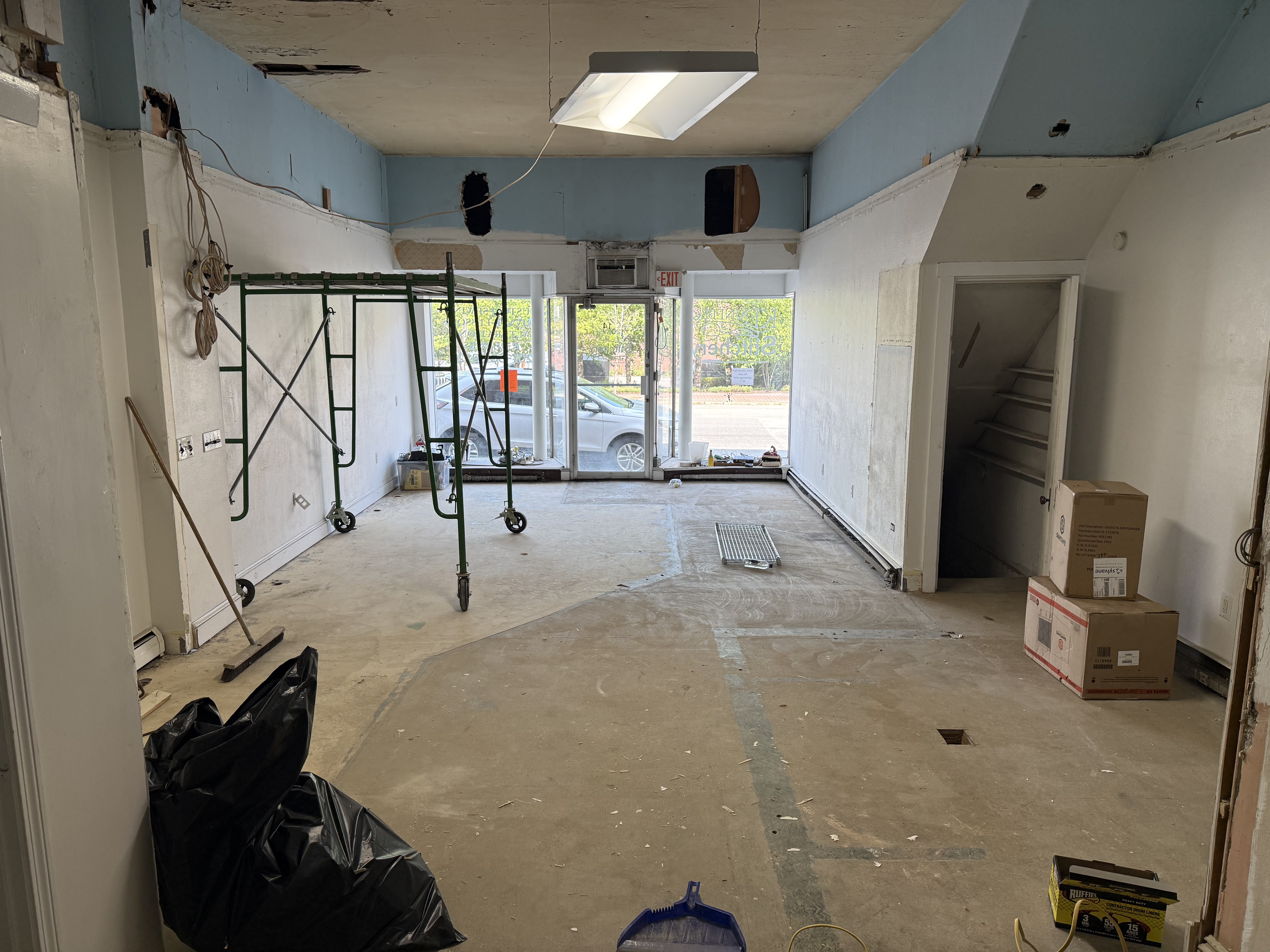
At most, the businesses are expected to create just a handful of jobs, according to plans submitted to the select board.
In 2022, Witting purchased the newspaper, founded in 1987. Originally a cartoon artist, whose resume lists stints at animation powerhouses Disney and Dreamworks, Witting went on to work in the software industry and founded a company that grew to a staff of about 300.
Having sold the software business, which he still helps, a few years ago, and with his children grown, Witting decided Comic Shop News would be his next endeavor.
He said he writes and designs much of it himself, although he hires some contributors (one of whom is Chad Gilley, director of digital audience engagement and revenue at the Maine Trust for Local News).

The paper is printed in Canada because there is a press there that prints most major comic books, such as those from Marvel, Witting said. That means distribution is cheap because there is already a supply chain getting comic books out to stores.
His wife is a former public school librarian, he said, and decided to open the bookstore while Witting looked for a new office space in Maine.
Witting told the board he and Brown chose Skowhegan, in part, because Brown is originally from Kingfield, about 40 minutes away. Her family in the area plans to help run the bookstore.
The two, who live in the Portland area, considered other locations, including a building in Lewiston, but settled on Skowhegan after considering its good schools and up-and-coming downtown.
“Quite honestly,” Witting said, “looking at the work that you’ve done with the River Park, and the Main Street, and all the work that Amber (Lambke) has done with Maine Grains, there seems to be a shocking amount of momentum in Skowhegan.”
The funds awarded Tuesday night come from Skowhegan’s downtown tax increment financing district.
Tax increment financing, commonly known as a TIF, is an economic development tool that many municipalities use. A TIF designates an area where a municipality will capture increases in property tax revenue as a result of commercial investment over a specific period of time.
The municipality commits to using the increase in tax proceeds over the original assessed value to fund specific projects related to economic development, which the municipality describes when it creates the TIF. The taxes on the original assessed value continue to go into the general fund.
The municipality not only benefits from those set-aside funds to complete projects, but also because the additional value generated by the project is “sheltered” from the negative impacts of a growing tax base. State aid for education and revenue sharing do not decrease with the rising property values. And, the state-issued valuations used to compute the school district and county tax assessments also do not include the increased valuation of the TIF district.
Many TIFs, but not all of them, also include a credit enhancement agreement, in which the town returns a certain percentage of the increased tax revenue to a developer.
Skowhegan has four TIFs, all of which voters have approved at town meetings and received further state approval.
The 30-year Downtown TIF was created in 2006, renewed in 2017 and expires in 2036.
Board Chairman Whitney Cunliffe was the sole vote against awarding the grant to Witting’s business. He said that while he liked the idea, he has heard from some residents that the board gave TIF grants in the past to people who used the money to flip properties and then left town.
He asked Witting if he would commit to a five-year ownership agreement to receive the TIF funds and, although Witting said yes, the rest of the board did not approve those conditions.
Cunliffe also questioned whether the TIF itself was ultimately beneficial for the town taxpayers, since none of the tax revenue from the substantial increase in downtown property values during the TIF’s 30-year lifespan goes into the town’s general fund.
Other town officials, meanwhile, were overwhelmingly impressed by Witting’s business plans.
Town Manager Nicholas Nadeau was intrigued by the prospect that the mailing address printed on the newspaper will say Skowhegan. The thousands of people who read it each week will see that and wonder, “Where is that?” Nadeau surmised.
Kevin Nelson, the board’s vice chairman, said past history with TIF grants that maybe did not work out ideally should not deter the town from economic investment.
“This is something else that is being brought to town that I think is different,” Nelson said. “It’s another niche business that’s coming here. The exposure that we’re going to get from this is going to be, I think, phenomenal.”
Lambke, owner of the downtown county jail-turned-grist mill that houses her company Maine Grains and other small businesses, thanked Witting for choosing Skowhegan.
“I know that you had lots of other options,” Lambke said. “And that we look like we care about our town — I’m glad that shines through. And that we look like a community that goes to bat for businesses that are coming here — I’m glad that shines through, too.”
Kristina Cannon, president and CEO of the economic revitalization nonprofit Main Street Skowhegan, was on the verge of tears as she urged the board to approve the TIF grant, citing years of ongoing work to make Skowhegan a welcoming place for business development.
She also praised the board for approving another TIF grant earlier in the meeting for the Masonic Lodge on Water Street to develop an event space.
“This is exactly the type of stuff that we had been hoping to see downtown,” Cannon said, “and we’re starting to see more of it.”

We invite you to add your comments. We encourage a thoughtful exchange of ideas and information on this website. By joining the conversation, you are agreeing to our commenting policy and terms of use. More information is found on our FAQs. You can modify your screen name here.
Comments are managed by our staff during regular business hours Monday through Friday as well as limited hours on Saturday and Sunday. Comments held for moderation outside of those hours may take longer to approve.
Join the Conversation
Please sign into your Sun Journal account to participate in conversations below. If you do not have an account, you can register or subscribe. Questions? Please see our FAQs.