


PHIPPSBURG — A juvenile harbor seal found wounded in September on the banks of the Mousam River in Kennebunk was returned to the Atlantic Ocean Wednesday after being nursed back to health by the state’s only marine mammal rescue organization.
The 6-month-old known as Number 269 was the 100th seal to be successfully rehabilitated by Marine Mammals of Maine since its founding in 2011. The Brunswick-based nonprofit rescues stranded seals, whales, dolphins and sea turtles all along the Maine coast.
“We’re really excited for you to be here, especially at a time of thanksgiving,” Executive Director Lynda Doughty told the crowd of 100 people who gathered at Head Beach to cheer on the late-morning send-off. “It’s great to see wildlife bounce back when Mother Nature isn’t so friendly.”
RESCUE AND RECOVERY
Number 269 was spotted by a kayaker and rescued on Sept. 6 from the banks of the Mousam River in Kennebunk. Doughty said the juvenile seal, likely born in May or June, was exhausted and suffering from deep cuts, dehydration and respiratory issues.
The wounds on its face, mouth and abdomen tell Doughty the animal had been attacked by a predator, but she said she could not tell what kind — Maine’s harbor seals are hunted by sharks and killer whales but can also be attacked by fellow seals.
After 81 days of round-the-clock care, which included nebulizer treatments, wound care and physical therapy, Number 269 was cleared by his care team, the veterinarian and regulators at National Oceanic and Atmospheric Administration for release.
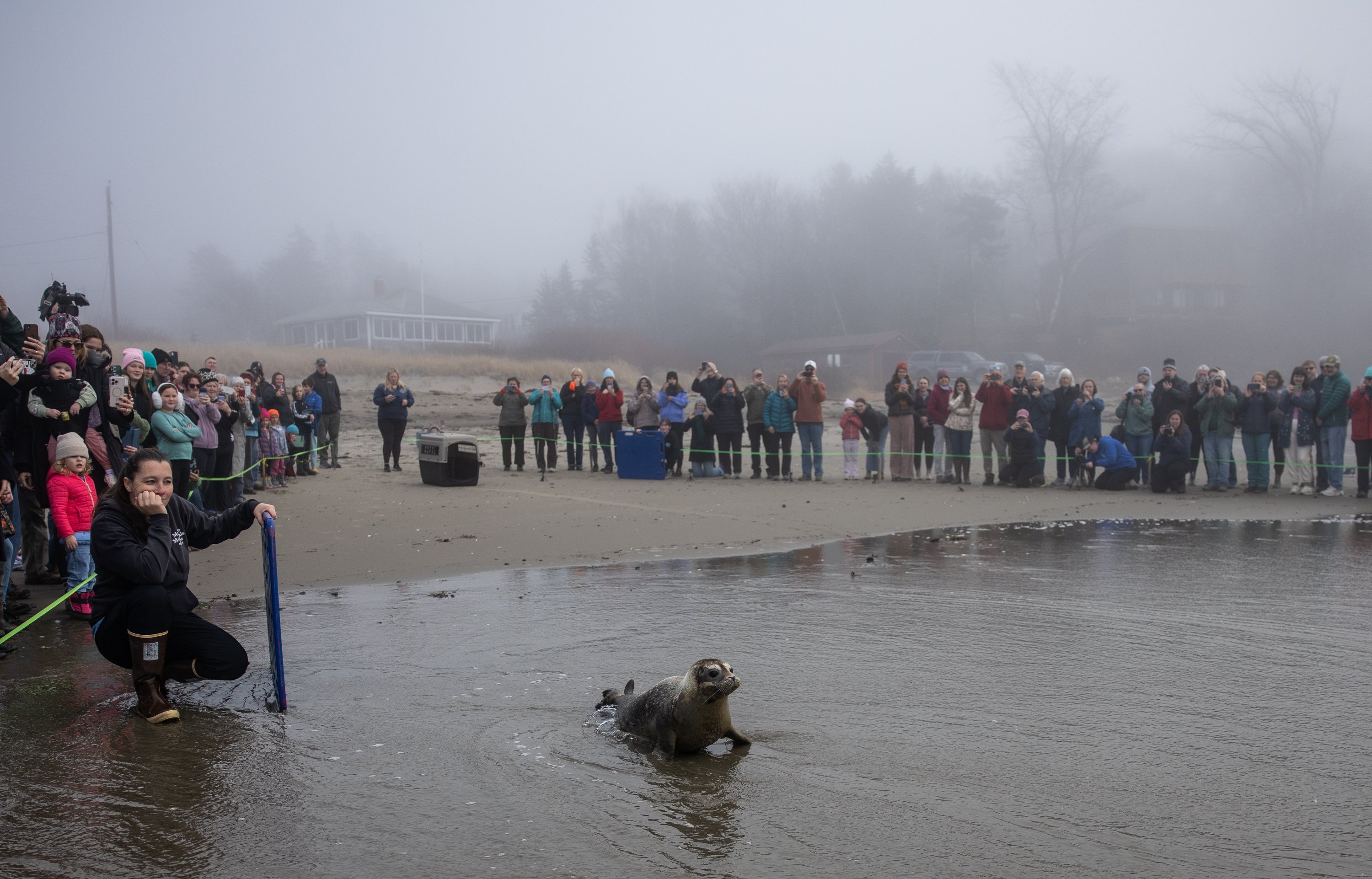
Thanks to a growth spurt and a steady diet of herring, the young harbor seal gained 22 pounds and grew 3 inches during rehabilitation. The two herring he had for breakfast Wednesday would give him time to adjust to his new freedom before he had to hunt again.
A QUICK GOODBYE
As Doughty spoke, the seal seemed eager for its freedom, peering through its transport kennel and even banging a flipper on the door. Once the gate was removed, seal paused to look at the assembled crowd before making a 90-second “galumph” down Head Beach to the water’s edge.
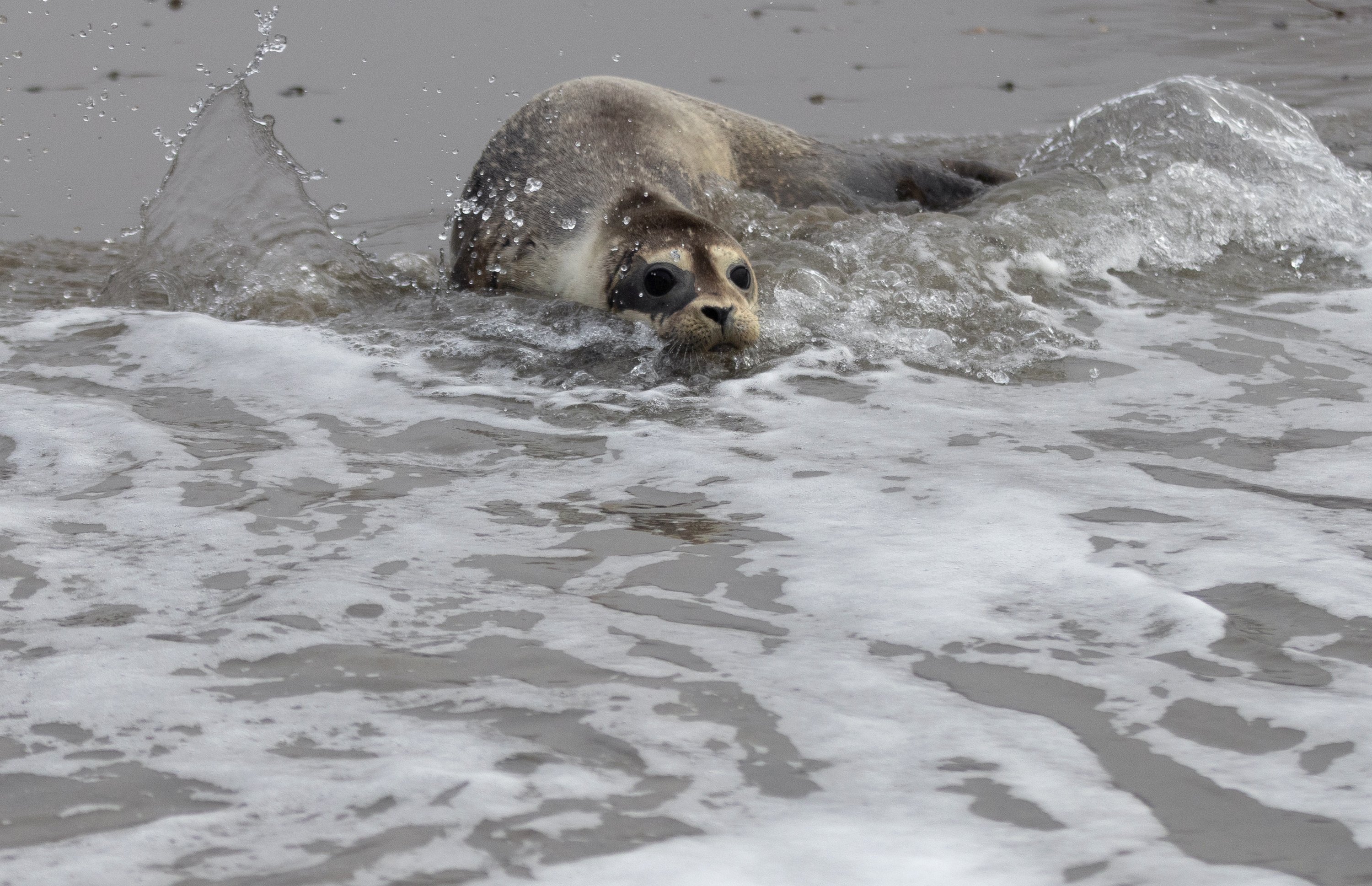
After playing in the waves for a minute or two, the seal disappeared underwater.
Number 269 was the last animal being treated at the group’s Bath facility. Now that it is empty, the group will start a long-awaited renovation, adding a pool that will allow it to treat more and larger animals.
Number 269 was the 20th seal released this year. Last year, the group rescued and released 24, but the number can range from 15 to 30 on any given year. Although founded in 2011, it did not get the federal permit needed to release recovered mammals until 2016.

Comments are not available on this story. Read more about why we allow commenting on some stories and not on others.
We believe it's important to offer commenting on certain stories as a benefit to our readers. At its best, our comments sections can be a productive platform for readers to engage with our journalism, offer thoughts on coverage and issues, and drive conversation in a respectful, solutions-based way. It's a form of open discourse that can be useful to our community, public officials, journalists and others.
We do not enable comments on everything — exceptions include most crime stories, and coverage involving personal tragedy or sensitive issues that invite personal attacks instead of thoughtful discussion.
You can read more here about our commenting policy and terms of use. More information is also found on our FAQs.
Show less