

Imagine that it’s opening day on the mountain, or the day after Christmas, or whatever weekend you traditionally hit the slopes for the first, and perhaps only, time of the ski season.
The air is crisp, the sky is blue, the pines are swaying, and the snow has that slight pebble that makes skiing the east an irresistible challenge. You’ve had an incredible day, feeling sweaty in the breeze, breathing hard. It’s the most you’ve moved all month.
The daylight is dimming and you’re ready for happy hour, but the mountain still calls or there’s a ritual with your pals, so you think, “one more run….” You’ll do a familiar blue or maybe even the bunny trail to take it easy. Little do you know, you’ve just made the most dangerous decision of the day. “Nationwide, most injuries on ski mountains occur on blue and green trails and after lunchtime,” said Michelle Cuva, Ski Patrol Director at Saddleback Mountain in Rangeley, which follows the same trend.
Cuva has just begun her second winter in this full-time role, though she has been a Saddleback skier for 20 years. She is an emergency room nurse by trade and still works night shifts at Franklin Memorial Hospital in Farmington. “I never planned on this being my full-time job, but it’s been wonderful. Saddleback is not just another mountain.”
She said that while the ski mountain has a much higher percentage of fun, healthy activities throughout the workday, ski patrol workers are first responders and the rhythm of action can be similar to the ER.
“You don’t know what you’re getting each day,” she said. Weather, number of skier visits and the demographic of visitors can all affect the day’s events. “Something new could always happen and you have no control over it.”
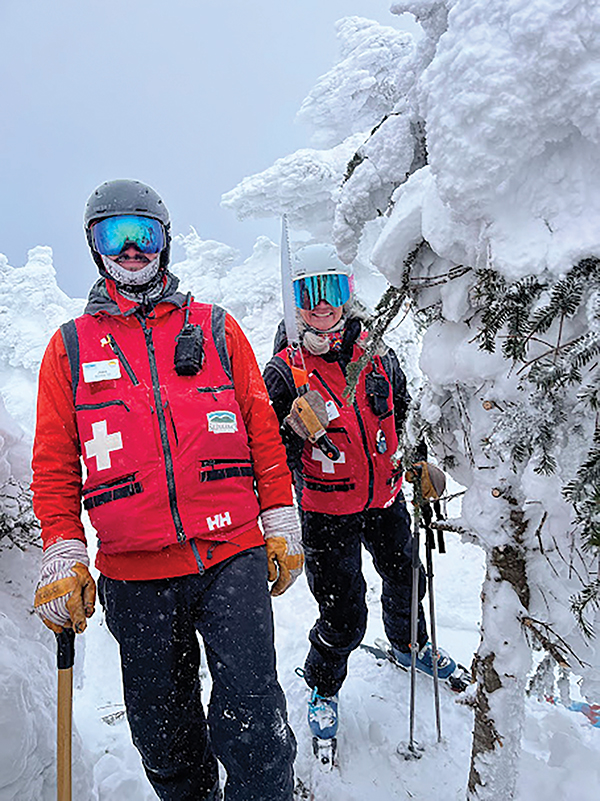
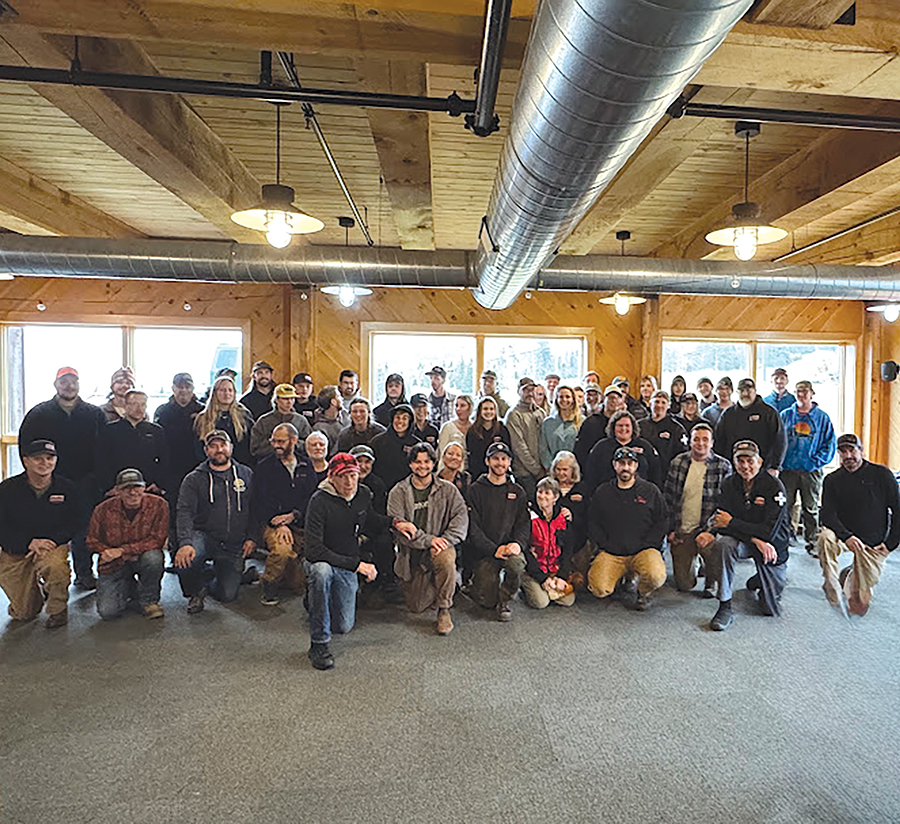
Cuva and any ski patroller can tell stories about when there’s a lot of gear needed or an ambulance got involved, but most of the time, she said, “it happens at the end of the day when people get tired. Leg, collarbone and shoulder injuries are the most common.” Cuva gives full accolades to her team and the community for safe outcomes, calling herself the “paper pusher,” while a crew of more than 60 ski patrol members work the mountain all season. There are seven to nine patrollers on weekdays and more than a dozen on weekends. “We have people in their 70s to teenagers, all backgrounds and life experiences, and we enjoy each other’s company,” Cuva said. Many of Saddleback’s ski patrol are highly qualified and certified volunteers, working in exchange for ski passes for themselves and family members. “It’s a great culture of collegiality that leads to safety. Plus, with the community that comes here, it feels like every parent is watching out for every kid out there.”

Saddleback also has a Young Adult Patroller program for high schoolers ages 15 to 18, where they get an Outdoor Emergency Care certification, which includes CPR, first aid and slope side care, that can be recertified throughout their lives and careers. Not only are they ready to work ski patrol once certified, Cuva added that it looks good on college applications and “they are exhausted on weekends.”
Speaking of exhaustion, let’s get into those basic safety refreshers, starting with the opening scene.
Don’t do “one more run”
Simply put: there’s no competition at a ski resort, including with yourself. If you’re not feeling up for it, you’ve already had a great day. Don’t push it. No racing.
Again, no competition! Ski mountains are full of children, beginners and, of course, the downhill skier always has the right of way. A modern problem Cuva has seen is a slight uptick in speed demonry due to new apps where people compete with a larger online group for best times or distance covered. She encouraged fliers to sign up for one of many local in-person races if they want to set a record.
Stretch, hydrate, no alcohol or THC
Skiing is something most of us do in our free time for fun, but that doesn’t make it any less of a rigorous sport that uses the whole body. Take time to warm up and stretch, stay hydrated and eat good meals or smaller amounts throughout the day. And, since the skier’s Code of Conduct includes being in control at all times, skiing is safest and best when clear-eyed—think before you drink or consume THC products.
Have the right gear
There is no mandate to wear a helmet while skiing, but for Cuva, helmets are non-negotiable. The tamest fall can cause a head injury. Bindings are the make-or-break-knees-and-ankles part of skis and snowboards. They should be checked yearly. Saddleback and other mountains have higher performance rentals if you want to try something before investing – or just ski extra smooth that day.
Prevent frostbite with a good pair of socks and gloves made for wicking moisture.
Reading can save a life
Safe, smart skiers will review the Code of Conduct when signing waivers and obey every posted sign as they explore for the day, especially anything that says “SLOW”.
Go in a group in the glades
For mountains like Saddleback with steep terrain, glades and uphill trails, there are additional considerations, starting with a two-person minimum party, but ideally three for bonus Safety Points.
“We have hundreds of acres and cell phone service is not good,” said Cuva. “When we send out staff to check trails over there, we have a check in system.” If skinning, keep an eye on machinery and be ready for a tough climb with extra water.
Take a lesson
If you are rusty or nervous like, full disclosure, the auhtor of this article who is admittedly a bit of a weenie and has not really alpine skied since 14 when she fell and hurt her shoulder, a lesson can give you the confidence to do it and feel safe.
Cuva said that the best part of a lesson, besides reinforcing the fundamentals or giving you a strong base, is that learners are paired with people who are “totally trained at dealing with those emotions and thoughts.”
As most skiers know, skiing is a more rewarding than risky endeavour. “All-in-all, we have very few collisions, very few calls and we are just seeing beautiful things. I simply would not do this job if I didn’t have the wonderful crew I have,” said Cuva. “Even on wild days, when it’s blowing sideways and we’re soaking wet, we have a pretty good time with it.”
Learn more about ski safety basics at skisafety.us. Resources from National Ski Patrol can be found at nsp.org.
Visit saddlebackmaine.com/safety for more detailed policies on uphill access and summer mountain biking, when the Saddleback Ski Patrol will be clearing and cutting trails, monitoring the lift during scenic rides and training for aerial evacuations.