


Auburn residents will have a chance this month to weigh in on a safe needle exchange ordinance, one the City Council has been workshopping for the past several weeks.
Needle exchange programs help prevent people using intravenous drugs from reusing or sharing needles, and typically offer other related services as well.
The programs have been criticized in Lewiston and elsewhere, however, as encouraging substance use and contributing to waste in public areas.
Councilors have been given information about needle exchange programs and the state legislation governing it from the municipal attorney, state officials and staff at Spurwink, which operates the only safe needle exchange program in neighboring Lewiston.
There are no safe needle exchange programs operating in Auburn, but councilors felt it was necessary to have some sort of local regulation in place for organizations that may be interested in establishing one. There is a moratorium on safe syringe programs while councilors work on an ordinance.
Here are a few things to consider ahead of the public forum Monday, Dec. 15, at 5:30 p.m. at City Hall.
Why enact a needle exchange ordinance?
Needle exchange ordinances allow towns to enact some rules around how needle exchange programs can operate, though it cannot be more strict than state law. Banning or limiting safe needle exchange programs would likely be a violation.
Municipalities can say where those programs are allowed to operate through zoning, and they can influence hours of operation and require programs to coordinate with the city’s public safety departments.
What are the major state rules for safe syringe programs?
Safe syringe programs must be certified and enroll all clients they serve through their program. They are prohibited from giving needles to minors. They must adopt operational policies and procedures, adhere to client confidentiality, give data to the Maine Center for Disease Control and Prevention, provide education and referral services for recovery, and dispose of used syringes safely.
How many syringes can be given to clients?
This varies by program and client need. Some programs will give up to 100 clean syringes for one used syringe; other programs enact a one-to-one exchange. Some clients who live far from programs or in rural areas and struggle with transportation are allowed to have a higher exchange ratio. Syringe availability also impacts this rate.
Safe syringe program operators and state officials advocate against municipalities limiting the exchange rate, such as requiring programs to only operate a strict one-to-one exchange ratio, because it is beneficial for programs to have flexibility around how many syringes they give out based on individual client needs and syringe availability.
What is the benefit of a needle exchange program?
Needle exchange programs help prevent people using intravenous drugs from contracting bloodborne viral infections. In turn, this helps maintain public health and prevents diseases like AIDS, HIV and hepatitis C from spreading through groups in a community.
Safe syringe programs help reduce the incidence of HIV and hepatitis C by 50%, according to Ann Sites, director of the state’s infectious disease prevention program.
The programs also provide education, access to resources and referrals to recovery programs that allow people to stop using drugs. They also help people with food, housing, wound care supplies and HIV and hepatitis testing.
What are the concerns about needle exchange?
Some people have shared concerns about increased used needle waste when communities have a safe syringe exchange program. Others are concerned that it could lead to an increase in drug use.
According to Sites, however, there is no data that suggests they increase a person’s use.
What about waste?
Research suggests that towns and cities with safe syringe programs have fewer improperly disposed syringes, Sites said.
Some municipalities have implemented used syringe cleanup programs to mitigate or clean syringe waste improperly disposed of on public property.
Some of those programs include a used syringe buyback program (used in Portland), a syringe pickup operation and a training program for public works employees about how to safely discard used needles found on public property.
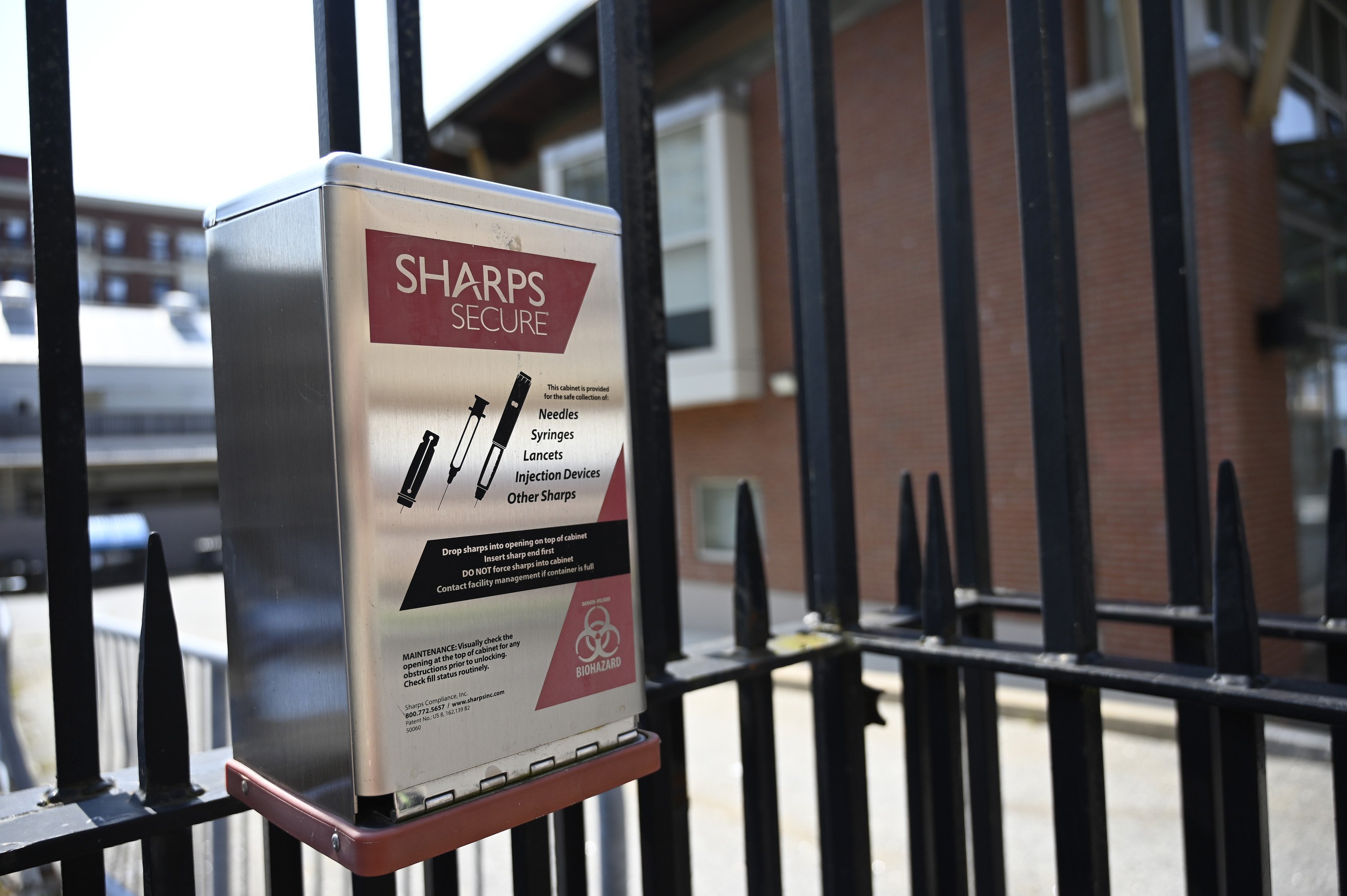
Towns can also install sharps containers in public spaces and provide portable sharps containers. Some municipalities will partner with a private organization to dispose of syringes found in public spaces. There are also online platforms that allow residents of a town to report sightings of needle waste.
Municipalities have no responsibilities and often cannot use public money to fund used syringe cleanups on private property. But some safe syringe programs offer cleanup kits for private land and business owners who find syringes on their properties.
