
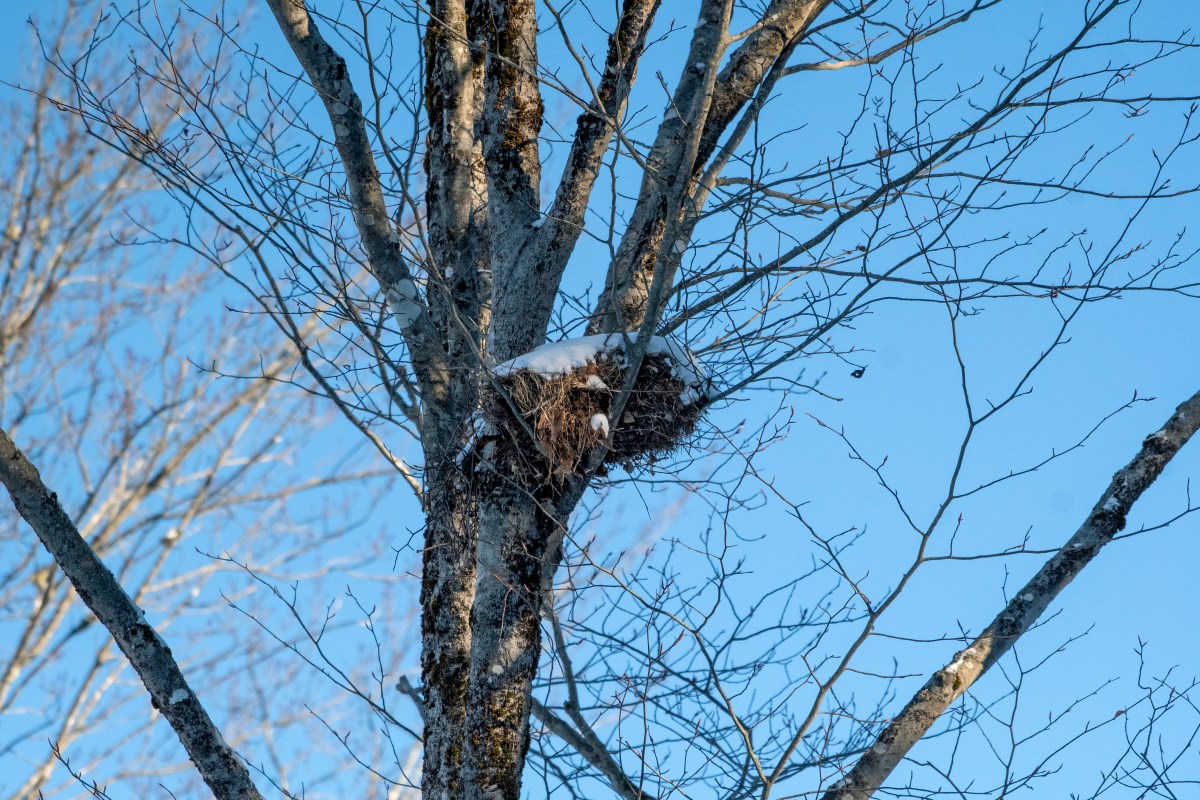
With all the leaves off the deciduous trees, except for beeches and maybe some persistent oaks, you may be noticing various nests around that were otherwise obscured all summer. Cathy from Wayne sent in a question (remember, send yours to [email protected]) specifically asking about the use of some of these larger leafy squirrel nests, and now seems like the perfect time to dive into some of the many nests and other blobs you may see in trees in winter.
Let’s start with Cathy’s observation of the large “nests” from grey squirrels. A better term for these is a “drey,” which is the specific type of nest made by tree squirrels. Typically, a nest is only used for raising young. In the case of birds, a nest is basically just a place to keep an egg and/or pre-fledged young from falling to the ground. Squirrels, on the other hand, will use their dreys throughout the year, so we can think of them as more like a house than just a nursery room. To expand on that analogy, squirrels will often have several dreys, three or more in an area, which you can think of as different rooms of their house. One of these might have been used specifically for raising young in the summer (the nursery), while another may only be used for sleeping (the bedroom).
Most tree squirrels don’t store food in dreys, but I’ve seen them carry acorns in for eating, so it’s perhaps more of a dining room than a pantry. These dreys will be used throughout the year and require maintenance, which you would have been more likely to see taking place in the fall as squirrels were gathering fresh leaves to build or reinforce their structures. Lastly, the identification is pretty straightforward because they are large and leafy, making them especially easy to see high in trees.
I should also mention the many “witches’ brooms” that you may also see. These are large deformities of a tree, often appearing like a witches’ broom growing off a branch, that are caused by a variety of sources, including fungi, insects, phytoplasmas and viruses (often depending on the tree). Their large, stick-filled appearance can often cause them to be mistaken for birds’ nests, especially like those of a bald eagle. Few animals use these witches’ brooms, with the exception of some cases in which red squirrels and northern flying squirrels use them as nests.
As mentioned above, birds typically just use nests for the nesting season. It isn’t uncommon to see birds using tree cavities or nest boxes in the winter as a roosting site, but again, a nest is really just to keep their eggs (and young) from rolling out. Most nests only last a couple of months before they break down, so there are only a few left on the landscape come December. Most nests found after leaf-fall are going to belong to the later nesting species in Maine, like American goldfinches or red-eyed vireos (more likely the second brood of the latter).
If you do find a bird’s nest, I recommend taking a close look at it because it may have been commandeered for the winter. Birds, especially those nesting in a tree or bush, make cup-shaped nests, and after they are done, the nest can be taken over by mice. White-footed and deer mice are known for building a dome over the top of old bird nests, which they’ll use as shelter and for storing food in the winter. I highly recommend reading Bernd Heinrich’s Winter World for a fascinating analysis of these mouse houses and many other amazing insights into the ingenuity of animal survival in winter.
Have you got a nature or wildlife question of your own? It doesn’t have to be about birds! Email questions to [email protected] and visitwww.maineaudubon.org to learn more about birding, native plants, and programs and events focusing on Maine wildlife and habitat. Maine Audubon Staff Naturalist Doug Hitchcox and other naturalists lead free bird walks on Thursday mornings starting at 8 am, at Maine Audubon’s Gilsland Farm Audubon Sanctuary in Falmouth.