
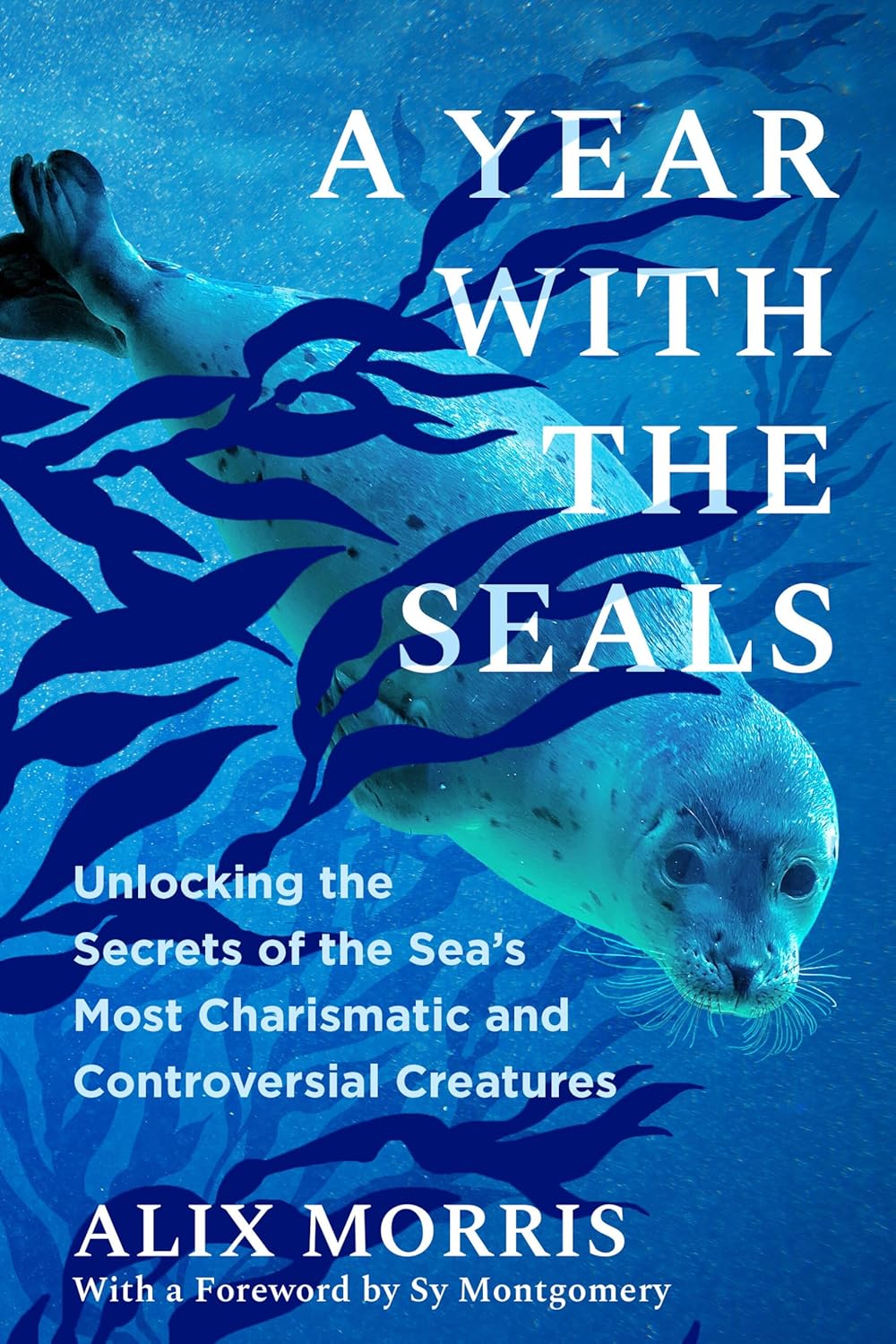
“I hate seals. They destroy fisherman’s gear. And now they’re bringing great white sharks.”
This sudden outburst at a picnic lunch last summer was precipitated by a careless reference to seeing seals during a lovely kayaking trip, appropriately in Vinalhaven’s Seal Bay. Such vehemence from a friend with whom I share so many other points of view quite shocked me.
I have always felt well disposed toward seals since befriending the ones that used to follow our rowboat up a little inlet on the edge of Penobscot Bay in the 1950s. There may not have been as many seals then as now. But there were some, despite the impression several people gave Alix Morris as she researched her book, “A Year with the Seals. “
Morris is an environmental journalist with an impressive portfolio of articles running the gamut from wildlife on land and sea to pesticides and diseases. Although she is based in Mid-coast Maine, seals, by her own admission, were hardly on her radar screen at all. In fact, her “obsessive quest” into the pinniped world, of which her first book is the result, was sparked by a shark; in 2020, a great white shark tragically killed a woman swimming just off Bailey Island. It was the first fatal shark attack ever recorded in Maine.
To Morris’s surprise, instead of a “’Jaws’-era anti-shark” hysteria, the headline response to this tragedy came to be all about seals. There were too many of them. After a century of persecution— including bounties — the seal population had exploded, thanks to the federal Marine Mammal Protection Act. Not only were they luring sharks into our waters, but they were putting a dent in fishermen’s catches. Was it time to cull them?
And so began a year of research into all things seal. Morris spent hours at the rehab center run by Marine Mammals of Maine in Brunswick. She crossed the country to Washington state where seal protection has collided with the traditions of Indigenous tribes. Against all odds (ultimately the weather), she was able to hop a helicopter flight for a lightning visit to Sable Island off Nova Scotia, where 400,000 gray seals were hauled out to breed, as they do every winter.
In all these peregrinations, Morris is as interested in the people she comes across as the seals. She accompanies the devoted staff at the rehab center as they pick up forlorn seal pups on the beach, nurse those that will live back to health, and mourn those that don’t make it. She even assists with a seal necropsy.
In Tacoma, where seal predation is threatening the dwindling salmon population, she falls under the spell of an elder of the local Indigenous tribe traditionally dependent on the fish. This plain-speaking octogenarian is campaigning to amend the Marine Mammal Protection Act to allow for a seal hunt to protect the salmon.
Before going to Sable Island, Morris has extensive video interviews with a scientist who has spent 50 years immersed in the ecology of that famously forbidding strip of sand. When Morris actually gets there, she witnesses bloody battles between huge male seals at close hand. These, she discovers, are of far less danger to her than the mother seals protecting their pups.
The author is by no means immune to the charm of seals, “their curiosity, their goofy behaviors.” However, in “A Year with the Seals” she is more interested in the conflicting opinions they arouse and the questions they raise. “Throughout history,” she acknowledges, “our understanding of seals has been dramatically shaped by the stories we tell about them.” Those stories usually reflect “the competing interests and demands of humans.” Above all, have seal conservation measures worked too well?
Morris is admirably even-handed as she explores and reports on her findings. The controversy over seals is not one “just of human-wildlife conflict, but of human-human conflict.” She also has a nice way with images. Sable Island is “a Cheshire Cat-like smile in the sea.” And I will never see a lounging seal again without thinking of it as a “blubbery banana.” However, she is a little too inclined toward superlatives, starting with her book’s subtitle, “the sea’s most charismatic and controversial creatures.” And the cozy details of her interviews, appropriate in a magazine feature, here get in the way of her main story.
Unfortunately, Morris is probably right when she predicts that conflicts between our species and the rest of the world are likely to get worse, not better. Investigations like hers will be essential in order “to take the time to identify and address the deeper issues at the heart of them.”
Thomas Urquhart is the author of “For the Beauty of the Earth,” and “Up for Grabs! Timber Pirates, Lumber Barons and the Battles Over Maine’s Public Lands.”