

Katie Watt had ambitious plans for her senior year at Bates College. She was the captain of the Nordic ski team. She was a three-time NESCAC winter All Academic selection.
Watt felt she was in peak condition for her final year at Bates. She had earlier even qualified to run the Boston Marathon.
But on Oct. 12, 2024, those lofty dreams suddenly came crashing down, as she sustained a traumatic brain injury and other injuries while training on the school’s track with her teammates.
Watt’s attorneys filed the suit Tuesday against the college, saying it failed to secure an 18-foot-long, 597-pound Kwik Goal bench shelter, which became airborne during the practice and struck Watt as she ran, pinning her to the ground. The wind that day was gusting to 30 mph, the lawsuit says.
According to the lawsuit, Watt suffered a skull fracture with significant bleeding in several areas of the brain. She sustained cognitive impairment, emotional disturbance, headaches and neurological deficits.
The suit claims Bates should never have exposed Watts to such danger. According to Kwik Goal’s instructions, the structure needed to be secured and anchored at all times.
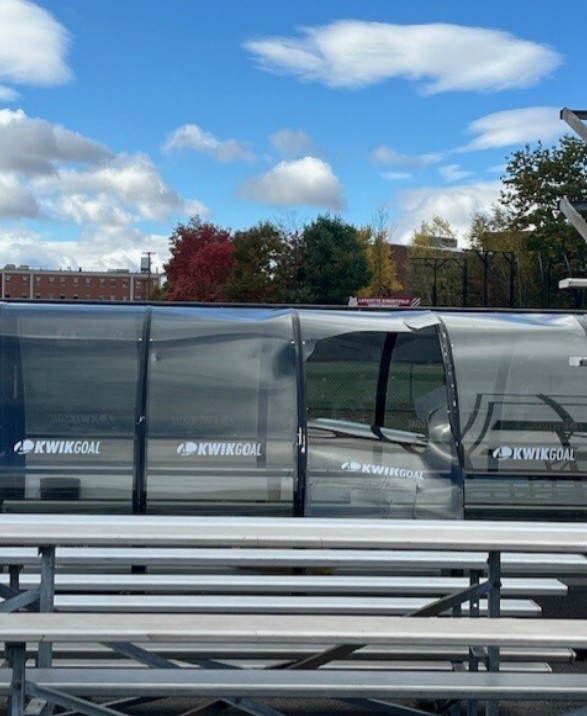
A different structure blew across the track just an hour earlier before Watt, her teammates and coaches arrived at the track for practice, the suit says.
Speaking by phone Tuesday from Boston, Watt said the injury occurred during testing week — the first week of practice to set baselines for strength and endurance. She was running practice laps when she was struck.
She felt she was quickly abandoned by the school, she says.
“After the accident, the phrase I was generally told was that ‘we didn’t see it. We don’t know how it happened,'” Watt said. “That confused me a little bit because I was at an official team practice. My coaches were there. My whole team was there with me. There was a soccer game being played there on the field later in the day. The general reaction was that it never happened.”
Watt said she has never received an apology from the college. She has received little sympathy or acknowledgement since the accident.
Watt continues to experience life-altering fallout from her injuries.
“Now, I have to be very careful about how I’m spending my cognitive load as I have significant decreased cognitive stamina,” she said. “I really don’t have much cognitive energy to do things outside of work. At work I really struggle reading, paying attention in long meetings. Usually by the end of each day. I’m pretty fried.”
Despite her handicap, Watt is working as a research technician at Mass General in Boston, a job she was proud to get as she deals with her brain injury.
She receives treatment for physical and occupational therapy, as well as therapy for PTSD, and she sees a neurologist every couple of months.
According to the lawsuit, Watt is seeking damages in an amount to be determined by a jury, including past and future medical expenses, lost earnings, and lost earning capacity, together with attorney fees and costs.
According to her attorney, Meryl Poulin from the law firm Gideon Asen, Bates is required to respond to the suit in three weeks. After different motions, the trial will likely start in eight or nine weeks.
Kristen A. Lainsbury, vice president for communications and marketing at Bates, sent the following response: “We acknowledge that this unfortunate accident happened on our campus in October 2024. Bates did provide support — both in the moment and following the incident — and we are pleased that Katie was able to return to her studies and graduate on time and with honors in May 2025. We continue to wish her well in her new research career at Massachusetts General Hospital.”