


Earlier this year Community Clinical Services made the tough decision to lay off 34% of its staff and end several services after it was clear that federal funding officials hoped for wasn’t likely to come.
That has left the Lewiston nonprofit, which provides primary care services and mental health care, looking to raise funds through private donations. But with other nonprofits looking to do the same to make up for their own federal funding losses, they are facing plenty of competition.
It’s a situation that many local nonprofits now find themselves in. As the Trump administration has cut federal spending, there are fewer resources for those fighting poverty, hunger and poor health.
That has left the organizations all going after charity giving at the same time.
‘NO FUNDING’
Community Clinical Services cut financial ties with its corporate sponsor, St. Mary’s Health System, in 2023. That cleared a path for the organization to apply for federal funding.
“This was a 100-page grant application and so we spent months on the application,” she said. “We made sure that we had dotted our I’s, crossed our T’s and spent hundreds of hours on this application. And to find out, you know, about a year later that no funding would be allocated at all was not expected.”
The majority of Community Clinical Services’ funding is from medical insurance, with 60% of its patients relying on Medicaid, which does not cover 100% of the services it administers to patients, Elias said. It also provides care to patients who have no insurance and cannot afford to pay for 100% of their medical care.
That makes additional funding a must.
Community Clinical Services has a $500,000 fundraising goal for the fiscal year 2025 but it has only managed to raise $60,000 of that so far, she said.
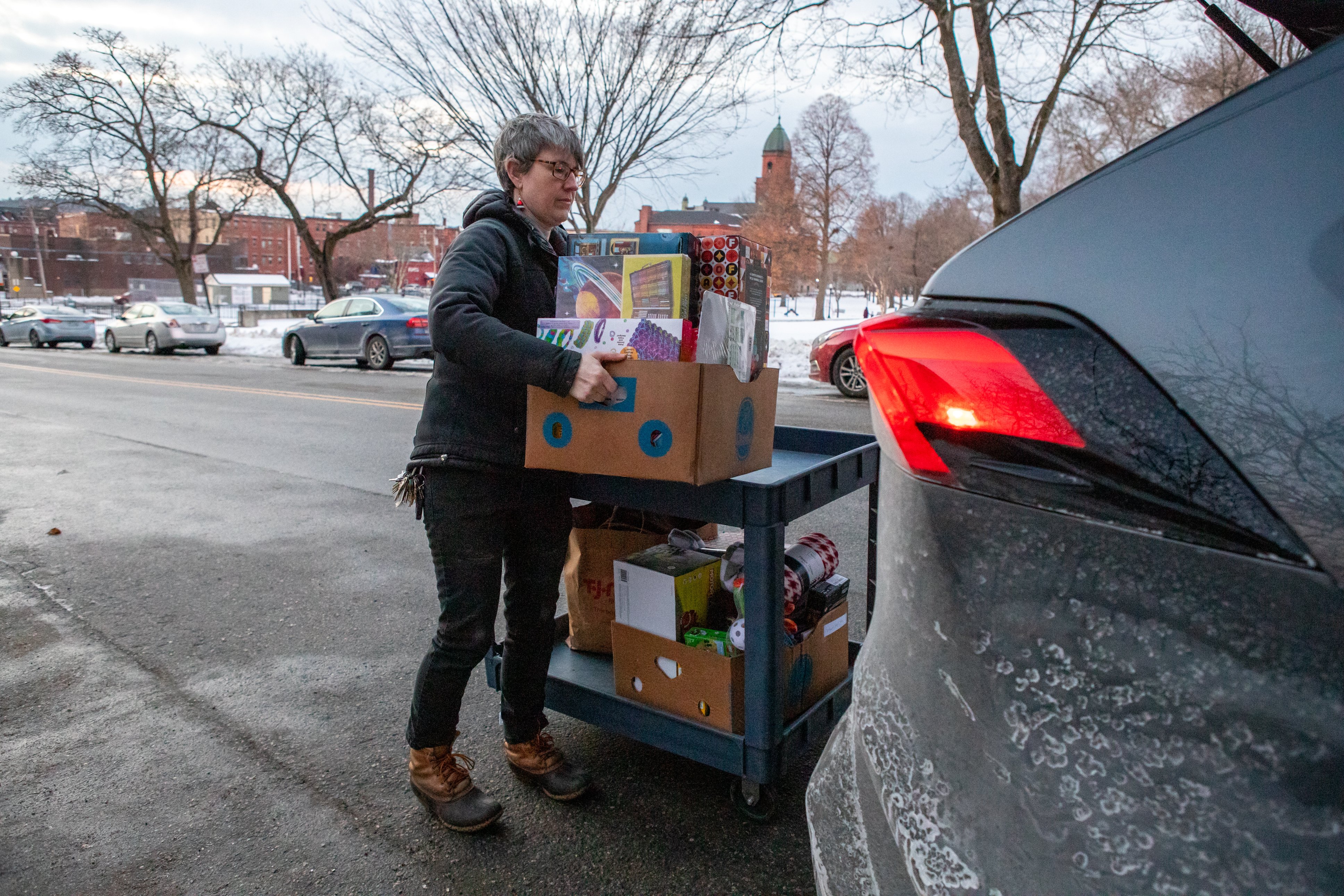
The organization is now looking to build out a private donor base, something that was not a focus when it was getting annual funding from St. Mary’s.
They are not the only ones.
The Trinity Jubilee Center in Lewiston, serving up to 5,000 people per year, receives very few federal funds, according to Executive Director Erin Reed. Its funding situation has remained relatively normal this year.
However, after the federal government cut funding to nonprofits earlier this year, she has seen an increase in competition among nonprofits for private grants, foundation funds and individual donations, she said.
“Those groups that lost their funding are now competing with us for the same grants and the same personal donations, so there’s a lot more competition right now,” she said.
The nonprofit runs a soup kitchen, food pantry, day shelter, resource center with a free medical clinic and immigrant integration program for the most vulnerable in the community, she said. They are services that typically do not qualify for much federal funding.
“Our mission is to address unmet needs and usually there’s need in these areas because there aren’t government contracts to do this work,” she said. “So, we write grant applications, we get donations from local families and churches and businesses, we just piece it together.”
Much of its funding comes from foundations, private grants and individual donations from a well-established donor network, she said. It typically applies for grants from United Way, as well as from foundations like Key Bank’s and the Lewiston Auburn Children’s Foundation.
About two-thirds of the nonprofit’s budget comes from grants and the remaining third comes from donations from families, churches, civic groups and local businesses, she said. It has seen a 10% decline in donations so far this year but Reed is hopeful that people will continue to donate over the holiday season.
“What comes in in December and January makes up a huge percentage of our budget,” she said.
The nonprofit is ending the year in a promising financial position, thanks to its individual donors, Reed said.
Since the pandemic people have become more aware of the services nonprofits provide, resulting in an increase in donations in the years since, she said. People realized that others around them need food assistance, making the issue more personal to them. Many of the people who started donating to nonprofits about five years ago have continued to give.
A SHIFT IN WHO CAN GIVE
Good Shepherd Food Bank in Auburn, , which distributes free and reduced cost food to local food pantries across Maine, has seen a sizable decrease in the amount of food and funding it gets from the U.S. Department of Agriculture, said Robin McCarthy, chief advancement officer for Good Shepherd.
Earlier this year the nonprofit lost $1.25 million worth of federal funding that would have been distributed over a three-year period, McCarthy said.
It also took a hit in the amount of food it gets from the federal government, initially amounting to a 250,000-pound reduction of food per month, she said.
The federal government has since walked back on some of those food cuts. But Good Shepherd is still not getting as much food as before, she said.
Roughly 30%-40% of Good Shepherd’s revenue in the last few years has come from donations in the last few months of the year, she said. It is a critical fundraising time.
When the government shutdown put federal food assistance at risk, Good Shepherd saw an increase in the number of people who needed help, she said.
People across Maine were generous and gave what they could, she said. The nonprofit came into December in a strong position. It met its funding goal for Giving Tuesday this month, raising about $120,000.
However, McCarthy has noticed a shift in its donations: They are getting fewer donations, but larger ones.
“What that tells us is that many people in the state who may have been donors in the past don’t have the flexible income to be able to spend on charitable donations that they may have had in other years, and that other people have more to share,” she said.
‘WE NEED OUR COMMUNITIES’
Though there may be a lot of people giving right now, relying on that to fill gaps left by federal funding cuts is not realistic, McCarthy said.
“We’ve been incredibly fortunate to see a lot of generosity from Mainers who we know care a lot about their neighbors and are going to show up and help when they know that there’s a problem and people are having a tough time,” she said.
“But we can’t expect our communities to do that in a consistent way and these problems don’t have a seasonality to them. So, we raised a lot of money for ending hunger in the last three months of the year but we know that people are experiencing hunger and food insecurity all year round. It doesn’t know a season.”
That is why behavioral health nonprofit Spurwink is advocating anywhere it can at the state level for increased funding, Kristen Farnham, vice president of legal affairs and advancement, said.
Spurwink provides behavioral health services and bills patients’ health insurances, she said. However it also raises funds through private donors. The nonprofit saw a 25% increase in its fundraising during its last fiscal year.
Its donor retention rate increased by 4%, with 47% of its donors continuing to give funds in consecutive years, she said. Spurwink also retained all of its corporate partners.
The nonprofit has found that sharing its mission, work and stories from people positively impacted by its efforts helps encourage people to donate funds or other resources, she said. There are many people who want to help, and that makes Farnham feel hopeful.
“I think that the fundamentals of philanthropy haven’t changed,” she said. “And the way I see them are, they are relationships. You know, building relationships with people who care about your mission and … being able to have stories of people who are positively impacted by the work that you do and the changes, the positive changes in their life.”
Community Clinical Services has served the community for 40 years, Elias said, and that community has become even more important amid uncertainties in the country’s current political environment.
Maine in general tends to be a close-knit community and she hopes residents consider donating to local nonprofits this year, she said.
“That sense of community is important, more important than ever before,” she said. “I would just ask that in the spirit of giving, the season of giving, that you do consider nonprofits for a charitable contribution. It is tax deductible, it supports truly important missions and everything is transparent. You can view, you know, an organization’s tax filings with the IRS.
“We need our communities now more than ever in the absence of other funding resources.”

Comments are not available on this story. Read more about why we allow commenting on some stories and not on others.
We believe it's important to offer commenting on certain stories as a benefit to our readers. At its best, our comments sections can be a productive platform for readers to engage with our journalism, offer thoughts on coverage and issues, and drive conversation in a respectful, solutions-based way. It's a form of open discourse that can be useful to our community, public officials, journalists and others.
We do not enable comments on everything — exceptions include most crime stories, and coverage involving personal tragedy or sensitive issues that invite personal attacks instead of thoughtful discussion.
You can read more here about our commenting policy and terms of use. More information is also found on our FAQs.
Show less