


When Aaron Buccheri and his wife, Annette, were looking to expand their Nutty Netties operation beyond the Auburn Mall, they turned to a space on the corner of Court and Main streets in downtown Auburn.
Attracted by the gothic architecture and space for a restaurant and shop, they have found what they consider to be a tight-knit, welcoming community, where businesses help support each other more than try to outcompete each other.
Along with the owners of Great Falls Comedy Club and Craft Brew Underground, the couple feel like they are appealing to the same customer base in slightly different ways, so they help circulate customers among themselves, Buccheri said.
“I call it the trifecta because (Leonard Kimble Jr.) and Mike (Williams Jr.) and I and my wife we all do a very good job trying to work together and just try to implement some things that will have people come down and visit,” he said.
The three business owners — and others in the city’s downtown area — are trying to survive and thrive in a downtown that took a hit after ’60s and ’70s era urban renewal projects.
Today, following a number of public and private investment projects in the downtown in recent years, city Economic Development Director Jay Brenchick hopes the downtown, which spans from the Great Falls Plaza area all the way down to New Auburn, is on its way back to becoming economically robust again.
The city is trying to attract a mix of hospitality and mercantile businesses downtown, but acknowledge it’s a challenge. Customers won’t come downtown if there aren’t a number of shops and restaurants to attract them, but often potential shop and restaurant developers are hesitant to open a business downtown without strong customer foot traffic to financially sustain them.
“We don’t have the critical mass of businesses that attract people downtown … but we’re working on that,” he said.
One effort is through the city’s 2019 Downtown Revitalization Plan, based on public feedback collected at that time, he said.
Some of the improvements already completed include placing street lights throughout downtown, installing curb cuts, installing outdoor seating and dining, and expanding crosswalks, according to Brenchick.
The city has also made changes to city codes and regulations to allow for more mixed use development in downtown and make development in that area more attractive for investors, he said.
So far those efforts have been rewarded with several new projects, some of which include elderly housing in the Roak Block and the development of apartments in the building next door, Brenchick said.
Slowly but surely the city seems to be convincing people that downtown is worth their investment. But progress is slow when it comes to redeveloping city areas, especially when a downtown has experienced historic economic decline, like Auburn’s.
“When you take a road and you take a downtown and you turn it into a place to pass through, you’ve now effectively taken your downtown and made it a challenge to come back from that,” he said. “And we are. It’s just going to take some time.”
EFFECTS OF THE BYPASS
Spending his life in Auburn, Rick Whiting worked on the Planning Board for 13 years (about a decade and a half ago now) and was the director of the Auburn Housing Authority. He has witnessed the ways in which the city has changed, especially the downtown.
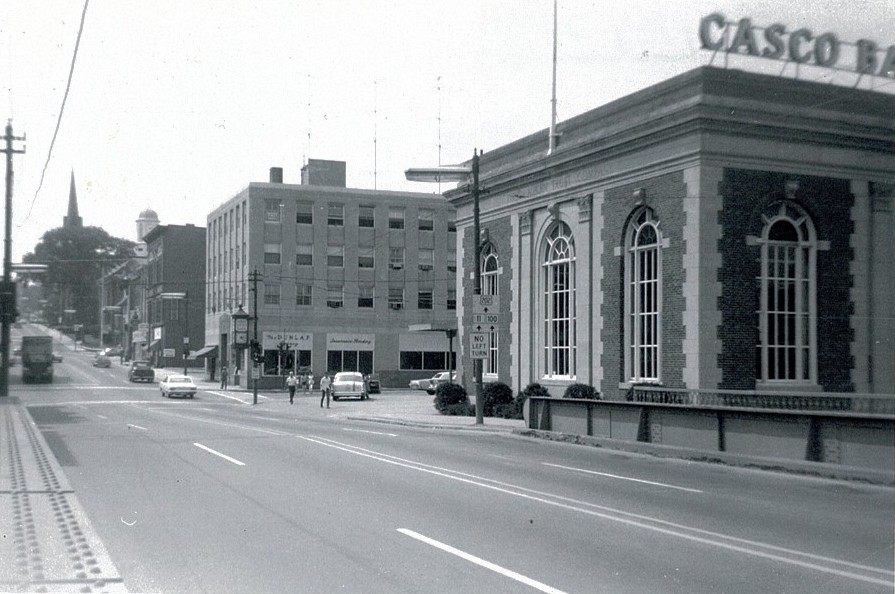
Back when Court Street was a bustling village with tall brick buildings lining both sides of the street, there used to be no straight connection between Center Street and Minot Avenue. Instead drivers would have to drive through downtown along Court Street to move between Turner Street and Minot Avenue.

This drove traffic through downtown and customers to those businesses. But when the Union Street bypass opened in 1973 it allowed traffic to flow between Minot Avenue and Center Street without having to navigate Court Street. Parking was also eliminated along Court Street in the downtown area, further limiting parking downtown.
This new convenience for motorists wanting to move quickly through the downtown had a negative impact on businesses on Court and Main streets and in the area of what is now Great Falls Plaza.
One of those businesses that took a big hit from the diverted flow of traffic was a gas station owned by Whiting’s father. First owned by Whiting’s grandfather and then later his father, Whiting spent a lot of time in downtown Auburn at the store growing up, he said.
It seemed to Whiting like there were always people walking around downtown, especially workers from a shoe factory once located in a large building in the area of what is now Denny’s and the Union Street bypass, he said.
“There were a lot of people out and you had, you know, shift work in the mills,” he said. “So you’d have people at various times, not just from 6:30 in the morning until 5 at night. You’d see people out after the second shift got out at 11. There were businesses that would operate different hours.”
Whiting used to see many regulars at his father’s gas station, he said. His father wanted to buy the land he was leasing from Exxon multiple times, but the company refused until after the bypass was built. By that time business was slowing and it didn’t make financial sense to own the property any more. His father closed the store in 1983.
In the decades since the era of urban renewal in the 1960s, many of the buildings along Court Street were torn down and in some spots new construction replaced the old buildings. But there are areas on the north side of Court Street that remain open. Whiting said some of the old buildings needed to be torn down but many of them were still in good or repairable shape.
Whiting sees the development of the Union Street bypass as the demise of what used to be Auburn’s downtown. He wishes the officials who worked on the Union Street bypass would have also developed a plan to soften the economic impact to Auburn’s downtown businesses. Instead buildings were torn down, shrinking downtown’s economic development capacity.
“It’s too bad that when they did the urban renewal, the Urban Renewal Authority didn’t create a replacement grid of developable lots, which would have had more of a structure and more of an organization, like a downtown, instead of a suburban sort of, you know, suburban village,” he said.
BUILDING BACK SLOWLY
Now faced with the task of rebuilding economic activity in the downtown, some Auburn residents and business owners have ideas of what they’d like to see done.
Expanding Nutty Netties from its location at the Auburn Mall to the corner of Court and Main streets was a good decision, Buccheri said, and the business has met the couple’s expectations since officially opening this past summer.
But probably the biggest hurdle to attracting customers to that space is the perception that there is not enough parking downtown, he said. He sees parking as a perception problem, not a real problem, because the city’s free parking garage is right nearby but confusing to some people who either don’t know about it or don’t realize it is open to the public.
Brenchick is hopeful that when the police department moves out of City Hall to a new public safety building on Minot Avenue, the garage will have more space and get more use as the public realizes its availability.
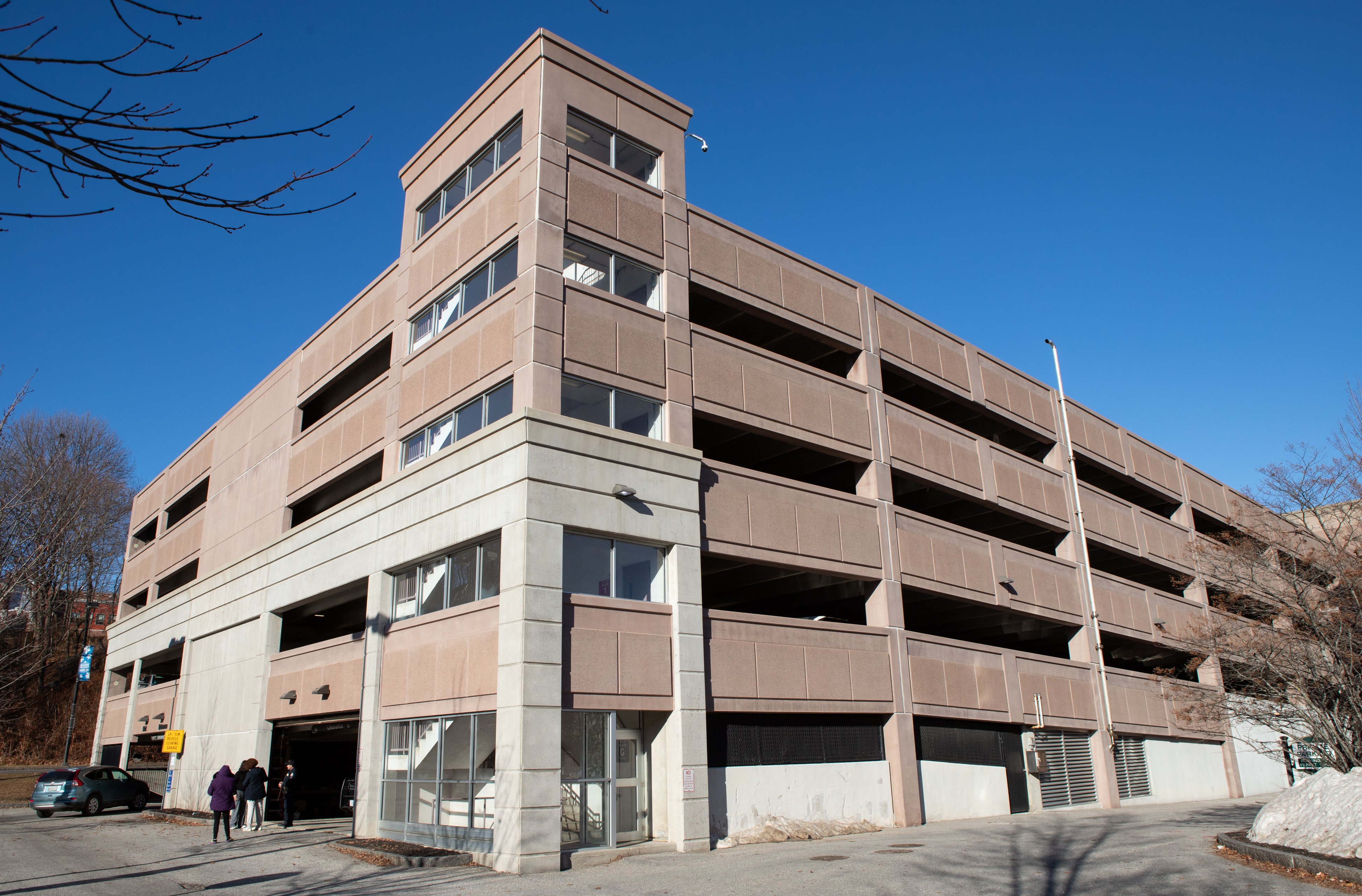
In the meantime, Buccheri thinks parking can be added along Court Street, despite it being a high-traffic area. He thinks there are creative ways the city can add parking that could accommodate the traffic passing through.
Part of the city’s downtown revitalization plan includes bringing back parking along Court Street and reducing the street to just two lanes to slow traffic down, but there are no efforts to implement those changes currently.
Whiting thinks the busy traffic on Court Street could be an impediment to bringing back parking there, he said.
When the Union Street bypass was put in, traffic along Court Street declined. But over the decades since, traffic has increased again and the road has become somewhat of a throughway for people commuting in and out of Lewiston and Auburn from the surrounding suburbs, he said.
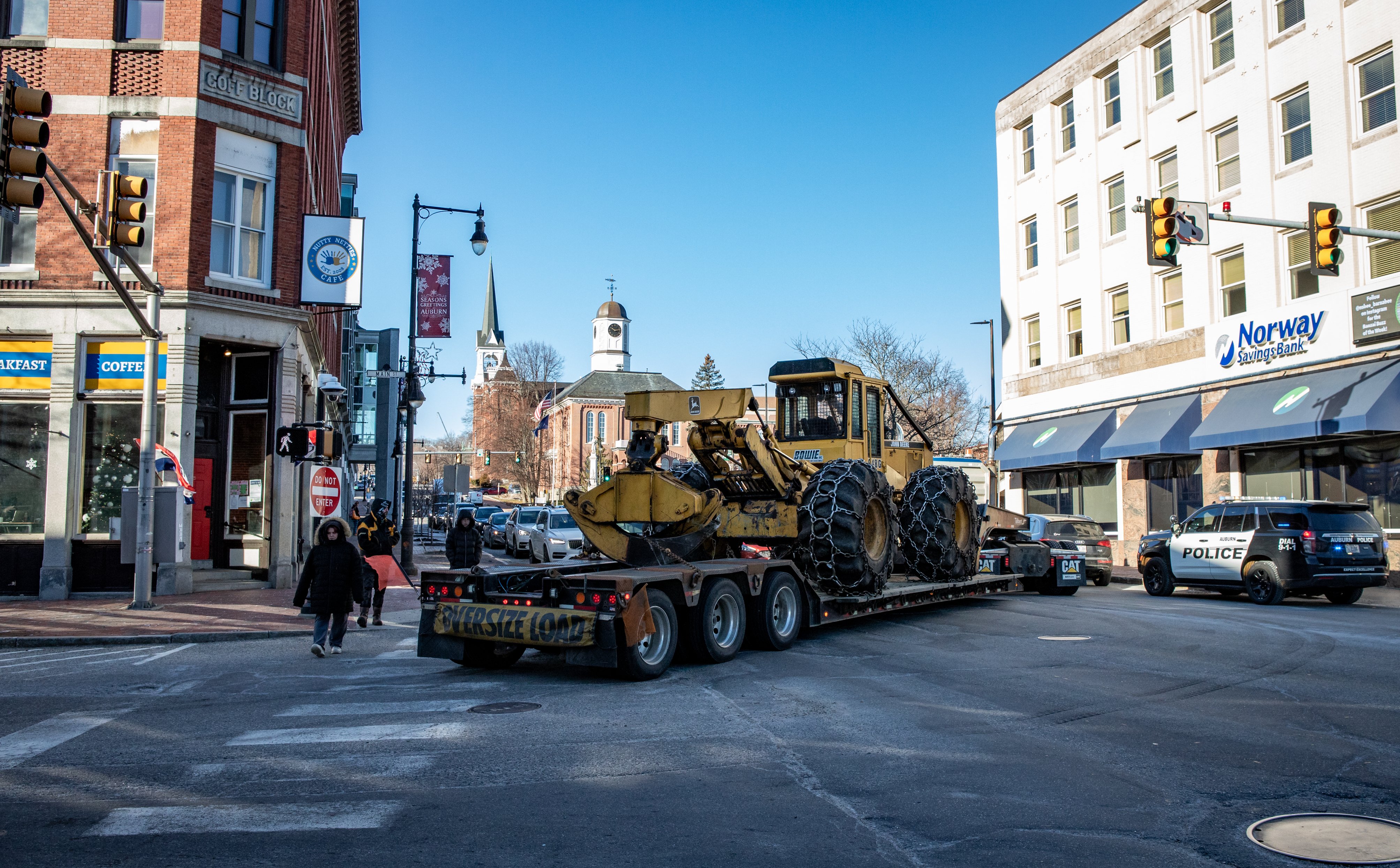
It could be possible to engineer Court Street in a way to let traffic flow through and bring back some parking, but it would be difficult to accomplish, and would have to be done right, he said.
“There’s a real conundrum, though, because you have all this traffic to move and if you think about traffic through Lewiston and Auburn, it’s not just Auburn. I mean, if you narrow Court Street too much then you could have traffic backing up,” he said.
CONNECTION TO NEW AUBURN
Hanging on the walls and shelves of Rolly’s Diner in New Auburn are relics from the neighborhood’s past, bottles from an old bottling plant, news clippings of stories written about aspects of the neighborhood and other memorabilia to commemorate a neighborhood that has remained tight-knit for a long time.
“I have a lot of pictures,” Rolly’s owner Ken Blais said. “I sort of collect history of the New Auburn particular area. I have enough (pictures) to cover this wall. That’s my plan.”
The neighborhood has seen numerous businesses from bakeries to soda bottling plants come and go, but many of the families in the neighborhood have stayed and can trace their roots there several generations back, he said.
The 32-year-old restaurant is considered by many to be the community’s hub, according to Blais. Many residents from the neighborhood, some new and some with ties to the area spanning several generations, meet there monthly to hear guest speakers, plan events and talk about the neighborhood.
The area of New Auburn, which sits where the Little Androscoggin River meets the Androscoggin River, is the southern reach of what the city considers “downtown” and is no stranger to redevelopment.
In 1933 a fire leveled a large swath of the area, requiring property owners to construct all new buildings. Despite the odds, the neighborhood was rebuilt.
The character of this part of Auburn’s downtown is very much crafted by the tight-knit residents and business owners who stay in close connection with each other and appreciate its history of resilience.
Residents in this area are concerned about walkability and public safety, according to Blais. The city installed some crosswalks for some of the wider streets that could still be a challenge for people to use, especially older people who live in the area. Residents would like to see more safety accommodations made in those crosswalks to slow traffic down.
The city has installed lighting in the neighborhood, painted crosswalks and is in the process of finishing a road that follows along the curved land area where the Little Androscoggin River and the Androscoggin River meet, to run from South Main Street to Broad Street. The city closed the intersection of Pulsifer and Broad streets in anticipation of the partially constructed new street.
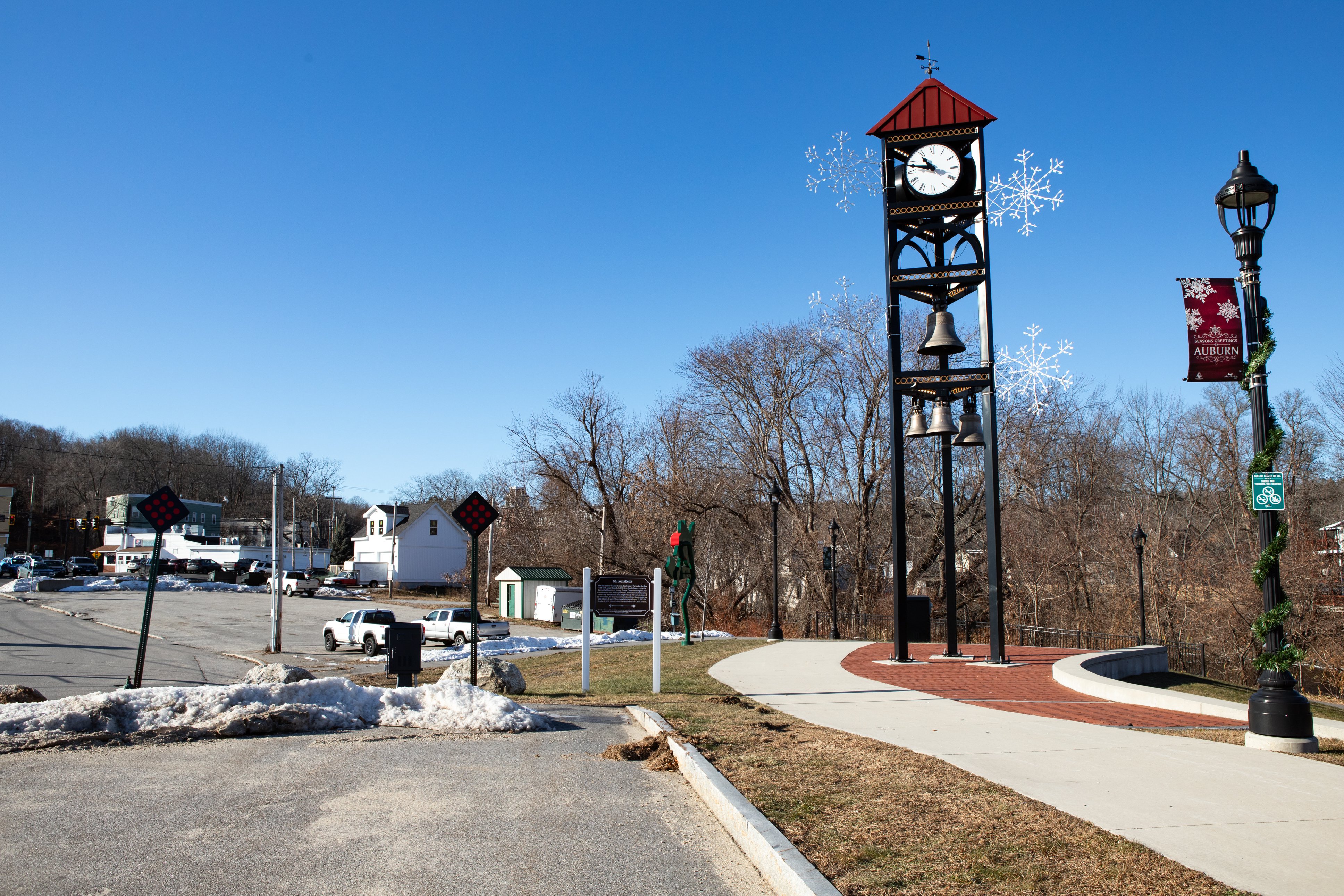
Blais has noticed a decline in the number of businesses in the neighborhood in the roughly three decades since he and his mother opened Rolly’s, he said.
There used to be a bank and credit union in the neighborhood when he opened Rolly’s, he said. He has heard residents express a desire to have a bank return to the neighborhood, along with a pharmacy, which the neighborhood has not had since before Blais’ time.
Those two businesses would help serve the older people living in the neighborhood, including those living at a nearby elderly housing complex, he said.
HOW DOES GREAT FALLS PLAZA FIT IN?
Great Falls Plaza is also ripe for development, but city officials have no formal ideas about how to develop the area, Brenchick said.
“There’s a great deal of potential there to create a downtown, but what needs to happen is all the property owners get together and agree on a course of action,” he said.
Whiting also sees the area as having potential for new development, particularly along Turner Street, he said. There is ample parking in the area that could potentially house a parking garage. And even through the design of the street that curves through the plaza currently is odd, it could be altered. But the future hinges on development filling the area.
The city is opting to wait to make stormwater drainage improvements in the area until it has an idea about how property owners would like to see the area grow, Brenchick said. The city does not want to spend millions of dollars on a design that will not be cohesive with the future use of the area.
The three distinct areas of downtown right now feel separate from each other, but city leaders’ overall goal is to fill in the downtown with businesses and housing that connects Great Falls Plaza all the way down Main Street to New Auburn, he said.
City officials would like to see a balance of office spaces, apartments, shops and restaurants, Brenchick said. But again, it means attracting people downtown and also drawing businesses and housing developers, he said. Knowing which aspect to focus on can be difficult, so the city is trying to tackle both.
And it’s trying to do that all while having limited say in what property owners end up actually doing with their buildings and spaces, outside of established codes and laws, he said.
For its part, the city hosts multiple sponsored events throughout the year, such as its upcoming annual New Year’s Eve event, which brings up to 1,000 people downtown; the Brews and Cruise event this year brought up to 1,000 people to downtown; and the summertime community concerts tend to bring up to 500 people downtown, he said.
Local businesses in downtown tend to make high profits off the events, and Brenchick is hoping the events show to local developers, investors and entrepreneurs that there is a potentially sustainable customer base to be tapped in the downtown area, helped by the increased housing construction bringing people to downtown in recent years.
“It’s kind of chicken or egg,” he said. “You got to bring the people into downtown but you also need businesses in downtown, and so the challenge is making sure our downtown starts to get vibrant so it attracts businesses to want to be here.
“And the other thing is, the way a downtown becomes vibrant is people actually living in downtown, so we’re trying to do both at the same time.”

We invite you to add your comments. We encourage a thoughtful exchange of ideas and information on this website. By joining the conversation, you are agreeing to our commenting policy and terms of use. More information is found on our FAQs. You can update your screen name on the member's center.
Comments are managed by our staff during regular business hours Monday through Friday as well as limited hours on Saturday and Sunday. Comments held for moderation outside of those hours may take longer to approve.
Join the Conversation
Please sign into your Sun Journal account to participate in conversations below. If you do not have an account, you can register or subscribe. Questions? Please see our FAQs.