

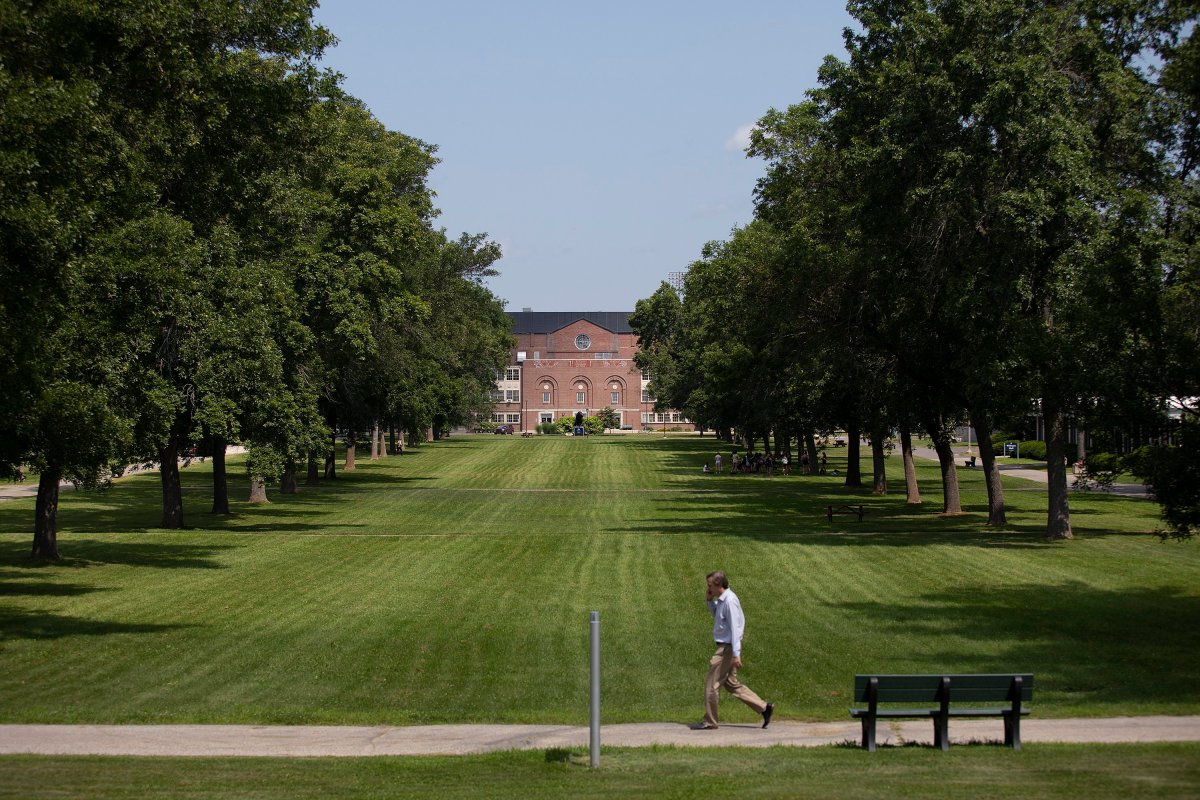
As the calendar turns to 2026, the University of Maine is deep into the process of redesigning itself.
For nearly two years, the school has been working on a comprehensive strategic plan that will define the institution’s priorities going forward. The goal is to reshape UMaine in response to the modern challenges in higher education, from economic pressures to enrollment declines to academic relevance.
That planning coincided this December with an announcement that UMaine was expecting an $18 million budget shortfall for the next fiscal year and requiring each department to submit a plan to cut 7% in that period.
The university’s revenue has been at the core of the long-term planning effort — and now the president is calling on department leaders to use those strategies to inform their budget cut proposals.
“We need to align our resources with our priorities, and that is an imperative that we must follow at the university now,” Interim Provost Gabriel Paquette said at an October town hall.
As part of the strategic planning, the university recently completed a review of every academic program based on data, like enrollment and graduation rate. It is now working with deans to gather personalized feedback as it figures out the next steps. That could mean combining or eliminating programs.
While the broader strategic planning is somewhat separate from the current budget issue, their concurrence is hard to ignore, some faculty say.
“The two together have caused agita among the faculty,” said Michael Grillo, an art history professor.
DESIGNING UMAINE TODAY

UMaine President Joan Ferrini-Mundy kicked off the re-envisioning project in May 2024 with a question: “What would UMaine look like if we were designing it today?”
In an interview this month, she said the objective, tied to the university’s 160th anniversary, was to formalize ideas on academics, research, efficiency and revenue generation — all of which were already under discussion across the university — into one central plan.
“Looking at who we are and where we’re going is a standard part of the work, and I wanted to give it a shape,” she said. That includes examining new technology, which types of students the university serves and Maine’s economic development plan.
For more than a year, the university gathered input through workshops and meetings, with more than 100 faculty members and staffers contributing to the project.
One of the planning efforts, called the Academic Portfolio Review Group, recently conducted an assessment of all 215 of the university’s academic programs. It gave each degree a score and sorted them into three categories: distinction, steady state or review.
The group used a nine-factor rubric to calculate how programs measured up. Metrics included student enrollment, number of degrees awarded, net tuition and fee revenue, job growth in the field and graduation and retention rates.
Programs that were highly rated on the rubric included psychology and finance; some of those with the lowest ratings were in Spanish, French and Romance languages. (The university emphasized that this assessment is meant for internal understanding and to stimulate conversation, not to wholly demonstrate the value of the programs.)
Paquette, the provost, said the dean of each college had to review the program assessments and submit a report recommending their “path forward” by Dec. 15. He’s now reviewing the deans’ reports.
For programs given the distinction tag, that might include new investments, Paquette said. For others categorized for review, it could mean consolidation or elimination. The university has processes for eliminating or creating new programs that involve faculty governance, which would be followed in these instances, he said.
“Program closure is a last resort,” Paquette said at an October town hall. “At the same time, our analysis as a result of collaboration shows that the status quo is not viable.”
BUDGET CHALLENGES
The university’s budget has always been a part of the strategic work.
“We have major challenges to address. The first, and it is overarching, is that our expenses exceed our revenues,” Ferrini-Mundy wrote in an October 2024 paper about the project. “This is not a new situation for the university.”
Earlier this month, just days before the deans were set to submit their reports to Paquette, the university announced the anticipated budget deficit for the coming fiscal year. In a Dec. 12 email to all employees, Ferrini-Mundy and Interim Vice President for Finance Jenny Boyden said they were calling on all colleges and units, including athletics and the administration, to reduce expenses by 7%.
“We know that meeting this target will require difficult decisions,” they wrote. “All options to balance our budget must be considered, including retrenchments and layoffs, as we have already seen at so many of our peer institutions across the country in recent years. “
Ferrini-Mundy told department leaders that the ongoing planning work, “must inform the preparation of your FY2027 budget submission.”
Leaders had until Dec. 19 to submit draft budget proposals with their suggested cuts. The system’s board of trustees will vote on the budget in May.
Ferrini-Mundy and Boyden pointed to several reasons for the shortfall, including cuts to federal funding, inflation, demographic changes that have resulted in enrollment declines and expensive debt service on major deferred building maintenance costs.
They also said a primary driver is a commitment to keeping tuition costs low.
UMaine’s tuition remains the most affordable of any flagship university in New England, according to Samantha Warren, spokesperson for the University of Maine System.
This year, tuition is $12,720 for in-state undergraduates and $36,870 for out-of-state undergrads. Warren said in-state tuition has gone up by about 3% each of the past two years. (Tuition and fees make up the single largest share, 46%, of the university’s revenue.)
Ferrini-Mundy said raising tuition is always on the table, but the university continues to see affordability as an advantage and an important part of UMaine’s public mission.
FACULTY UNEASE
The university’s strategic planning was originally meant to be ready to roll out during the current fiscal year, which began in July. However, that timeline has expanded. Federal disruptions drew focus from the work last spring, leaders said, and the vision for the project has widened.
Sabrina DeTurk, an early director of the planning, said a strategic undertaking of this scale doesn’t necessarily have a clear end date or fireworks moment.
But while the details shake out, some faculty have been left feeling uneasy. The Maine Monitor reported this month that faculty expressed concerns about decreased transparency last spring and during the summer.
Lisa Neuman, president of the UMaine chapter of the faculty labor union, said she had heard from members who were frustrated that they sat on the groups focused on strategic planning, but didn’t get the opportunity to make formal recommendations.
Grillo, the art history professor, is a member of the Faculty Senate and is involved in the union. He said the recent collaboration with deans on the program reviews seemed like the right approach. But he also had broader concerns that the university’s priorities might be too focused on the current moment and job market.
He worries humanities programs are more likely to suffer if consolidation or eliminations occur.
“I’m afraid that if we overspecialize, it will limit the university, it will limit the potential for students to find what they really want to be studying,” Grillo said. “It will limit interdisciplinary growth, and it will limit how we prepare students for an unforeseeable future.”
Ferrini-Mundy, the university president, said she’s heard a range of feedback from faculty during the planning.
“It’s not always a comfortable conversation, on the one hand,” Ferrini-Mundy said. “But on the other hand, as we put together task forces and committees and groups that are taking some of these ideas, there’s been tremendously good thinking and input.”

We invite you to add your comments. We encourage a thoughtful exchange of ideas and information on this website. By joining the conversation, you are agreeing to our commenting policy and terms of use. More information is found on our FAQs. You can update your screen name on the member's center.
Comments are managed by our staff during regular business hours Monday through Friday as well as limited hours on Saturday and Sunday. Comments held for moderation outside of those hours may take longer to approve.
Join the Conversation
Please sign into your Sun Journal account to participate in conversations below. If you do not have an account, you can register or subscribe. Questions? Please see our FAQs.