

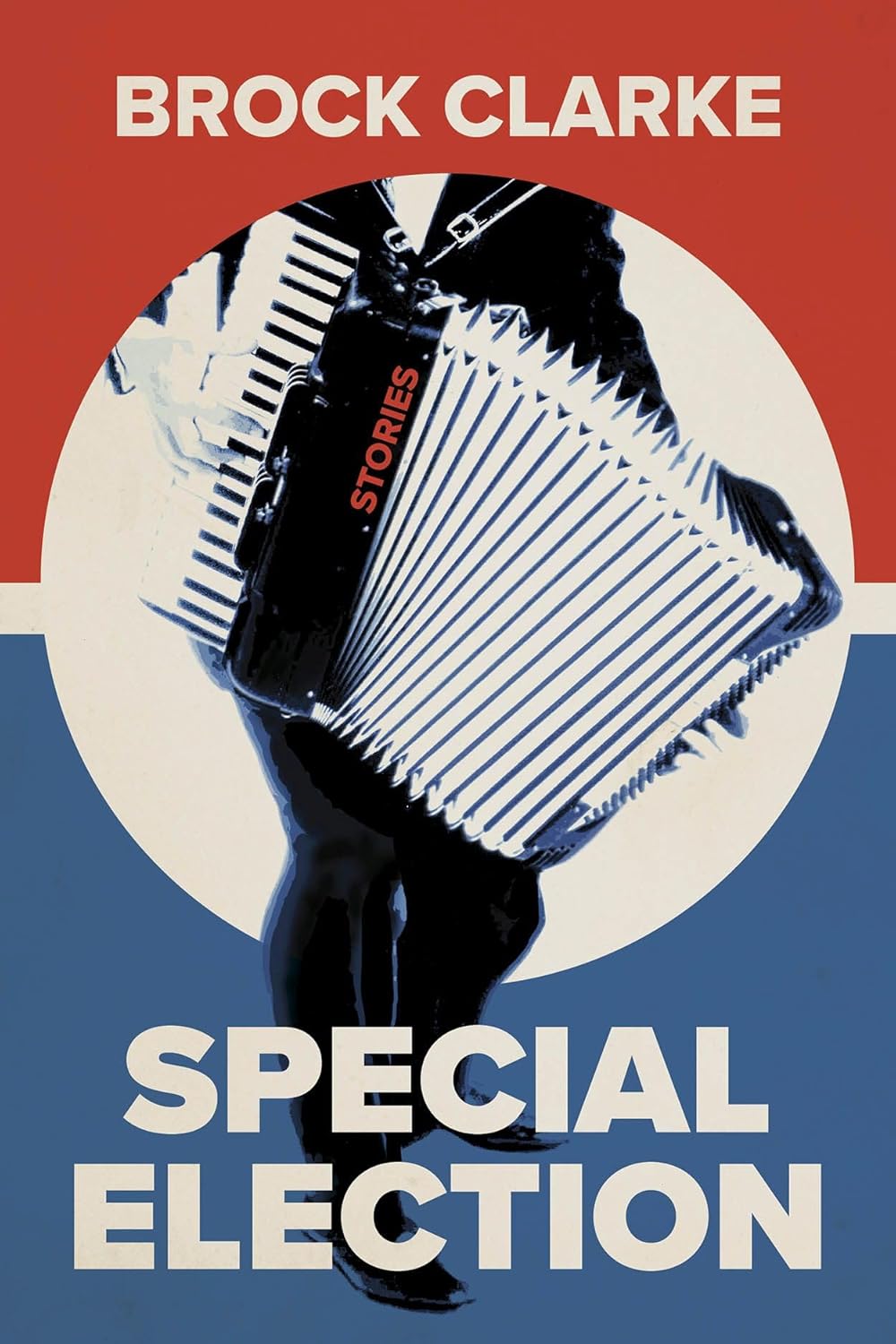
Is there a heaven? This question opens Brock Clarke’s latest book of short stories, “Special Election.” With a medium shot of an accordionist on the book’s cover, one can only imagine that if there is a heaven, it might be unrelenting in its absurd, wonky music.
Clarke’s stories take on the real in uncanny ways. In what Clarke refers to as a “cockeyed” approach to reality, readers encounter satire, the grotesque and dark comedy — in the words of the protagonist in “The Slim Jim” referring to her husband: “sometimes his deadpan [is] so dead that it really did sound like a corpse may have spoken.” And it’s true, Clarke masterfully brings the dead to life.
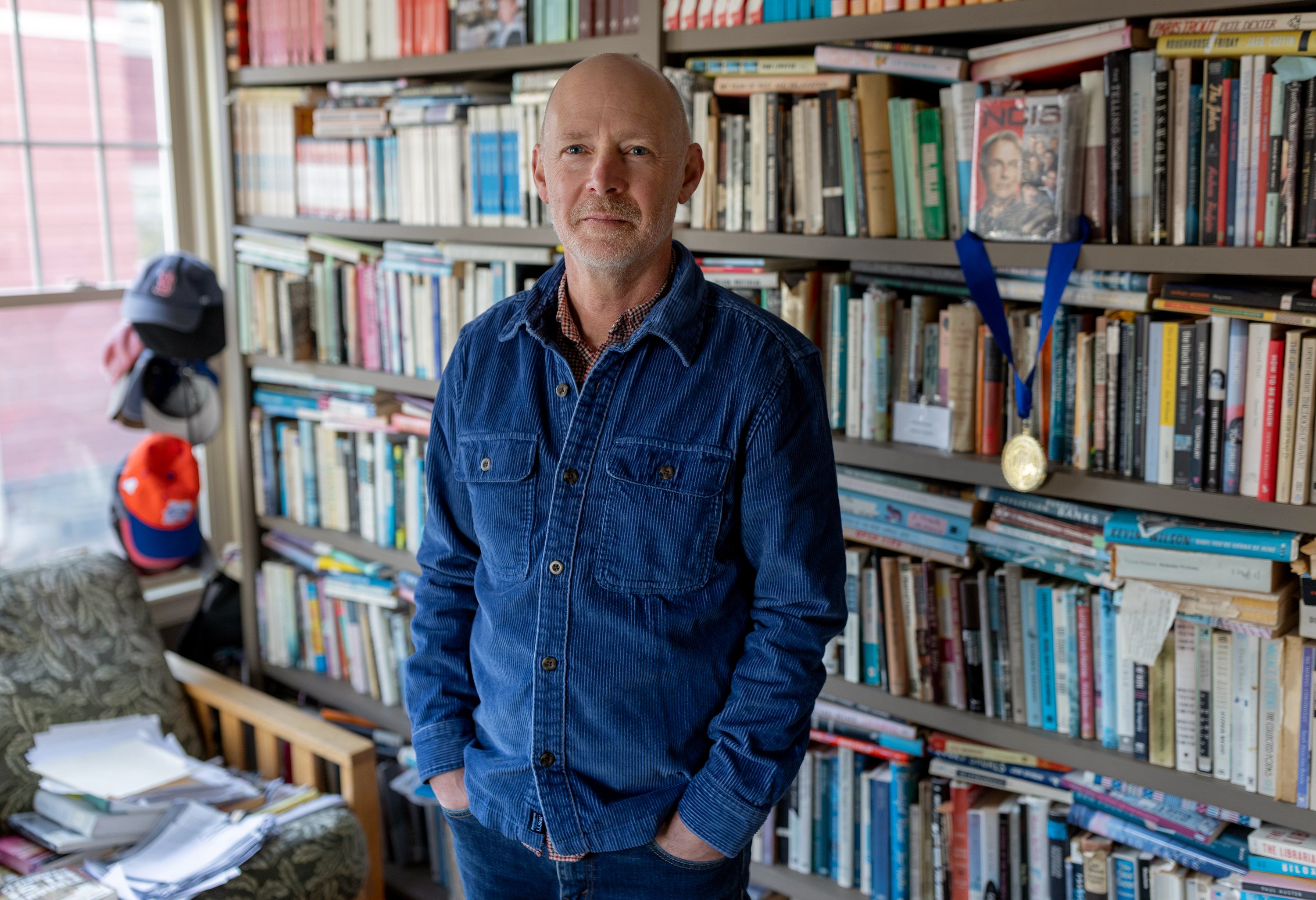
Brock Clarke is a professor at Bowdoin College and lives in Portland, where he spoke with the Portland Press Herald about fiction, the role of place and humor in his work.
One of the things I love about your writing is its humor and satire. How does humor play into your process of conceiving of a story?
It depends on the story. I gravitate toward subjects or premises that have some sort of comedy embedded in them. When I’m writing, I don’t think, “Is this funny or not?” As far as I’m concerned, the other part of the question is, “What do I do with it?” I might be initially attracted to the subject, premise or character because there’s humor, but if I can’t do something else with it, then I’ll abandon it.
I want to talk about the opening story, “Special Election.” We meet the TV host, Lawrence Welk, in this wild circumstance in which he is brought to North Dakota from the afterlife to run in a special election.
During the pandemic, there was a North Dakotan state legislator who was running for reelection. He died of COVID, then his constituents elected him anyway. It wasn’t like he died after they elected him: they voted for him after he was already dead. And I was like, “Whoa, North Dakota.” Then I thought, “What else do I know about North Dakota?” and it was Lawrence Welk.
I started rewatching the shows that I just dreaded when I was a kid. I found he has a memoir, so I read that and started thinking, “Would it be interesting if Lawrence Welk were recalled from heaven to run for office?” As I was reading, he remained the out-of-time goofball I remembered him being, but he also seemed more optimistic. I often do this — I jam two things together and see if I can make something out of them. What I made out of this one, I thought, was something that was weird and funny, but also kind of hopeful.
He’s also compelling because there are moments when all seems against him, then he’ll find some agency, and it’s enough for his humor and optimism to come through in a less tragicomic way.
That makes me happy that you said that. I’ve tried valiantly over the years to make my characters more active. In the past, they’ve been the captains of their own sinking ships. But I actually wanted him to have that agency to see if he could make something of it.
The collection begins in North Dakota and ends in Memphis. How has place influenced your writing?
I was just talking about this the other day with some students. At the beginning, many of my stories were set nowhere, which was part of the problem. I realized that I should set them in a version of where I grew up, which was a small mill town in upstate New York. The minute I called the setting Little Falls, N.Y., the stories began to do something for me. Not that the place really resembled Little Falls, but it was a place that meant something to me. It was a weirdly complicated place that no one knew anything about, so I could do whatever the hell I wanted with it.
At some point, I felt like I had said and done what I wanted to with that place, and the stories and novels became a little more globetrotting. I don’t really have a fidelity to any of these places. There are a bunch of places I don’t name. In my mind, “Reckonings” is set in my neighborhood in Portland, but I don’t ever identify it as such because that would be distracting. The identity of the place is something for me, but it’s not always necessary for the story or the reader.
“Customs and Alterations” opens with the death of the narrator’s son, then we meet his ex-wife. How are divorce or self-divorce of interest to you, especially in relation to satire and the absurd elements you’re juggling?
On a practical level and a plot level, those kinds of divorces are good because they demarcate a change. Then, how do characters react to the change? Do they try to ignore it? Do they try to justify it? Do they try to rectify it, which ends up usually meaning they just make it worse?
A lot of the stories are about people who’ve either changed or change has been forced upon them, then they have this big question: “What do I do about it?” For me, the story is an answer to that question. I think almost all those stories, in some ways, are about, “How are people going to remember me?” That’s true of “Special Election.” It’s true in “Customs and Alterations.” In “Reckonings” it’s certainly true — the narrator is thinking, “Was I really this kind of person who believed and loved this book, “To Kill A Mockingbird,” that all these people are saying all of these negative things about now?” You can’t really write a story about legacy unless the legacy is being threatened.
Lisa Hiton is a poet living in Brooklyn, N.Y. Her first book of poems, “Afterfeast,” was selected by Mary Jo Bang to win the Dorset Prize. Her work has been featured or is forthcoming in the Kenyon Review, The Slowdown, NPR, New South and elsewhere.
We invite you to add your comments. We encourage a thoughtful exchange of ideas and information on this website. By joining the conversation, you are agreeing to our commenting policy and terms of use. More information is found on our FAQs. You can update your screen name on the member's center.
Comments are managed by our staff during regular business hours Monday through Friday as well as limited hours on Saturday and Sunday. Comments held for moderation outside of those hours may take longer to approve.
Join the Conversation
Please sign into your Sun Journal account to participate in conversations below. If you do not have an account, you can register or subscribe. Questions? Please see our FAQs.