


Many of the Maine residents arrested during an immigration enforcement operation last month were processed at a facility in Massachusetts that attorneys warn has deplorable conditions and is not set up for extended detention.
When Immigration and Customs Enforcement pulled all of its detainees out of the Cumberland County Jail, many of them were moved to a field office in Burlington, Massachusetts, about 100 miles from Portland.
The facility is designed for administrative processing, but immigration attorneys say it has been holding some people for more than 10 days, raising concerns about due process and access to legal counsel.
Lisa Parisio, policy director at the Immigrant Legal Advocacy Project, said her organization learned the facility was “heavily” used during what ICE called “Operation Catch of the Day” and is deeply alarmed by reports about the conditions there, including overcrowding and lack of access to medication.
Attorneys throughout Maine and Massachusetts told the Sun Journal they’ve heard stories of as many as 50 people to a cell — men and women in some cases — with no windows and limited airflow, a single camera-monitored toilet, aluminum blankets, no showers and poor quality food.
“They’re trapped in this little confinement cell, a dark cell with no sunlight, with multiple people,” said Shaan Chatterjee, an attorney at New England Immigration Law. “They’re basically torturing people into signing off on their own deportation.”
The complaints have started to catch the attention of U.S. Rep. Chellie Pingree of Maine, who said this week she is hoping to tour the facility soon.
Others are citing it as a reason to oppose the federal funding bill currently being debated in Congress that would renew the annual budget for the Department of Homeland Security, which includes ICE.
An ICE spokesperson denied the allegations and said in a statement Thursday that the Burlington field office is a processing facility, not a detention facility, where “illegal aliens are quickly processed and transferred to permanent housing at a detention facility.” The spokesperson said all claims of substandard conditions at the facility are false.
CONDITIONS
Massachusetts attorney Robin Nice said she has six clients who were detained during the Maine operation and, as of Tuesday, all were being held in Burlington.
Two of her clients, one of them a man who uses a walker and was still detained as of Thursday, has been there longer, Nice said.
“The conditions in Burlington aren’t zoned or designed to hold people for more than 12 hours,” said Nice. “Frankly, the fact that people have been staying there for 10-plus days is inhumane and egregious.”
Most of her clients have no criminal history; one has a prior conviction for an OUI, she said. All of them have ongoing immigration or asylum cases pending and have been in the United States for two or more years.
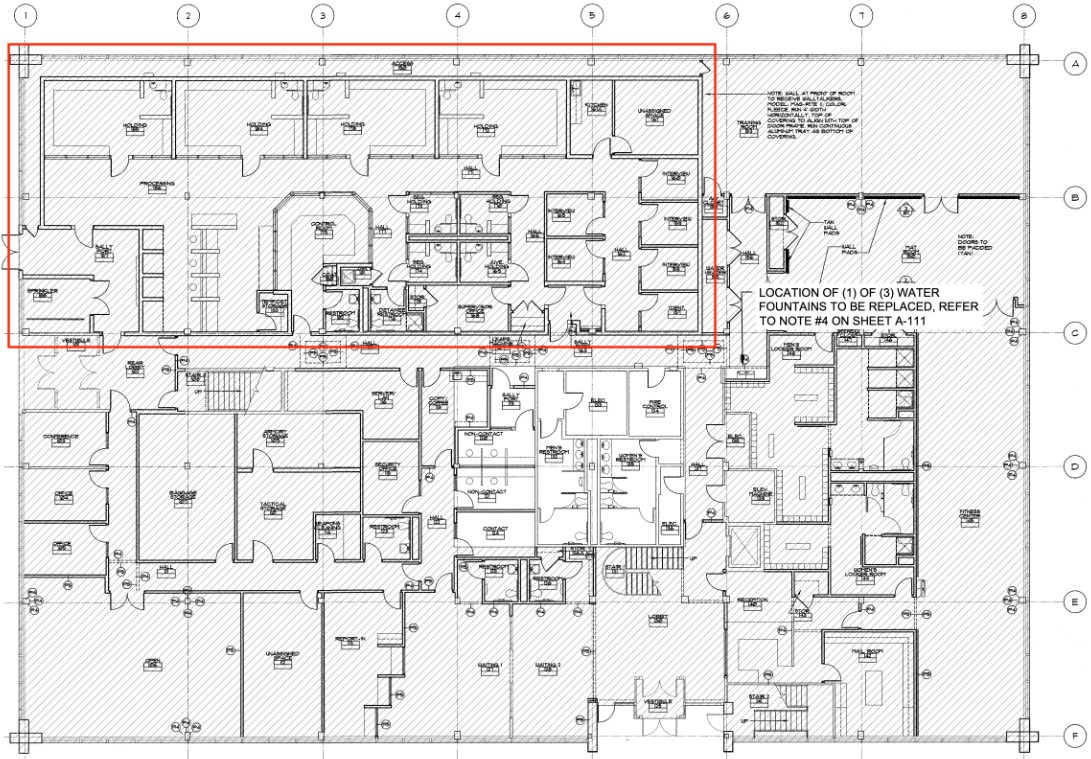
Lograi Tuzolana, one of Nice’s clients, said she was screamed and cursed at as she was crammed into a cell with some 50 other people. The cell had just one toilet and detainees had no access to showers. Nice said she has been told by several clients that each toilet is in view of a camera.
“Everyone was feeling bad, sick,” Tuzolana said. “Many people could not breathe properly, people were falling down because of the conditions. The food was like dog food.”
Another of Nice’s clients, a Lewiston man in his 30s who does not speak English as a first language, is using a walker after a recent surgery and has been held without appropriate medical care, Nice said.
With a language barrier and limited time for communication, it’s difficult to piece together his medical situation and an urgent follow-up surgery, on top of his legal woes, Nice said.
“ICE has told me that they want me to get his medical records and share those with them so that they can figure out what medical care they need to provide, if any,” Nice said. “That is just insane to me, because, frankly, ‘release him’ is the solution there.”
Chatterjee, the attorney at New England Immigration Law, said he has four Maine clients in detention at the Burlington field office, and many more who have been released.
One of his clients, a man from Nicaragua, is deaf.
When the man was arrested, Chatterjee said, he attempted to communicate to ICE agents that he could only speak through Nicaraguan sign language. He was accused of lying and was transferred to Burlington, his lawyer said, where continued requests for an interpreter were ignored.
In the meantime, Chatterjee filed a petition arguing the man was being held illegally and a federal judge ordered federal agents not to move him outside of Massachusetts.
“ICE violated that order and transferred him to the Wyatt Detention Facility in Rhode Island, where he continued to be accused of lying about his deafness,” Chatterjee said. Other attorneys that have similar orders in Maine say they also were ignored.
When the man was ultimately released, Chatterjee believes it was because of a lack of beds or resources, “not an act of humanitarian discretion.”
“What he went through as a person with a disability is just unconscionable,” Chatterjee said.
In a statement, an ICE spokesperson denied the allegations, saying, “The facility has an abundance of supplies, including food, assorted snacks, water, personal hygiene and bedding materials. Detainees have access to a shower.”
“In fact, ICE has higher detention standards than most U.S. prisons that hold actual U.S. citizens,” the statement read, adding that men and woman are processed separately.
ATTORNEY ACCESS
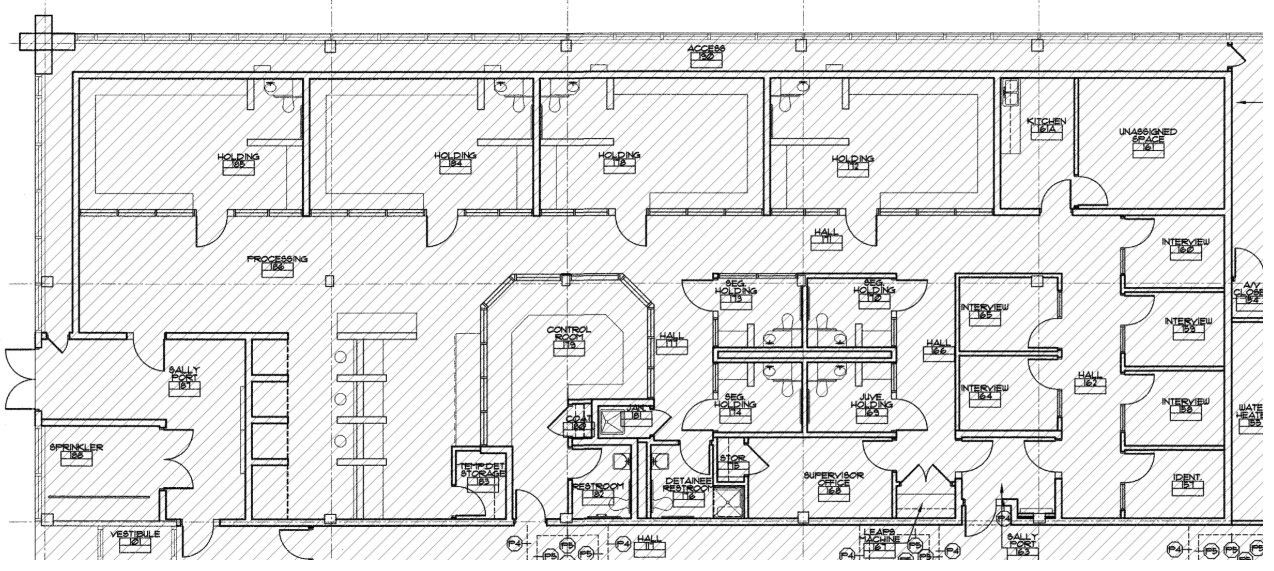
The Burlington field office is a bottleneck, Chatterjee said, making for a nerve-wracking experience filing habeas corpus petitions — which attorneys use to argue their clients are being held illegally — and no ability to communicate with clients.
He said time is of the essence because shipment to Burlington typically means only one thing — “a sign that ICE is intent on shipping them somewhere far from New England.”
Some Maine detainees have been sent as far as Louisiana. The Department of Homeland Security is investing in more detainment facilities. One in Merrimack, New Hampshire, has yet to be built.
Attorneys cannot initiate calls to their clients, who are allowed only brief, possibly monitored, daily outgoing phone calls, said Nice, the Massachusetts attorney. Over about 10 days, Nice said, she has had just 25 minutes of contact with some clients, which she described as “not meaningful access to counsel.”
“I’ve taken phone calls when I’m in the middle of putting my kids to bed, when I’m in the middle of dinner, when I’m in the middle of another court hearing,” Nice said. “There’s no way to plan for it because they just call when they can … and it’s not private.”
That makes it hard to decide on next steps, and file petitions for release.
“I’ve never gotten a single phone call from a client at Burlington,” Chatterjee said. “That is not only a due process issue, but it’s a logistics issue. … I view it as a serious obstruction of the due process right to access counsel.”
Tuzolana, one of Nice’s Maine clients who was detained at an immigration check-in, was released after three days when her habeas corpus petition was granted. All of Nice’s other clients have pending habeas corpus petitions or bond hearings for release, she said.
Nice and Chatterjee both said they have had no luck trying to access clients in person.
“I’ve been at the Burlington office and said, ‘Hey, I have an entry of appearance on file. You’re looking at it, I’m showing it to you. I would like to talk to my client, please.’ And then I’m told, ‘No.’ That’s the norm,” said Nice.
The limited communication with clients is demoralizing and exhausting, but that’s probably the point, Nice added.
“The government’s intention is to make it harder for immigrants, of course, and by extension, make it harder in death by a thousand paper cuts (for) the attorneys,” she said.
An ICE spokesperson said all detainees have opportunities to communicate with lawyers and their family members.
‘IT’S TAKING AWAY FROM REAL WORK’
Kira Gagarin, an attorney in Framingham, Massachusetts, has worked for about eight years as an Enforcement and Removal Operations liaison for the American Immigration Lawyers Association.
AILA is a nonpartisan nonprofit based in Washington, D.C., representing more than 18,000 attorneys and professors who specialize in immigration law. The organization advocates for fair and just immigration law while providing its members with networking, resources and communication within the legal system. AILA and ERO, a directorate within ICE, have a long history of cooperation, Gagarin said.
As one of two AILA New England liaisons to the facility, Gagarin keeps private attorneys up to date on ICE policies, addresses systemic procedural issues and tries to resolve problematic cases involving compliance, detention or removal.
Though, like most attorneys, she has never had access to the holding areas at the Burlington field office, she said she does know that conditions are as described by many detainees.
“We have had a very good working relationship with ERO, ICE … so it’s sad to see what ICE looks like in Burlington now,” Gagarin said. “Because I don’t think that’s what any of the officers there want to be doing.”
Gagarin said the duties of helping immigrants through the citizenship process has taken a back seat to the “detain first, ask questions later” directive from DHS.
“It’s very unfortunate that they have these orders from above that are cruel and unlawful, because from having years, if not decadeslong relationships with ERO, I just do not think this is their mission and what they want to be doing,” she said. She added that immigrants with multiple check-ins every year now have to report once a month, a new policy that is further clogging up the courts and costing individuals money and time.
“It’s taking away from real work that they could be doing when they have to do thousands, if not hundreds of thousands, of check-ins,” Gagarin said.
CONGRESSIONAL OVERSIGHT
Parisio said ILAP is urging Congress to exercise its oversight of the facility and others in New England. She also supports calls for Congress not to provide additional funding for ICE.
Pingree, a Democrat representing Maine’s 1st District, said she is aware of the “terrible conditions” at the Burlington field office and is in the process of arranging her first tour of the facility.
“Anyone in federal custody, regardless of immigration status, has a right to due process and must be treated with dignity and in accordance with the law,” Pingree said. “This administration must be held accountable for its abuses, and congressional oversight of federal facilities is a crucial tool to expose what’s happening behind closed doors and demand immediate change.”
Congress passed a funding bill Tuesday ending a four-day government shutdown and extending ICE and DHS funding at current levels for two weeks. The heated negotiations in the meantime have not come to any resolution as lawmakers face a Feb. 13 deadline.
Poor conditions at the Burlington field office are nothing new.
The Boston Globe reported in June that detainees faced sleeping on the concrete floor without mattresses or sheets, were only given crackers and microwave oatmeal for meals, had no access to showers or menstrual products, and took turns “grabbing a gulp of fresh air from a gap under the door.”
U.S. Rep. Seth Moulton, a Democrat representing Massachusetts, held a news conference in December some six months after the Globe ran its story, updating the public after completing a 90-minute tour of the facility, one of several he took throughout the year.
Moulton determined that the practices in the facility — “inadequate and inhumane” — do not meet the standards Congress would like to see.
Nice, the Massachusetts attorney, said the strain of these arrests will be felt not just by immigrants and their attorneys, but by the taxpayers, too.
The cost of detaining a person is about $177 a day, Nice said, which only adds to the inestimable cost of pushing habeas corpus petitions through district courts and jamming up the already backlogged immigration court system.
“It’s a complete waste of everyone’s time, of taxpayer money,” Nice said, “and it means that people are being deprived of their basic right to liberty for days and days longer than they should have been.”

Comments are not available on this story. Read more about why we allow commenting on some stories and not on others.
We believe it's important to offer commenting on certain stories as a benefit to our readers. At its best, our comments sections can be a productive platform for readers to engage with our journalism, offer thoughts on coverage and issues, and drive conversation in a respectful, solutions-based way. It's a form of open discourse that can be useful to our community, public officials, journalists and others.
We do not enable comments on everything — exceptions include most crime stories, and coverage involving personal tragedy or sensitive issues that invite personal attacks instead of thoughtful discussion.
You can read more here about our commenting policy and terms of use. More information is also found on our FAQs.
Show less