


Under the ice on Rangeley Lake, Maine State Police divers say it’s like being in another world.
“Being under that sheet of ice and watching your bubbles, you know, go up and dissipate across the surface — underneath the ice was, was awesome,” said Chris Cookson, a sergeant for Maine State Police and a commander for the state dive team. “You really can’t recreate that anywhere else.”
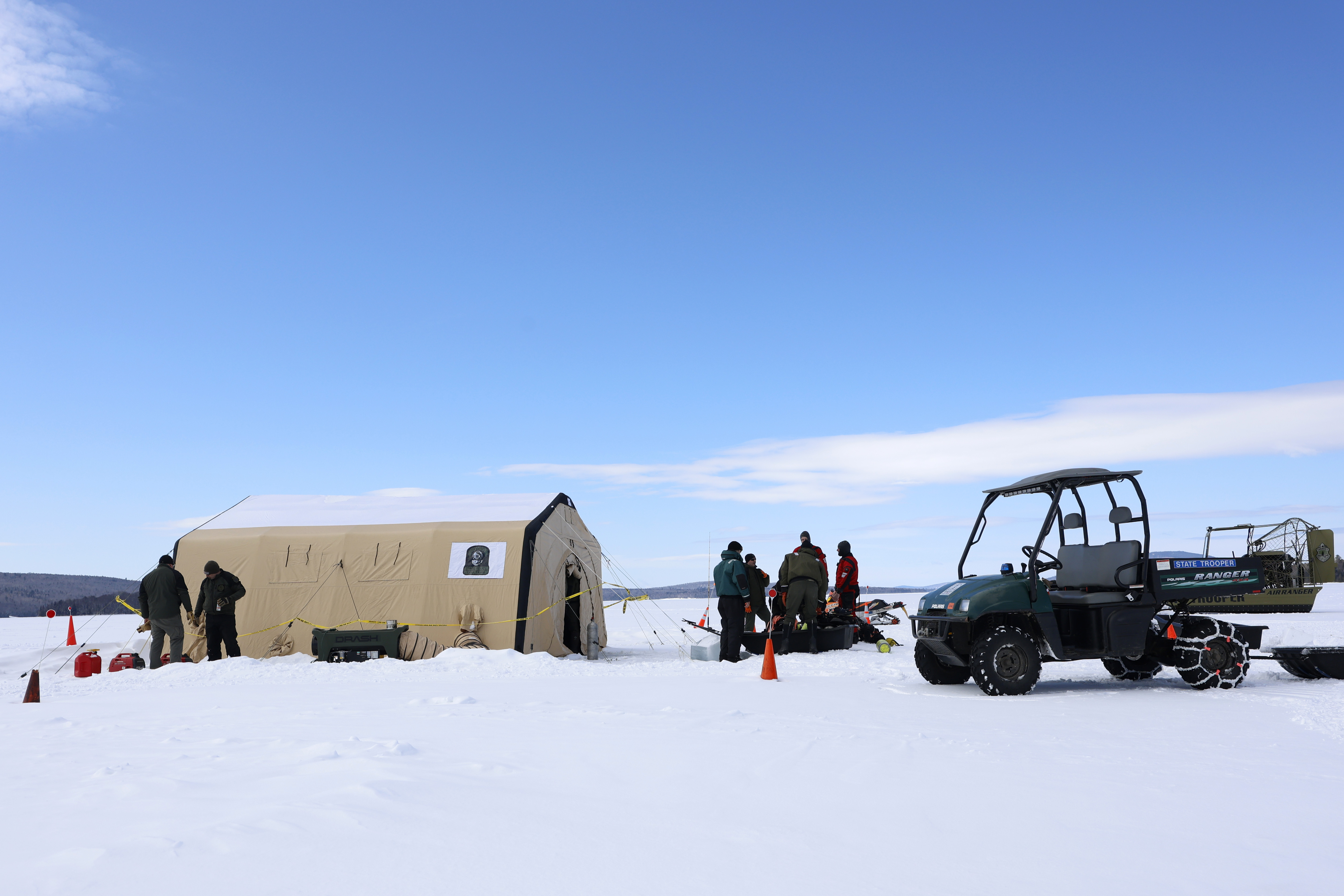
On a clear but windy day last week, ATVs zipped back and forth from the shore to a tent overflowing with law enforcement as part of a regionwide training program hosted by Maine State Police that has brought state agencies and marine patrol officers from across New England to Rangeley Lake for the last 10 years.
Inside the tent, officers donning wet suits sat at the edge of a hole in the ice. One officer commanded the divers to test their radios and air supply. Others circled the divers, inspecting their suits. The divers then took turns plunging into the icy water.
Below, the divers, in teams of three, performed a variety of tests from opening a bolted container to seeking and retrieving a lost item. After a few minutes underwater, they took turns surfacing, where their teammates helped pull them up into the tent to take off their gear and warm up.
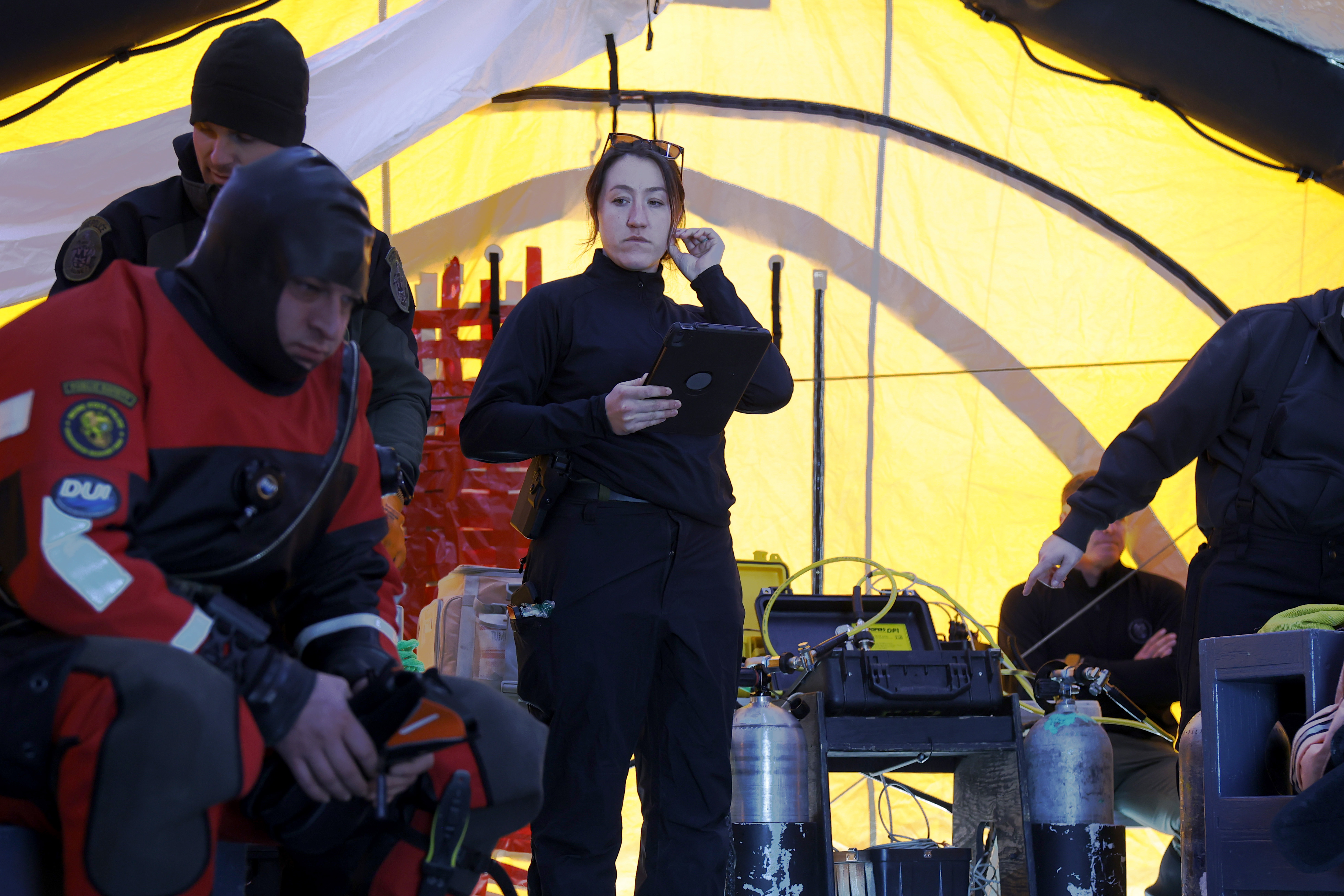
The group is part of the New England State Police Administrators Conference, which standardized the equipment and the training for recovery divers in the region. They can all be deployed to a surrounding state should a situation arise where extra divers are needed. The most recent case was during the investigation of the Lewiston mass shooting in 2023.
Divers are called for underwater police investigations. They are deployed to recover bodies from lakes, rivers and the coastal waters. They also search for vehicles and weapons that are involved in investigations.
So far this year, the Maine diving team has only been deployed once, to recover a car and one body from a frigid waters.
Even when dealing with such stressful conditions, officers remain calm in their training and real operations. Cookson said the dives are usually relatively low-stress because they happen after an incident.
“We’re not going to deploy divers who are excited, you know or nervous with adrenaline pumping,” Cookson said. “We want to make sure that those divers are cool, calm and collected and operating at 100%.”
Regardless of their layers of thermal undergarments, hoods and dry suits, divers still face brutally freezing conditions. In the few minutes they spend underwater, their extremities can grow numb from the cold.
“It’s more of a mental game than anything else,” said Tim Beauchamp, a Maine marine patrol officer who was the first to dive into the near-freezing water during the March training.
He took comfort in the fact that, if something were to go wrong, he would be surrounded by divers with years of experience.
“When you have that kind of trust and all the checks necessary before you get underneath the water. It’s a really cool experience,” he said.

Supporting Sponsor for Franklin Journal, Livermore Falls Advertiser, Rangeley Highlander and Rumford Falls Times.
Keeping communities informed by supporting local news. franklinsavings.bank

We invite you to add your comments. We encourage a thoughtful exchange of ideas and information on this website. By joining the conversation, you are agreeing to our commenting policy and terms of use. More information is found on our FAQs. You can update your screen name on the member's center.
Comments are managed by our staff during regular business hours Monday through Friday as well as limited hours on Saturday and Sunday. Comments held for moderation outside of those hours may take longer to approve.
Join the Conversation
Please sign into your Sun Journal account to participate in conversations below. If you do not have an account, you can register or subscribe. Questions? Please see our FAQs.