

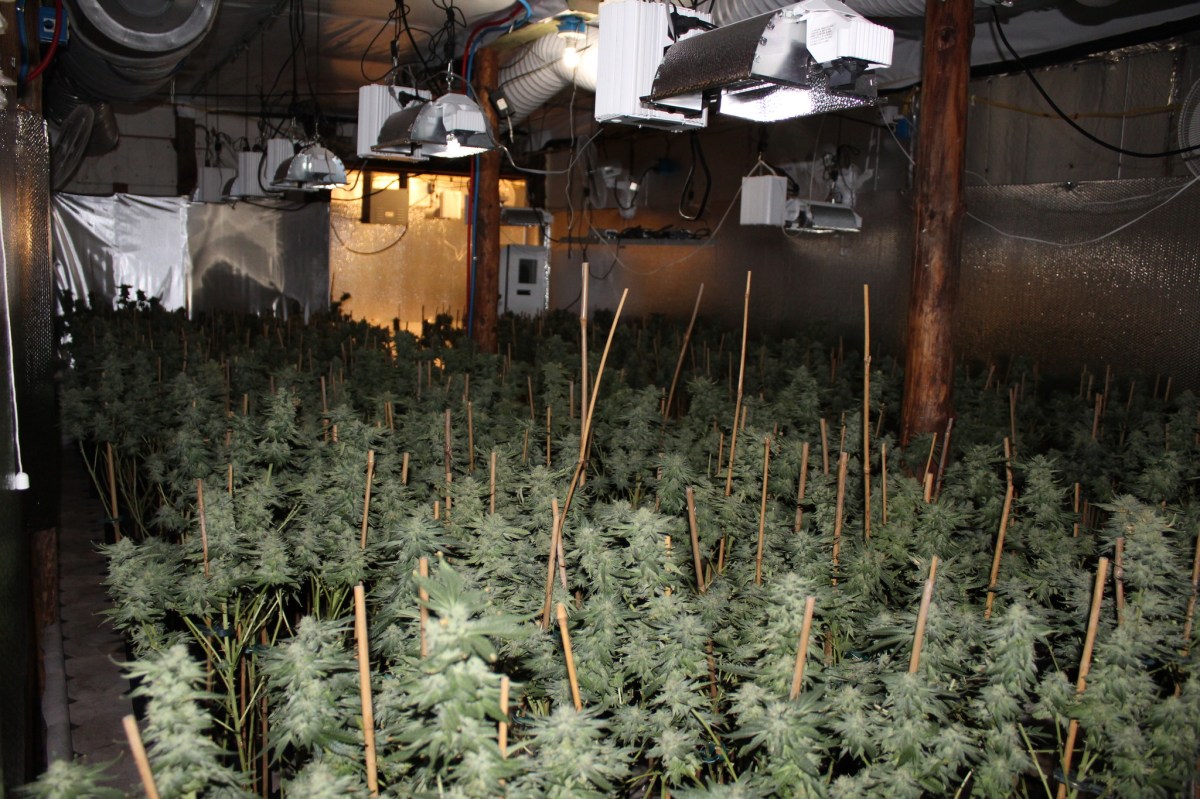
In 2024, Maine police kicked off a year of sudden and visible enforcement against suspected illegal cannabis grow houses. Search warrants were executed at more than 60 single-family homes across the state. Nearly 40 people were arrested.
Since then, enforcement seems to have ground to a halt, although local police say that’s not because they have stamped out all the grow houses.
After President Donald Trump won the White House, the administration promised a swift crackdown on Maine’s illicit grows. The Senate appointed Andrew Benson as the state’s new U.S. Attorney with the support of Maine Republicans and Sen. Susan Collins, who referenced illegal Chinese grows in her statement supporting his nomination.
But the filing of new search warrants has largely stopped. Fewer than 10 suspected grow houses have been searched in the last 12 months. And despite a handful of recent guilty pleas, the U.S. Attorney’s office hasn’t filed new charges against alleged Maine growers in roughly just as long.
Both Benson and representatives from his office declined repeated requests for an interview about the grow houses or the investigations into them.
Some state law enforcement agencies say there is still no coordinated federal effort to root out any illegal operations, which means the burden of investigating what they’ve called a network of transnational criminal groups that has established hundreds of illicit grows across the state has often fallen on them. Most say they lack the necessary resources.
“You have so many barriers,” said Guy Dow, a sergeant with the Piscataquis County Sheriff’s Office who has executed search warrants at 10 grow houses across the county so far. “These cases have been very, very difficult to work with compared to any other case I’ve ever worked on.”
The investigations often include more than cannabis and stretch across jurisdictions. Property owners usually live out of state and traffic laborers to the grows, according to local police, though no one has been charged with human trafficking in Maine. Many workers don’t speak English or know the names of the towns where they’ve been sent to work, police say.
And in recent years, a significant factor in the down turn has been the grows’ shift into legal markets. Many once-illicit operations have become licensed to grow legally in Maine’s loosely regulated medical cannabis industry, often to subvert law enforcement scrutiny.
DIFFICULTY PROSECUTING
Of the more than 60 grow houses searched across Maine since 2023, about two-thirds were in Penobscot, Piscataquis and Somerset counties. Each county’s sheriff has described a similar problem:
“We’re able to do investigations,” Penobscot County Sheriff Troy Morton told legislators in January. “But to actually prosecute these cases, that was the challenge.”
For police, identifying grow houses and building the basis for a case is easy. In dozens of warrants, police narratives and other documents reviewed by the Press Herald, police used the same methods to identify suspected illegal grow houses.
Most can be spotted (or smelled) between their shuttered windows, numerous heat pumps and unmistakably pungent odor. The next step is often to find property records, which generally show the homes were bought in cash within the last few years, usually by people from out of state. Subpoenaed electric records often show a spike in electricity following the purchase.
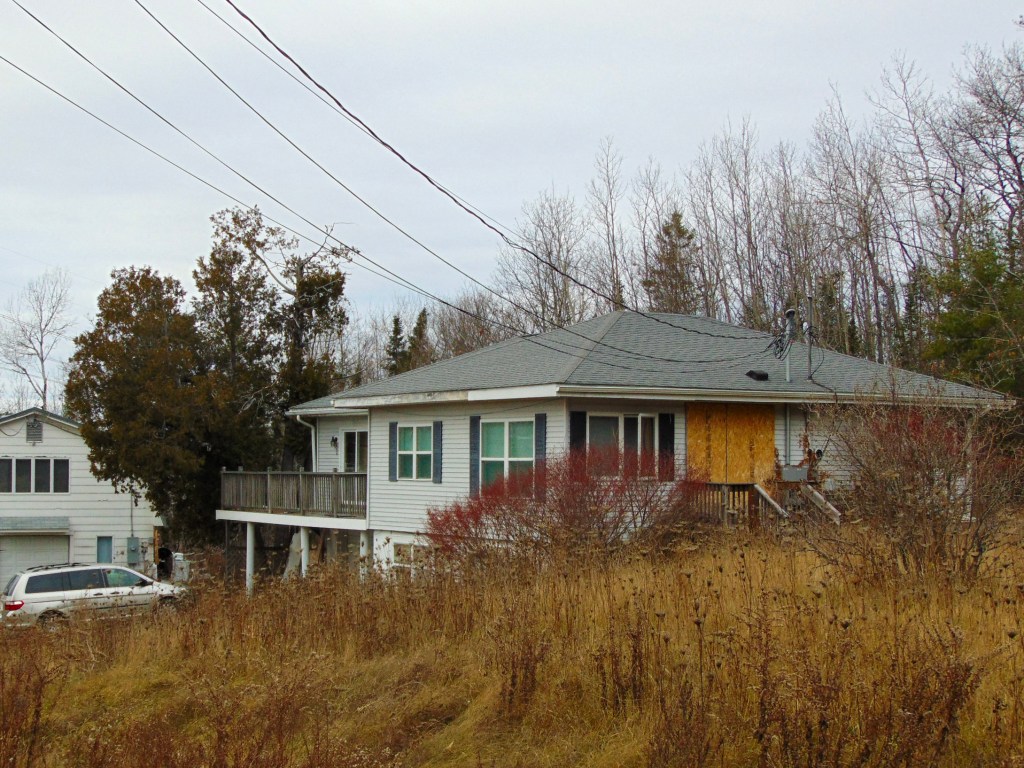
But police say investigating the web of who’s running these operations is tricky. They often cross county and sometimes state lines. Most investigations require coordination between county sheriffs and federal agencies.
“Resources are limited in any organization,” said Somerset County Sheriff Dale Lancaster, whose office has searched more than 20 grow houses so far. “There’s a lot of things going on in both the state and local government.”
Corralling a team of dedicated investigators from short-staffed agencies to investigate suspected criminal networks is difficult. Many officers feel their time is better spent elsewhere, according to several law enforcement sources.
Even when police have enough information to press charges, several sheriffs said few prosecutors want to spend the resources to pursue grow house cases in a state where the plant is already legal.
“It has been a challenge to secure the necessary support for a comprehensive investigation into activities we suspected to be more extensive than just marijuana cultivation,” Morton said in a statement.
All of this is complicated further by the operations’ shift into the legal market. Hundreds of Chinese-linked grow houses have obtained medical growing licenses from state regulators since local police began their crackdown in 2024, according to state records.
Even though the operations could still be run by organized criminal groups, having a license provides them a layer of legality to avoid scrutiny, police say.
“They’re allowed to do this,” said Dow, in Piscataquis County. “Our hands are tied.”
For its part, Maine’s Office of Cannabis Policy has said it’s not able to address the problem without changes to state law, which gives OCP little authority to deny or revoke licenses for suspected illicit activity. Their statutory role is to bring or keep growers in compliance, officials have said, not dole out punishment or investigate growers outside the legal market.
The agency has said the lack of seed-to-sale plant tracking and contaminant testing in the state’s medical cannabis industry has further enabled illegal activity in the market.
“The reality continues to be that neither OCP, nor state and local law enforcement alone have sufficient authority or resources to curb the illicit cannabis operators operating in and alongside the State’s medical cannabis program,” agency spokesperson Alexis Soucy wrote in an email.
FEDERAL CASES
Maine is not the only state where law enforcement says growers with suspected ties to Chinese criminal networks have set up massive operations blurring the line between legal and illegal markets. But it is one of the few that has yet to see a large-scale federal response.
Federal prosecutors have convicted nearly 20 people in Oklahoma, where law enforcement have said Chinese organized crime controls much of the legal and illegal cannabis markets alike. In Oregon, federal authorities have seized more than a dozen illegal grow houses tied to interstate drug rings.
But in Maine, things have moved slower.
Ten people in the state so far have faced federal charges for their connection to the illegal grows, the most recent in March 2025, according to a review of court filings. All of the charges pertain to allegedly owning a grow house or financing it through bank fraud. All but three of them have pleaded guilty, and all of those pleas came after Benson took the role of Maine’s top federal prosecutor in October 2025.
Notably, the office has not charged anyone with human trafficking. The U.S. Attorney’s Office of Massachusetts charged seven Chinese nationals last year with money laundering and human trafficking for running a ring of illegal grows throughout New England. Two of those men were licensed growers in Maine and managed operations in the state, according to a federal indictment.
Darcie McElwee, Benson’s predecessor, maintained there has been no evidence of forced labor inside the grows despite local law enforcement’s repeated assertions to the contrary. Benson’s office declined to comment when asked whether he believes human trafficking is occurring in Maine cannabis operations.
In testimony to the Legislature in January, Morton, the sheriff in Penobscot County, said federal prosecutors have reversed their hesitance to take up cases following Benson’s appointment and “a push through the federal government,” in part from Collins, Maine’s senior senator.
He declined to comment further, but said in a statement this month that local authorities are collaborating with the feds “to expose organized crime groups.”
Still, those efforts have yet to materialize publicly or in a large way. Aside from a FBI search of a Fairfield dispensary in January that had been tied to Chinese organized crime groups elsewhere in the state, there has been no visible enforcement. Even that dispensary was open again within a matter of days.

We invite you to add your comments. We encourage a thoughtful exchange of ideas and information on this website. By joining the conversation, you are agreeing to our commenting policy and terms of use. More information is found on our FAQs. You can update your screen name on the member's center.
Comments are managed by our staff during regular business hours Monday through Friday as well as limited hours on Saturday and Sunday. Comments held for moderation outside of those hours may take longer to approve.
Join the Conversation
Please sign into your Sun Journal account to participate in conversations below. If you do not have an account, you can register or subscribe. Questions? Please see our FAQs.