


LEWISTON — A new partnership with a Lewiston-based organization and Hannaford aims to provide food to least 700 young people in the area.
New Beginnings, a program that helps prevent homelessness and food insecurity for youth, will receive $50,000 yearly from Hannaford to stock its new food pantry at 436 Main St.
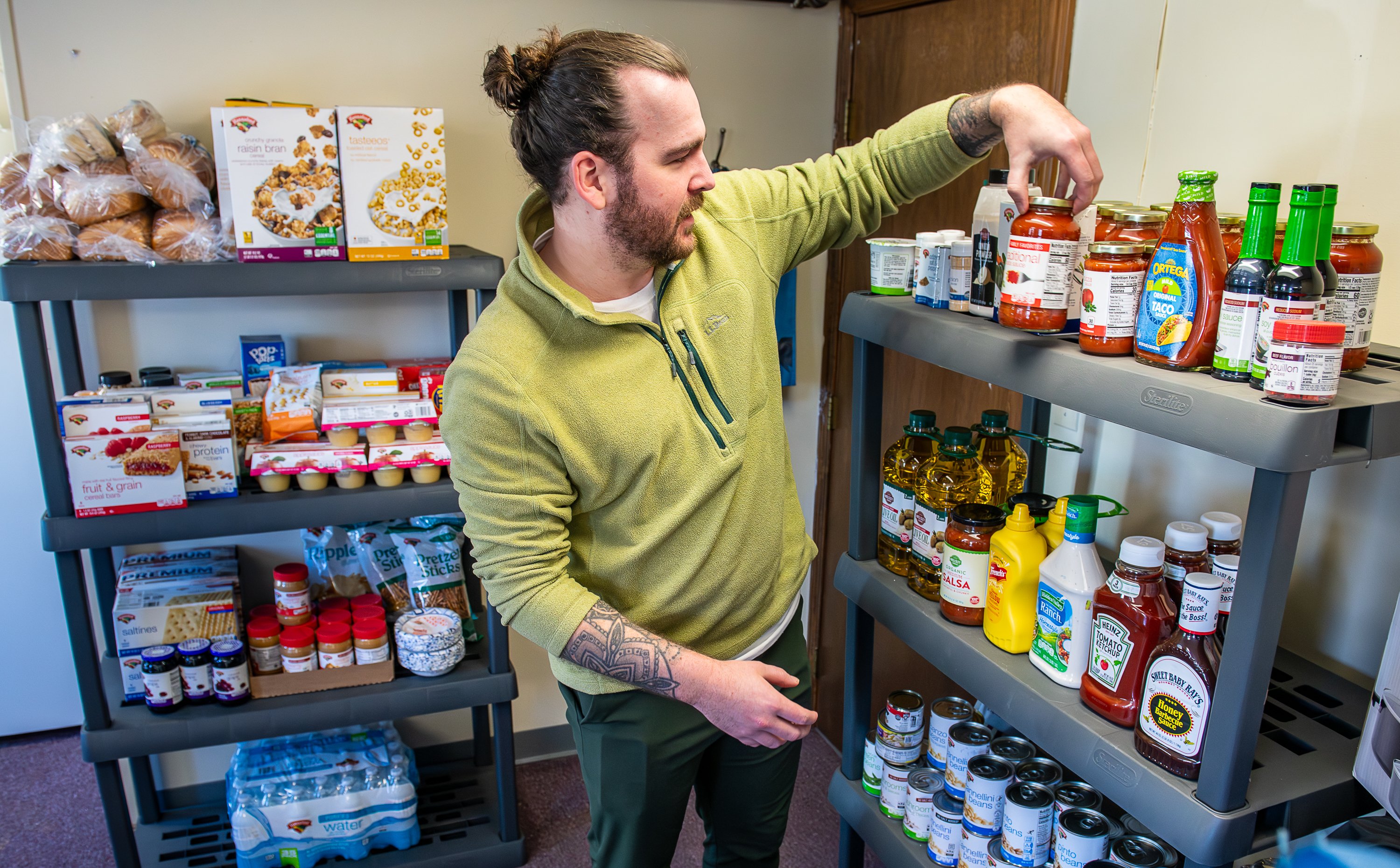
Colorful fresh fruits, dozens of crackers to choose from, an array of condiments and boxes of pasta are a few of the items that line the walls of the pantry.
The partnership will not only help with food insecurity in the community, but teach financial literacy and healthy habits, said Chris Bicknell, executive director of New Beginnings.
“It’s a place they can come and say, ‘I don’t have protein, or snacks, or enough money to pay for food after paying for rent,’” he said. “It’s to help them not go to work hungry, to bed hungry, or to school hungry.”
New Beginnings serves youth between the ages of 10 and 24 in its various programs.
In addition to the food pantry, the organization has a drop-in center, a low-barrier shelter and a transitional housing program that helps youth between the ages of 16 and 24 with renting a place to live.
The pantry is set up in the bottom of one of the transitional housing apartment buildings.
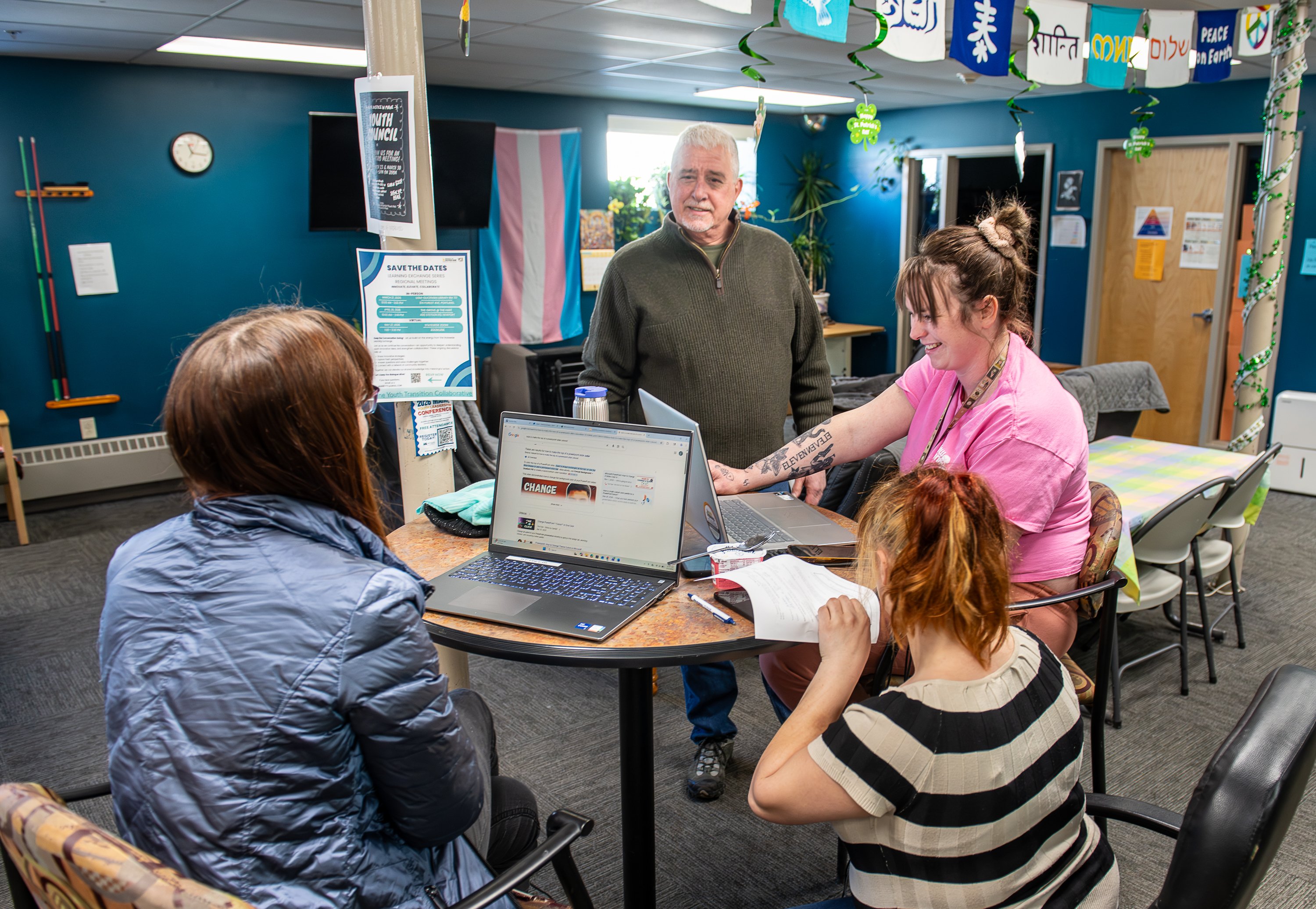
Any youth can walk in the pantry and grab what they need with no questions asked.
No one should have to ask for food, said Sherri Stevens, the community impact manager for Hannaford.
“By removing that food insecurity, it allows them to focus on their other needs,” Stevens said.
At New Beginnings on Friday, Stevens arranged the food in the pantry.
“I think it is important to make it look as neat and orderly as possible, so there is a feeling that someone cares, and it’s more like a real store,” she said.
New Beginnings runs on state and federal funding, as well as community sponsorships and partnerships, like the one with Hannaford. It aims to provide a safe space to seek support, not only with meals, or housing, but among peers and those who work there.
Most of the youth are coming from traumatic home environments or are in and out of the system, either struggling with the law or school.
Bicknell estimates the organization serves at least 700 youths between the ages of 10 and 24 on a yearly basis, or about 40 to 50 youths a week. The breakdown is even among gender, he said, with 20% to 30% of youths identifying with the LGBTQ+ community and 13% are youths of color.
He estimates they serve at least 1,000 meals a week among all program avenues.
“If you are thinking about where your next meal comes from, you are not thinking about managing your personal relationships, not thinking about showing up at work, or at school. You are thinking about your next meal,” Bicknell said. “Once you have a meal, your next thought is about where you are sleeping.”

Comments are not available on this story. Read more about why we allow commenting on some stories and not on others.
We believe it's important to offer commenting on certain stories as a benefit to our readers. At its best, our comments sections can be a productive platform for readers to engage with our journalism, offer thoughts on coverage and issues, and drive conversation in a respectful, solutions-based way. It's a form of open discourse that can be useful to our community, public officials, journalists and others.
We do not enable comments on everything — exceptions include most crime stories, and coverage involving personal tragedy or sensitive issues that invite personal attacks instead of thoughtful discussion.
You can read more here about our commenting policy and terms of use. More information is also found on our FAQs.
Show less