

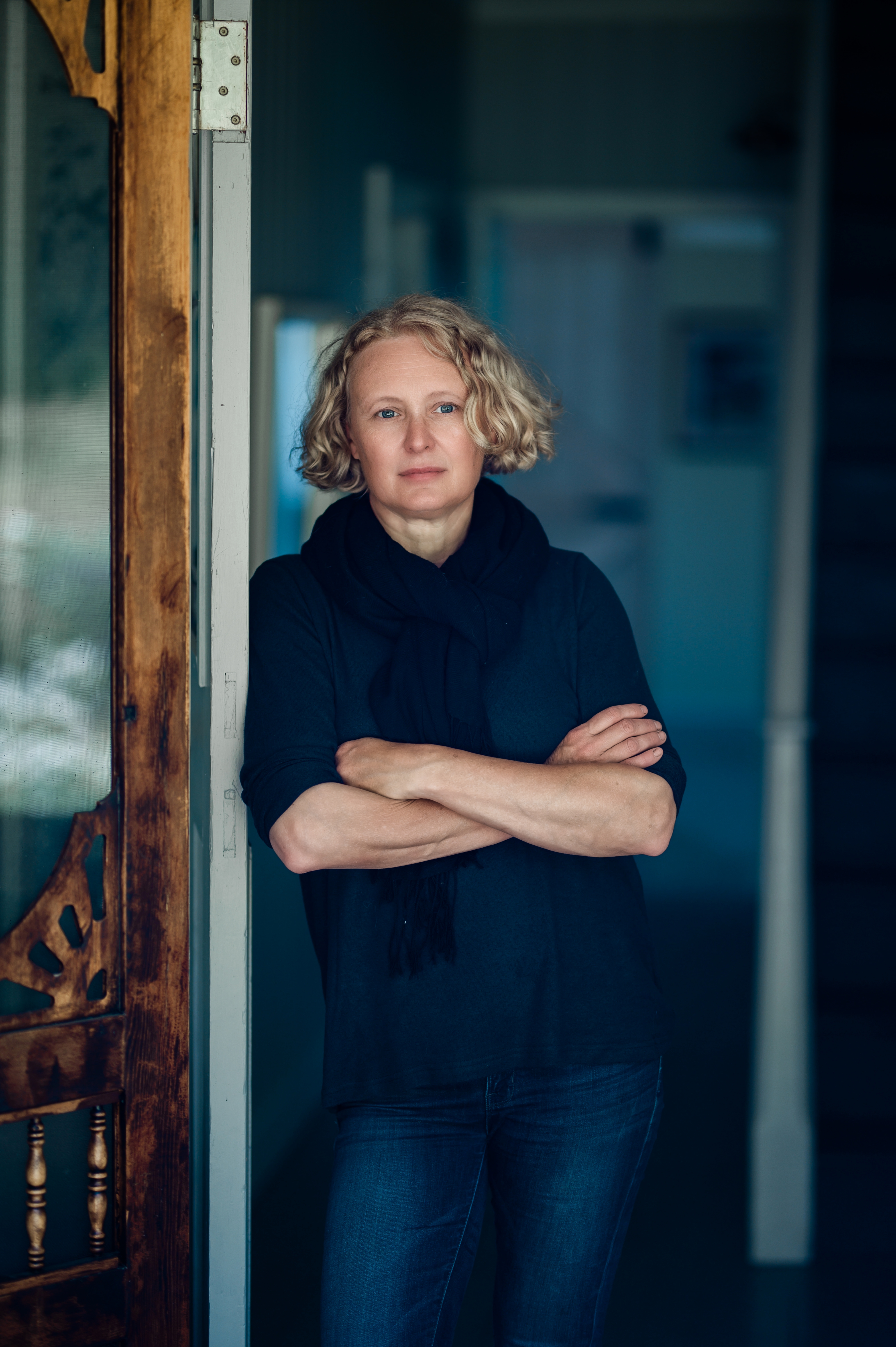
There was a time in the history of seafaring when some of the most advanced technology and engineering could be found in the clipper ships that transported cargo around the world. The life of a clipper ship’s captain often involved risks like treacherous waters and the possibility of sabotage from rival companies. And, as is so often the case with massive risks, it was also a time of unlikely heroes.
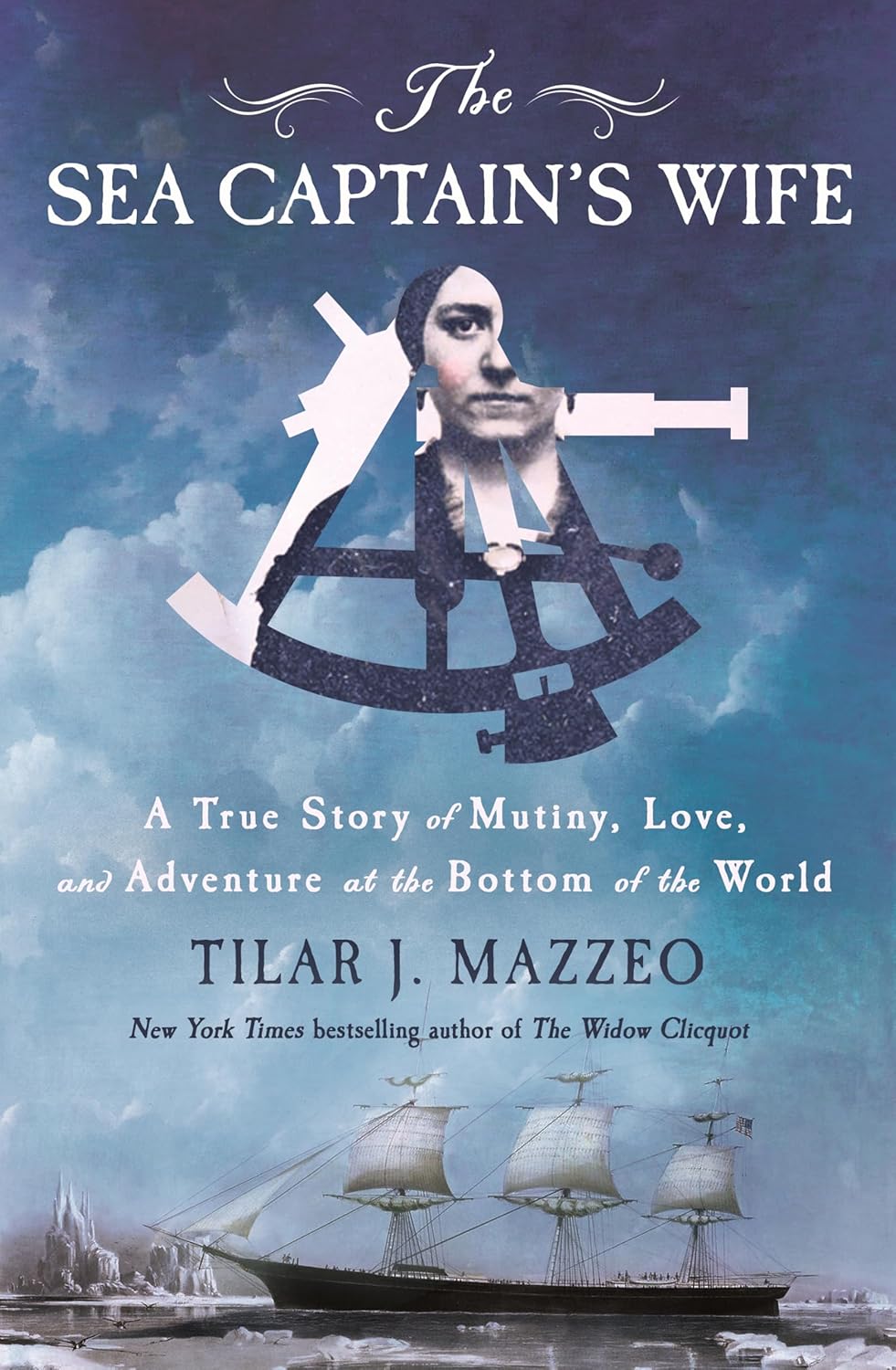
In her new book “The Sea Captain’s Wife: A True Story of Mutiny, Love, and Adventure at the Bottom of the World,” Tilar J. Mazzeo tells the story of Mary Ann Patten, who accompanied her husband Joshua on a fateful trip around the southern tip of South America on the clipper ship Neptune’s Car. It was there, in some of the most dangerous waters known to humanity, that Mainer Mary Ann Patten faced an imposing challenge, becoming a hero to the nation in the process. We spoke with Mazzeo about the origin of this book, her own connection to its Maine history and why Patten’s story isn’t better known.
Was your process for finding the subject of ‘The Sea Captain’s Wife’ similar to how you’ve gone about writing previous books, or was this one a little different?
I would say it happened exactly like all of my book ideas do, which is by dumb chance. My ears are always open to a good story. My husband and I are based on Vancouver Island primarily. We have a sailboat, and we were out sailing in a pretty remote area for a couple of weeks with no internet connection and no cell phones. You get really, really bored when you’re out sailing for that long. I picked up in our ship’s library a book about transits of Cape Horn. There was one paragraph about Mary Ann Patten’s story. That was really what got me thinking about it. I wondered why I hadn’t ever heard this story.
In the acknowledgements, you thank members of your family for helping with research in cemeteries and probate records. What is your process like to gain a deeper understanding of the ins and outs of everyday life as the historical figures you’re writing about experienced them?
I started my career as a professor of 18th and early 19th century literature at Colby College and was trained in how to do 18th and 19th century archival research. I find the thrill of the hunt in the archives fun and intellectually satisfying.
For this book, it involved probate records and deeds in Maine, because there’s not a lot recorded about Mary Ann Patten or any of their lives before they’re famous. There are moments where you are reading the scaffolding of somebody’s life. If the probate records and the church records are the skeleton, there’s not always a lot of flesh on the bone. I try really hard not to embellish. As I say in the epilogue, if we’re not comfortable with the idea that we have to read the bones of history, then we’re only going to end up with certain kinds of stories about certain kinds of people.
You mention that Mary Ann Patten was often compared to Florence Nightingale. Do you have a sense of why one story endured and the other did not?
The Merchant Marine Academy named its hospital after Mary Ann Patten — that’s a kind of enduring legacy — but it doesn’t name a ship after her. In other words, it was Mary Ann Patten’s status as a wife who nursed her husband that ends up being most thoroughly commemorated. It was a time in which people were more comfortable with the idea that she was a nurse like Florence Nightingale. I wonder whether it’s because Florence Nightingale’s achievement was in the realm of something that was considered more culturally appropriate.
Did your own experience sailing give you any different perspectives than you might have had solely from your perspective as a historian?
Every sailor that I know who’s serious and well-experienced never loses their sense of awe and mystery at the sea. I tried to write the book coming from that place of wonder that all serious sailors have about the incredible force of the ocean and the incredible solitude of being out there alone and knowing that you are not in control of where you’re going.
The way you describe Mary Ann Patten at the time of this voyage is far from imposing: 19 years old, barely five feet tall, several months pregnant. And yet all of the experienced sailors on board the ship trusted her to navigate them out of an incredibly dangerous situation. If it was a scene in a movie, it might not be believable, yet it actually happened.
That is one of the very well-documented sections of her story; we know exactly what happened. The sailors came back and talked about how the old salts had tears in their eyes. The experienced sailors understood at that moment that they were witnessing something extraordinary. It wasn’t just that those men were saying she is their equal. In that moment, they chose to make a woman their master.
It’s so hard to explain how truly extraordinary her skill was as a captain. That you could be 19 and have only done one circumnavigation and be such a phenomenally gifted sea captain and sailor is quite astonishing.
This industry was incredibly competitive. You wrote about how the owner of one ship might pay a crew member on another ship to lead them off course.
There were vast amounts of money at stake. There’s that old quote where they say the people who got rich in the gold rush were not the 49ers, but the people delivering the pickaxes. It was a pretty exploitative system in certain ways.
I also hadn’t realized that some of the clipper ships were carrying opium around the world, which feels like a precursor to the modern-day drug trade.
Until I did the research for this book, I had not understood that either or the extent to which the indentured servitude trade was also tied up with the clipper trade. Once you were in San Francisco, you had to get home. You had to go the long way and needed something for cargo. Joshua Patten was lucky. He carried tea and not opium, and not what they would have called “coolies” — essentially, indentured servants. He was lucky that that wasn’t who approached him for cargo, but if somebody had approached him, he would have been expected to carry that cargo.
The voyage at the center of “The Sea Captain’s Wife” takes place around much larger national or international events: the California Gold Rush, the Panic of 1857, and the Civil War. How challenging was it to balance this very personal story with these other events?
I’m not at all overtly drawing any comparison between the present moment and that past moment, yet there are lots of parallels. They certainly were in my mind as I was writing the book. I was thinking about the intense divisiveness of our politics and then that same moment of a decade before this American Civil War. And global supply chains, oligarchies and people who are indentured to wealthy people. I had hoped that there would be undertones and resonances without my making much of it, because that wasn’t the purpose of the story that I was telling.
It certainly was in the back of my mind that on the brink of the American Civil War, Mary Ann Patten was somebody everybody in America could agree represented the best of what it meant to be an American.
New York City resident Tobias Carroll is the author of five books, most recently the novel “In the Sight.” He has reviewed books for The New York Times, Bookforum, the Star Tribune and elsewhere.
We invite you to add your comments. We encourage a thoughtful exchange of ideas and information on this website. By joining the conversation, you are agreeing to our commenting policy and terms of use. More information is found on our FAQs. You can update your screen name on the member's center.
Comments are managed by our staff during regular business hours Monday through Friday as well as limited hours on Saturday and Sunday. Comments held for moderation outside of those hours may take longer to approve.
Join the Conversation
Please sign into your Sun Journal account to participate in conversations below. If you do not have an account, you can register or subscribe. Questions? Please see our FAQs.