


Warming temperatures means birds will be looking for places to nest, lay eggs, and raise their young. Some of the places they choose may not necessarily be that good, for birds or humans occupying the property where they may be looking to cohabitate.
So what can you do to prevent birds from nesting and having babies somewhere that may be unsafe for them, or inconvenient or impractical for you?
For starters, the key is prevention, because once a bird establishes a nest, it’s generally too late to do much about it. In Maine it is illegal to take, possess, or needlessly destroy the nest or eggs of a wild bird, except for a handful of birds that are considered nonnative species. The federal Migratory Bird Treaty Act of 1918 prohibits moving or destroying a nest with eggs or chicks in it without a federal permit.
Further, adult birds will usually abandon a nest, and the eggs or babies in it, if it’s moved even a short distance.
Stacia Brezinski, a field naturalist with Maine Audubon Society, urges prevention to deter birds from nesting somewhere that would be dangerous for them or undesirable for humans.
“If you notice a bird building a nest somewhere that would be dangerous for the birds or causes you an inconvenience you can’t live with for a few weeks, remove nesting material as soon as you see it and put something in that spot that makes it no longer a good place to build a nest,” Brezinski said. “Any object that blocks a platform they like, or a strip of aluminum foil tacked up nearby usually dissuades birds from persisting in that spot.”
One relatively easy nesting site to get rid of before birds arrive? That wreath still hanging on your front door or porch since the holidays. Wreaths, Brezinki said, are a popular nesting spot, especially for house finches which, as the name suggests, commonly nest close to people. So it’s good to take them down before nesting season if you don’t want birds there.
One way to prevent birds from nesting somewhere undesirable is to make another part of your property more desirable to the birds, giving them a better option. In the area where you wish to attract the birds, plant native plants to help provide food sources, leave dead trees standing to provide a place for cavity-nesting birds, provide fresh water, and build or buy nest boxes.
“Birds choose the best options available,” Brezinski said. “If they seem to like a spot that doesn’t seem like a smart choice to you, there’s probably something about it that makes the risk worth it, or there are just no better options. Thinking like a bird can help you both deter and attract birds. They want safety, shelter from the elements, food, and water, just like the rest of us.”
If prevention doesn’t work and birds have moved in, have patience with your new feathered friends, and maybe try to enjoy watching the birds grow up. They won’t be there long, usually only two or three weeks. Nests are vulnerable places for baby birds, so they’ll only be there as long as they need to be.
“Sometimes folks seem quick to decide that a nesting bird is a problem, but before putting yourself through the hassle of doing something about it and making life harder for the birds, think about whether the nest really is a problem or not,” Brezinski said. “Nests are often not much bigger than the birds themselves, and quite temporary. Providing a safe space for birds to raise a family, especially in this time of plummeting bird populations, can be a wonderful way to be a good neighbor to the wildlife with whom we’re lucky enough to share space.”

She cited estimates that North America has lost nearly three billion breeding birds since 1970, which is roughly one out of every four birds.
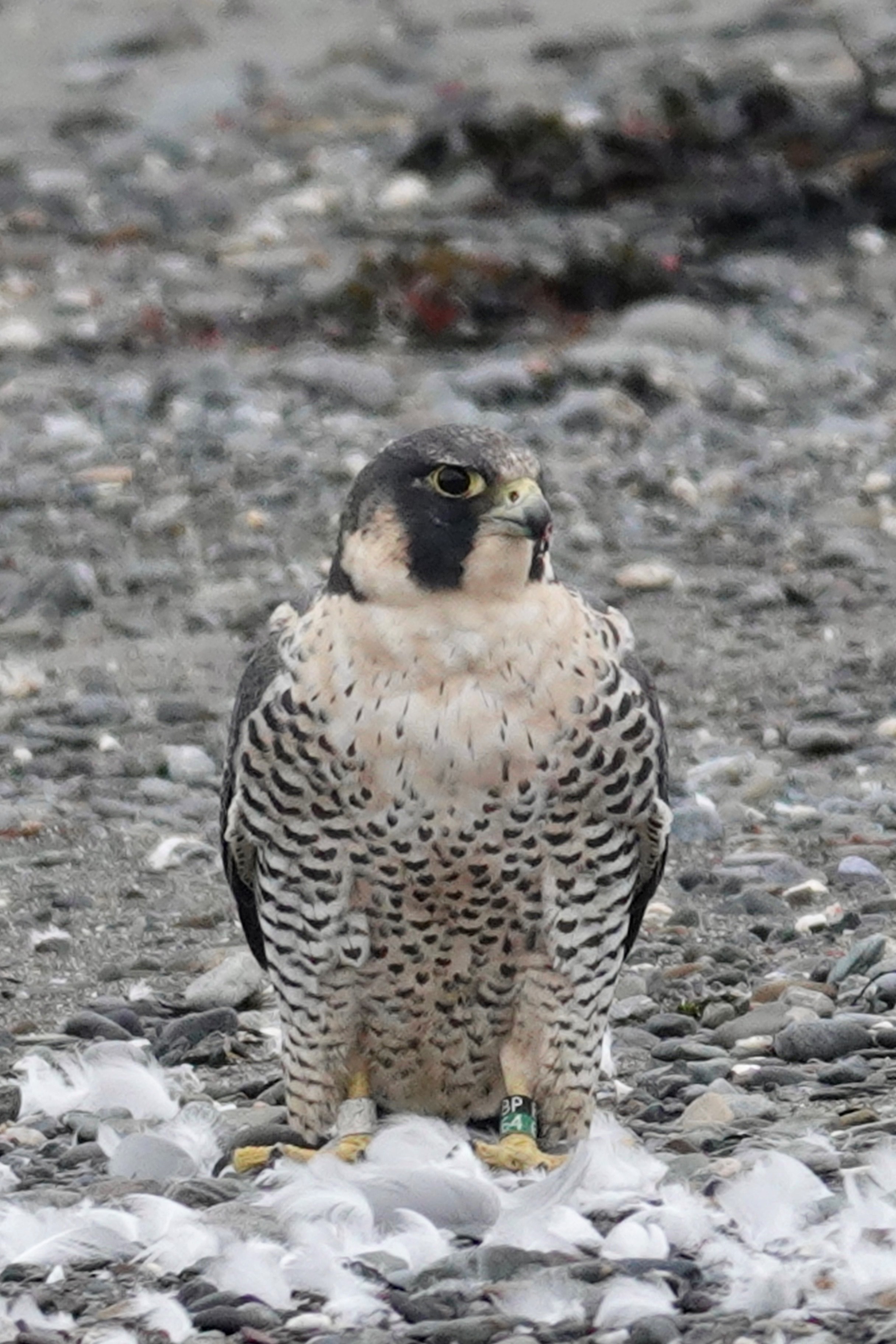
Most species begin nesting in May or June, while some, such as peregrine falcons, begin nesting as early as March. Some will have multiple broods, and most will try again, and sometimes again and again, if attempts to hatch eggs fail. The last chicks of the season for most species in Maine fledge between late July and mid-August. American goldfinches, which rely almost exclusively on seeds, are some of the latest breeders, sometimes extending into September.
Some birds prefer trees or bushes while others, like European starlings, will nest in all sorts of cavities, including gaps in buildings. Eastern phoebes, known as good neighbors for eating lots of mosquitos, like ledges close to an overhang, such as outdoor lights.
Editor’s note: This story was updated to correct a misidentified bird in a photo. It is an Eastern Kingbird.

We invite you to add your comments. We encourage a thoughtful exchange of ideas and information on this website. By joining the conversation, you are agreeing to our commenting policy and terms of use. More information is found on our FAQs. You can update your screen name on the member's center.
Comments are managed by our staff during regular business hours Monday through Friday as well as limited hours on Saturday and Sunday. Comments held for moderation outside of those hours may take longer to approve.
Join the Conversation
Please sign into your Sun Journal account to participate in conversations below. If you do not have an account, you can register or subscribe. Questions? Please see our FAQs.