


“Captain Rich” leans in, lowers his voice as if others may hear him, and rubs his hands together.
He’s been talking about his 30 years of driving in the Lewiston area for Western Maine Transportation Services. For years, he drove people to their medical appointments. These days, he’s driving children. But there’s one stop he made he says he’ll never forget.
He was supposed to pick up a dialysis patient for an appointment. After waiting for more than 15 minutes, the individual still hadn’t come out to the bus.
“I wasn’t technically supposed to do this,” he says quietly. “I went into someone’s home because they weren’t coming out. I went to make sure they were OK, but I found them on the floor beside their bed. I called 911 and made sure they were all right. Like I said, we’re technically not supposed to go into someone’s home. But I was told that if it were two hours later, that person would have died.”
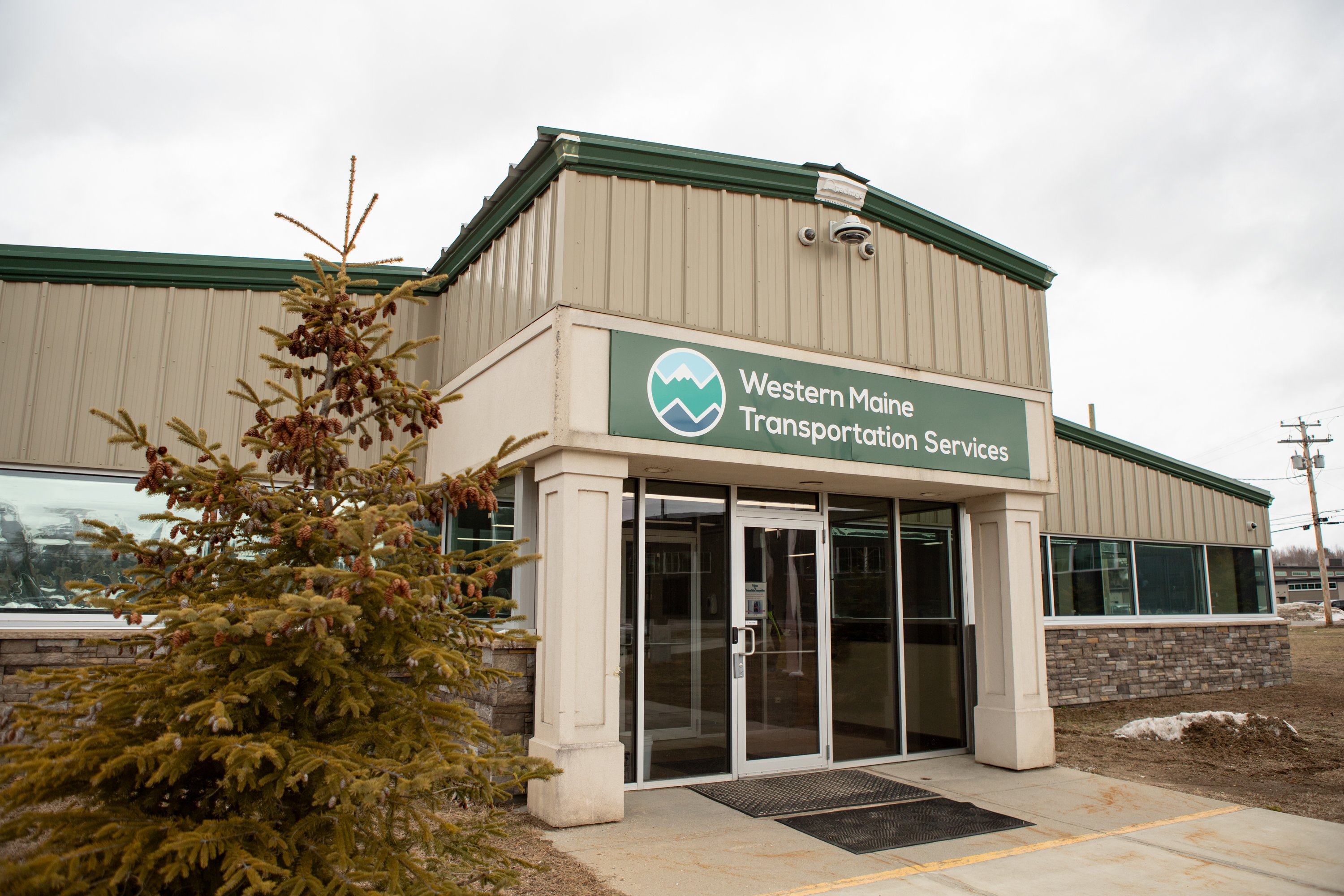
“Captain Rich,” whose full name is Richard Garey, is one of 70 people working in some capacity for Western Maine Transportation Services, which turns 50 in May. Garey’s lifesaving efforts would be considered extraordinary among the many drivers employed by the service to transport people in Lewiston-Auburn and western Maine areas.
Almost as extraordinary is the estimated nearly 3 million rides the service has given since its creation in 1976 — rides to jobs, schools, medical appointments and more. It’s a service that has been a lifeline for riders who have no other form of transportation.
“If I didn’t have this service I would have to pay $25 one way and another $25 to get back home,” said Molly Daggett, a Lisbon Falls resident who was riding the bus recently. “I make $15 -$25 per hour and work four-and-a-half-hour shifts. That wouldn’t make it worth going to work.
“If it weren’t for this service, I wouldn’t have money in my pockets.”
BORN OUT OF COMMUNITY NEED
Western Maine Transportation Services started in 1976 as a collaboration between the Maine Department of Transportation, Western Area Agency on Aging (now called SeniorsPlus), and the Maine Department of Health and Human Services. Its headquarters is at 76 Merrow Road in Auburn.
Operating in Androscoggin, Franklin and Oxford counties, it was meant to help senior citizens, people with disabilities and women who lost their spouses and never learned to drive.
Today, anyone can use the service, which, because of an expansion to Bath, includes employees of Bath Iron Works.
What makes the service unique is that it offers both traditional bus service — picking riders up at designated bus stops throughout the region — and individual service, with drivers picking people up at their homes or other specific locations and getting them to their destinations.
The low cost of the service also stands out. Trips range from as low as $2.50 to no more than $10 for long-distance trips over 51 miles, with discounts for seniors, children and the disabled.
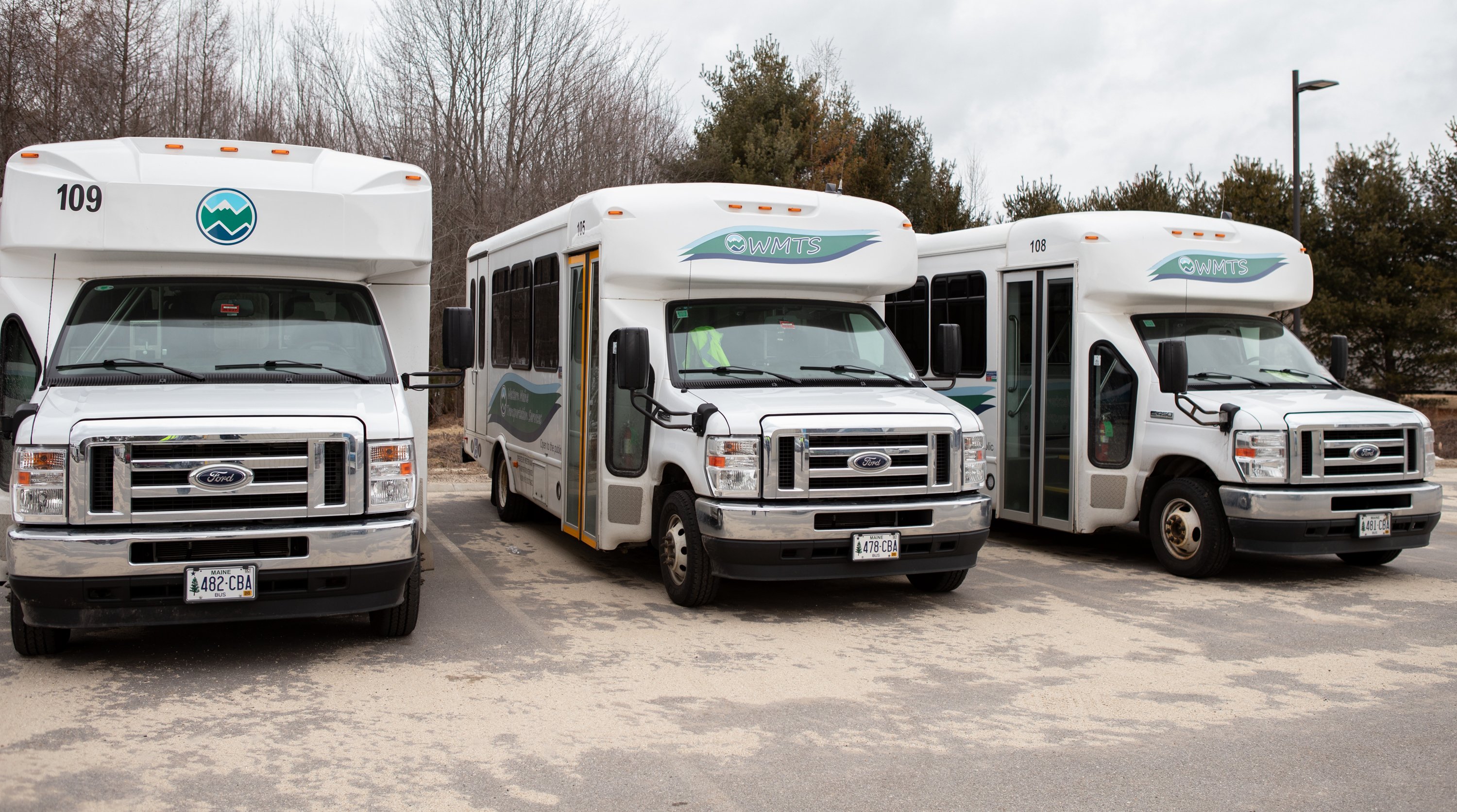
As the service offered by WMTS changed to meet the communities’ needs, so did ridership.
According to figures supplied by Executive Director Sandy Buchanan, WMTS gave 75,000 to 100,000 rides annually in its early years. It now provides 200,000 to 250,000 a year.
Riders such as Robyn Williams, a Brunswick resident who uses WMTS monthly to run errands that include visiting her daughter in Auburn and attending eye appointments.
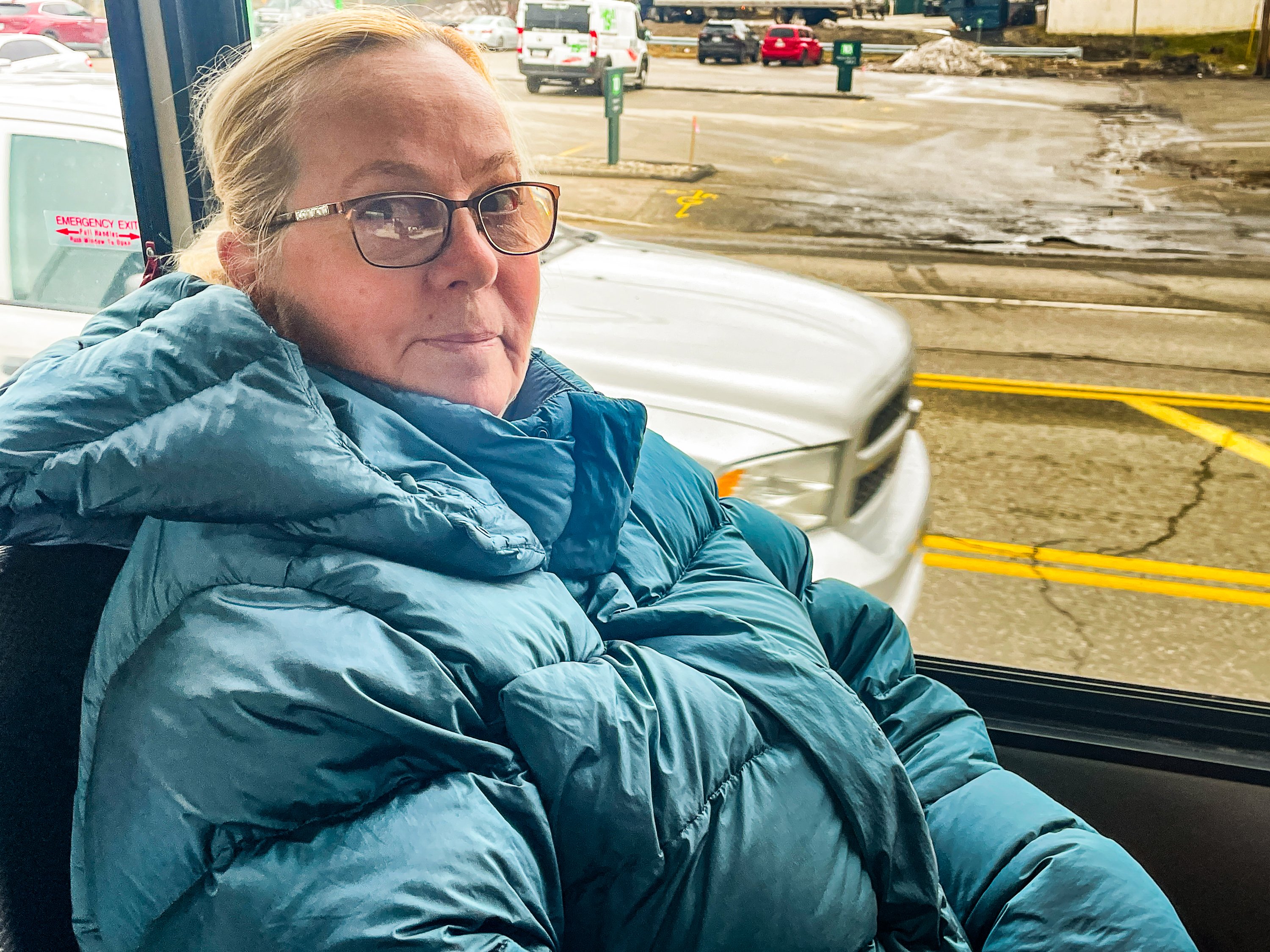
Over the past few years, Williams said, she’s had a lot of eye issues but there are no ophthalmologists in Brunswick that accept her insurance. This, and the fact that she doesn’t drive, make WMTS critical to her.
“I really need to see an eye doctor on a regular basis,” Williams said. “And it only costs $3 to go from Brunswick to Auburn, whereas $40 for a taxi ride or Uber.”
Rockland resident Paul Chartrand is a public transportation junkie, taking it whenever he can. When he’s in this area, he uses the Lewiston-Auburn-Portland bus to run errands to Portland and WMTS’ BlueLine Commuter bus that runs from Lewiston to Bath to visit his son in Lewiston.
His love for public transportation stems from when he was the transit coordinator for Kennebec Valley Transit in the 1980s, now known as Kennebec Valley Community Action Program.
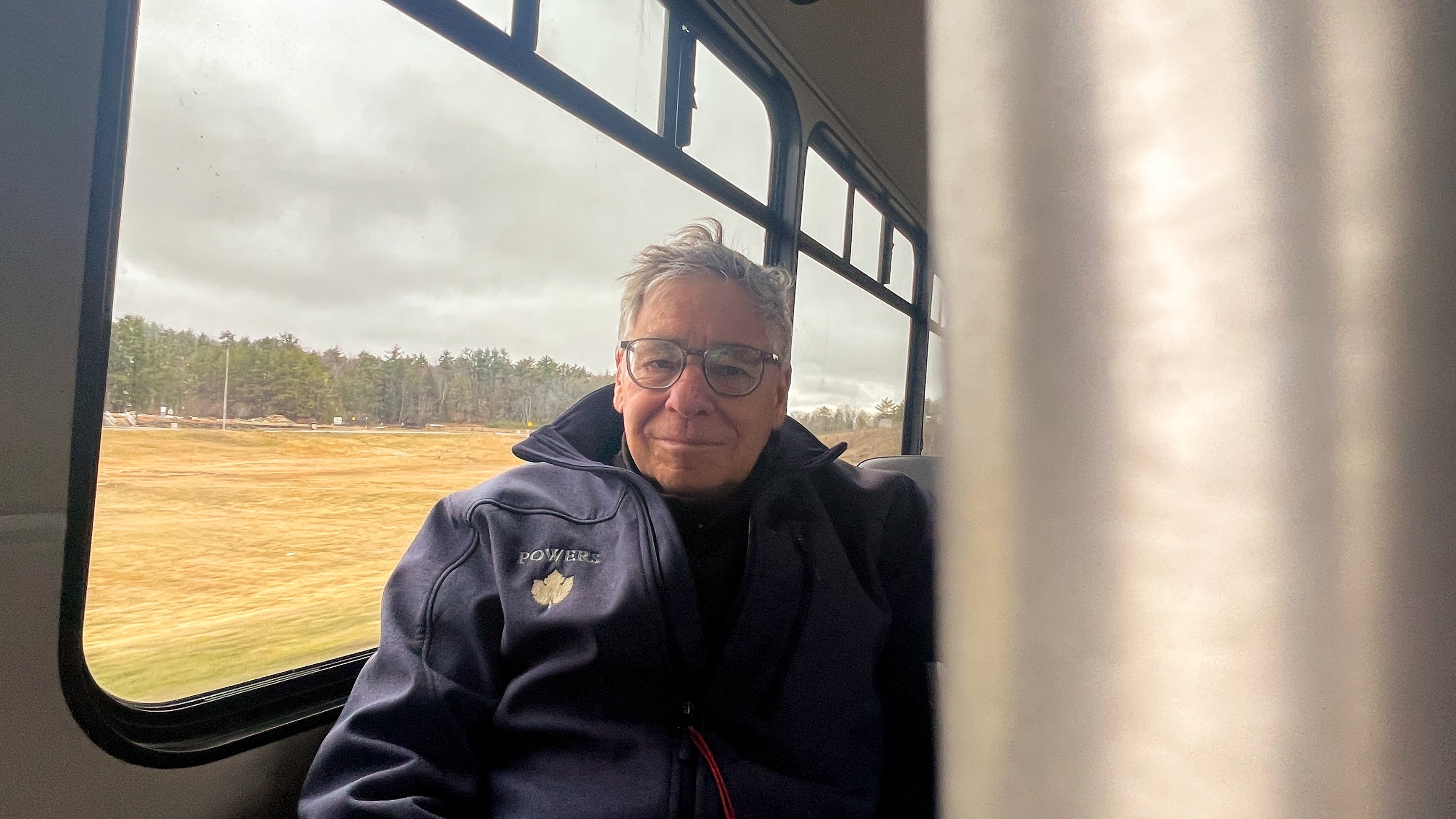
As he rode the BlueLine Commuter on April 1, he reminisced about what it was like engaging with the WMTS staff at regular meetings of the Maine Transit Association.
“We struggled, but we struggled together,” Chartrand said. “It was hard to get money at the time from the Department of Transportation, who was dependent on the federal government. It was a struggle, but a fun struggle since we all believed in transit and wanted to help one another.”
And then there’s rider Ryan Swidersky, of Lewiston, who works as a cook in Poland and was relying on friends and co-workers to get to work.
That is, until he found out about WMTS.
“It’s pretty cool that this service is here, especially when you don’t drive or can’t afford to,” Swidersky said. “It gets you to your destination fairly quickly and all the bus drivers are super nice. I don’t know where I’d be without it.”
‘THE MISSION ISN’T FINISHED’
Like Captain Rich, Wanda Pynchon, who has been driving WMTS’ BlueLine Commuter for the past six years, has a favorite memory.
In 2018, Pynchon was transporting an elderly Lewiston woman who had an accident, ruining her clothing and nervously apologized while undressing herself.
Instead of panicking at the sight, Pynchon calmly told the woman everything would be OK and to keep her clothing on. Pynchon then pulled over and quickly gave her something to cover herself.
“That’s my nature,” Pynchon said. “I love people. I have compassion for people. I don’t want people to feel humiliated, hurt or anything like that. I want everyone to be happy, and that’s who I am. If I have to spend my own money to wrap this lady in a blanket, so be it. That’s what’s important.”
Buchanan, the executive director, acknowledges it’s about the people — the riders for whom the service provides a critical lifeline.
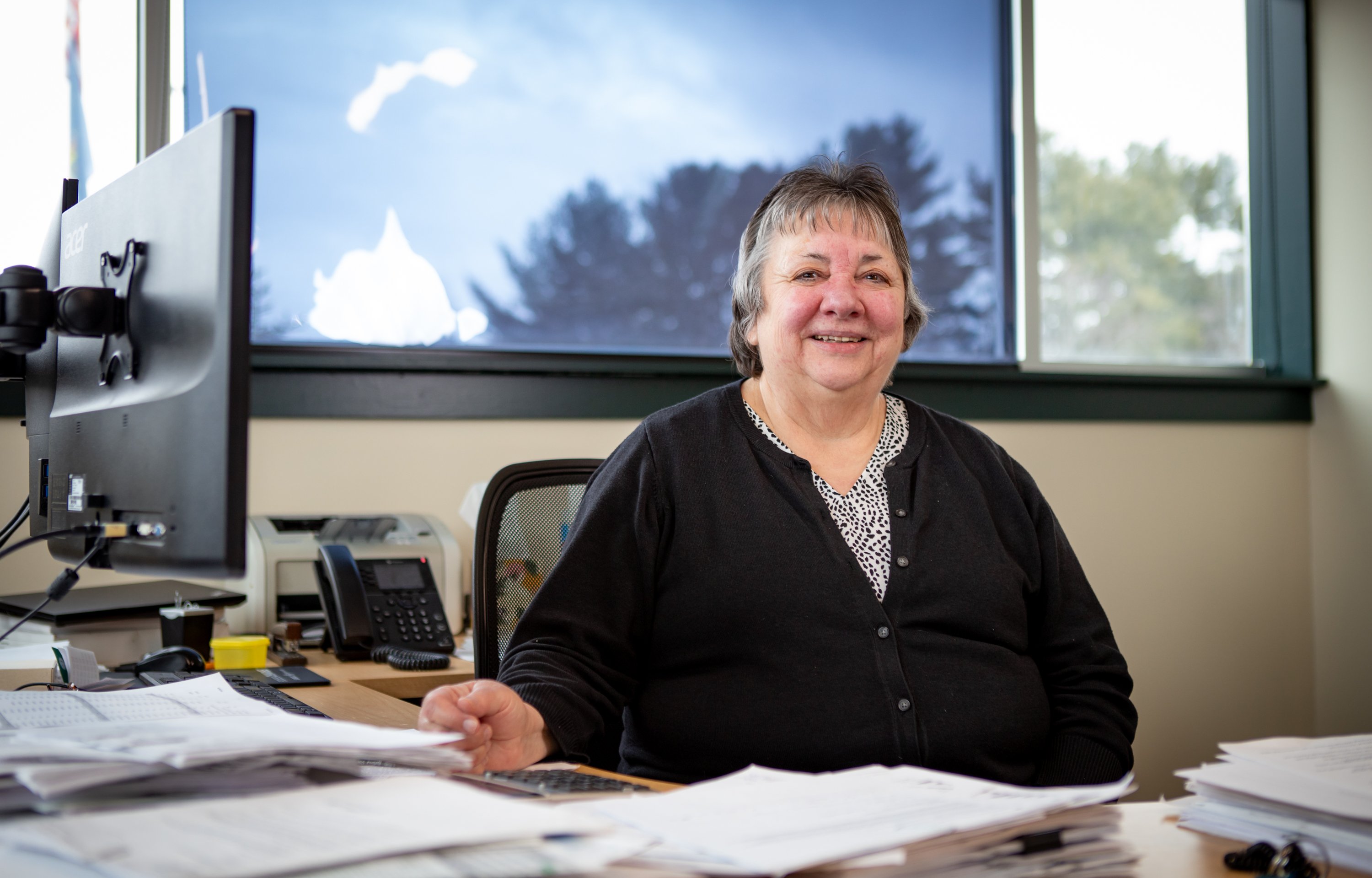
Buchanan has been with WMTS for 38, starting as a dispatcher, then as customer service supervisor, operations director, deputy manager and now executive director from her office at 76 Merrow Road in Auburn. She oversees it all, making sure the buses are staffed, people are being picked up on time, schedules are maintained and more.
“We always continue to hold ourselves to high standards. To do that we have to be able to adapt, and I think we’ve done that well,” she says.
With the 50th anniversary approaching on May 19, Buchanan was asked whether the service accomplished what its founders set out to do.
“Yes and no,” she says. “Yes, we set out to do what we wanted to do, which was to provide transportation to as many people in the communities we serve as we could, and I couldn’t be any more proud of that.
“But I feel like the mission isn’t finished,” she said. “I feel like there’s always more work that needs to be done. There’s people who we still aren’t reaching that could use our services, and those are the people we need to reach.”
Asked about future plans, Buchanan said the organization doesn’t have any at the moment, but acknowledges it won’t be long before they think of something new.
“If there’s a challenge, we’re up for it,” she says. “We’re always looking to address any and all transportation challenges. We’re always looking to do better, and we’ll keep doing this year after year.”

We invite you to add your comments. We encourage a thoughtful exchange of ideas and information on this website. By joining the conversation, you are agreeing to our commenting policy and terms of use. More information is found on our FAQs. You can update your screen name on the member's center.
Comments are managed by our staff during regular business hours Monday through Friday as well as limited hours on Saturday and Sunday. Comments held for moderation outside of those hours may take longer to approve.
Join the Conversation
Please sign into your Sun Journal account to participate in conversations below. If you do not have an account, you can register or subscribe. Questions? Please see our FAQs.