


Scott Olson was shopping for a truck, not looking for a job, when a Portland dealership hired him three years ago.
Craig McCauley, the Berlin City associate who sold Olson his Toyota pickup, knew the dealership needed drivers to deliver vehicles and transport customers. He also knew Olson was retired and liked to drive. Most important, he was personable.
“I just had a good vibe from him,” McCauley recalled. “I thought he’d be a good fit.”
Since then, Olson has delivered cars as far away as Florida and chauffeured customers from all walks of life. It’s the latest chapter in a varied work history that includes 20 years at the former Fairchild Semiconductor microchip maker in South Portland.
Now 71, Olson works a few days a week, up to 30 hours, depending on the dealership’s needs and his availability. His wife is a retired teacher, and they have a busy lifestyle. His job helps with everyday expenses, he said, and he loves every minute of it.

“It’s a joy just to do it,” said Olson, of South Portland. “I like meeting people and hearing about their experiences. Life is a learning experience, and for me it’s an open book.”
Olson is among a growing number of Mainers who are staying in the workforce after retirement age and filling jobs in a tight labor market. They’re delaying retirement or shifting to completely different fields. And companies are adjusting their hiring and workplace practices to accommodate older workers in ways experts say also benefit other employees.
Over the last decade, the number of workers in Maine who are 65 or older has increased 16%, from 53,062 to 61,531, according to federal estimates from 2015-2019 and 2020-2024.
In the same timeframe, older Mainers have assumed a larger portion of the state’s workforce — from 7.6% to 8.6% — among people age 16 and up who aren’t students, disabled or fully retired.
That increase has helped to offset a recent decline in Maine’s overall workforce participation rate, which is now slightly below the national average of 62%.
“More people are moving out of the labor force than moving in,” said Amanda Rector, the state economist. “People who are working after retirement age are helping to fill the gap.”
GROWING FLEXIBILITY
The increase in older workers comes as the state’s overall population age 65 and older grew to 330,000 in 2024, up 36.3% since 2014. Maine has long been the the oldest state, with 23.5% of its 1.4 million residents now in that age group and a median age of 44.8.
Older Mainers say they’re staying in the workforce because they enjoy it and recognize the physical, mental and social benefits of staying active and connected. They also want or need the added income.
Employers, in turn, say the trend has prompted them to be more flexible. Many are letting older employees work as much or as little as they want — usually 30 hours or less — and accommodating individual skills and abilities. They benefit because older workers fill in where needed and may save money if they’re covered by Medicare.

For some companies, it’s part of an overall strategy to attract and retain talented and reliable workers of all ages and backgrounds, said Patrick Woodcock, CEO of the Maine State Chamber of Commerce.
They’re being more deliberate in hiring and making jobs more appealing across the board, Woodcock said. It’s a necessary approach in an economy with no measurable job growth expected through 2030.
“Maine has an opportunity to attract more of these workers,” Woodcock said. “It’s on Maine’s business community to make sure we do that.”
Rector, the state economist, said flexibility for older employees helps to draw others into the workforce who also might need adjustable or part-time schedules, including people with health issues or disabilities, parents and other caregivers.
“It’s a shift in being more flexible for both employers and workers,” she said.
The payoff for hiring older workers is measurable, said Eric Johnson, general manager of Berlin City Toyota-Lexus, where Olson works.
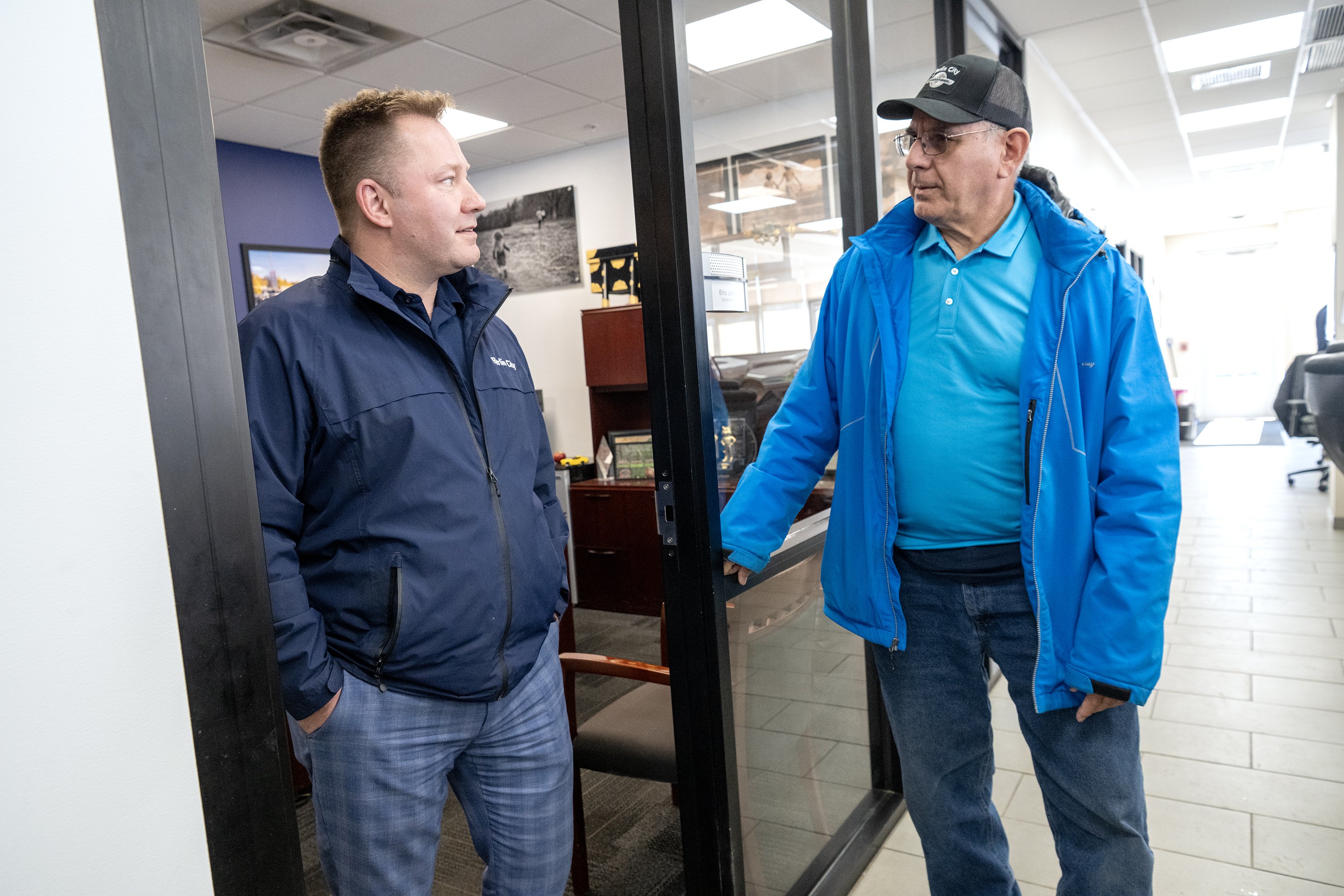
Twenty of the 170 workers at the Portland dealership and Berlin City Honda-Nissan in South Portland are 65 or older, including two sales associates and a driver who’s 90.
Johnson said older workers have a wealth of knowledge to share, show younger employees how to interact with customers and are “super reliable.”
“For some, if their shift starts at 8:30, they’re here at 7:30,” he said.
AN EXPECTED SHIFT
Maine economists anticipated this shift decades ago.
They noticed fewer people were in physically demanding jobs like farming, fishing and forestry, and more were in service and trade jobs more suitable for older people, according to a report for the Blaine House Conference on Aging in 2006.
Demographic trends showed fewer extended families were living together or even in the same region, and more people were retiring to Maine from other states, suggesting that more retirees would work as a way to connect with their communities.
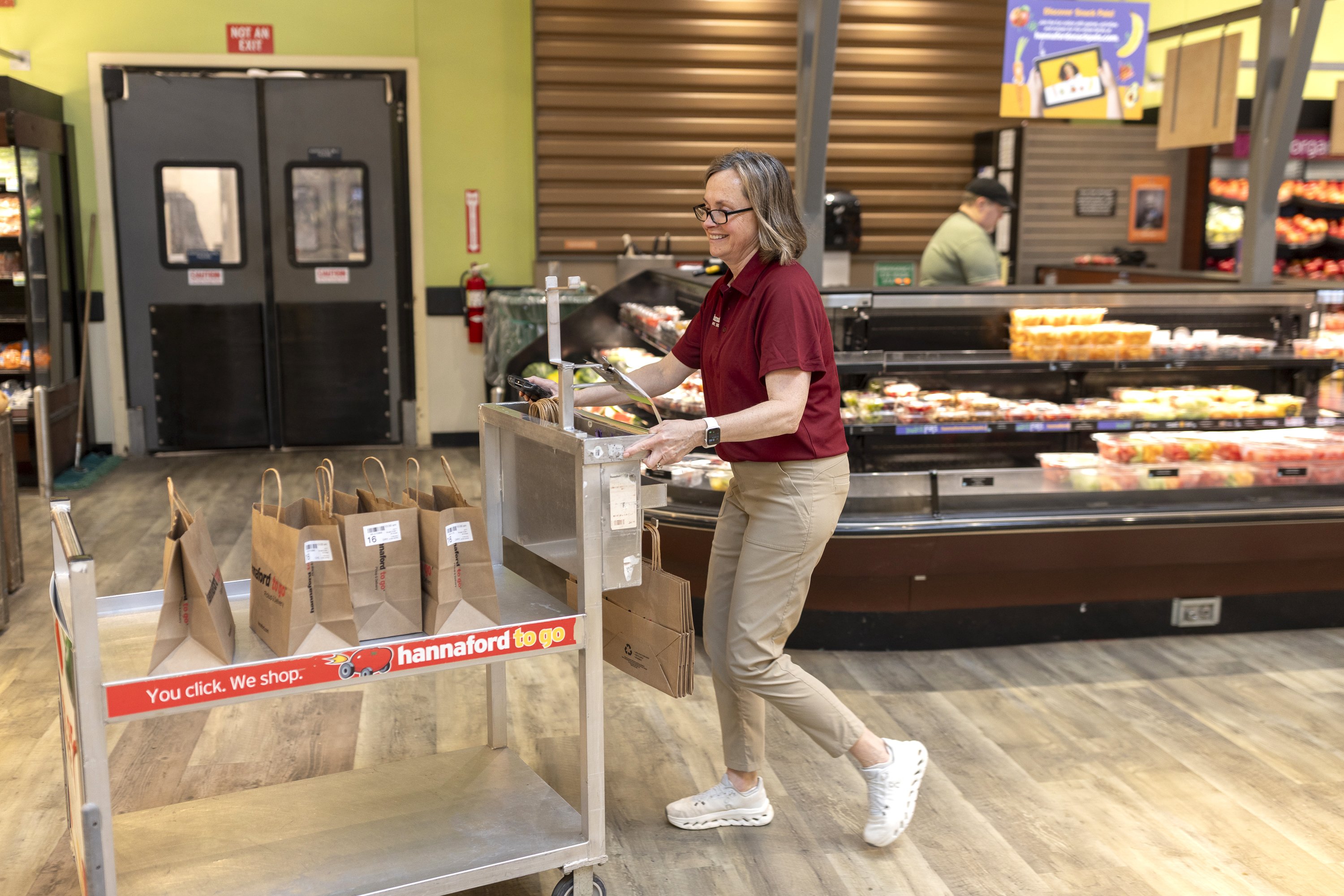
And some would have to keep working because their Social Security benefits or retirement savings weren’t enough, the report said. That’s a driver for Cheryl Smith, 69, who has worked at MaineHealth Franklin Hospital in Farmington for 27 years, most recently in the laundry.
“To live off that Social Security check every month, you can’t do it,” said Smith, who lives in North Jay. “So I keep on working.”
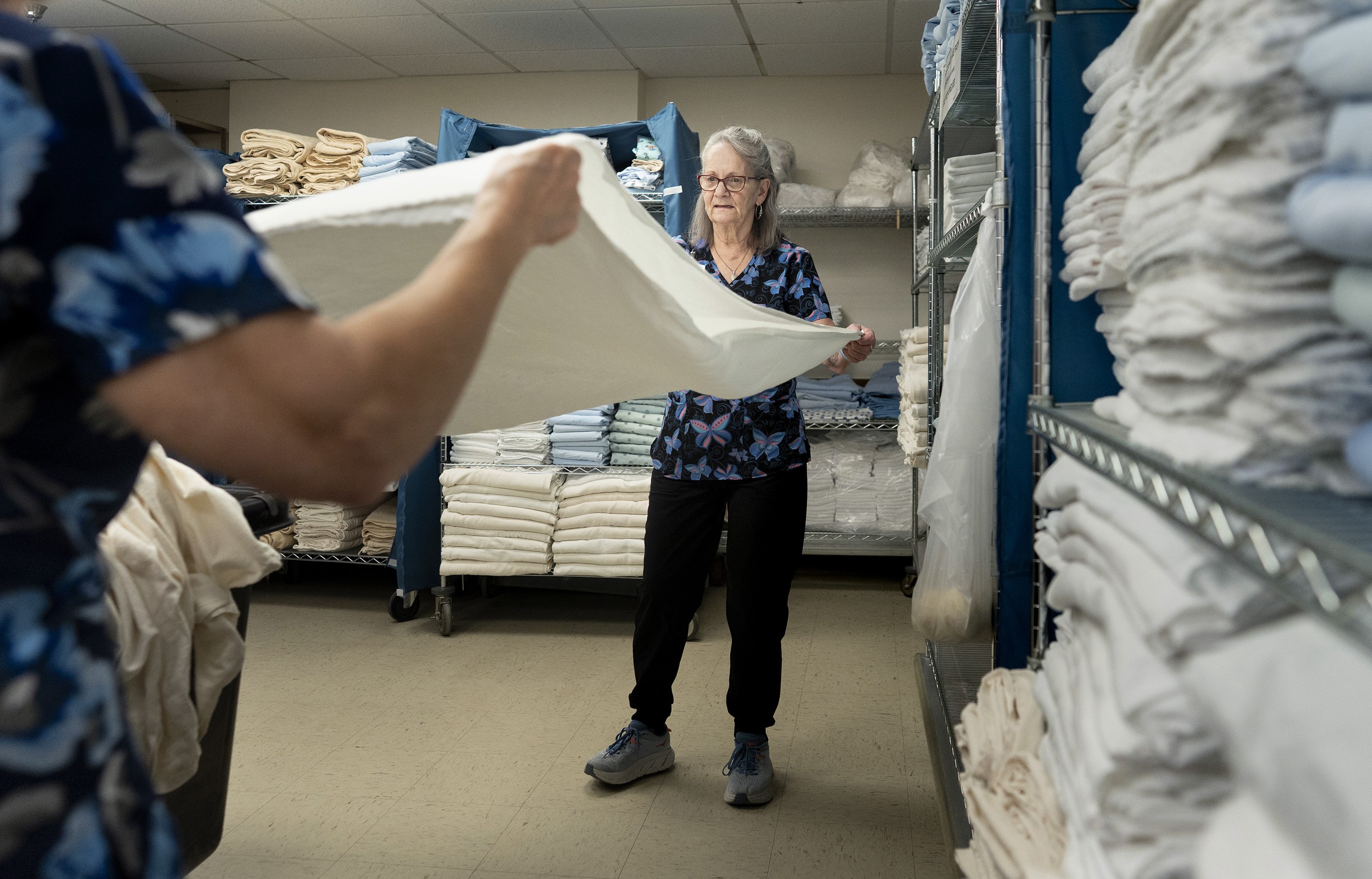
Smith declined to discuss her personal finances, but said it’s more than the paycheck that keeps her folding and delivering clean scrubs and bed linens throughout the hospital. She enjoys the work and her coworkers. She sets her own hours, working four days a week, so she has plenty of time for camping and beachcombing in the summer.
“I could cut back on days if I really wanted to, but I don’t want to,” she said. “I know I want to make it to at least 30 years.”
That’s just a milestone Smith would like to reach, she said, “unless I meet some good-looking guy and we run off together.”
Dr. Annya Tisher, a MaineHealth psychiatrist specializing in geriatric care, said working later in life can have a variety of health benefits related to cognitive and social engagement.
“It can be a lovely way to stay active, socially connected and engaged in their community,” Tisher said. “It matters how much agency they have in that decision. It shifts the equation if it’s a matter of necessity, but it can be a real positive if it’s on their terms.”
EMPLOYERS WELCOME INCREASE
While Social Security retirement benefits can start at age 62, they will be reduced if a person draws them before so-called “full retirement age.” That’s 67 for people born in 1960 or later. For people born between 1955 and 1959, it’s 66 and a certain number of months, according to the federal agency.
People who have yet to reach full retirement age can earn wages up to $24,480 without diminishing Social Security benefits. After they reach full retirement age, there’s no earnings limit.
MaineHealth, the state’s largest private employer, with over 24,000 employees across nine hospitals and affiliated medical groups, has nearly 1,800 workers (7.3%) who are age 65 or older.
“We see a larger share of our older population taking advantage of the unique mix of jobs that the MaineHealth system is able to offer,” a spokesperson said via email.
MaineHealth’s per diem positions, which don’t have set schedules, give employees more control over when they work and account for 32% of jobs held by people age 65 and up, the spokesperson said.
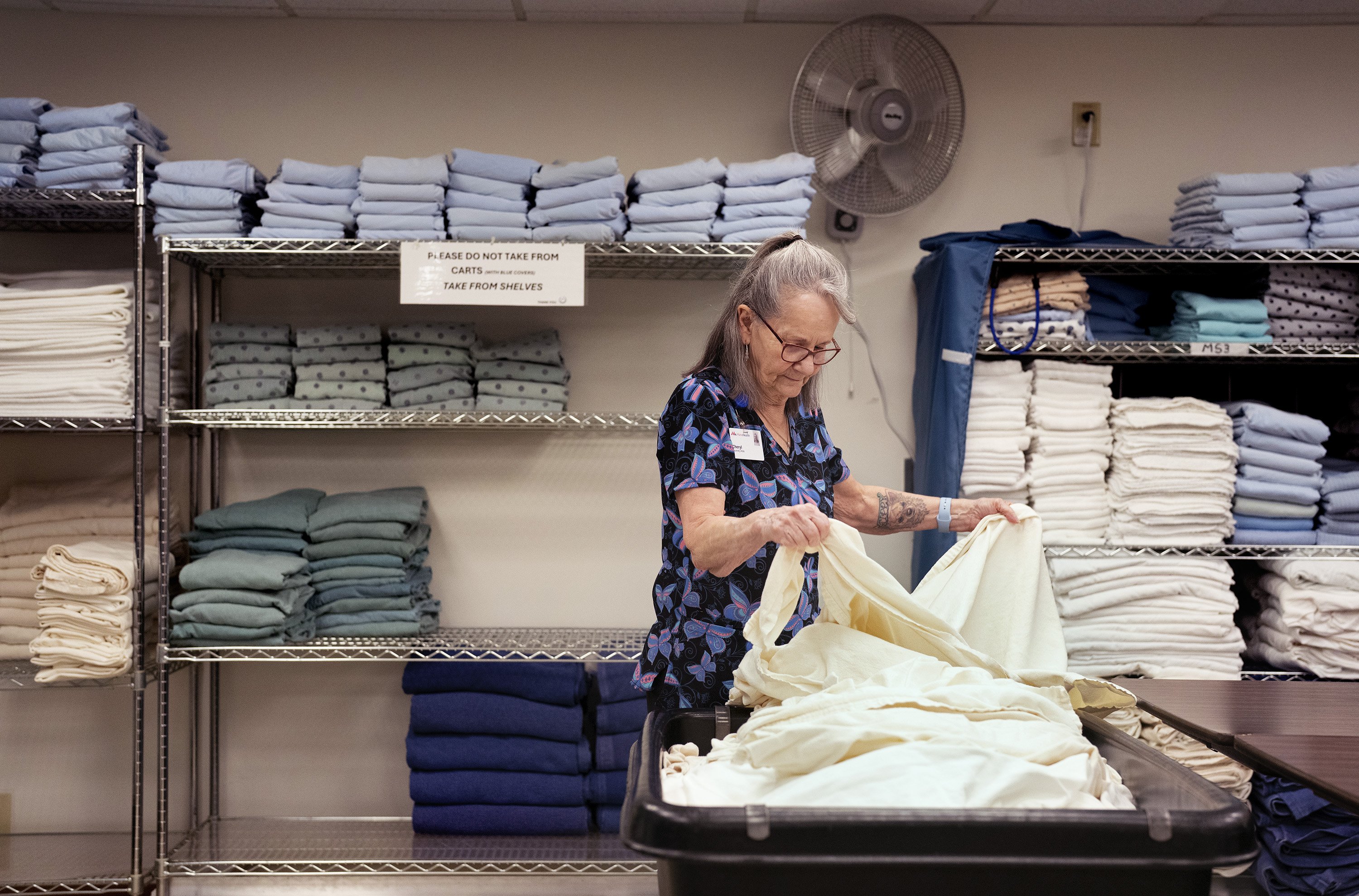
At Hannaford supermarkets — the state’s second-largest private employer, with 68 stores in Maine — about 15% of its 10,000 workers are age 60 and up, said spokesperson Caitlin Cortelyou.
“We believe that a team shaped by a wide range of lived experiences brings fresh perspectives, new ideas and more ways of thinking to everything we do,” she said via email.

Linda Whittum, 61, works at the Hannaford off Route 1 in Scarborough. She recently retired after teaching elementary school in Portland for 37 years. Her husband hasn’t retired yet.
Two mornings a week — about 15 hours total — she darts through the aisles, filling to-go orders. That leaves plenty of time to babysit her granddaughter or have lunch with friends.
“I work with great people and we have fun,” Whittum said. “I don’t necessarily need to work, but I like to stay busy and it helps with expenses.”

Dale Kinney, 72, is a former store manager who has worked for Hannaford for 53 years. He retired in 2020 during the pandemic, then returned a year later, bored and ready to pick up the slack at the store on Portland’s Back Cove.
Married and a grandfather, Kinney works three days a week, about 16 hours total, stocking the specialty cheese case, packaging deli items and training new employees. He enjoys seeing people he knows from his years in the business and educating customers about the food they’re buying.
“I tell people it’s harder to retire than you think,” Kinney said. “There are a lot of people out there like me with experience that could benefit businesses right now.”


We invite you to add your comments. We encourage a thoughtful exchange of ideas and information on this website. By joining the conversation, you are agreeing to our commenting policy and terms of use. More information is found on our FAQs. You can update your screen name on the member's center.
Comments are managed by our staff during regular business hours Monday through Friday as well as limited hours on Saturday and Sunday. Comments held for moderation outside of those hours may take longer to approve.
Join the Conversation
Please sign into your Sun Journal account to participate in conversations below. If you do not have an account, you can register or subscribe. Questions? Please see our FAQs.