


When Brett Goldman moved to Wiscasset from Pennsylvania in 2024, he decided to get the Maine Lighthouse Trust specialty license plate, so he’d have an easier time distinguishing his gray sedan from other gray sedans in a parking lot.
With an American flag taking up the entire background, however, he started to realize it was giving off a more aggressively patriotic impression than he intended, especially on trips to Canada.
“It kind of brought some negative attention I didn’t enjoy,” he said.
Upon the rollout of a new standard license plate, Goldman figured he would just get the plate with the pine tree and star design he’d seen presented as the replacement for the chickadee.
“Then all of a sudden, there was a choice,” he said.
Goldman is among the nearly 100,000 Maine drivers who, as of March 1, chose a second option, offered for the first time: a plain standard plate, with a white background and a navy blue number, sandwiched between “Maine” in green lettering at the top and “Vacationland” below. That’s 12.5% — or one in eight — of the total standard plates issued since May. It’s 16% when including additional plates that have been reserved, a number that falls within the range of what the Secretary of State’s office anticipated, according to spokesperson Jana Spaulding.
The percentage seems low to Goldman, who feels like his attempt to get a less popular design backfired.
“Everybody’s got the blank plate,” he said, talking from the parking lot in front of Staples in Brunswick, where he couldn’t count the number he saw around him on one hand.
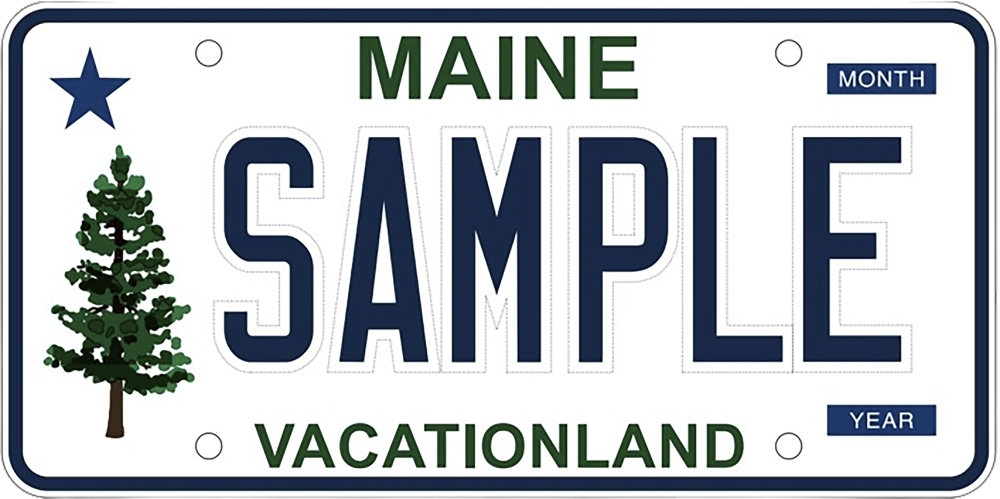
He figures it depends on where in the state you are and how people there feel about the pine tree design, based on Maine’s original state flag.
“I think it’s iconography that’s been kind of shoved down people’s throats,” he said. “It’s on everything, all these T-shirts; the Hearts of Pine have it.“
It could have made its way back onto our state flag, too, but 56% of voters rejected a 2024 proposal to change the design, with support for it concentrated along the coast, from Kittery to Bar Harbor.
There is some evidence of a correlation between town-by-town referendum results and the popularity of the no-tree plate.
In Buckfield, where nearly 65% of voters rejected the flag proposal, residents picking up their plates from the town office have chosen the no-tree design over the pine tree twice as often as the state average — with 27%, or more than one in four, opting for the plain plate, according to numbers provided by the town clerk.
Meanwhile, City Hall in Portland, where 67% of voters favored a new flag, has issued nearly 10 times as many pine tree plates as plain ones, based on data from the city.
The new plates are politically charged for reasons beyond the association with the proposed flag. Some people have taken issue with them being manufactured in Canada or feel the whole undertaking is an unnecessary expense, rejecting the state’s explanation that worn-out chickadee plates are causing a public safety issue.
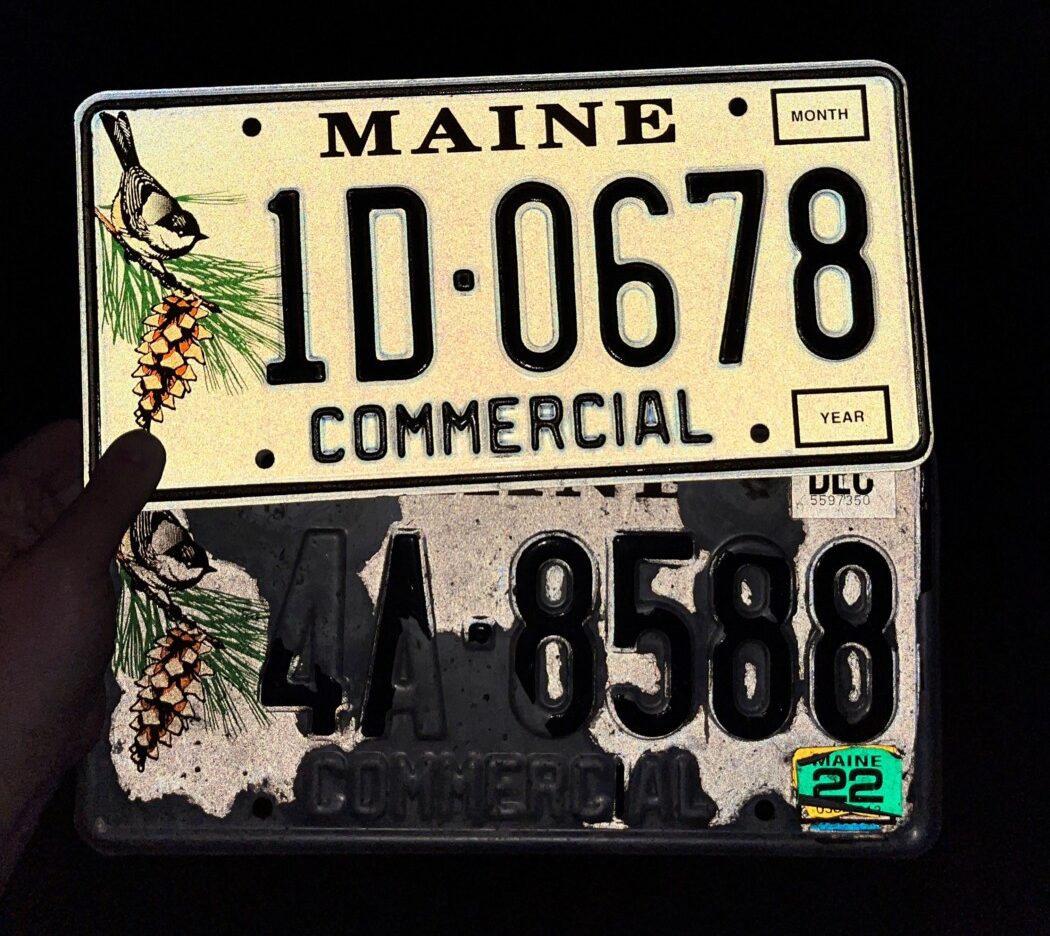
For those more concerned with aesthetics, complaints lodged online include that the tree looks like free clip art and is actually a fir not a pine.
“I think the tree is ugly. It looks sick to me,” said Hanna Niedzwiecki of Old Orchard Beach, referring to the fullness of the branches.
While some prefer the plain plate for its “retro” feel, others think it looks too much like a government plate.
Nick Ivey of Lyman said that was the appeal to some of his friends and his girlfriend, who picked out the plain plate for him.
“It kind of looks like you’re an official person,” he said.
Spaulding said the plain look is similar to the first plates the state issued, in 1905, though the “Vacationland” motto wasn’t added until 1936. The first graphic design introduced was a lobster, printed behind the plate numbers, in 1988 — a design some people wish the new plate had reused.
The chickadee design (dating to 1999), Spaulding said, was the first to have a graphic element to the side of the plate number, which can be up to seven characters and, in such cases, obscure the image. That’s why the Legislature approved two designs for the new plates, she said, “to offer customers options.”
Not everyone with a plain plate put a lot of thought into their choice. Michael Marston didn’t know about the new plates when he went to renew his registration at the Buxton town office but was told he had to choose from one of two designs.
“I just said, ‘I don’t care,'” he recalled, and that’s what he was given.
Another option that more Mainers are choosing is one of the state’s many specialty plates, like those featuring a lobster or loon, which raise money for various causes through an annual fee of $15-$20. The number in circulation rose by 5%, or almost 13,000 plates, between May 1 and March 1, some saying the choice was based on the color scheme that goes best with their car.
Niedzwiecki, of Old Orchard Beach, said she’s getting a new car soon and will probably get a specialty plate instead of another plain one, maybe the one with the loon or the moose.
“My favorite was the chickadee, but we lost it,” she said.
Goldman, of Wiscasset, said his wife, who opted for the pine tree, is among those who would have preferred to keep her chickadee plates. Now, they hang in their sunroom.
Anyone who hasn’t taken them off their cars should be aware that, starting in May, they’ll serve a new purpose — tipping off police that your registration is expired.

We invite you to add your comments. We encourage a thoughtful exchange of ideas and information on this website. By joining the conversation, you are agreeing to our commenting policy and terms of use. More information is found on our FAQs. You can update your screen name on the member's center.
Comments are managed by our staff during regular business hours Monday through Friday as well as limited hours on Saturday and Sunday. Comments held for moderation outside of those hours may take longer to approve.
Join the Conversation
Please sign into your Sun Journal account to participate in conversations below. If you do not have an account, you can register or subscribe. Questions? Please see our FAQs.