

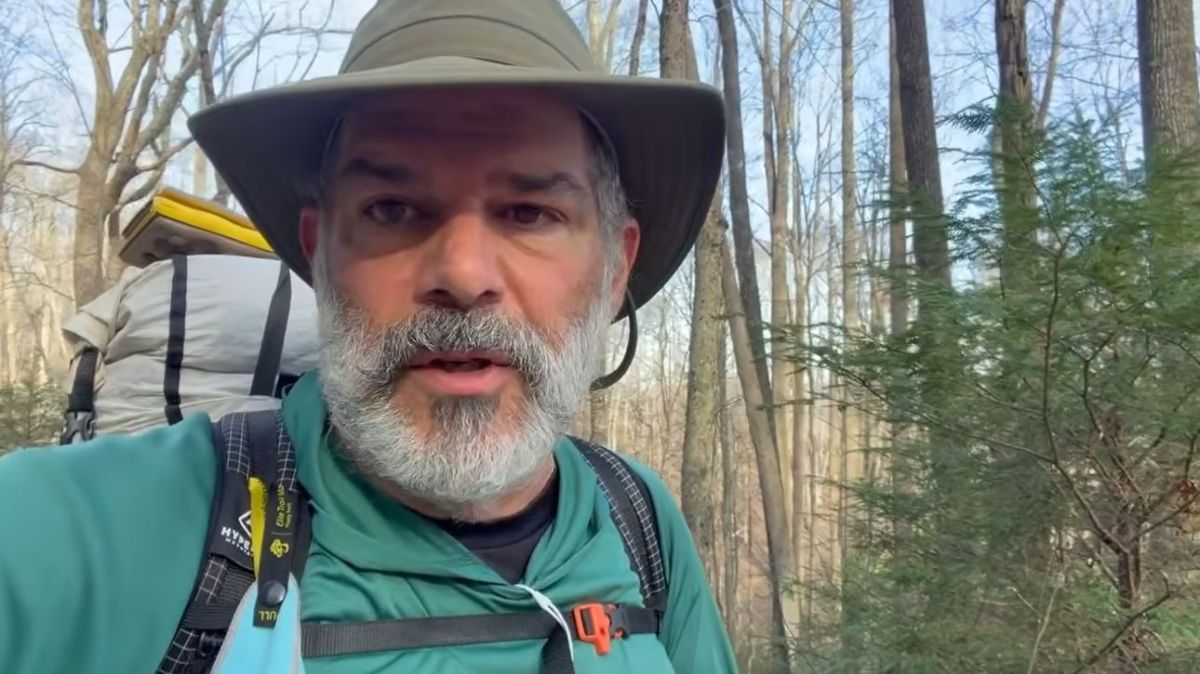
Half his lifetime ago, Joe Rando set his sights on hiking the entire 2,200 miles of the Appalachian Trail, from Georgia north to his native state of Maine.
The Lewiston-born Rando, a businessman-turned-professor living in Nashville, got especially focused on this bucket-list endeavor a decade ago, and on Feb. 3 he began what has so far been a sometimes grueling, but frequently amazing, trek.
Rando, who graduated from Lewiston High School in 1984, documents his journey via his YouTube channel Manzo Walking Home and his blog on The Trek. He takes videos with his iPhone — which he keeps charged with battery packs that also power his headlamp and Garmin satellite emergency device — and his daughter Becca grabs them from a shared folder and edits them for posting.
Rando, who turns 60 in July, must return to Nashville every six weeks for shots to his back, hips and knees — procedures critical in allowing him to continue his hike.
But although he experiences the comforts of a soft bed, homecooked meal and hot shower for a few days, Rando is always eager to get back on the trail, a resilience and optimism that’s pushed him through the toughest of days.
During such a break this week — a few miles from the AT’s quarter-completion mark, near Pearisburg, Virginia — Rando did a Q&A with the Sun Journal. Some responses have been edited for length.
What’s the most awesome part of your Appalachian Trail trek?
Rando: The whole thing is pretty awesome. Just actually experiencing this 2,200-mile continuous trail, and how it weaves through towns and mountains, and rivers and valleys.
Hurricane Helene came through this southern Appalachian area a year and a half ago; it really crushed this region. There are a half a dozen valleys where I came around the corner, and as far as the eye can see it’s downed trees. Tens of thousands of downed trees. It’s “awesome” in the negative sense; in the “power of nature” sense.
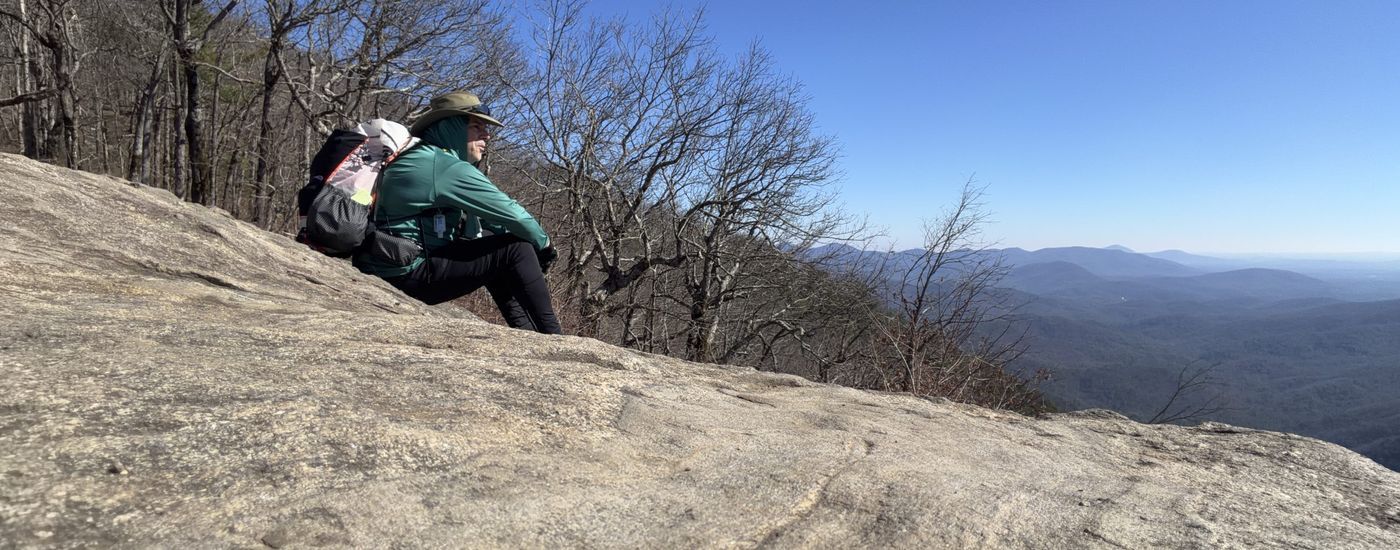
The actual trail itself has just been life-changing; it’s been inspirational. But in terms of jaw-dropping awe, it’s been the destruction done by Hurricane Helene.
What part of your journey has been the most challenging? Have you ever wanted to give up? Have you had any scares or close calls along the way?
Rando: The first three weeks of my journey were alternating days of chilly southern winter and subzero snow and ice. (I was) trying to decide what I could handle with my gear, and what I needed to get off-trail for.
All hikers think about quitting and giving up. I termed (these times) myself: “quit days.” A quit day for me is a day where something’s going on, whether you’re cold or wet, or tired, and you can’t get the quitting ideas out of your head; you spend half your day saying, “This is just dumb, hiking through four inches of snow while it’s actually still raining and snowing on me.”
But I’ve never actually yet considered quitting. … The ideas come into your head, but I just try to work through them. The nights and the recovery days re-energize, and we get back out the next day and forget about the quit days.
You keep your equipment well-charged. How about your body? Do you find yourself rejuvenated each morning?
Rando: I’ve got pretty good gear, so in my tent I can get a pretty good night sleep. For hikers, morning time and bedtime are totally driven by the sun. Early on, before the clocks changed, the sun was going down at like 5:30, and every night I was in my tent, asleep, by 6:30, because there’s just nothing else to do.
But some days, you get up in the morning and you do the exact same thing — you do the exact same pack and the exact same breakfast — and you hit the trail, take 10 steps, and you know it’s gonna be one of those days. You just have nothing in your legs. And there’s no rhyme or reason … it’s just, some days, we just don’t seem to recover as well overnight.
But generally speaking — I am amazed by the human body — I can lay down at night, sore and tired, and over 12 hours overnight an amazing amount of recovery happens.
On average, how much weight are you carrying in your pack?
Rando: There are a couple of big measures. The most important one is called your base weight, which is everything you carry except food and water. Because food and water varies literally as you walk down the trail.
My base weight is about 23 pounds. Loaded with food and water (before getting to a town to resupply, generally every few days), that adds about 13 or 14 pounds. So about 35 pounds would be my totally loaded, walking-out-of-town weight.
Being active for so long every day, have you noticed an impact on your own body weight?
Rando: Early on, the first 100 or 150 miles, it seems like the hiker hostels … are loaded with scales. Everybody’s totally obsessed with “have I lost any weight yet?” And it’s pretty dramatic. As a general rule, it’s a shocking number. I’ve been hiking with people who check at the end of the day; we’re walking 30,000 steps a day, sometimes 35,000.
So we’re burning 5,000 or 6,000 calories a day. And to keep up with food, calorie consumption, it’s virtually impossible. I eat all day. I eat breakfast, and then I eat protein bars, I eat peanut butter, and then I eat lunch, and then I eat more protein bars and more peanut butter, and then dinner. And you still can’t keep up.
Last time I weighed myself, I had lost about 15 pounds; I actually haven’t weighed myself in a long time, but I can also see my legs getting stronger, my body is physically changing. There’s an expression on trail called “your trail legs.” I’m not 100% sure what that means; I keep looking for my trail legs.
What’s the best and worst thing about roughing it — truly going back to nature?
Rando: The best thing about hiking, and roughing it, is the self-sufficiency. … Every single morning I wake up and I pack up my sleeping pad and sleeping bag, and clothes and food, and poop kit and medicines, and they all go in their space. And I throw this thing on my back and off I go, and everything I need to survive for the next several days is (there). It cracks me up that I’m walking through the woods, and I have my whole life on my back.
The worst thing, for sure, is the stench. Everybody on trail stinks. And it doesn’t matter what you do. Some people carry deodorant; it doesn’t work. Some people stop at rivers during the day, and mostly strip down and wash their face and their feet; it doesn’t help, it doesn’t matter.
Everything in your bag starts to smell the same. That’s why getting into a town, and doing all of your laundry (is important) … showers are big days.
Does recording your videos, talking to your viewers along the way, help stave off loneliness when you haven’t come across other hikers in a while? How do you keep your mind active as you walk miles upon miles?
Rando: I came on the trail with all sorts of things to keep me busy: audio books, and playlists, and podcasts. But I’m also amazed at how somedays I can hike for 10 hours and never put earphones in, and just be in my own head and look around, and think about things.
It actually led to what you’ve seen in the videos: my 60 years of gratitude. Hiking alone, in my own head, had me walking through these long reminiscences (about people known throughout life). The videos, and the 60 years of gratitude and all the memories, have been a really fun way to pass the time, but (also) for other people to hear me and comment, in the YouTube videos or texting me. … It is absolutely a connecting fiber, for sure.
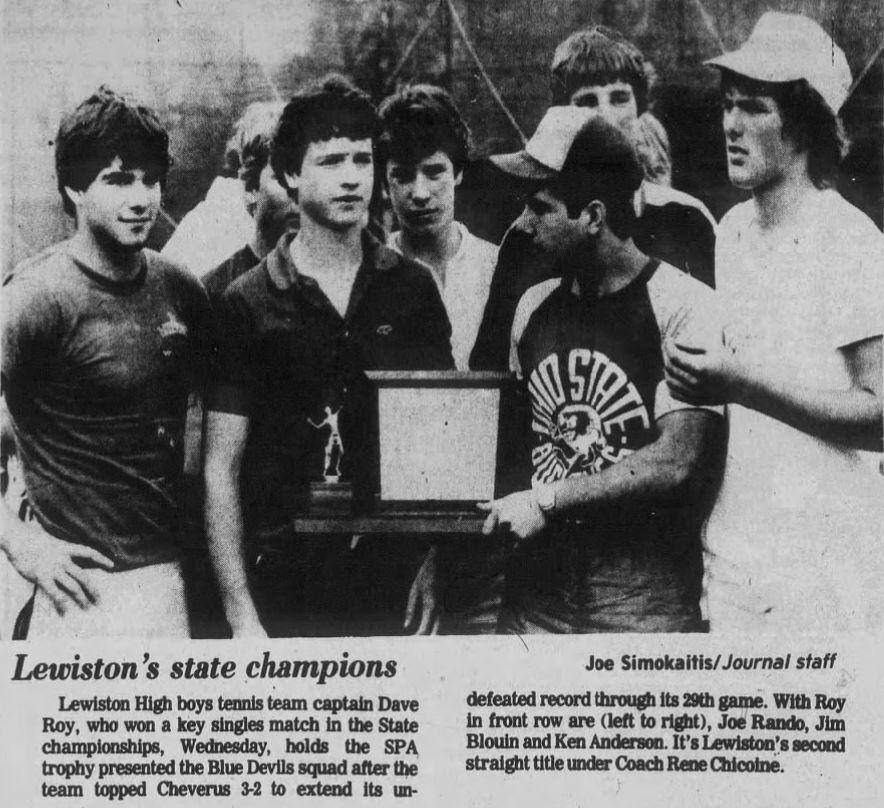
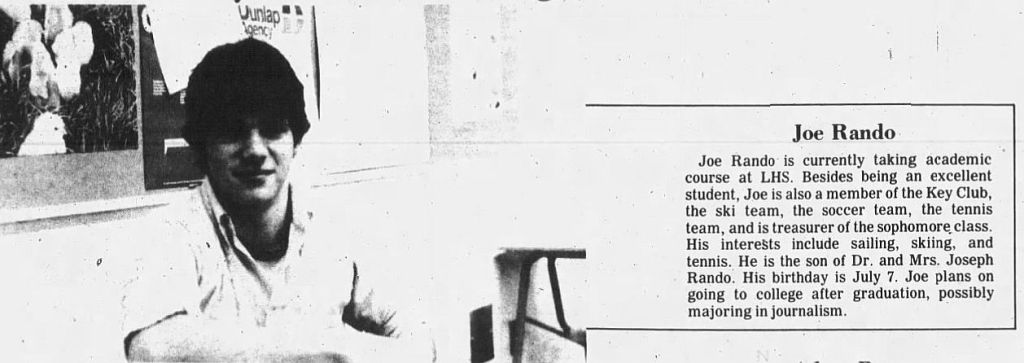
On that note, please tell me about your Lewiston roots.
(Joe’s reminisces about his years growing up in Lewiston, and the people and places he knew along the way, can be found in episodes 21 through 35).
Rando: I was born and raised in Lewiston, lived in the same house (on Novella Street) for 18 years. … When I graduated from high school and went off to college, my parents moved away from Lewiston, too.

I still have a place in Maine (on Thompson Lake in Casco), which was our family place forever. So I go back to Maine every summer for a month, and I get up there usually two or three other times during the year as well. … I’m on a nonprofit board (the Maine State YMCA). So I have a lot of connection to Maine, and I get back to Lewiston to visit friends often.
I loved growing up in Lewiston. For me, it was a great place to go to elementary school; I went to Pettingill Elementary School, which is no longer there, of course. (I remember) the day I drove by to see my old school, and it was gone. My heart sank. And then I heard the whole history of the attempt to save it.
Going to high school in Lewiston was awesome. … I learned a lot, and my teachers prepared me well, and we had some amazing sports stories. I’ve got tremendous friends, that are still my dearest friends in life, from Lewiston.
I let people say whatever they want, and I say, I think Lewiston is a charming, amazing, little blue-collar town. I am very proud to be from Maine, and I am very proud to be from Lewiston.
Where does your trail name, ‘Manzo,’ come from?
Rando: Just about everybody on trail has a trail name. The purists say the trail has to name you; something has to happen, and of course you have some really funny trail names as a result. I was afraid that if I came on trail, I would likely end up with a name like “Faceplant.”
Part of it was, I didn’t want to wait and let somebody name me a name that I then can’t shake. So I came on the trail with the trail name “Manzo.” It’s a nickname that my dad and I called each other for my whole life. So it was a very easy, simple name, and of course it turns the whole trip into an homage to my dad.
How did you prepare for this journey, and did you find that there was much for which you couldn’t prepare — which you could only learn through experiencing the AT itself?
Rando: I felt really prepared. My gear, everything. I did shakedown hikes to practice hiking in the rain and setting up and taking down my gear. There are books about the Appalachian Trail … I read ’em all.
At the exact same time, I was completely unprepared. You can’t imagine the whole concept until you’re actually walking on the trail. … There are elements of hiking (it) that you can only learn when you’re on the trail.
You’re a quarter of the way through your journey (546 miles), and you’d once set a goal of July to reach the trail’s terminus on Mt. Katahdin in Maine. Is that still your aim?
Rando: I’m hoping to finish the trail right around my 60th birthday (in July). Unfortunately, I have a hard stop. I can’t extend my trek; I’m not retired, so I have to be back in Nashville by the fall for work.
(But) people keep telling me, don’t give up yet. Once you hit Virginia, the elevations change, and the days get longer and you get stronger (and log more miles).
An average day for me is 12 to 14 miles. I would need to get into the 20s immediately for it to average out. … The umbrella over all of that is whether or not my body will hold up. So I keep saying to my wife, and my kids, and my friends, I’m just gonna keep hiking until either my body says you can’t go any further, or until the calendar says you can’t go any further. I’m totally OK with those.
The notion of hope is the reality for every one of us. I don’t care whether you are a hardcore hiker or somebody who’s never slept on a trail: The day you set out as a thru-hiker, you’re only attempting to thru-hike it, and you’re a section hiker until you touch that sign (at the summit of Mt. Katahdin).
Alex Lear is digital producer for The Maine Trust for Local News.

We invite you to add your comments. We encourage a thoughtful exchange of ideas and information on this website. By joining the conversation, you are agreeing to our commenting policy and terms of use. More information is found on our FAQs. You can update your screen name on the member's center.
Comments are managed by our staff during regular business hours Monday through Friday as well as limited hours on Saturday and Sunday. Comments held for moderation outside of those hours may take longer to approve.
Join the Conversation
Please sign into your Sun Journal account to participate in conversations below. If you do not have an account, you can register or subscribe. Questions? Please see our FAQs.