


Maine lawmakers wrapped up work on the legislative session this week, bringing an end to three and a half months in which they debated hundreds of policies, passed a supplemental budget and, at times, engaged in partisan bickering.
But mostly, lawmakers kept things civil.
Tuesday concluded the second, shorter session of Maine’s biennial Legislature, though lawmakers will return on April 29 to take up any vetoes from Gov. Janet Mills. After that, they’ll turn their attention to running for reelection in their home districts.
2026 is a consequential election year for Maine, with races for U.S. Senate, U.S. House and governor on the ballot in addition to all 186 seats in the Maine Legislature.
Those elections loomed large over this year’s session, especially for Mills, who is running in the Democratic primary to unseat Republican U.S. Sen. Susan Collins in November.
Lawmakers can only introduce emergency bills in the second session, so they predictably took up fewer policy proposals than last year. Still, it was quieter than recent years, in which major issues like gun control and rights for transgender people took center stage.
Democrats, who control both chambers in addition to the governor’s seat, focused on affordability while Republicans repeatedly called for greater accountability in the state’s Medicaid program in light of recent fraud allegations.
Here are a few takeaways from the session.
MILLS WAS PUSHED TO LEFT AMID SENATE RUN
Mills, a two-term governor from rural, western Maine, has a track record as a centrist Democrat who has been more conservative than other members of her party on certain issues, like gun control, while more liberal on others, like abortion.
But this year, locked in a competitive primary with progressive Marine veteran and oyster farmer Graham Platner, Mills tacked left.
She approved a new millionaire’s tax in the state budget signed last week, despite having previously opposed an effort to increase income taxes for high earners. Platner had been pushing for a millionaire’s tax for months.
The governor also reversed course on a controversial immigration bill just before the start of the session. Despite previous concerns she had raised about LD 1971, which was broadly supported by Democrats in the Legislature, Mills announced she would let it become law without her signature.
The bill, which hasn’t taken effect yet but is already being enforced by Maine State Police, limits the ability of local law enforcement to work with federal immigration authorities.
DEMOCRATS MADE PROGRESS ON AFFORDABILITY
Democrats, who have a 75-72 advantage in the House and a 20-14 advantage in the Senate, largely made good on their start-of-session promise to work on affordability.
Amid rising fuel costs and general inflation, it’s unclear whether Mainers will be satisfied with their lawmakers’ work. But Democrats have numerous proposals they can point to on cost-of-living that passed.
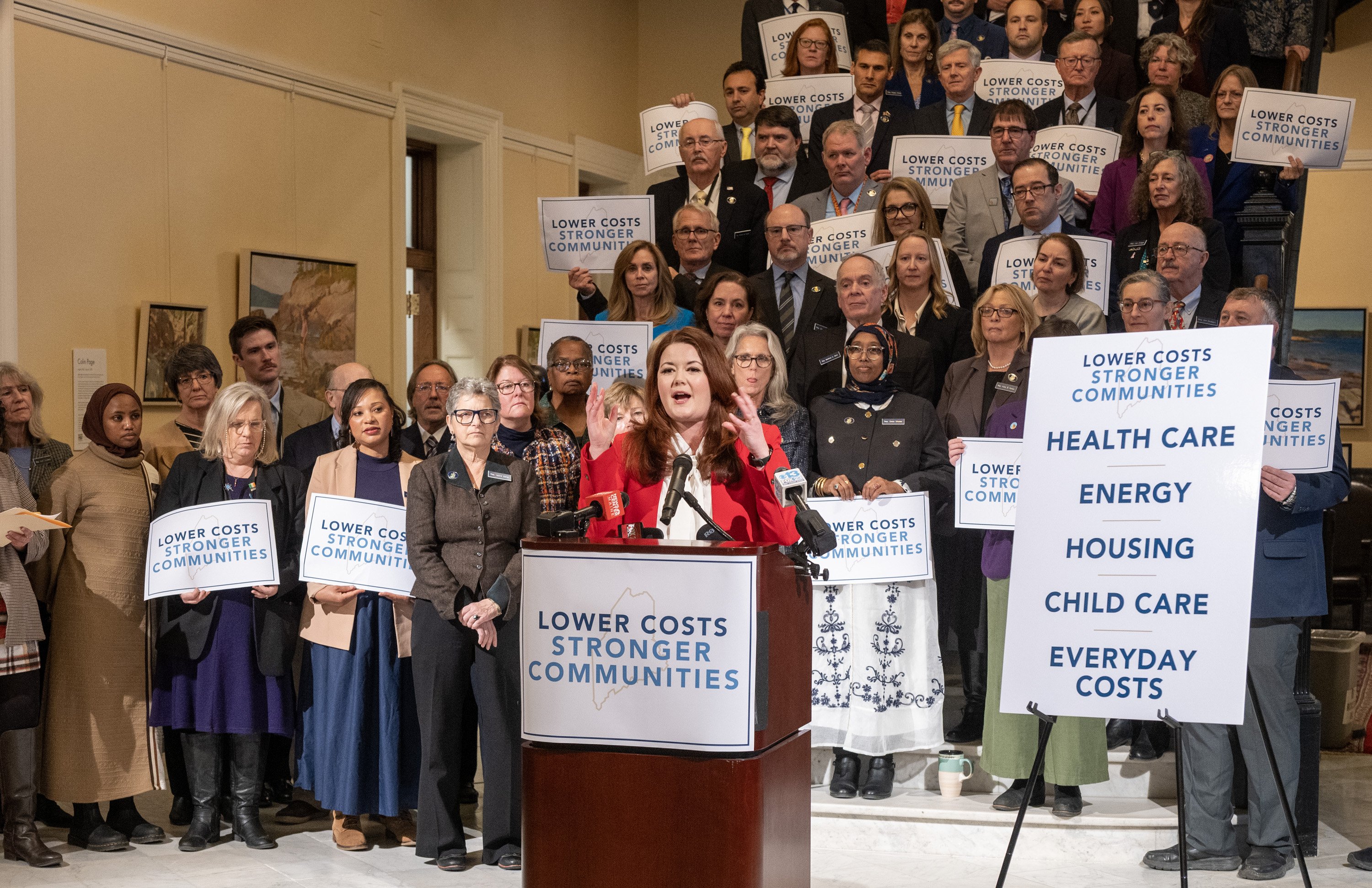
The supplemental budget signed by Mills includes $68 million in new investments for housing affordability and homelessness prevention programs; raises the minimum salary for teachers from $40,000 to $50,000 by 2029 and includes money to eliminate the waitlist for a program that provides child care subsidies to income-eligible Maine families.
Mills also pushed for, and got, $300 “affordability checks” that will be sent to some 500,000 Mainers.
Democrats advocated for a new law that bars debt collectors from garnishing wages for medical debt and from placing a lien on a debtor’s primary residence. Another new policy extends a state tax credit for affordable housing projects that had been set to expire in 2028. It will now be available through 2036.
REPUBLICANS FOCUS ON MEDICAID FRAUD
Medicaid fraud was a recurring topic at weekly news briefings held by legislative Republicans, who used the time to call on Democrats to do more to investigate abuse and graft in the state’s sprawling health care program for the poor and sick.
In particular, they pointed to the case of a home health care provider accused of falsifying billing documents and a federal audit that found Maine made close to $46 million in improper payments for autism services in 2023.
After the Trump administration signaled it might withhold Medicaid payments to Maine and other states in an effort to crack down on fraud, Mills accused federal authorities of using the allegations as a pretense for enhanced immigration enforcement in the state.
Before Trump’s fraud talk ramped up, the Mills administration had withheld payments to Gateway Community Services, a provider suspected of fraud, and referred the case to the Maine attorney general’s office.
Mills administration officials have noted that the federal audit about autism services payments does not allege fraud, and they have said it instead highlights “potential documentation and compliance issues,” which the state is reviewing.
The issue isn’t likely to go away anytime soon. In February, lawmakers on a key committee directed a review of the office tasked with overseeing the integrity of the MaineCare program, the results of which are still to come.
Republicans are also likely to bring up the topic on the campaign trail. Some, like Bobby Charles, who is running for governor, have already made it a key issue.
SESSION WASN’T DOMINATED BY ONE ISSUE
There were plenty of party-line votes and divisive debates this legislative session, but no single issue stole the spotlight as in other recent years.
In 2024, the halls of the State House were packed with people calling for stricter gun laws on the opening day of the legislative session, which came two months after a mass shooting in Lewiston left 18 people dead.
Debate on gun laws colored the session that year, with lawmakers holding hours-long public hearings and pushing through some of the most significant gun control legislation the state had seen in years with passage of a 72-hour waiting period and expanded background checks.
(The Senate voted to repeal the 72-hour waiting period this session, with three Democrats joining Republicans in favor of the effort, though the measure failed in the House.)
Last year, Republicans rallied around a series of bills to restrict the rights of transgender students amid criticism from Rep. Laurel Libby, R-Auburn, of a transgender student’s win in a state track championship. The issue was also highlighted by the Trump administration, which is now suing Maine over its policies allowing transgender students to participate in school sports in a way that aligns with their gender identity.
That session was filled with plenty of drama as Democrats censored Libby, who then sued. The U.S. Supreme Court later restored her right to vote.
This year, by comparison, was much quieter.
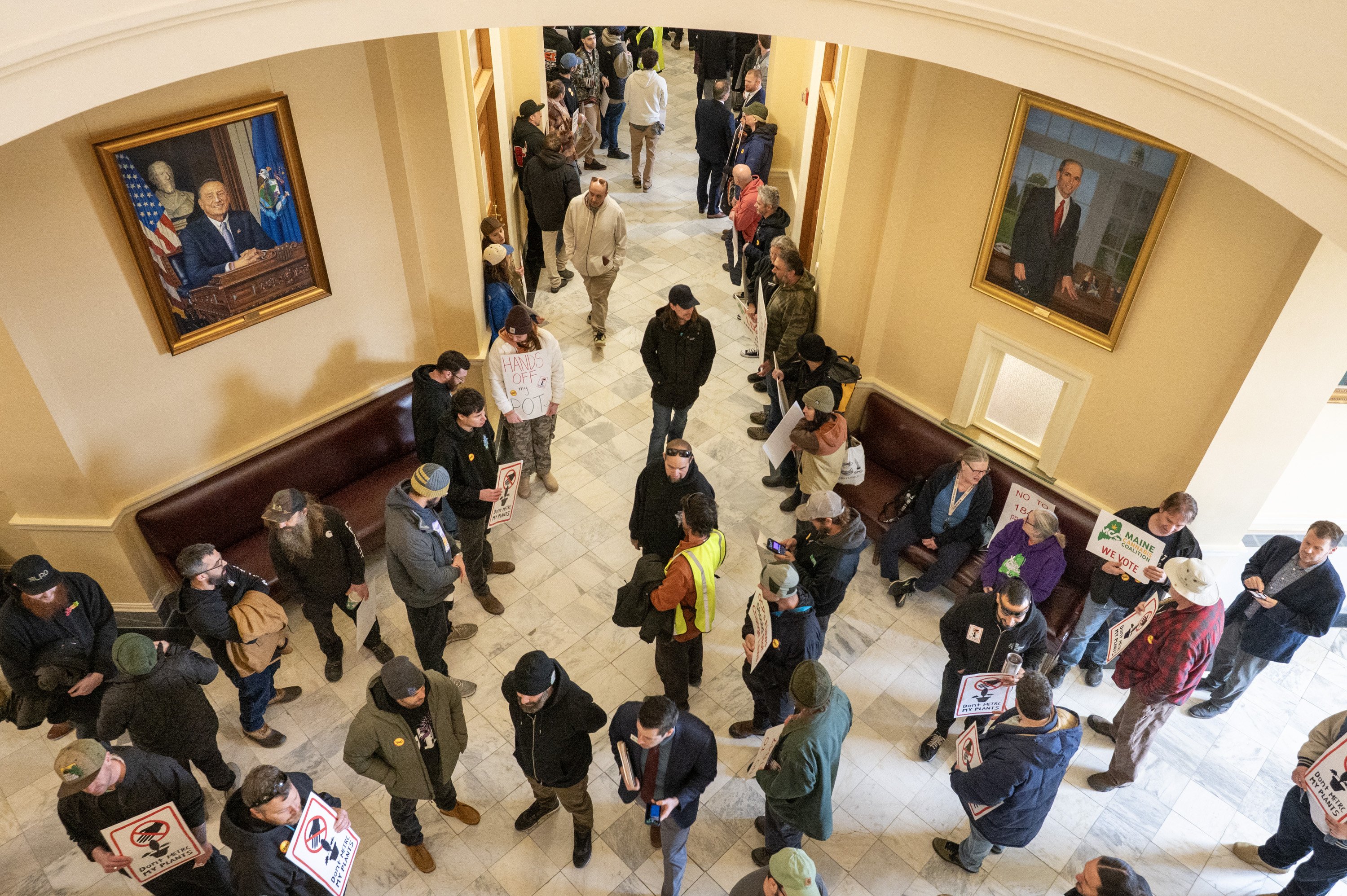
Still, bills on testing requirements for medical and recreational cannabis and on making big oil companies pay for climate change drew protests in Augusta.
Perhaps the most bizarre episode of the session came after lawmakers adjourned. Two days after session ended, a mobile billboard urging Mills to sign a bill that would temporarily ban big data centers in Maine was pulled over by Hallowell police.
Other moments were surprisingly less heated than expected — a possible sign of lawmaker fatigue more than anything else. A Republican resolution to honor Charlie Kirk, the controversial founder of the conservative group Turning Point USA who was killed last year, for example, sailed through the House with no objections from Democrats. Senate Democrats later defeated it.
ELECTIONS WERE TOP OF MIND
Mills’ final State of the State address sounded at times like a campaign speech as she used the opportunity to highlight her administration’s accomplishments and call for the federal government to enact universal health care.
Some Republicans walked out of the address, and they later called her $300 checks a campaign stunt.
In February, a special election in Lewiston’s House District 94 drew outsized interest as Democrats fought to maintain their narrow majority in the Maine House. Democratic National Committee Chair Ken Martin came to Maine to rally support for Democrat Scott Harriman, who went on to win the election over Republican Janet Beaudoin.
Republicans will try once again to take over the House in November, with Minority Leader Billy Bob Faulkingham, R-Winter Harbor, telling lawmakers on the floor last week that his party was only a few dozen votes away from securing the majority in the 2024 elections.

We invite you to add your comments. We encourage a thoughtful exchange of ideas and information on this website. By joining the conversation, you are agreeing to our commenting policy and terms of use. More information is found on our FAQs. You can update your screen name on the member's center.
Comments are managed by our staff during regular business hours Monday through Friday as well as limited hours on Saturday and Sunday. Comments held for moderation outside of those hours may take longer to approve.
Join the Conversation
Please sign into your Sun Journal account to participate in conversations below. If you do not have an account, you can register or subscribe. Questions? Please see our FAQs.