


Jennifer Fogg says her daughter comes home from Poland Community School every day not feeling well. For the past year, they’ve been in and out of the doctor’s office, scrambling for answers without any real diagnoses.
So Fogg was furious when she got an email from the school district in March mentioning that several schools had recorded elevated levels of carbon dioxide, which studies have found can impact student health and performance.
“My daughter plays sports every season, always been good with her class work, always energetic,” Fogg said. “Then one day she comes home not feeling well, and it’s happened every day since, and the school has done nothing to solve this.”
Fogg is among the parents who say Regional School Unit 16 leaders have not done enough to address the elevated levels, which were first recorded in February at Minot Consolidated School.
Regional School Unit 16 officials have been working with residents of Minot, Poland and Mechanic Falls for several years to upgrade aging school heating and ventilation systems. Discussions and proposals go back to 2023, but the communities have rejected two proposals as too expensive.
But the more recent discovery of elevated levels of carbon dioxide — not to be confused with deadly carbon monoxide — has added another layer of concern and urgency to the effort.
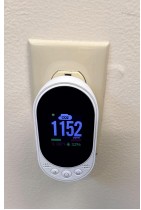
Superintendent Amy Hediger said the district has made meaningful progress, installing carbon dioxide monitors in many classrooms. She said she understands monitors can’t “fix everything,” but are one way the school district can address the problem short term until funding can be found to upgrade the schools’ heating and ventilation systems.
What did RSU 16 find?
Carbon dioxide is odorless, colorless and everywhere. It’s the bubbles in soda, it’s critical for plant photosynthesis, and humans expel it with every breath.
In a closed environment like a classroom, however, too much carbon dioxide can cause headaches, drowsiness and slower thinking.
According to RSU 16’s Protocols page, carbon dioxide levels below 1,000 parts per million are considered normal. Levels between 1,000 ppm and 1,999 ppm require “low fresh air,” and anything over 2,000 ppm requires “action for fresh air.”
Hediger said in an email to the Sun Journal that anything above 5,000 ppm for eight continuous hours is considered dangerous.
A public school forum by the RSU 16 board of directors in January raised concerns and questions about air quality. She said that the next day, the district contacted multiple state agencies, including the Maine Department of Health and Human Services, Maine Department of Education, Maine Department of Environmental Protection and Maine Department of Labor.
Hediger said school leaders wanted to understand how its school ventilation systems were working and how much fresh air was getting into the spaces at the schools. A letter was sent to families Jan. 9 acknowledging residents’ concerns and outlined the district’s next steps.
She also asked the district’s operations director to purchase carbon dioxide monitors for the schools. She said knowing the levels would allow school staff to react to elevated levels by opening windows and taking other actions to increase fresh air.
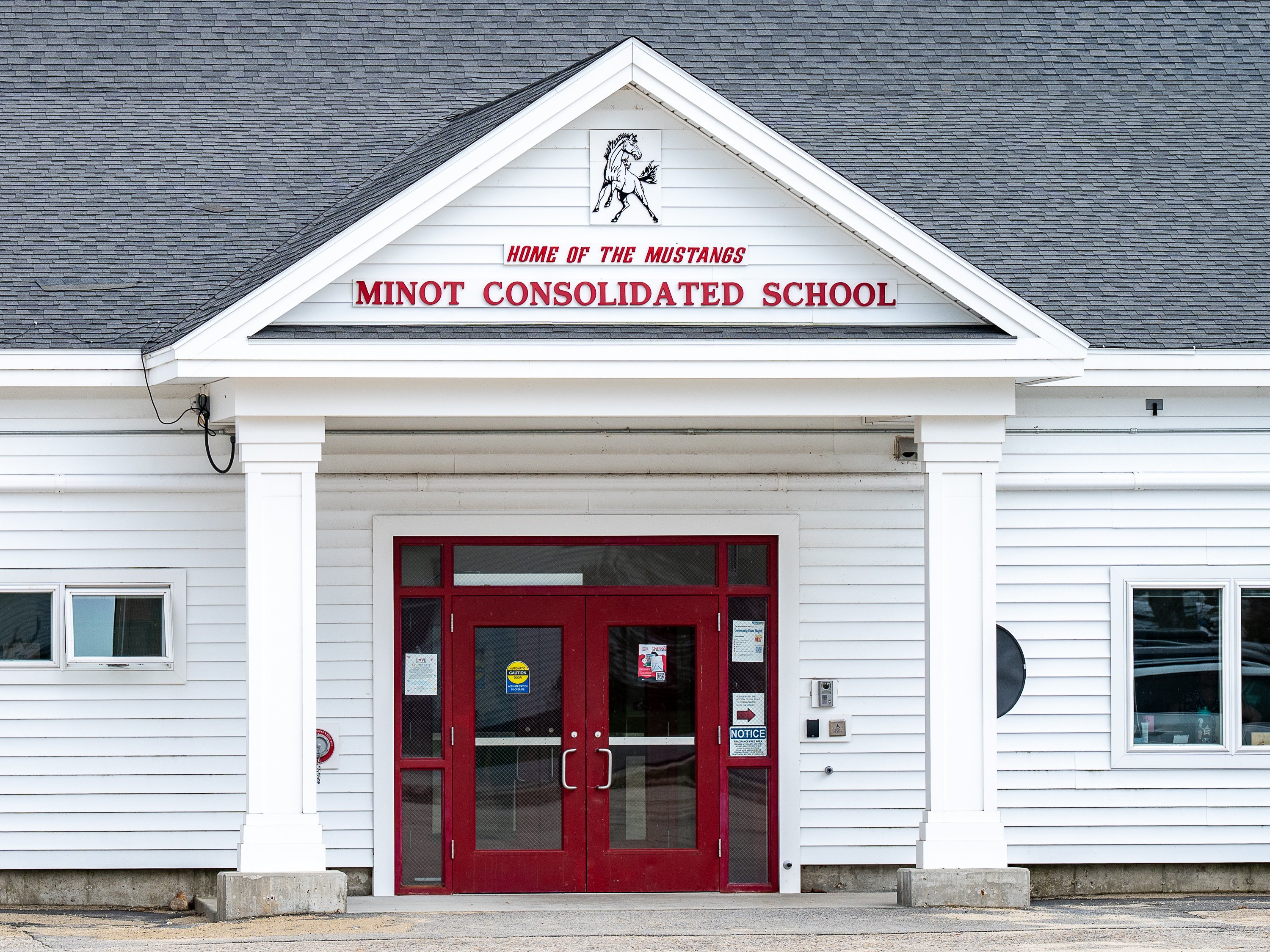
The school district started weekly testing at Minot Consolidated School the week of Feb. 9, posting the results to the district’s website. That week, 30 spaces were tested, with 25 reporting normal carbon dioxide levels, four with occasions when levels were recorded between 1,000 ppm and 2,000 ppm, and one classroom peaking at 3,491 ppm.
The last week of February, the same spaces were tested again. This time, 23 classrooms reported normal carbon dioxide levels, with seven areas recording occasions when levels were between 1,000 ppm and 2,000 ppm.
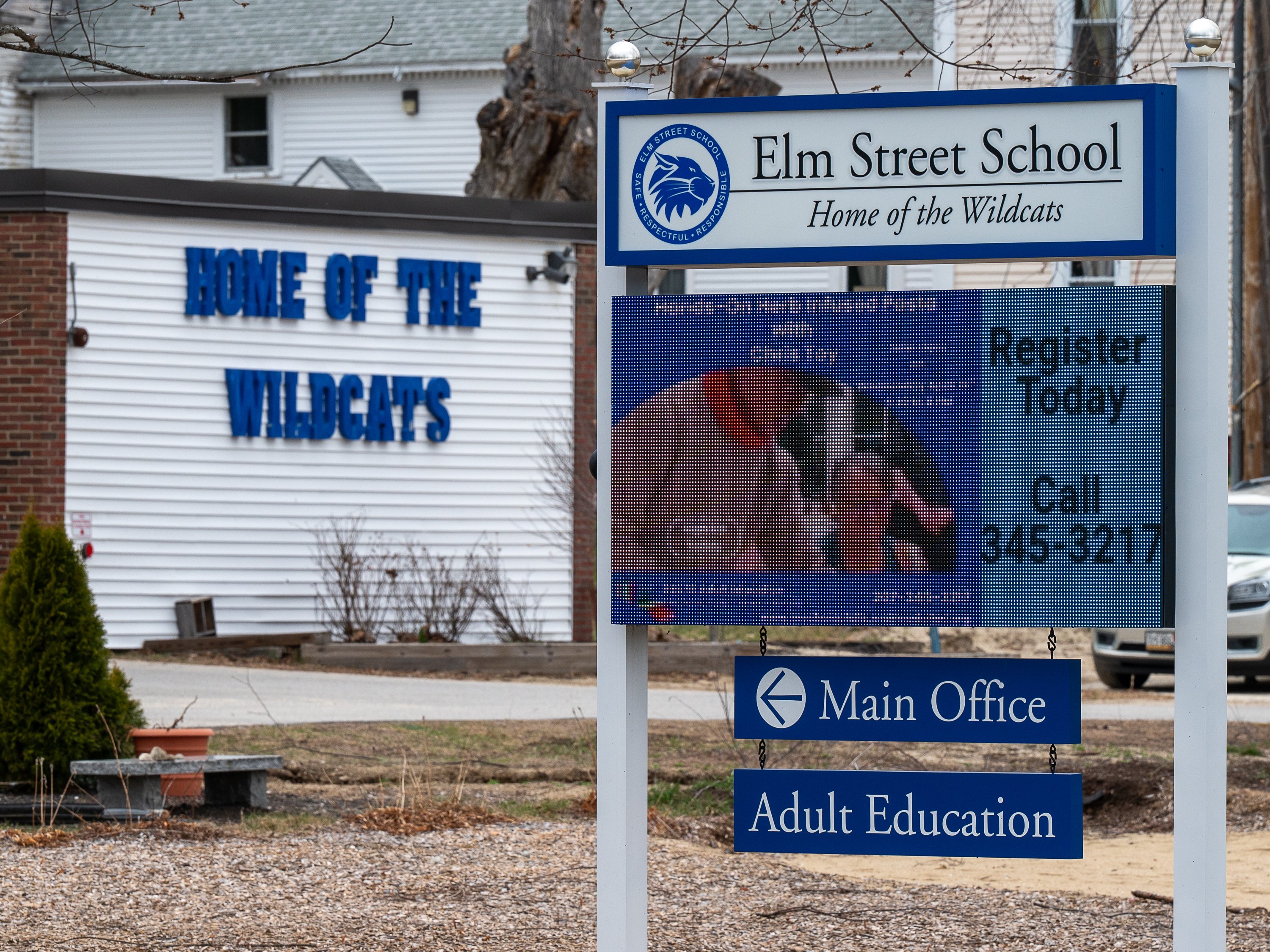
In March and April, Bruce Whittier Middle School, Poland Community School and Elm Street School also joined the weekly testing. While most of the spaces in these schools tested at normal carbon dioxide levels, some areas saw extraordinary high levels, specifically a classroom at Elm Street School with 3,600 ppm during the week of March 30 to April 3, and 3,359 ppm at Minot Consolidated School from March 9 to March 13. Minot Consolidated School also had a classroom record 2,360 ppm for the week of March 30 to April 9.
The areas in the school were all tested in the afternoon, mainly between the times of noon and 2 p.m. The elevated levels only went as high as they did for one day before returning to normal.
When areas exceed 1,000 ppm, the district recommends staff open doors and windows and turning on ventilation fans and units if available. It also recommends reducing high-movement activities in these areas. If an area remains above 2,000 ppm, the district recommends temporarily moving the classroom or activity until levels decline.
For comparison, a 2025 PubMed case study found the average carbon dioxide level at Boston Public School buildings to be 841 ppm.
The study, which recorded carbon dioxide levels at schools over the school year, considered levels between 400-1000 ppm as “typical.” The study found carbon dioxide levels exceeded 1,000 ppm, which it considered “moderate,” on half the school days, and reached 2,000 ppm, which it considered “high,” on 7% of school days.
The same case study found that improved ventilation increased student health, attendance and performance.
A 2025 Harvard University paper found that elevated levels of carbon dioxide result in a 5% decrease in paying attention.
Voters rejected proposed upgrades
RSU 16 officials said they have been committed to improving heating and ventilation systems in schools for several years, but the costs of these upgrades have been more than what taxpayers want to spend, forcing officials to look into different funding options.
In May 2023, a $5 million bond proposal to update heating and ventilation systems in the three elementary schools, prompted by a problem with the heating system at Minot Consolidated School unrelated to air quality, lost by seven votes in a districtwide referendum.
A subsequent proposal in 2023 to spend no more than $10.2 million to upgrade the systems faced pushback from the community, Hediger said, and was voted down by the school board.
As a result, district officials applied for state revolving loan money in October 2025. The district was granted $6 million, with the school board moving forward on a supplemental bond totaling $2.94 million last week that will go to voters in June.
If approved, the money will be used to improve air quality at Poland Community School, Bruce Whittier Middle School in Poland and Elm Street School. More than half (58%) of the $6 million will be forgiven by the state and the remaining 42% will be repaid interest-free.
In January, the school board also approved a tax-exempt lease purchase for $2.82 million to make heating and ventilation improvements at Minot Consolidated School, which will start this summer. The money will pay for HVAC upgrades and installation of CO2 monitors.
Meanwhile, officials plan to use existing funds to continue with their plan to install monitors in every elementary school classroom, including Poland Community School.
“From my perspective, we’ve made meaningful and steady progress with our monitors,” Hediger said. “This has been a learning process for all of us, building our understanding of the data.
“Publishing the CO2 data on our website provides a snapshot of a moment in time, while the monitors themselves are always plugged in and actively working. If levels rise and a monitor alerts, it gives us a real-time tool to respond and bring in more fresh air.
“This is about our community coming together to invest in our schools,” she said. “We now have a significant opportunity in front of us, and it will take all of us to see it through.”
Parents: School officials should have done more

Despite the ongoing progress, some parents remain unhappy.
Amber O’Donnell Lyman’s 13-year-old son Scott goes to Whittier Middle School, one of the locations with carbon dioxide monitors.
In early March, she said her son was getting bloody noses, headaches and even high blood pressure that would clear up once he got home. She blamed the air quality at school.
She said she worries about his conditions getting worse, as well as the long-term health effects.
“I feel like the kids are being hurt and spending more time feeling sick then learning,” Lyman said. “It’s sad. Homeschooling is really sounding like the safest for all the kids in this district. And knowing that Minot is first to get repairs, and now with the water damage at PCS (Poland Community School), I know the rest of the schools will get pushed to the back and forgotten about.”
Mechanic Falls resident Tiffani Hall has a son, Mason, 8, who attends Elm Street School. On April 9 she said her son’s classroom was getting carbon dioxide detectors installed, which she said was “needed.”
She said the elevated levels of carbon dioxide officials announced to parents in March probably explain why her son, who has autism, had been having aggressive outbursts at home.
The last week of March into early April, Hall said her son had two outbursts at home and some irritability at school. She hopes the behavior is from her son being exposed to the elevated levels of carbon dioxide over a period of time, and not from some other harder-to-manage cause.
“I know my Mason and I know he’s such a sweet boy,” Hall said. “If this is all because of carbon dioxide, I would like to hold the school accountable for causing my son and family significant harm. I feel like something like this should have been addressed earlier on and a plan should have been put in place, even if it was temporary, like opening windows once an hour or something. Instead they waited until it affected kids. More needed to be done.”
In the end, Lyman said she just wants the district to be more transparent.
“I understand that the school district is installing new carbon dioxide monitors and telling teachers to open windows, but that isn’t enough,” Lyman said. “We want to know what more can be done and whatever it takes, I feel the school district should be doing so. The school seems to not be prioritizing the students’ health.”
There are others who think the school district has been handing the situation the right way.
One resident who wished to remain unidentified said in an email that the air quality issue has been blown out of proportion, and that residents are to blame for voting down prior proposals to fix it.
“The school administration has been trying to repair the HVAC of the schools for over a decade,” the individual said. “The public continues to ignore the concerns and continues to say the solutions are too expensive, and have voted down solutions. It is illegal for the school board to spend money that the public refuses to spend.”

We invite you to add your comments. We encourage a thoughtful exchange of ideas and information on this website. By joining the conversation, you are agreeing to our commenting policy and terms of use. More information is found on our FAQs. You can update your screen name on the member's center.
Comments are managed by our staff during regular business hours Monday through Friday as well as limited hours on Saturday and Sunday. Comments held for moderation outside of those hours may take longer to approve.
Join the Conversation
Please sign into your Sun Journal account to participate in conversations below. If you do not have an account, you can register or subscribe. Questions? Please see our FAQs.