
When Bill Fairchild was asked whom Oak Hill High School defeated to win its first baseball state championship in 1978, there was a lengthy pause and a lamenting of the passage of time before a rhetorical, “Was it Southern Aroostook?”
If you want to know who eliminated the Raiders from the playoffs in the two seasons that sandwiched that one, however, there’s no need to ask. You’ll get names and colorful details.
Dozens of other coaches, players and schools know the feeling.
Fairchild built one of Maine’s enduring high school baseball powerhouses from scratch. To beat one of his clubs was to be acutely prepared and to have everything go right.
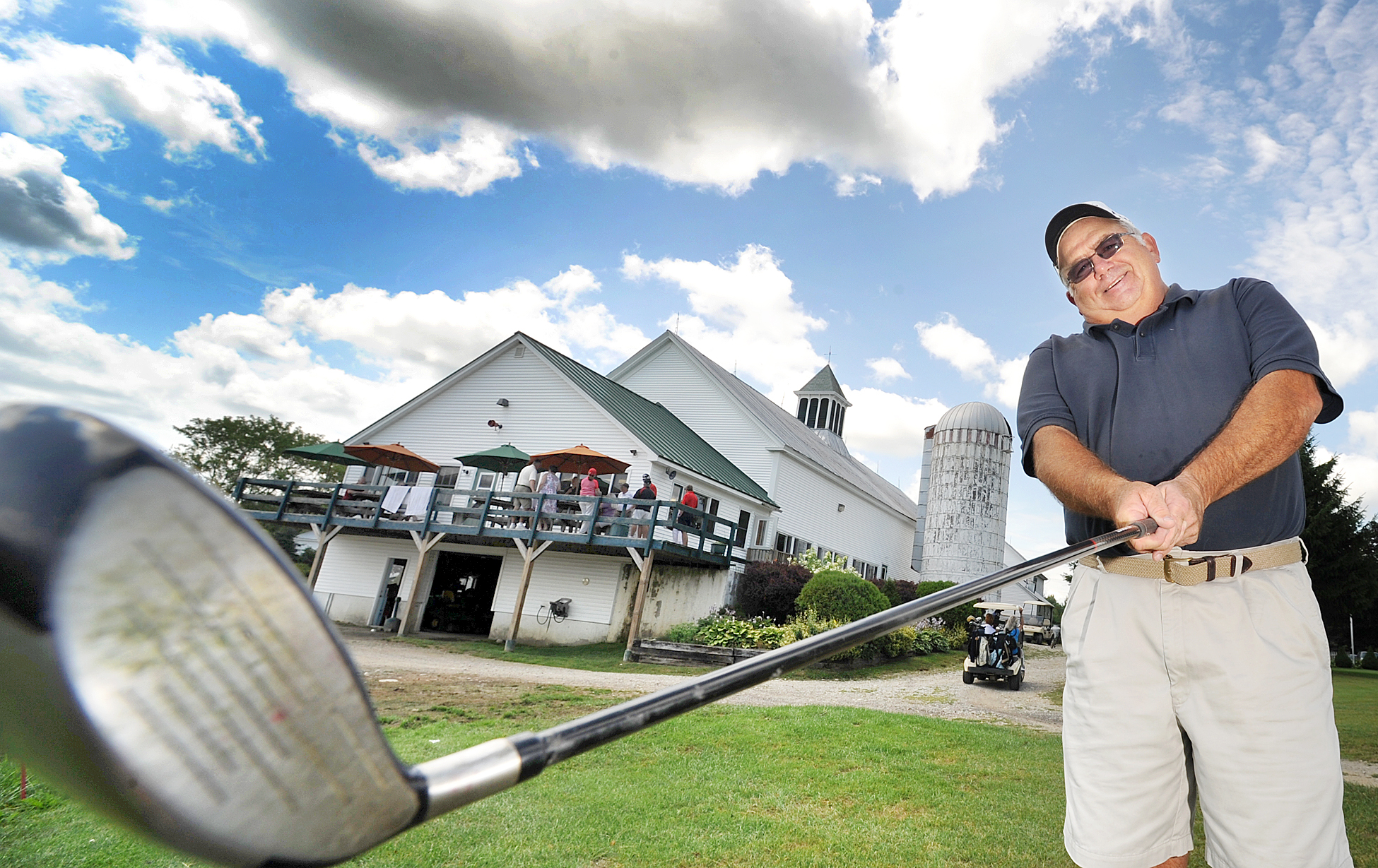
For his contributions to the game and to the lives of hundreds of local youths, Fairchild, a lifelong Monmouth resident, will be enshrined Sunday in the Maine Baseball Hall of Fame.
“It took me a little by surprise because it has been a while since I’ve coached,” Fairchild said. “It’s very nice. I’m very honored.”
Few coaches or teachers in the state are more closely identified with their school than Fairchild.
He coached three sports at Oak Hill, including varsity baseball for the first 28 years of the school’s existence. The Raiders won four regional championships and three state titles during his tenure, ruling Class C in 1978 and 1981 and Class B in 2003.
Fairchild taught physical education for 30 years and spent five more as athletic director and assistant principal before retiring in 2011.
Fateful split
Oak Hill withdrew from Monmouth Academy and formed its own school union prior to the 1976-77 school year. Fairchild applied for one of the job openings after starting his teaching career in Turner.
“I was there from the word giddy-up,” Fairchild said. “There were two jobs, the Monmouth job and the Oak Hill job. Ted Goff had his pick.”
Goff’s choice to stay in Monmouth changed the course of Maine baseball history.
Fairchild credited Goff for schooling his Oak Hill players in the finer points of the game. The new coach also had taught many of his players during their formative years, because Litchfield and Wales — which joined with Sabattus in the new academic venture — were part of Monmouth Little League.
“I started out with Ricky Pilot and Craig Edgecomb,” Fairchild said of his two pitching aces in Oak Hill’s early years. “They made me look pretty good.”
Oak Hill won the Mountain Valley Conference championship in its maiden voyage.
Then came one of those losses that plagued the coach all summer and sticks in his mind to this day: 2-1, to Sacopee Valley in the Western Maine final.
“Sacopee Valley had a hell of a pitcher,” Fairchild said. “Boy, was he good. We got a guy on third and didn’t score and that was it.”
Fairchild’s team struck gold in 1978, beating Southern Aroostook and another budding coaching legend, Murray Putnam, at the University of Maine’s Mahaney Diamond.
Oak Hill owned a 7-0 lead against Telstar in the ’79 playoffs.
Edgecomb was fighting an illness. The young coach felt safe going to his bullpen and even let some of his substitutes gain some playoff experience in the late innings.
“For once I had a heart and took (Edgecomb) out,” Fairchild said. “We thought we had it all wrapped up and we lost 8-7. (Former Telstar coach and Jay principal) Peter Brown sends me a copy of the newspaper clipping just about every year. I learned from that one.”
Not many foes enjoyed the last laugh against Fairchild and Oak Hill, particularly in those early years.
Oak Hill’s success persisted throughout the 1980s in the Mid-Maine Conference, where the Raiders built fierce rivalries with Hall-Dale and Maranacook.
Baseball was the school’s flagship sport and participation proved it. Fairchild commonly welcomed 60 or more prospective players to tryouts every March.
“Our JV teams were extremely tough,” Fairchild said. “Kids understood that their freshman and sophomore years, they were going to be playing JV.”
From the old school
Fairchild describes his coaching style as intense and old-school. Oak Hill players never struggled to hear his booming voice from the dugout.
He wonders aloud if a coach with his personality could build a career today.
“You didn’t have a lot of opportunities to be mentored back then. You went right into a varsity job. You didn’t sit with someone for a year or two and learn how to deal with things,” he said. “My intensity was huge. Too much, I’m sure. But I had great kids and great parents who could handle it. Parents expected their kids to work hard and to be accountable. That community was ready to be champions in something. They bought into it.”
Fairchild learned from a line of great coaches.
It started at the family dinner table. His father, Thomas, the longtime principal and superintendent at Monmouth Academy, was a baseball coach.
Stu Foster, for whom Monmouth’s gymnasium is named, coached Fairchild in high school.
“His knowledge of the game was more than sufficient, but what he taught you about being a man was even better,” Fairchild said.
Fairchild played at the University of Maine for two years under Jack Butterfield. Although he left the team after his sophomore year, Fairchild continued to pick the brain of Butterfield’s successor, Dr. John Winkin.
Both, of course, are hall of famers in their own right.
“I just tried to be a sponge,” Fairchild said.
Peer pressure
Fairchild also credits his colleagues with keeping him sharp.
When Oak Hill grew into a Class B school in the 1990s, he consistently was forced to match wits with Rocky Myers of Gorham and Derek Soule of Greely in the playoffs.
“Those were the games to watch,” Fairchild said. “To this day, whenever I see Rocky, we talk about how his team would beat us by one run in the playoffs one year and we would beat his team by one run the next.”
Those exchanges led to a satisfying state title in 2003. Fairchild retired from coaching a year later to concentrate on a successful fight with cancer.
Oak Hill soon christened its baseball complex after the only coach it had ever known.
On June 30, 2011, the day of Fairchild’s retirement, dozens of former players made the pilgrimage to T. William Fairchild Field for a barbecue and pickup game in honor of their mentor and friend.
“The way the community supported our team was extremely humbling,” Fairchild said. “The kids showed up every year and worked their butts off. We talked all the time about how talent wasn’t geographical. You could be from Wales, Maine, and win. We were going to play the game, play it right and play it hard.”

Comments are no longer available on this story