
With all due respect to the beleaguered, hairnet-wearing, spoon-wagging, stereotypical lunch ladies of yesteryear — who did their best with what they had — today’s lunch ladies and lunch men have raised the bar.
In most school districts, the days of breaded, fried fish sticks, instant mashed potatoes and syrupy sweet fruit cocktail have given way to meals that are both appealing to school-aged youngsters and nutritious, as well as compliant with U.S. Department of Agriculture guidelines, producible in large scale and cost effective.
And just as upscale restaurants have embraced the farm-to-table movement, school cafeterias are now embracing the concept of “farm to school.”
Clearly, balancing this complex conglomeration of regulations, financial considerations and trends elevates today’s school lunch cooks and planners to superhero status, although capes would be dangerous in the typical industrial-size school kitchen.
Naturally, this elevation to superhero status called for an epic battle pitting school district against school district, chef against chef.
Food fight!
And so was born the Maine Farm to School Cook-Off, “to provide a skills-based competition for school food service staff using local ingredients to produce high-quality school meals that students enjoy and can be replicated in a school kitchen,” according to the 2016 cook-off fact sheet and press release.
The cook-off challenges participants to prepare two meals within a specific period of time using three ingredients that were “grown, raised, caught or manufactured in the state of Maine.”
“This competition is intended to connect schools to local farms and growers, as well as to food hubs and other local distributors,” said Stephanie Stambach of the Maine Department of Education’s Child Nutrition Services, because “by making those connections, we will get fresher and higher quality foods into the schools.”
Schools around the state were invited to compete. Participants were expected to prepare both breakfast and lunch for a panel of judges, which included culinary arts students, local school nutrition directors and professional chefs.
What began with five teams, each with two cooks, competing at two different locations in mid-April, culminated with two teams competing for top honors last month at Kennebec Valley Community College.
Alisa Roman is the director of nutrition for Lewiston’s public schools. Roman selected employees Curtis Manchester and Meranda Deraps to represent Lewiston in the competition. Participating in competitions such as this “gets my staff engaged in the community, and gets Lewiston’s name out there at the state level,” said Roman. “It also draws attention to our local farmers.”
Roman said the farm-to-school initiative is “a fantastic community program that brings farmers together with schools (resulting in) fresh apples in the fall, milk from local dairies and potatoes and other vegetables grown in Maine” being integrated into the diets of 5,000 local school children.
Winning slaw, smoothies, muffins and shepherd’s pie
Although the Lewiston public school’s team made an impressive showing in the initial cook-off, they did not advance to the final round.
The team of Susan Boivin, director of food services for MSAD 28 and Five Town CSD (Camden-Rockport), and Charles Butler, director of food services for RSU 13 (Rockland area), took the top prize.
Boivin practiced the farm-to-school model well before she came to Maine. She saw the competition “as an opportunity to let community members see what we do, to promote school food and to change misconceptions” about cafeteria food and that, in fact, locally sourced and thoughtfully prepared school food is both tasty and nutritious.
Boivin said Butler came up with suggestions for the breakfast menu that included maple apple oat muffin tops and Unbeetable Bana-Berry smoothies (see recipes), while Boivin designed the lunch menu.
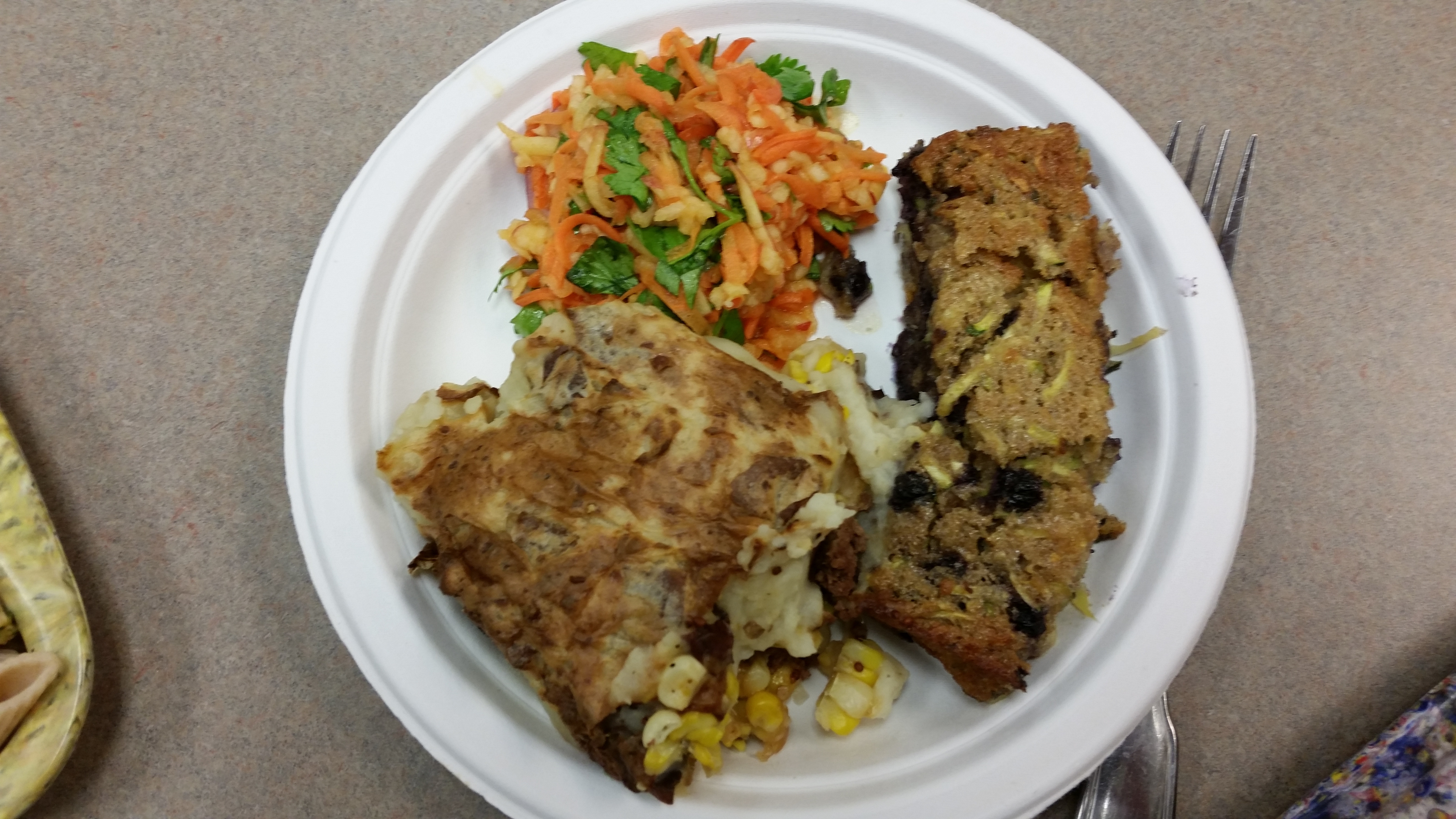
For the final lunch competition, Boivin and Butler prepared a carrot apple slaw with fresh lime juice vinaigrette. “It’s very simple,” said Boivin, and something she prepares often for her students. “The lime dressing is made with honey, brown sugar and cumin . . . not mayonnaise.”
Boivin and Butler also chose to present “shepherd’s pie, because all school menus have shepherd’s pie.” Boivin’s recipe is atypical. “I love seasonings and spices, and wanted something that didn’t include the cream of mushroom gravy.”
The team began by seasoning the beef with chipotle and cinnamon, using the stock from the corn and potato as a base for the gravy, a trick Boivin learned from her mother.
While the beef was cooking, “I caramelized onions and mixed it with a grainy mustard and garlic, sauteed it through and added the liquids,” said Boivin.
She reserved some of the liquids to mix with cornstarch. Put it all together, she said. “It makes a nice gravy.”
Boivin and Butler’s meal was finished with a lemon blueberry zucchini bread, another offering that Boivin makes regularly in her own school kitchen, where she often plays a game with the younger kids, challenging them to “find the zucchini.”
Both Roman in Lewiston and Boivin agreed the biggest challenges of the competition were working in an unfamiliar kitchen and the time constraints. “When I’m in my own kitchen, I know my way around,” said Boivin.
Connecting students to food
Stambach, with the state, said the program also helps provide an education to students regarding where their food comes from. “It’s pretty neat when there’s a farm down the road,” she said,
Boivin noted that the vegetables in some of her school’s meals “come from the farm that they (students) can see at recess.” Even eggs are purchased locally for the schools in Boivin’s and Butler’s districts from an egg farmer in Waldoboro.
In addition, Boivin’s elementary school children visit farms to “plant vegetables and watch them grow,” while “botany students at the high school participate in everything from growing herbs and vegetables to tending apple trees in their own orchard.”
“The older students also learn about the economic impact of keeping dollars local,” says Stambach. “It’s an economics lesson.”
This participatory attitude toward meal production in the school cafeteria also stimulates a sense of ownership among students – something that was often missing in the dark ages of “mystery meat.”
Some things never change, however, including what kids prefer to eat. In Lewiston, the most popular meals are “pizza, breakfast for lunch, and tacos,” said Roman.
Boivin said her students like pizza too; she offers a healthy alternative to the standard version, making hers with “whole-grain crust, fresh low-sodium tomato sauce and skimmed-milk mozzarella cheese with fresh herbs and toppings.”
The superpower possessed by these school kitchen heroes, it appears, is the rare ability to turn old standards into tasty and healthy things that kids actually want, give students an appreciation of where their food comes from, teach them about the importance of eating healthy, and support the community’s economic growth.
Blueberry lemon zucchini cake
Yield: 5 servings
Ingredients:
1/2 cup zucchini, shredded
1/8 cup buttermilk
1 1/2 teaspoon lemon zest
1 1/2 tablespoon lemon juice
1/4 cup unsalted butter
1/2 cup and 2 tablespoons sugar
1 egg
3/4 cup and 1 1/2 teaspoon whole wheat flour
1/4 teaspoon baking soda
1/4 teaspoon salt
1/2 cup blueberries
Directions:
Preheat oven to 350
1. Mix dry ingredients together and set aside.
2. Mix zucchini with zest, juice and buttermilk, then set aside.
3. In a mixing bowl cream butter and sugar until fluffy (scrape sides often).
4. Mix egg into the butter and sugar slowly.
5. Fold in half of the dry ingredients.
6. Fold in half of the lemon/zucchini/buttermilk mixture.
7. Fold in remaining half of the dry ingredients
8. Fold in remaining half of the lemon/zucchini/buttermilk mixture.
9. Fold in blueberries until evenly distributed.
10. Bake approximately 30 minutes until golden brown and firm
11. Remove from oven and let cool.
Shepherd’s pie
Ingredients:
1/4 cup sliced onion
1 teaspoon unsalted butter
1 pound ground beef
2 cups corn
1 1/2 pounds red potato
1/2 cup lowfat milk
2 teaspoons unsalted butter
1 tablespoon cornstarch
3/4 cup water
2 teaspoons chopped garlic
2 teaspoons grainy mustard
Directions:
Caramelize onions in butter. Set aside. Cook off ground beef. Steam potatoes and corn (separately), reserving all cooking water.
Mash potato with 1/2 cup lowfat (1%) milk and 2 teaspoons unsalted butter.
Remove onions from pan, chop fine. Saute garlic in the same pan, add the mustard and onions. Add reserved cooking water (3/4 cup less 2 tablespoons) and bring to a boil. Mix cornstarch with 2 tablespoons water and add to pan to thicken.
Layer in baking dish: Beef, then drained corn, pan gravy, then the mashed potato. Bake at 350 degrees for 30 minutes. Serves 5.
Apple carrot slaw
Ingredients:
1 cup chopped fresh cilantro
1/4 cup and 2 tablespoons fresh lime juice
1/2 cup vegetable oil
1/4 teaspoon cumin
2 tablespoons brown sugar
2 tablespoons honey
4 cups shredded carrot
4 cups shredded apple
Directions:
Shred the carrots and apples into a large mixing bowl. Mix all other ingredients together. Add the dressing to the carrot/apple mixture and toss.
Serves 8.
Maple apple oat muffin tops
Yield: 5 servings
Ingredients:
2 cups apples, chopped
1/3 cup maple syrup
1 egg
1/4 cup skim milk
1 tablespoon canola oil
1 tablespoon Bakewell Cream
1/2 teaspoon baking soda
1 teaspoon salt
1/2 teaspoon cinnamon, ground
1 cup and 1 tablespoon rolled oats
3/4 cup all-purpose flour
1/4 cup whole white wheat flour
Directions;
Preheat oven to 350 degrees.
1. Mix 1 cup of oats with apples, egg, maple syrup, milk and canola oil. Set aside.
2. Mix Bakewell Cream, baking soda, salt, cinnamon and flours together.
3. Add wet mix to dry mix and stir until blended.
4. Place 10 #16 scoops of the dough on a sheet pan lined with a baking sheet.
5. Top with remaining tablespoon of oats.
6. Bake for 6 minutes.
7. Rotate pan and bake for approximately 6 more minutes until golden brown.
8. Remove from oven and let cool.
Unbeetable Bana-Berry Smoothie
Yield: 5 servings
Ingredients:
3/4 cup frozen blueberries, thawed
3/4 cup frozen strawberries, thawed
1/4 cup beets, cooked
3/4 cup ripe banana
20 ounces fat-free vanilla yogurt
Directions:
1. Puree blueberries, strawberries, banana and beets until smooth.
2. Mix with yogurt.


Comments are no longer available on this story