
Bill Murray’s math lesson of the day revolved around a bag of trash.
His third-graders at Sherwood Heights Elementary School in Auburn started with an 18-pound bag of trash that the school custodian pitched aside. Armed with rubber gloves, the kids took out all the paper, plastic, anything that could be composted and anything that the class could reuse. “We took out all kinds of stuff that does not belong in the landfill,” said Murray, a 1980 graduate of Edward Little High School.
What was put back into the garbage bag weighed less than a pound.
Many of Murray’s lessons, regardless of subject, have a reduce, reuse, recycle spin. “It’s an overall theme,” said Murray, a first-year teacher at the school. “There is not anyone in this classroom that is not engaged,” he said.
Mackenzie Clark, 8, came in from recess carrying paper that she picked up from the playground. She slipped it into the recycle bin before taking her seat. “If you don’t recycle, there will be more dumps and you don’t want a dump next to your home,” Clark said.
Prior to teaching, Murray spent 20 years with International Paper making cardboard. Now he recycles it. “Personally, I think I was born in the wrong time period,” he said. “I would prefer the days when there were not all these disposable things.”
Murray’s classroom is filled with all sorts of reused items. Each student has a mailbox made from a plastic coffee can. Clip boards are made from old three-ringed binders and clothes pins. The “take a break chair” was rescued from the Share Center and revived with “steel wool and Coca-Cola.” Murray shops for teaching supplies at Goodwill and the Share Center, an Auburn nonprofit that specializes in providing educators with recycled and used material. “One man’s trash is another man’s treasure,” he emphasized.
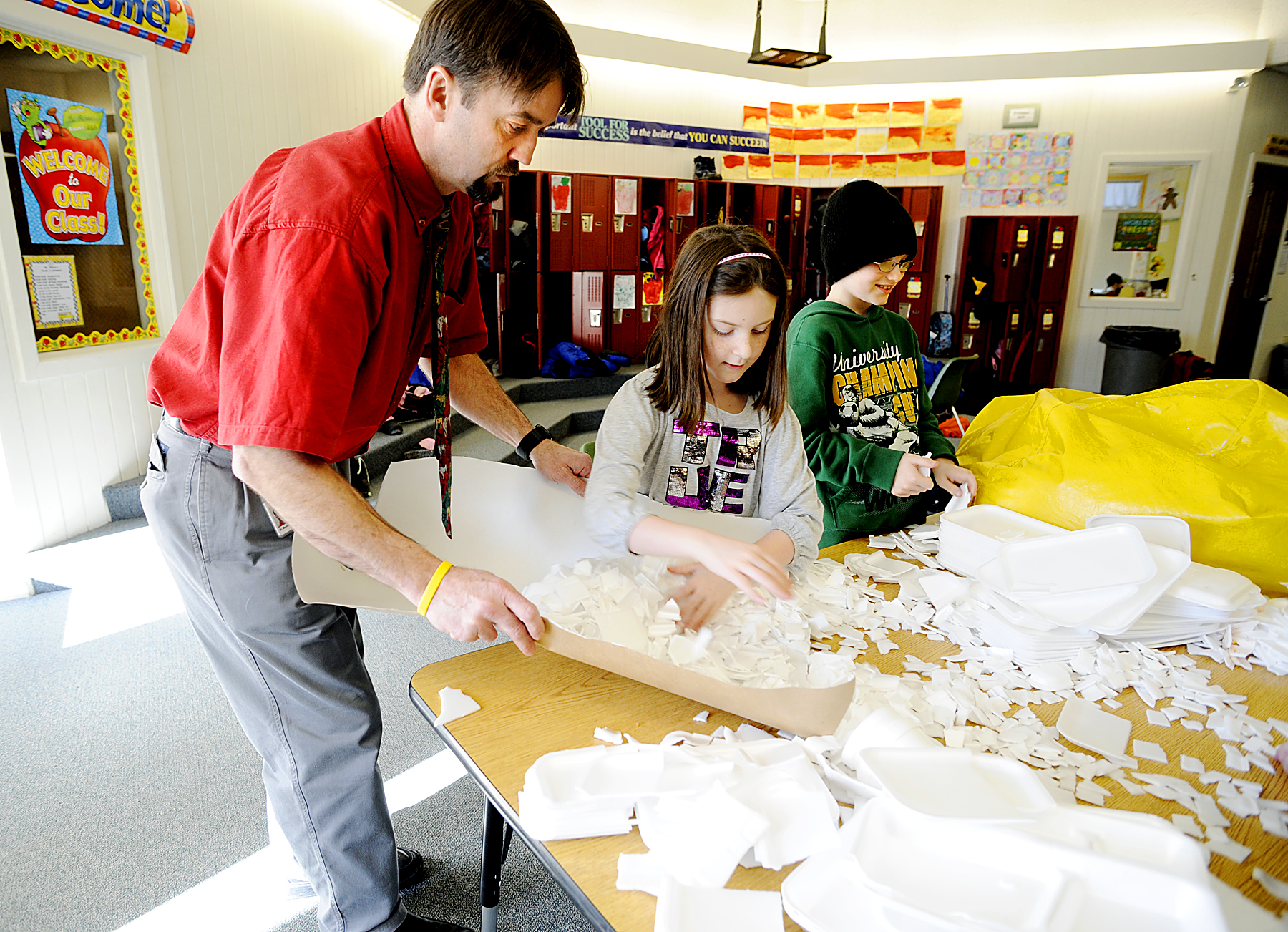
“We started out small,” Murray said about his classroom’s effort to reduce the school’s carbon footprint. “We went schoolwide during Maine Recycles Week.” Students went on the school’s Channel 99 News broadcast asking for Styrofoam trays that get passed out with lunch on half-day Wednesdays.
The trays are broken into pieces and used to fill beanbag chairs. “We want to break these down, otherwise they will be in the landfill for 500 years,” Clark said. “We have a waiting list of beanbags to fill,” Murray said.
Waiting for students as they walk into Murray’s classroom is the job board. Feed fish, flag duty and empty pencil sharpener are pretty routine in most classrooms, but one job in particular stands out in this classroom: compost collector. Students go from room to room collecting food scraps each day. Some days produce two five gallon buckets full of banana peals and grape stems that students empty onto the compost heap behind the school. “If you want life on the earth to have plants and flowers then composting is pretty important,” said 9-year-old Cameron Johnson. Murray’s plan is to use the compost for a pumpkin patch. Pumpkins make a great canvas to paint the world map on, according to Murray. “I try to integrate the arts whenever I can.”
Murray’s green approach is starting to pay dividends. Empty Capri Sun juice pouches bring 2 cents a piece back to the school and his students’ effort to reduce waste was awarded with a $750 grant from the KIDS Consortium Green Schools service learning initiative.
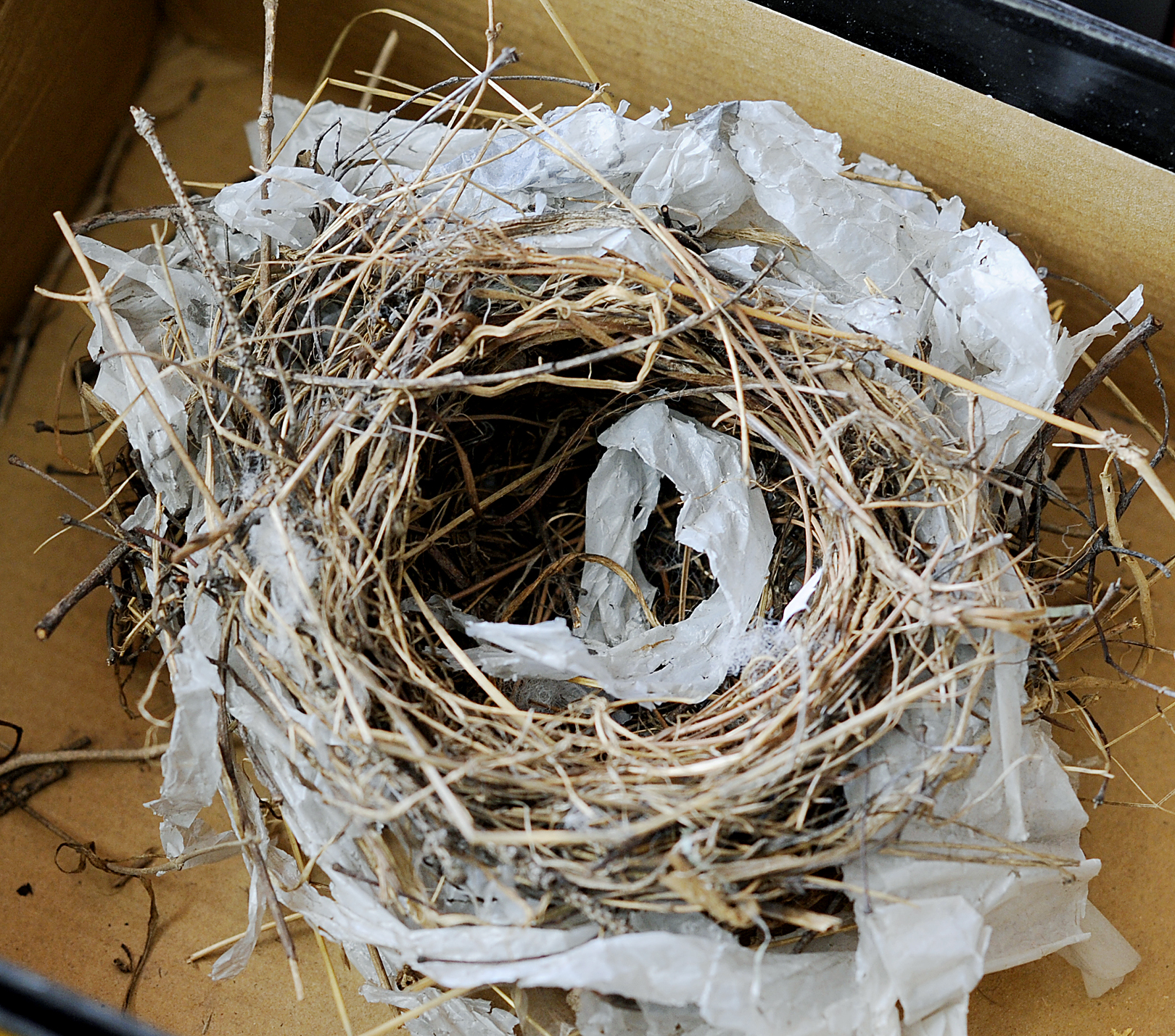
A birds nest woven with a plastic bag is on Murray’s shelf to remind kids why it’s so important to reduce the amount of waste they produce. “I don’t need to remind them often,” Murray said. “They police themselves and rat on each other. This world will soon be in there hands,” Murray said.
Comments are no longer available on this story