
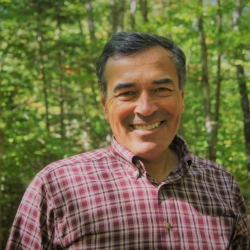
Party affiliation:
Republican
Social media accounts:
facebook.com/SenRickBennett/
Occupation:
Business
Education:
Harvard College, BA (1986); USM School of Business, MBA (2000)
Community Organizations:
Member, First Congregational Church of South Paris (2017-present); moderator (2020-present) and assistant moderator (2019-2020); corporator, Norway Savings Bank (1992-present); member, Board of Trustees, Hebron Academy (2010-2019)
Personal information (hobbies, etc.):
Trail running, hiking, canoeing, cross-country skiing, reading, writing
Family status:
Married with two adult children
Years in the Legislature:
14
Committee assignments (if elected):
Environment and Natural Resources Committee, Government Oversight Committee
Q&A
Define what “success” would look like if you are elected to serve your district.
It’s time to think anew and act anew. The level of partisan polarization is unacceptably high, causing ordinary people to distance themselves from civic engagement at just the time we need collaboration and unity to tackle immense challenges like inflation, environmental degradation, investment in infrastructure from highways to broadband.
I am proud to have been found to be the most bipartisan legislator by one independent assessment.
I will work with all people of any party to take control of our electric grid from foreign interests, reform campaign finance, continue our fight against PFAS contamination, fix our broken child welfare system, among other priorities.
I will continue the effort to build a recreational trail on the Mountain Division line through western Maine.
Characterize your view on public access to governmental business.
We must reform our FOAA laws, improve lobbying disclosures, increase transparency into dark money, and protect Maine elections by keeping foreign governments out of our referendum campaigns (which is now legal!).
Comments are not available on this story. Read more about why we allow commenting on some stories and not on others.
We believe it's important to offer commenting on certain stories as a benefit to our readers. At its best, our comments sections can be a productive platform for readers to engage with our journalism, offer thoughts on coverage and issues, and drive conversation in a respectful, solutions-based way. It's a form of open discourse that can be useful to our community, public officials, journalists and others.
We do not enable comments on everything — exceptions include most crime stories, and coverage involving personal tragedy or sensitive issues that invite personal attacks instead of thoughtful discussion.
You can read more here about our commenting policy and terms of use. More information is also found on our FAQs.
Show less