



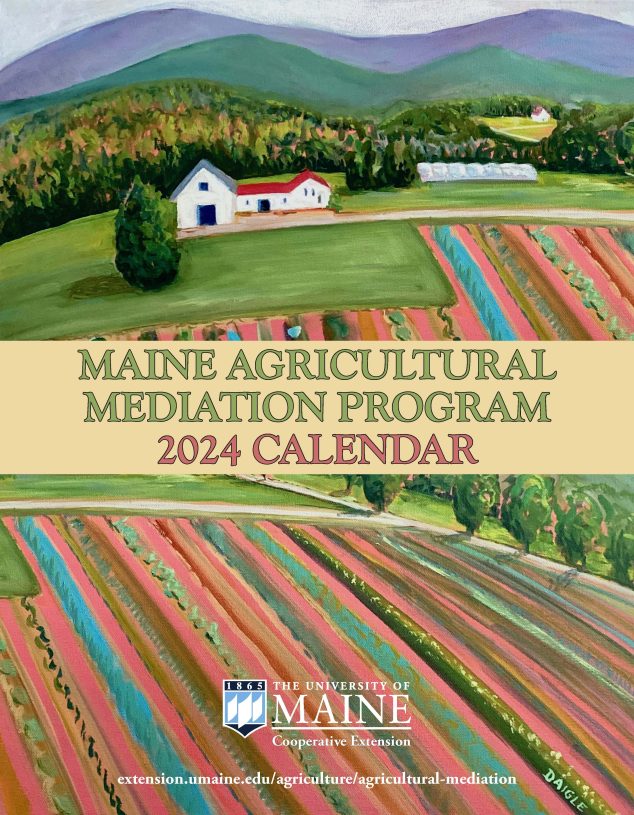
Photo courtesy University of Maine Cooperative Extension
STATE — The Maine Agricultural Mediation Program (MAMP), which is part of University of Maine Cooperative Extension, has released its 2024 wall calendar.
The theme of this year’s calendar is ‘Farming and Tending to the Land and Sea Throughout the Seasons’. It features twelve charming images from Maine-based artists that capture the essence of agricultural work and life. From vibrant fields of crops to somber coastal scenes, each image tells a unique story of Maine’s agricultural journey throughout the seasons.
Measuring 8.5 by 11 inches, the calendar is designed with wire binding for easy hanging. Copies are now available for purchase for $6.50, which includes shipping. Order a copy by visiting UMaine Extension’s website.
MAMP is one of 43 U.S. Department of Agriculture (USDA) Agricultural Mediation Programs. It supports the agricultural community in Maine by providing conflict resolution, contract and lease consultation, and financial coaching.
MAMP provides services in three major areas: mediation/ conflict resolution; contract/ lease consultation and co-drafting; and financial coaching. The MAMP staff, mediators, and financial coaches are person-focused and aim to provide compassionate assistance, support, and resources to agricultural producers, their lenders, USDA agencies, and others involved in various conflicts.
All MAMP services are voluntary and confidential and are no-cost/ low-cost to participants. Visit the program website to learn more about agricultural mediation at UMaine Extension. All MAMP services are voluntary and confidential and are no-cost/ low-cost to participants. Visit the program website to learn more about agricultural mediation at UMaine Extension.
Comments are not available on this story.
Send questions/comments to the editors.
