
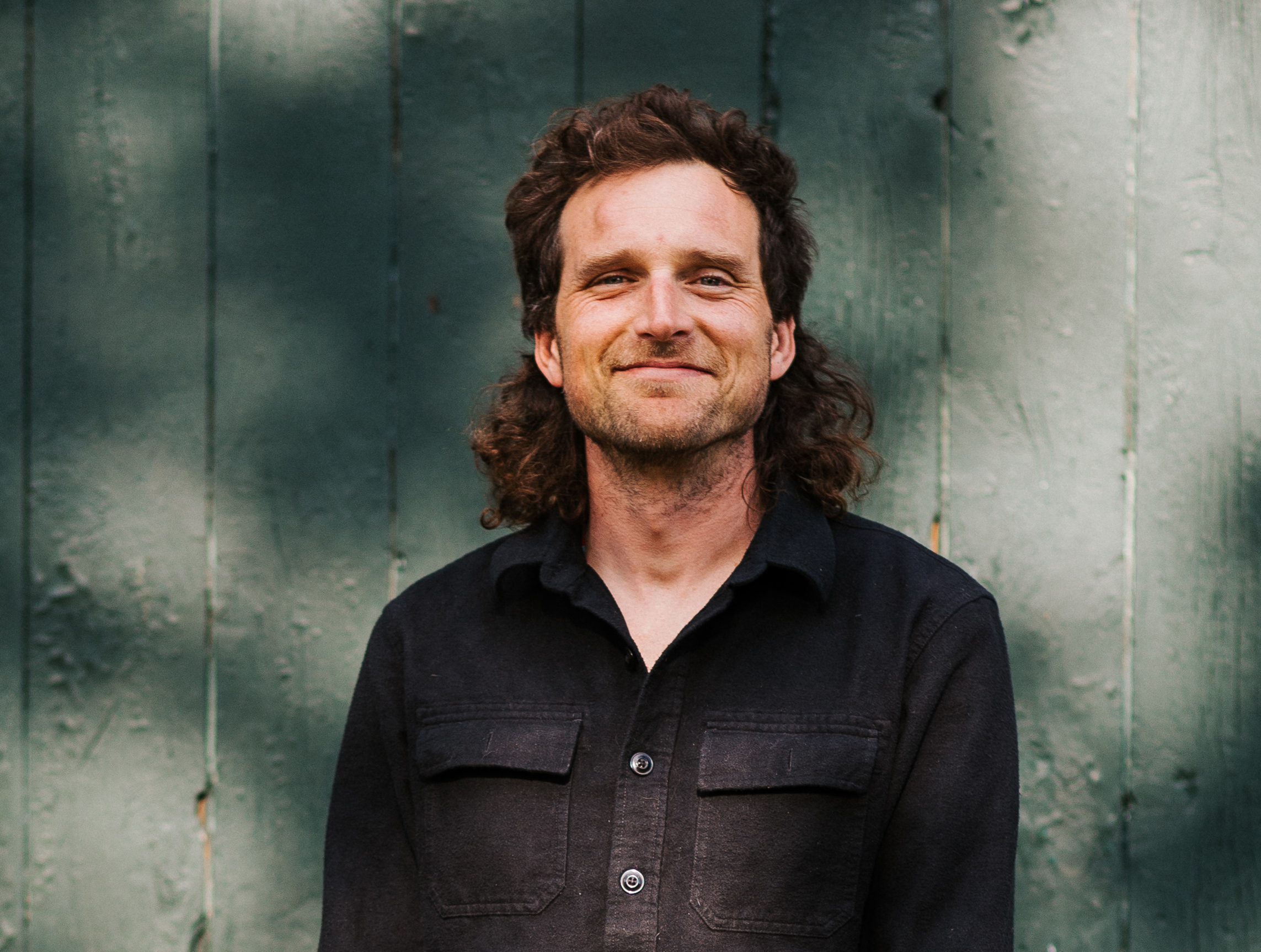
The University of Maine at Farmington’s celebrated Visiting Writers Series is excited to present nonfiction writer Matthew J.C. Clark as the popular program’s first reader of the 2025/26 season. Clark will read from his work at 7:30 p.m., Thursday, Sept. 18, in The Landing in the UMF Olsen Student Center. The reading is free and open to the public and will be followed by a book signing with the author.
Clark’s debut personal essay collection, “Bjarki, Not Bjarki: On Floorboards, Love, and Irreconcilable Differences” (University of Iowa Press, 2024) is a rumination on the people and processes that transform the forest into your floor, gift cards, crab rangoons, Jean Claude Van Damme, and what it means to know another person and to connect with them in an increasingly polarized America.
Author and memoirist Jaed Coffin writes, “Matthew Clark is trying to write about everything all at once: love and heartbreak and loss; wood and work and loneliness; friendship and privilege, masculinity and honesty and the sad limitations of both…full of contradictions and wilderness, always committed to the impossible question of what it means to be a free and honest person in the world.”
Clark’s work has been published in Ecotone, The Antioch Review, and the Iowa Review, among others. In addition to writing, Clark is a carpenter in Bath, Maine. He earned his B.A. at Middlebury College in Religious Studies and his M.F.A. in Nonfiction Writing from the University of Iowa.
“Bjarki, Not Bjarki: On Floorboards, Love, and Irreconcilable Differences” is available for pre-purchase at UMF University Bookstore and Devany, Doak, and Garret Booksellers in Farmington.
The Visiting Writer Series is sponsored by the UMF Bachelor of Fine Arts in Creative Writing Program.

Supporting Sponsor for Franklin Journal, Livermore Falls Advertiser, Rangeley Highlander and Rumford Falls Times.
Keeping communities informed by supporting local news. franklinsavings.bank
Comments are not available on this story. Read more about why we allow commenting on some stories and not on others.
We believe it's important to offer commenting on certain stories as a benefit to our readers. At its best, our comments sections can be a productive platform for readers to engage with our journalism, offer thoughts on coverage and issues, and drive conversation in a respectful, solutions-based way. It's a form of open discourse that can be useful to our community, public officials, journalists and others.
We do not enable comments on everything — exceptions include most crime stories, and coverage involving personal tragedy or sensitive issues that invite personal attacks instead of thoughtful discussion.
You can read more here about our commenting policy and terms of use. More information is also found on our FAQs.
Show less