
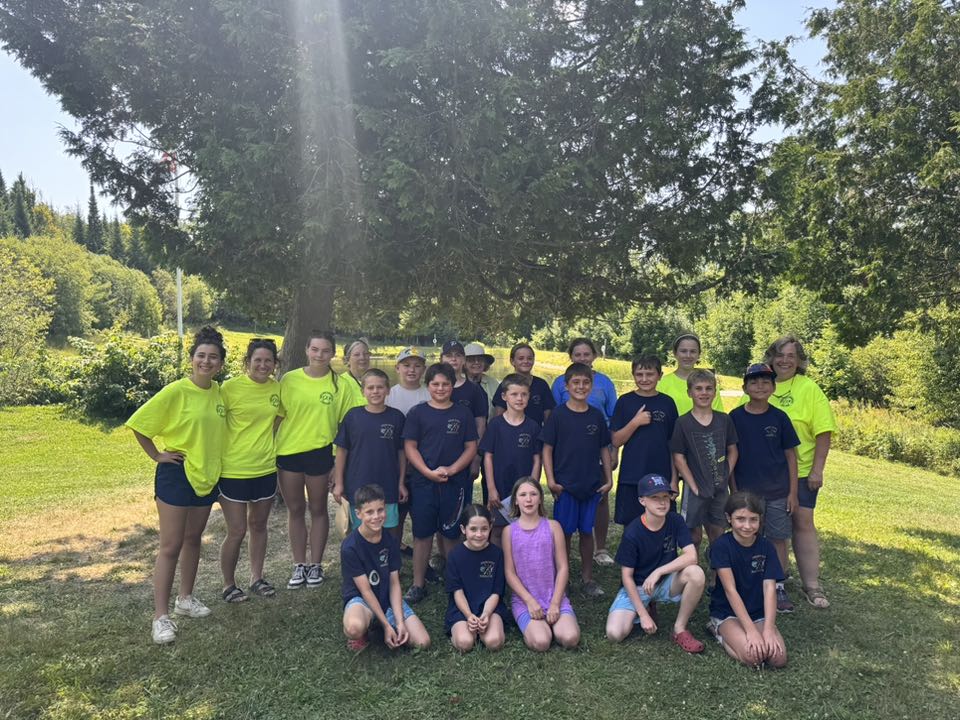
For 29 years, the Junior Maine Guides program has been at the heart of the Rangeley Region Guides and Sportsmen’s Association’s mission to connect kids with the outdoors. Starting with the Basic Group, campers ages 9 and 10 build the foundation of knowledge and confidence they’ll carry into more challenging adventures as Advanced Guides
This summer, RRG&SA welcomed 9 Junior Guides in the Basic Group and 7 in the Advanced Group. Both groups were supported by Junior Counselors Natalie, Dakota, and Tess, all former campers. Leadership came from Ashley Greene and Karon Noyes, with behind-the-scenes support from Elaine Holcombe and new volunteer Tanya Baron, a retired teacher who taught team building and orienteering. The Advanced Group was led by Susan and Bill Lewis.
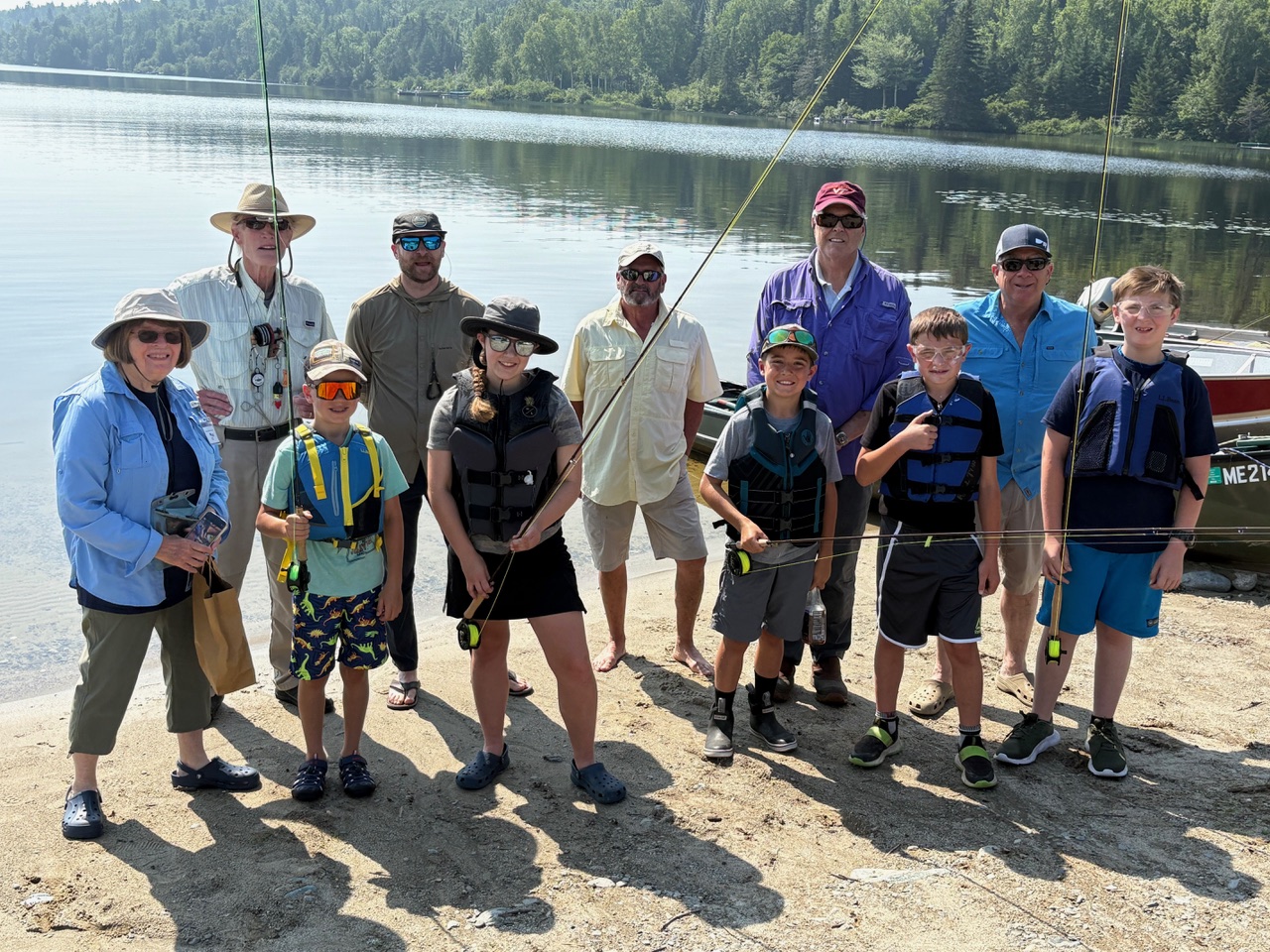
The Basic program focuses on three core areas: Maine Mammals and Vertebrates, where campers learn about local wildlife through tracking, skulls, pelts, and habitats; Invertebrates & Insects, which highlights their role in Rangeley’s fisheries through activities like fly tying and fly fishing; and Watercraft and Safety, where campers practice boating skills and safety on the water through trips and challenges.
The Advanced Guides, ages 11 to 13, enjoyed a wide variety of hands-on experiences. They practiced shotgun and rifle skills with Sheri Oldham and David Kreting, went hiking with the TRAC team led by Jeff Zapolsky and Brian Holmes, explored nature photography with Nick Leadley, and joined Rangeley Fire Rescue for search and rescue practice, along with trauma first aid training from the Saddleback Ski Patrol and Border Patrol.
Other highlights included kayaking the Cupsuptic River with Heather Knight, Karon Noyes, and Susan Lewis, using kayaks generously provided by River’s Edge Sports, and archery lessons with Brent England. The group also spent a full day fishing on Kennebago Lake, where Sara Smith helped sharpen their fly-casting skills. They then fished alongside mentors from the Kennebago Lake Association and ended the day with a cookout. Campers also visited the Historic Rangeley Museum, where Ashley Greene and Bill Lewis introduced them to the area’s fishing and hunting heritage.
To keep the program close-knit, only 10 Basic campers are accepted each summer, with a waiting list most years. Advanced spots are reserved for campers who finish the Basic program. Over the past 29 years, almost 300 young people have gained outdoor skills and experiences through the Junior Guides.
“None of this would be possible without the many volunteers, community partners, and local businesses whose time, talents, and generosity made this year’s Junior Guides program such a success,” said Sonny Pierce, president of RRG&SA. “From sharing skills and guiding adventures to providing equipment and support, their help continues to strengthen the program and inspire the next generation of outdoor enthusiasts.”
In addition to this generous community support, the Junior Guides Program received a $1,200 grant from the Northern Forest Center, with funding provided by L.L.Bean. This partnership helps ensure that the Junior Guides program continues to give youth meaningful outdoor experiences and the chance to grow as future outdoor leaders.
Founded in 1895, the RRG&SA is dedicated to conservation, education, and the celebration of the region’s outdoor heritage. RRG&SA works to connect all ages with the natural resources of the Rangeley Lakes region. Learn more at rrgsa.org.

Supporting Sponsor for Franklin Journal, Livermore Falls Advertiser, Rangeley Highlander and Rumford Falls Times.
Keeping communities informed by supporting local news. franklinsavings.bank
Comments are not available on this story. Read more about why we allow commenting on some stories and not on others.
We believe it's important to offer commenting on certain stories as a benefit to our readers. At its best, our comments sections can be a productive platform for readers to engage with our journalism, offer thoughts on coverage and issues, and drive conversation in a respectful, solutions-based way. It's a form of open discourse that can be useful to our community, public officials, journalists and others.
We do not enable comments on everything — exceptions include most crime stories, and coverage involving personal tragedy or sensitive issues that invite personal attacks instead of thoughtful discussion.
You can read more here about our commenting policy and terms of use. More information is also found on our FAQs.
Show less