


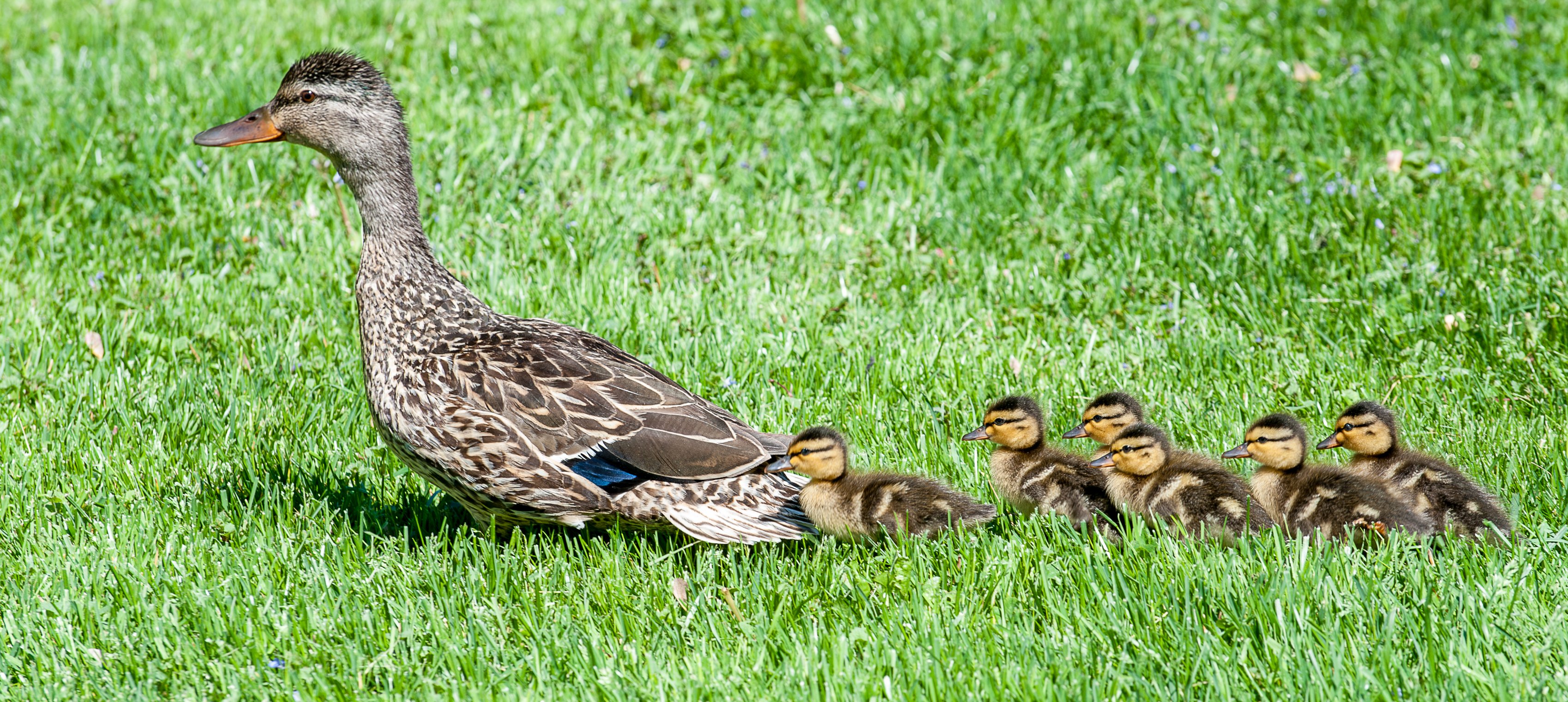
Geoffrey Swift said there have been ducks at Bates College’s Lake Andrews for at least the 11 years he has worked there. The college’s vice president for Finance and Administration and its treasurer works with the facilities team to manage and maintain wildlife on campus, including the ducks.
“So long as there’s been water, there’s surely been ducks,” he said.
The facilities team has supported the ducks in multiple ways, including taking measures to ensure that ducklings do not fall into drains near the lake and installing new drainage covers that look like grass, he said. There have been rescue missions in the past to save ducklings from the drains, but the team has not had to do that this year.
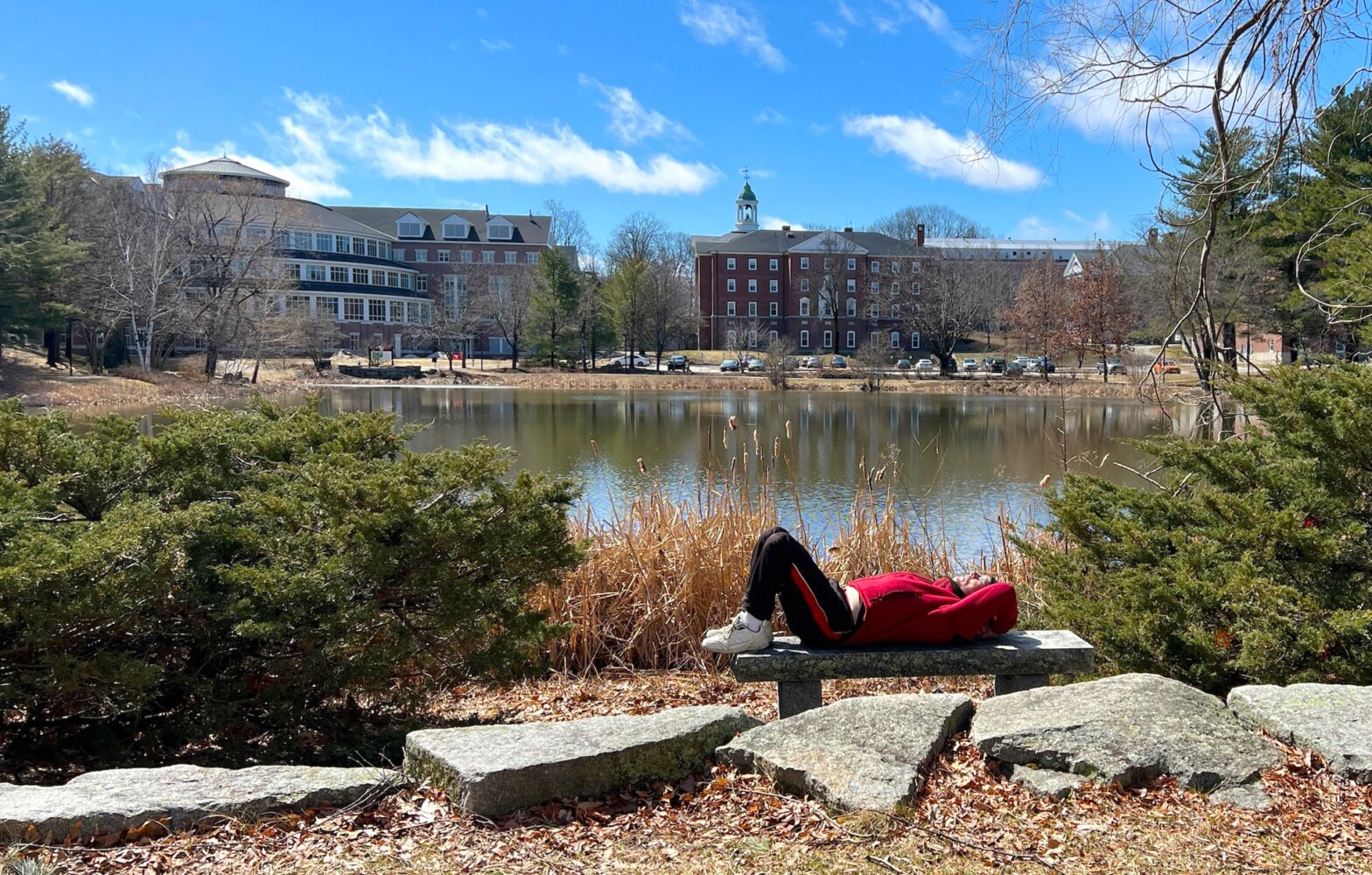
Lake Andrews, sometimes referred to as “The Puddle,” is not a lake. It’s an area that collects stormwater runoff to prevent flooding the campus.
“About a quarter of the college’s 133 acres drain into the 2.13-acre body of water, and its storage capacity prevents campus runoff from overwhelming the city’s drainage system during major rainstorms,” he said.
Because Lake Andrews is ringed by a sidewalk and surrounded by natural landscaping, it is an attraction for students and visitors alike — used for skating in the winter, observing wildlife, walking dogs and as a recreational and relaxational asset.
What are some of the animals people might find at Lake Andrews?
Besides the ducks, there are turtles, fish and birds, including red-winged blackbirds that are very protective of their nests, and the occasional osprey and/or heron. We had a bald eagle earlier this summer that was hanging around the lake, and there are at least two snapping turtles that live in Lake Andrews. This summer a huge snapping turtle laid eggs in a garden bed near Page Hall during reunion.
What makes it so ideal for ducks?
Ducks enjoy puddles of all shapes and sizes, and this is a good size, and I believe that we’re not a friendly site for predators like cats or foxes, so they are safe here. The vegetation from the 1998 Lake Andrews restoration provides natural protective cover for the ducks and their offspring.
What if there are too many ducks?
There’s not much we can do. Some years ago Bates worked with Maine Department of Inland Fisheries and Wildlife to relocate some ducks when the population became overwhelming. My hunch is they self correct when and if they start to crowd the resource. The numbers do tend to fluctuate.
How do you strike a balance between managing campus infrastructure and respecting wildlife?
We’re stewards of this place. Bates sits on 133 acres, much of them occupied by residential buildings, sports fields and academic facilities. But the green spaces, from the quad to the wooded areas, are also under our charge and we take that seriously. Respecting wildlife is part of that. There are limits to what we can or should do.
Sometimes we have to move wildlife along. We had a successful relocation effort in the summer of 2024 when we realized honeybees had nested in the soffit of Hathorn Hall, the very first building at Bates. We found out they were there after a painter was stung. Matt Capone, from our Facility Services team, worked with a local beekeeping company, Spicer Bees, to remove the bees. The beekeeper was able to take the majority of the bees and incorporate them into his apiary.
What do you think the students and community enjoy about Lake Andrews?
There’s something great about the pastoral feel in an urban environment. It’s sweet to see high school students gravitate to this site for prom photos and couples come here for wedding photos. That reflective surface creates a special atmosphere; there’s a reason we always have our fireworks for reunion weekend on Lake Andrews. It’s a lovely spot, and our grounds team does a great job with it.
What are some of the rules and regulations at the lake?
We’ve got an official list. Ducks are third and fifth on that list: Do not disturb springtime nesting ducks. Don’t feed the ducks: We are trying to maintain the environmental balance.
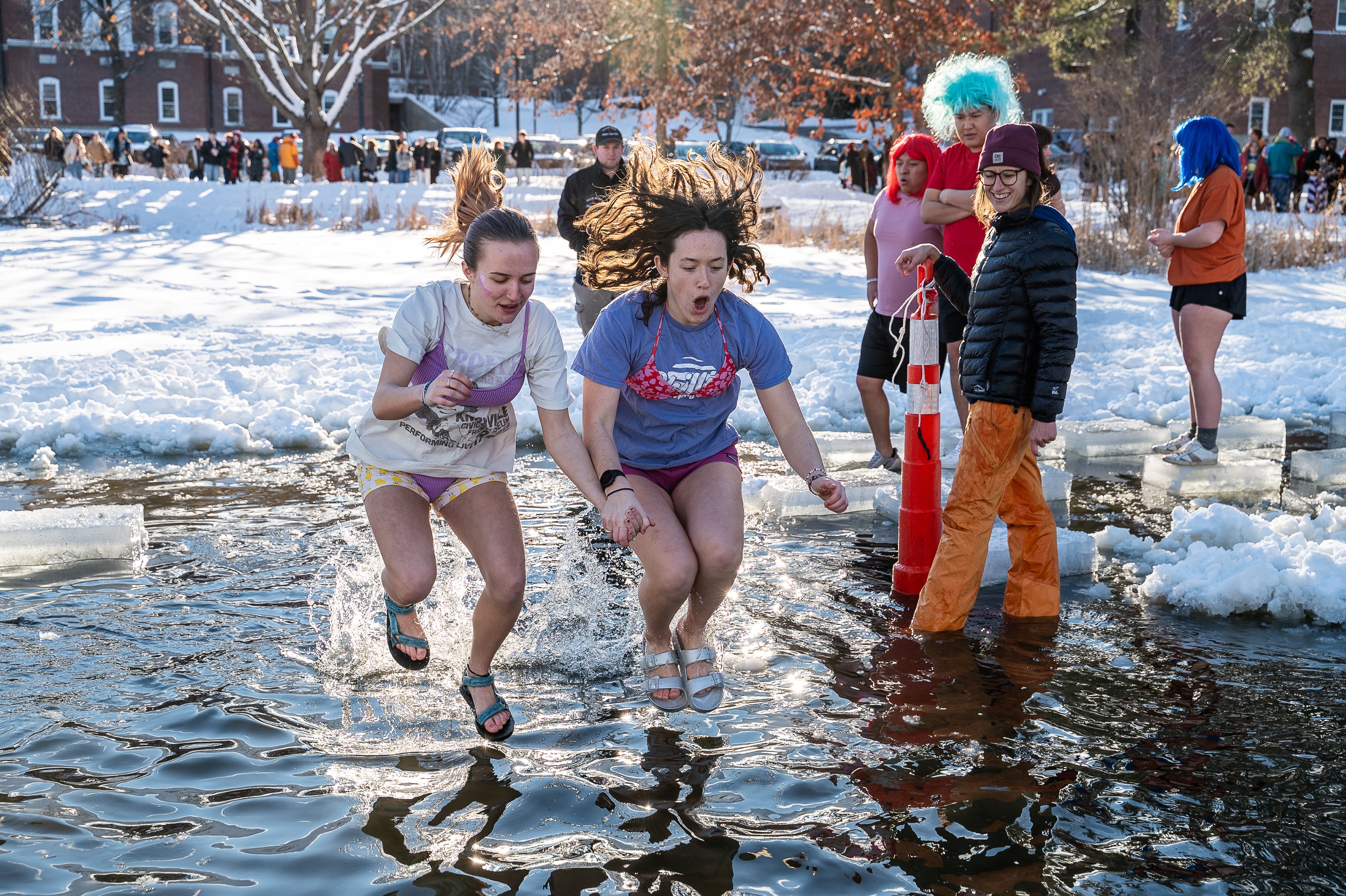
The list also includes: please respect the natural features, don’t walk in the areas between path and shore (where the ducks spend a lot of time). Other rules are around ice skating (at your own risk), no remote control vehicles, no swimming (except the annual winter Puddle Jump, which the college does authorize), (no) kayaking, canoes or rafts.
The ducks have become somewhat of a symbol for Bates, haven’t they?
At Bates our mascot is a bobcat, and that’s what’s on shirts and whatnot. But the pond — and the ducks as an attraction — perhaps symbolize how open the campus is to the Lewiston community. Neighbors and local employers often walk our campus and might think of ducks before bobcats.
They matter to our students too. We have this tradition at Bates called the Ivy Stone. Every class picks one of their classmates to design the annual Ivy Stone, which is then affixed to a building on campus, with their class year on it. The students have worked closely with our mason Ron Tardif in the last number of years. Most of the recent ivy stones have gone up on Pettengill Hall.
Amelia Hawkins, class of 2024, created one entirely around the ducks. She talked to our news team in communications about it. She said: “I wanted to do something new that I hadn’t seen — yet also something everyone sees. I immediately thought of the ducks at The Puddle.”
That was the class that really went through it all with COVID. They arrived here in the fall of 2020 for an in-person residential experience, with masks and testing every few days.
What Amelia said then was that the ducks having ducklings represented hope to her, as one of those cycles that repeats, and she wanted to include a message of hope on her Ivy Stone.
“Hope for our class, because our class has gone through a lot,” is how she put it.

We invite you to add your comments. We encourage a thoughtful exchange of ideas and information on this website. By joining the conversation, you are agreeing to our commenting policy and terms of use. More information is found on our FAQs. You can modify your screen name here.
Comments are managed by our staff during regular business hours Monday through Friday as well as limited hours on Saturday and Sunday. Comments held for moderation outside of those hours may take longer to approve.
Join the Conversation
Please sign into your Sun Journal account to participate in conversations below. If you do not have an account, you can register or subscribe. Questions? Please see our FAQs.